
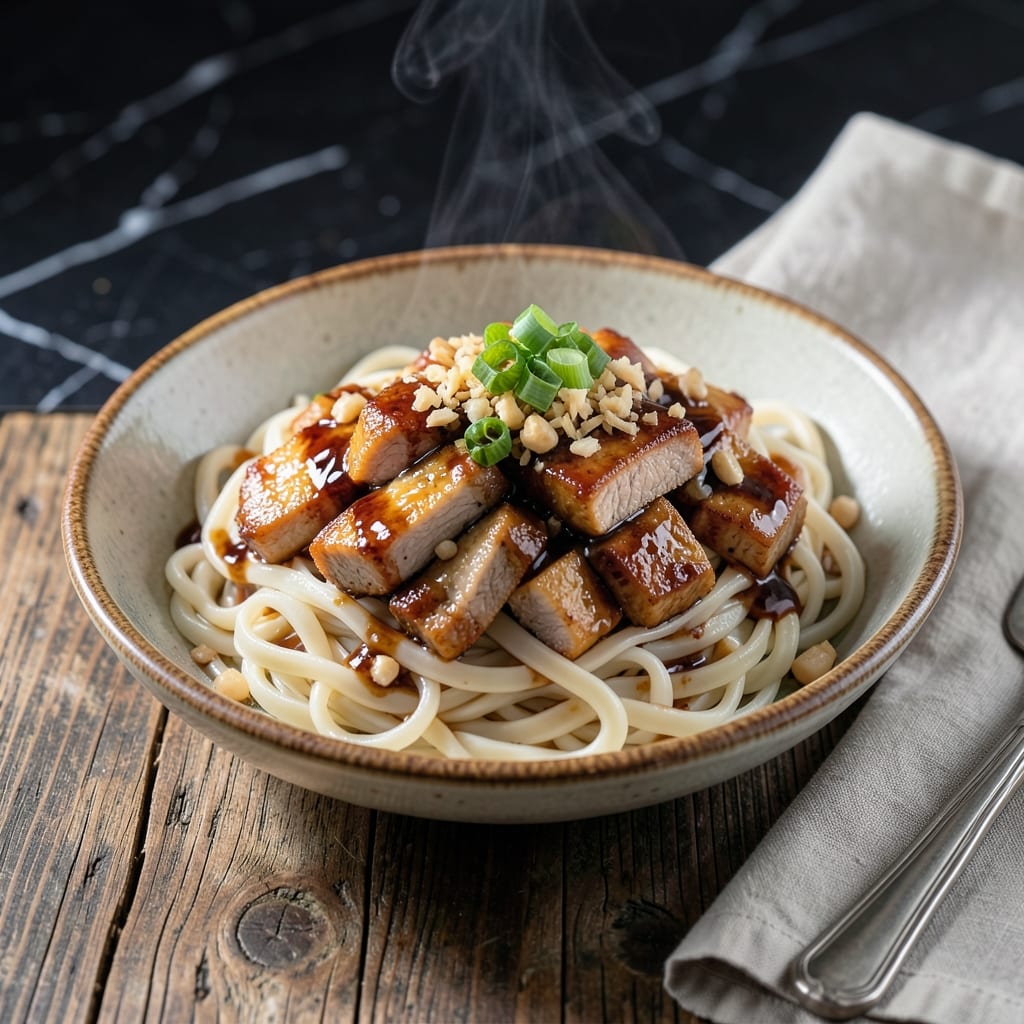
This Hawaiian-style dish brings comfort in every bite with its unique blend of tender pork and glass noodles. The long rice absorbs the rich flavors of the slow-cooked meat, creating a hearty meal that’s perfect for any occasion.
I’ve perfected this recipe to ensure the pork is fall-apart tender while the noodles stay soft and chewy. It’s a traditional favorite that’s easy to make at home with simple ingredients and a little patience.
Ingredients for Pork Long Rice
Simple yet rich ingredients create this Hawaiian-style comfort dish with pork and glass noodles.
| Ingredient | Amount | Notes |
|---|---|---|
| Pork Shoulder 🥩 | 2 lb | Boneless, cut into chunks |
| Long Rice Noodles 🍜 | 8 oz | Cellophane or glass noodles |
| Low-Sodium Soy Sauce 🫕 | ½ cup | For marinade and seasoning |
| Brown Sugar 🧈 | ½ cup | Light or dark variety |
| Garlic Cloves 🧄 | 6 cloves | Minced for depth of flavor |
| Fresh Ginger 🌿 | 2 tbsp | Grated or finely minced |
| Green Onions 🧅 | 4 whole | Thinly sliced, whites and greens |
| Chicken Broth 🥣 | 2 cups | Low-sodium preferred |
| Vegetable Oil 🫒 | 2 tbsp | For searing pork |
| Salt 🧂 | 1 tsp | Kosher or sea salt |
| Black Pepper 🌶️ | ½ tsp | Freshly ground preferred |
| Sesame Oil 🫒 | 1 tsp | Toasted, for finishing |
| Red Pepper Flakes 🌶️ | ½ tsp | Optional, for heat |
The pork shoulder is non-negotiable here. Look for well-marbled pieces at your butcher or Costco for the best results—this fat renders down into tender, fall-apart meat. The long rice noodles, sometimes called cellophane noodles, are typically found in the Asian aisle at Safeway or Walmart. Avoid the pre-cut versions; whole noodles hold up better to slow cooking.
No pork shoulder? Pork butt works just as well. For a quicker version, pork loin can be used, but it won’t be as tender. If you can’t find long rice noodles, vermicelli or rice sticks are decent substitutes. The soy sauce can be swapped for tamari if you need gluten-free. Brown sugar alternatives like coconut sugar work, but may alter the flavor slightly.
This dish tastes even better the next day. Store leftovers in an airtight container in the fridge for up to 4 days. For longer storage, freeze for 3 months—just thaw overnight before reheating. The noodles will soften further upon reheating, so add a splash of broth to revive.
Why You’ll Love This Recipe
- One Pot Meal: I love how the pork shoulder and noodles simmer together in one pot—minimal cleanup, maximum flavor.
- Sweet-Savory Magic: The brown sugar caramelizes with the soy sauce and garlic, creating this deep, sticky-sweet glaze that clings to every strand.
- Feeds the Crowd: Between us, this stretches to feed six easily, and it’s even better the next day when the flavors meld.
- Pantry Staples: Honestly, I always have soy sauce, garlic, and noodles on hand, so it’s my go-to when I need something hearty fast.
Step-by-Step Instructions for Pork Long Rice
Here is the method. Simple steps, bold flavors, and comforting results every time.
Step 1: Sear the Pork Shoulder for Depth of Flavor
Heat the 2 tbsp vegetable oil in a large pot over medium-high heat. Add the 2 lb pork shoulder chunks and sear for 5-6 minutes, turning occasionally, until golden brown on all sides.
This step builds a rich foundation of flavor. Don’t overcrowd the pot—work in batches if necessary to ensure each piece browns properly. The pork should develop a deep caramelized crust, which will enhance the overall taste of the dish.
Step 2: Build the Aromatic Broth Base
Once the pork is browned, add the minced 6 cloves garlic cloves, grated 2 tbsp fresh ginger, and the white parts of the 4 whole green onions. Sauté for 1-2 minutes until the aromatics are fragrant and slightly softened.
Pour in the 0.5 cup low-sodium soy sauce, 0.5 cup brown sugar, 2 cups chicken broth, 1 tsp salt, and 0.5 tsp black pepper. Stir well to combine, ensuring the sugar dissolves completely. Add the 0.5 tsp red pepper flakes if using for a subtle kick.
Step 3: Simmer the Pork Until Tender
Bring the mixture to a boil, then reduce the heat to low. Cover the pot and let it simmer for 1.5 to 2 hours, stirring occasionally. The pork is done when it shreds easily with a fork.
Keep an eye on the liquid level—if it reduces too much before the pork is tender, add a splash of water. The broth should remain flavorful but not overly thick at this stage. The pork will absorb much of the liquid as it cooks, infusing every bite with rich, savory goodness.
Step 4: Add Noodles and Finish Cooking
Once the pork is tender, add the 8 oz long rice noodles to the pot, pressing them down gently to submerge in the broth. Increase the heat to medium and cook for 5-7 minutes, or until the noodles are translucent and tender.
Stir occasionally to prevent sticking. The noodles will absorb the remaining liquid, creating a thick, hearty texture. If the dish seems too dry, add a little more broth or water to reach your desired consistency.
Step 5: Garnish and Serve Warm
Remove the pot from heat and stir in the 1 tsp sesame oil. Taste and adjust seasoning with additional salt or soy sauce if needed. The sesame oil adds depth and a subtle nutty aroma that ties everything together.
Ladle the pork and noodles into bowls and garnish with the sliced green onion tops. Serve immediately while hot. The dish should be rich, savory, and deeply comforting, with tender pork and chewy noodles in every bite.
Pro Tips For Making Pork Long Rice
- Parboil the Noodles: Soak the long rice noodles in hot water for 5-7 minutes until pliable but still firm—I learned this the hard way after ending up with mushy strands that fell apart in the stir-fry.
- Sear the Pork First: Brown the pork shoulder in batches over medium-high heat before braising, about 3-4 minutes per side. It locks in juices and adds depth to the sauce that you just can’t get otherwise.
- Balance the Sauce: Taste as you go and adjust the brown sugar and soy sauce ratio—start with 1:1, but the pork releases salt, so you’ll often need a touch more sweetness.
- Use Fresh Garlic: Minced fresh garlic cloves taste brighter and more aromatic than the jarred stuff. Sounds small, but it actually changes the outcome of your sauce.
Regional Styles of This Recipe
Hawaiian Tradition
This dish is a staple at Hawaiian luaus, where it’s often served as a main course alongside kalua pig and poi. The slow-cooked pork and chewy noodles absorb the sweet-savory broth, making it a comfort food favorite across the islands. 🌺
Filipino Adaptation
In the Philippines, they call it lomi and add a thicker, heartier broth with extra vegetables like cabbage and carrots. The noodles are often egg noodles instead of glass noodles, but the pork remains the star.
Chinese Influence
Chinese immigrants brought their version of glass noodle dishes to Hawaii, which evolved into this local favorite. The original often includes shiitake mushrooms and wood ear fungi for extra texture and umami depth.
Sam Choy’s Version
Celebrity chef Sam Choy popularized a richer variation with added char siu (Chinese BBQ pork) and sometimes shrimp. His recipe often includes a splash of oyster sauce for an extra layer of flavor complexity.
Vegetarian Twist
For a meat-free version, replace pork with mushrooms and tofu. The broth can be made with vegetable stock instead of chicken broth, keeping the same sweet-savory balance that defines the dish.
Nutrition Facts
Frequently Asked Questions
Can I use a different cut of pork?
Yes! Pork butt works just as well as shoulder. For a quicker cook, try pork loin, but it won’t be as tender. The marbling in shoulder or butt keeps the meat juicy during long simmering.
How do I prevent the noodles from clumping?
Soak the long rice noodles in warm water for 10 minutes before adding them to the pot. Stir occasionally while cooking and ensure they’re fully submerged in broth.
What if my broth is too salty?
Balance it by adding a splash of water or low-sodium chicken broth. A teaspoon of brown sugar or a squeeze of lime can also help mellow the saltiness.
Can I make this in a slow cooker?
Sear the pork first, then transfer everything to the slow cooker. Cook on low for 6-7 hours or high for 3-4 hours, adding noodles in the last 30 minutes.

- Jollof Rice Sauce Recipe: West African Tomato and Spice Infusion - September 25, 2026
- Japanese Rice Soup Recipe: Umami-Rich Comfort in a Bowl - September 25, 2026
- Homemade Cream Of Rice Recipe: Silk-Smooth Breakfast in Minutes - September 25, 2026