
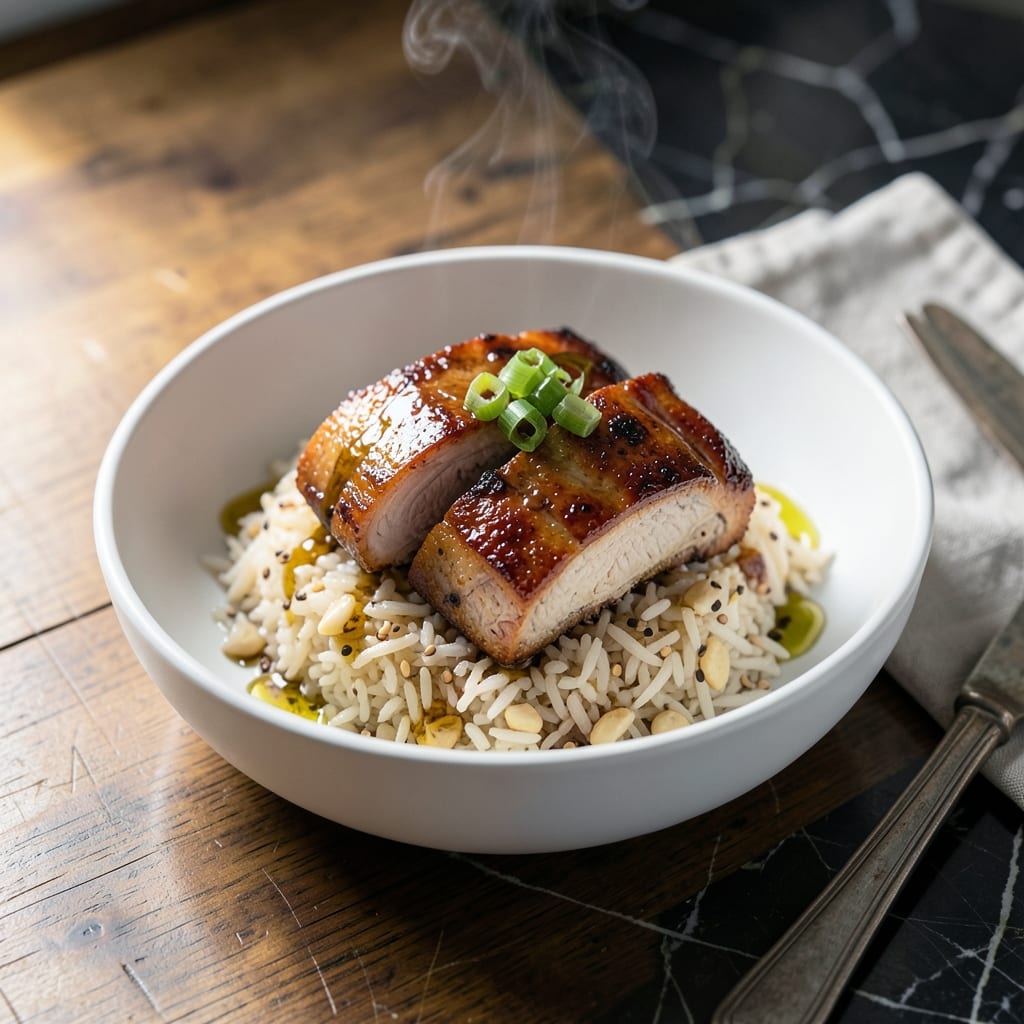
This pork over rice dish delivers tender meat and savory garlic sauce in every bite. A simple marinade transforms affordable pork shoulder into melt-in-your-mouth pieces that soak up the rich sauce.
The secret is a quick sear followed by gentle simmering, allowing the flavors to develop without drying out the meat. The garlic sauce reduces to a glossy consistency that coats each grain of rice and every piece of pork.
Served over steamed jasmine rice, this creates a complete meal with minimal effort. The pork stays tender while the sauce infuses the rice with extra flavor.
Perfect for weeknight dinners or meal prep, this recipe proves that simple ingredients can create extraordinary results. The balance of savory, garlicky, and slightly sweet notes makes it irresistibly satisfying.
Ingredients for Pork Over Rice
Transform affordable pork shoulder into tender, saucy bites over fluffy jasmine rice.
| Ingredient | Amount | Notes |
|---|---|---|
| Pork Shoulder 🥩 | 1 ½ lb | Cut into bite-sized pieces |
| Jasmine Rice 🍚 | 2 cups | Uncooked, rinsed before use |
| Garlic Cloves 🧄 | 8 cloves | Minced for maximum flavor |
| Soy Sauce 🫒 | ½ cup | Low-sodium for balance |
| Brown Sugar 🍚 | 3 tbsp | Light or dark variety |
| Rice Vinegar 💧 | 2 tbsp | For tangy brightness |
| Olive Oil 🫒 | 2 tbsp | Divided for searing and sauce |
| Fresh Ginger 🌿 | 1 tbsp | Grated or minced fine |
| Cornstarch 🌾 | 1 tbsp | Mixed with water for slurry |
| Green Onions 🧅 | ½ cup | Thinly sliced for garnish |
| Sesame Oil 🫒 | 1 tsp | Toasted, for finishing |
| Black Pepper 🌶️ | ½ tsp | Freshly ground preferred |
| Water 💧 | 1 ½ cups | For rice cooking and slurry |
The pork shoulder is non-negotiable here—its marbling renders down during simmering, giving you that melt-in-your-mouth texture. Costco and Sam’s Club sell large cuts at good prices, but most grocery stores carry pre-cubed pork for convenience (just avoid lean cuts like tenderloin). For the rice, jasmine from Asian markets has the best fragrance, but any long-grain works in a pinch.
No jasmine rice? Basmati or long-grain white are fine substitutes. Out of brown sugar? Regular sugar plus a splash of molasses mimics the depth. If you don’t have rice vinegar, apple cider vinegar at half the amount adds similar brightness. The soy sauce can be tamari for gluten-free, but taste before adding salt—the sodium content varies wildly between brands.
Leftover pork and sauce keep beautifully for 4-5 days in the fridge. The flavors actually deepen overnight, making it perfect for meal prep. Freeze portions for up to 3 months, but the rice is best fresh—reheat it with a splash of water to restore moisture.
Why You’ll Love This Recipe
- One Pot Meal: I just toss the pork shoulder with garlic, soy sauce, and brown sugar, then serve it over jasmine rice—minimal cleanup, maximum flavor.
- Sweet-Savory Magic: The brown sugar caramelizes with the soy sauce, creating this sticky, umami-rich glaze that soaks into the rice.
- Feeds the Family: Honestly, this stretches far—leftovers taste even better the next day, and it’s budget-friendly with pork shoulder.
- Meal Prep Dream: I make a big batch on Sunday, and it reheats beautifully for lunches all week. Between us, it’s my secret to stress-free dinners.
Step-by-Step Instructions for Pork Over Rice
This method ensures perfectly tender pork with a rich, aromatic sauce over fluffy jasmine rice.
Step 1: Sear and Cook the Pork Shoulder
Heat 1 tablespoon Olive Oil in a large skillet over medium-high heat. Add the 1.5 lb Pork Shoulder (cut into bite-sized pieces) and sear for 4-5 minutes until golden brown on all sides. This creates a flavorful crust while locking in juices.
Reduce heat to medium and continue cooking for another 5-6 minutes until the pork is no longer pink inside. I check by cutting into the thickest piece—the center should be just opaque with no redness. Transfer the pork to a plate and set aside.
Step 2: Build the Garlic Sauce Base
In the same skillet, add the remaining 1 tablespoon Olive Oil. Sauté the 8 cloves Garlic Cloves (minced) and 1 tbsp Fresh Ginger for 30-45 seconds until fragrant. Be careful not to burn the garlic—it should turn light golden at most.
Pour in the 0.5 cup Soy Sauce, 3 tbsp Brown Sugar, and 2 tbsp Rice Vinegar. Stir well and let it simmer for 2 minutes until the sugar dissolves completely. The mixture should look glossy and slightly thickened.
Step 3: Thicken the Sauce and Combine with Pork
In a small bowl, mix the 1 tbsp Cornstarch with ¼ cup Water from the 1.5 cups Water to create a slurry. Slowly pour this into the skillet while stirring constantly. The sauce should begin to thicken within 30-60 seconds.
Return the cooked pork to the skillet and stir to coat evenly in the sauce. Add the remaining 1.25 cups Water and 0.5 tsp Black Pepper, then simmer for 3-4 minutes until the sauce reaches your desired consistency. It should cling lightly to the pork pieces.
Step 4: Cook the Jasmine Rice and Assemble
While the pork cooks, rinse the 2 cups Jasmine Rice under cold water until the water runs clear. In a pot, combine the rice with 1.5 cups Water and bring to a boil. Once boiling, reduce to a simmer, cover, and cook for 15 minutes until all liquid is absorbed and the rice is tender.
Fluff the rice with a fork and let it sit covered for 5 minutes. This steaming step ensures perfectly separated grains. To serve, spoon the rice onto plates, top with the pork and sauce, and garnish with 0.5 cup Green Onions (thinly sliced) and a drizzle of 1 tsp Sesame Oil.
Pro Tips For Making Pork Over Rice
- Sear the Pork First: I learned this the hard way—browning the pork shoulder in a hot pan before braising adds a depth of flavor that simmering alone just can’t match.
- Rinse the Rice: Jasmine rice can get gummy if you skip rinsing it first; swirl it in cold water until the water runs clear to remove excess starch.
- Don’t Drown the Garlic: After burning garlic in soy sauce too many times, I now add minced garlic to the pork only in the last 5 minutes of cooking to keep it sweet, not bitter.
- Use Leftover Fat: That rendered pork fat in the pan? Sounds weird, but it works—stir a spoonful into the cooked rice for extra richness.
Serving Suggestions for This pork over rice
Family-Style Plating
For a communal meal, serve the pork and sauce in a large cast iron skillet placed at the center of the table. Spoon 2 cups cooked jasmine rice onto a platter and let everyone build their own bowls. This keeps the pork warm and the rice from getting soggy.
Bento Box Presentation
Pack this for lunch in a divided container with rice in one section and pork in another. Drizzle 1-2 tbsp sauce over the pork just before eating to prevent rice from absorbing too much liquid. Add ½ cup steamed veggies like broccoli or snap peas for color.
Garnish Like a Pro
Finish each serving with 2 tbsp green onions and a drizzle of sesame oil. For extra crunch, sprinkle 1 tbsp toasted sesame seeds or crushed peanuts. A few slices of fresh jalapeño add a pop of color and heat. 💫
Sauce Adjustments
If the sauce thickens too much while serving, thin it with 1-2 tbsp hot water. For a glossier finish, add an extra ½ tsp sesame oil and toss the pork gently. I always taste and adjust with a pinch of sugar or splash of vinegar if needed.
Kids’ Friendly Version
Serve the pork and sauce on the side for picky eaters. Some kids prefer plain rice with just a little sauce for dipping. I’ve found that cutting the pork into smaller pieces makes it more approachable for little ones. 💛
Leftovers Reinvented
Transform leftovers into fried rice by stir-frying with day-old rice, scrambled egg, and frozen peas. Or use the pork as a topping for ramen or noodle bowls. The flavors hold up well to reheating in a non-stick pan over medium heat.
Nutrition Facts
Frequently Asked Questions
Can I use a different cut of pork?
Pork shoulder works best, but you can use tenderloin for a leaner option. Adjust cooking to medium heat and shorter times to prevent dryness. Avoid overly fatty cuts like belly.
How do I make the sauce thicker?
Mix 1 tbsp cornstarch with 2 tbsp cold water and stir into simmering sauce. It’ll thicken in 1-2 minutes. For thinner sauce, add 1-2 tbsp water to reach desired consistency.
Can I prepare this ahead of time?
Cook pork and sauce up to 2 days ahead. Store in an airtight container in the fridge. Reheat gently with a splash of water, and cook rice fresh for best texture.

- Rice Mix Recipe: Fluffy Grains With Customizable Flavor Boost - September 25, 2026
- Soupy Rice Recipe: Broth-Soaked Grains With Rustic Depth - September 25, 2026
- Rice Paper Pancakes Recipe: Crispy Vietnamese Breakfast Delight - September 25, 2026