
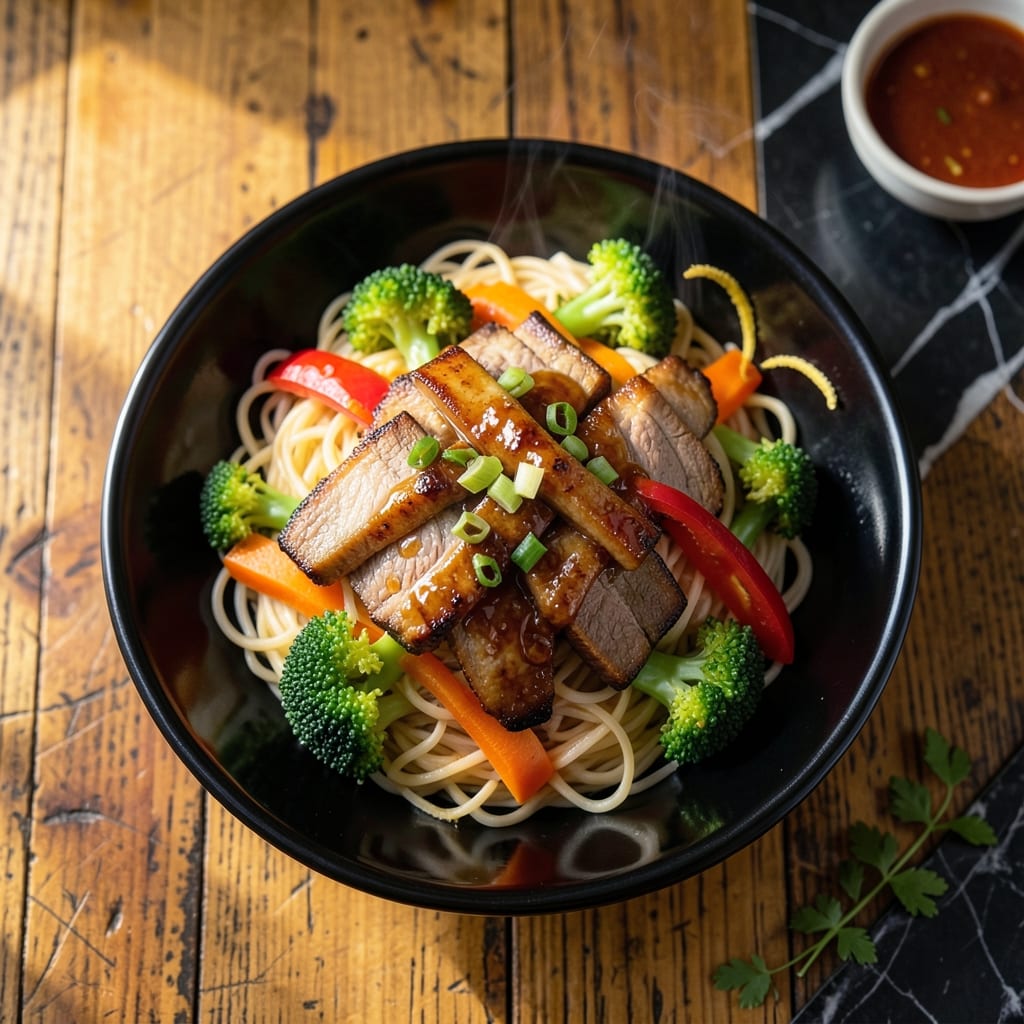
This stir fry delivers tender pork and wok-charred vegetables over perfectly cooked rice noodles. The secret is high heat and precise timing to lock in flavors.
I developed this method after years of trial and error, focusing on achieving that restaurant-quality texture. The pork cooks quickly at high temperature to stay juicy, while the vegetables develop smoky depth.
Rice noodles soak up the savory sauce without turning mushy, creating a balanced bite every time. The dish comes together in under 30 minutes with minimal effort.
What you get is a satisfying meal with layers of texture and flavor, where each ingredient shines through without overpowering the others.
Ingredients for Pork Stir Fry with Rice Noodles
High-heat essentials for wok magic. Pork, noodles, and veggies ready to char and shine.
| Ingredient | Amount | Notes |
|---|---|---|
| Pork Shoulder 🥩 | 1 lb | Thinly sliced against grain |
| Rice Noodles 🍜 | 8 oz | Flat pad Thai style |
| Red Bell Pepper 🌶️ | 1 whole | Thinly sliced lengthwise |
| Broccoli Crowns 🥦 | 2 cups | Cut into small florets |
| Carrots 🥕 | 2 whole | Julienned or thinly sliced |
| Green Onions 🧅 | 4 whole | Cut into 2-inch pieces |
| Garlic Cloves 🧄 | 4 cloves | Minced finely |
| Fresh Ginger 🌿 | 1 tbsp | Grated or minced |
| Soy Sauce 🫒 | ⅓ cup | Low-sodium preferred |
| Oyster Sauce 🫒 | 2 tbsp | Or vegetarian oyster sauce |
| Sesame Oil 🫒 | 1 tbsp | Toasted for depth |
| Shaoxing Wine 🍶 | 2 tbsp | Or dry sherry substitute |
| Cornstarch 🌾 | 1 tbsp | For velvety pork texture |
| Neutral Oil 🫒 | 3 tbsp | High smoke point for stir-frying |
| Salt 🧂 | ½ tsp | To taste |
The pork is non-negotiable here—shoulder or tenderloin sliced thin against the grain guarantees that melt-in-your-mouth texture. Asian markets often have pre-sliced options, but any supermarket works. For rice noodles, Pad Thai width holds up best to stir-frying. Look for brands like Annie Chun’s or Thai Kitchen at Whole Foods or the international aisle. Fresh ginger and garlic are worth the effort (pre-minced in jars is okay in a pinch, but fresh is brighter).
No pork? Chicken thighs or tofu work great—just adjust cooking time. Swap oyster sauce for hoisin or extra soy if needed. Shaoxing wine can be dry sherry or white wine (skip the cooking wine—it’s salted). For gluten-free, tamari instead of soy and rice noodles labeled GF. Cornstarch is for that silky pork coating—arrowroot powder works too if that’s what you’ve got.
Everything cooks fast, so prep all ingredients before heating the wok (mise en place, chef’s kiss). Leftovers keep 3-4 days refrigerated, but honestly, they’re best fresh. Reheat quickly in a hot pan with a splash of water to revive. Noodles freeze okay, but the texture changes slightly.
Why You’ll Love This Recipe
- One Pan Wonder: I toss everything—the pork, bell peppers, even the rice noodles—into a single pan. Honestly, cleanup takes longer than the cooking.
- Umami Bomb: The pork shoulder soaks up the stir-fry sauce like a sponge, and the charred edges of the broccoli? Ridiculously good.
- Meal Prep Hero: I make a double batch on Sunday, and it reheats beautifully for lunches all week. Between us, it tastes even better the next day.
- Budget Stretcher: Pork shoulder is cheap, and a little goes a long way with all those veggies and noodles filling it out. My wallet thanks me every time.
Step-by-Step Instructions for Pork Stir Fry With Rice Noodles
Here’s how to nail the wok-hei flavor with perfectly tender meat and crisp vegetables.
Step 1: Velvet the Pork for Maximum Tenderness
Slice the 1 lb Pork Shoulder thinly against the grain into ¼-inch thick strips. I always cut partially frozen pork for cleaner slices. Toss the strips with the 1 tbsp Cornstarch, 2 tbsp Shaoxing Wine, and 0.5 tsp Salt in a bowl until evenly coated.
The cornstarch creates a protective barrier that locks in juices during cooking, while the Shaoxing Wine tenderizes the meat. Let this mixture sit for 15 minutes at room temperature—this is the velveting process that guarantees that melt-in-your-mouth texture.
Meanwhile, fill a large bowl with hot water and add the 8 oz Rice Noodles to soften. They should become pliable but not fully cooked, about 8-10 minutes. Drain and set aside.
Step 2: Stir-Fry Aromatics and Pork in Batches
Heat 2 tbsp of the Neutral Oil in a wok or large skillet over high heat until shimmering. Add the minced 4 cloves Garlic Cloves and 1 tbsp Fresh Ginger, stirring constantly for 30 seconds until fragrant but not browned.
Add the pork in a single layer, working in batches if necessary to avoid overcrowding. Let it sear undisturbed for 1 minute before stirring. Cook until the pork is just cooked through and starting to brown at the edges, about 2-3 minutes per batch.
Real talk: if you crowd the pan, the pork will steam instead of sear, and you’ll lose that crucial caramelization. Transfer the cooked pork to a clean bowl and set aside.
Step 3: Char the Vegetables to Perfection
Add the remaining 1 tbsp Neutral Oil to the wok and return to high heat. Add the julienned 2 whole Carrots and cook for 2 minutes, stirring occasionally. Then add the thinly sliced 1 whole Red Bell Pepper and 2 cups Broccoli Crowns.
Stir-fry for 3-4 minutes until the vegetables are tender-crisp with slightly charred edges. The carrots should soften slightly but retain a bite, while the broccoli should turn bright green with some browned spots.
This is the moment that matters: you want that wok-hei—the smoky breath of the wok—that makes stir-fry taste authentic. If your veggies start to steam, increase the heat and let them sizzle.
Step 4: Combine Everything with the Sauce
Return the pork to the wok along with the drained Rice Noodles. Add the 0.33 cup Soy Sauce, 2 tbsp Oyster Sauce, and 1 tbsp Sesame Oil. Toss everything together with tongs for 2-3 minutes until the noodles are heated through and everything is evenly coated.
The sauce should cling to the noodles and pork, creating a glossy, umami-rich coating. If the mixture seems dry, add a splash of water and toss again. The rice noodles will absorb the flavors quickly, so work fast.
Finally, add the cut 4 whole Green Onions and toss for another 30 seconds just to wilt them slightly. The green onions add a fresh, oniony bite that cuts through the richness of the dish.
Pro Tips For Making Pork Stir Fry With Rice Noodles
- Velvet the Pork: Marinate the pork shoulder with 1 tsp baking soda and 1 tbsp water for 15 minutes before cooking—I learned this the hard way after my stir-fry pork turned out tough every time. It makes the meat absurdly tender.
- Soak Noodles Properly: Cover rice noodles with warm water for exactly 8-10 minutes, no more. After ruining a batch with mushy noodles, I now set a timer—this guarantees they stay chewy and don’t turn to paste.
- Skip the Overcrowding: Cook the pork in two batches if needed. I used to cram everything in the pan and wondered why my stir-fry steamed instead of seared.
- Prep Veggies Uniformly: Cut the broccoli into small florets and slice carrots thinly—about 1/8 inch thick. Sounds fussy, but it actually changes the outcome by making sure everything finishes cooking at the same time.
Storing and Reheating pork stir fry with rice noodles
Refrigerator Storage
Let your stir fry cool for no more than 2 hours before transferring to airtight containers. I use glass containers with locking lids to keep flavors fresh. Store at 40°F or below for up to 3-4 days. The flavors actually deepen over time as the sauce soaks into the noodles. ❄️
Freezer Storage
This dish freezes well for up to 2 months without losing texture. I recommend flat freezer bags for efficient stacking. Leave 1 inch of headspace for expansion and squeeze out excess air to prevent freezer burn. Label with the date so you remember when you made it.
Stovetop Reheating
This is my preferred method for maintaining texture. Heat a wok or skillet over medium-high heat with 1 tbsp neutral oil. Add your portion and stir-fry for 2-3 minutes until hot. Add a splash of water to revive the noodles if they seem dry. 🔥
Microwave Reheating
For quick lunches, microwave individual portions covered with a damp paper towel. Heat on 70% power for 1-2 minutes, stir, then continue in 30-second intervals until reaching 165°F. The damp towel prevents the noodles from drying out.
Sauce Refresh
If your stir fry seems bland after storage, revive it with a splash of soy sauce or sesame oil. I keep a small bottle of each at work for this exact reason. A quick toss in the pan with 1 tsp cornstarch slurry can restore that glossy sauce coating.
Nutrition Facts
Frequently Asked Questions
Can I use a different cut of pork?
Yes! Pork tenderloin works well as a leaner option. Just slice it thinly against the grain and reduce cooking time to 1-2 minutes per side. Avoid fatty cuts like ribs, as they won’t cook evenly in stir-fry.
How do I prevent the noodles from sticking together?
Rinse the soaked noodles under cold water before adding to the wok. Toss them with a little oil, and stir-fry quickly over high heat. This keeps them separate and perfectly tender.
What if my sauce is too thin?
Mix 1 tsp cornstarch with 1 tbsp water to make a slurry. Stir it into the simmering sauce and cook for 1 minute until thickened. Avoid adding too much at once to prevent clumping.
Can I make this dish ahead of time?
Prep ingredients the night before, but cook just before serving for the best texture. If storing, keep noodles and sauce separate to prevent sogginess. Reheat quickly in a hot pan.

- Fry Rice Recipe Without Eggs: Quick Skillet Savory with Toasted Aromatics - September 25, 2026
- Lemak Rice Recipe: Fragrant Coconut-Infused Grains - September 25, 2026
- Japanese Rice Sauce Recipe: Umami-Rich Glaze for Sushi and Bowls - September 25, 2026