
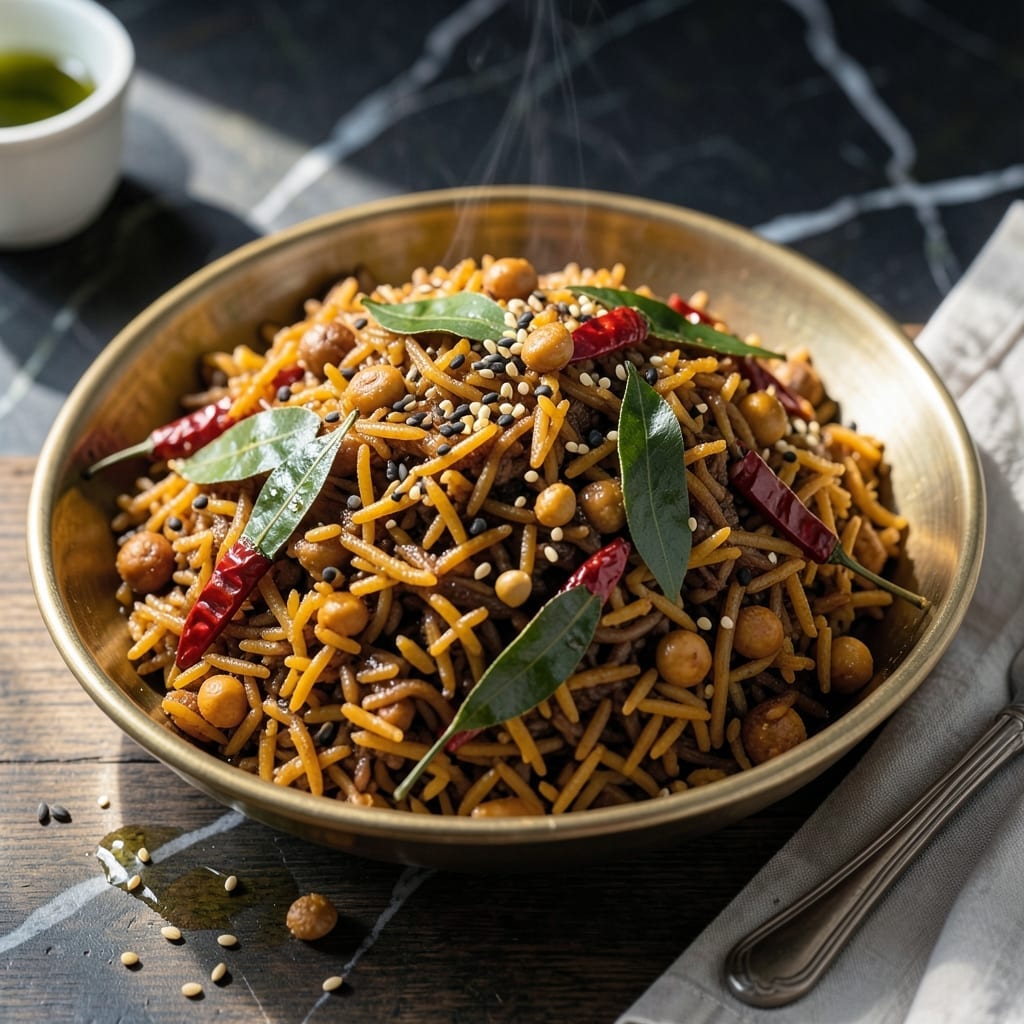
There’s a reason puliyodharai is a South Indian favorite—its perfect balance of tangy, spicy, and aromatic flavors makes it unforgettable.
This dish starts with a homemade tamarind pulp that infuses the rice with a bright, sour tang. Toasted mustard seeds, curry leaves, and dry spices create a fragrant tempering that ties everything together.
The rice absorbs these bold flavors while staying light and fluffy, never mushy. It’s a vegan dish that’s as satisfying as it is traditional.
Serve it warm or at room temperature—the flavors only deepen with time.
Ingredients for Puliyodharai Rice
Pantry staples and fresh curry leaves create this South Indian classic with bold flavors.
| Ingredient | Amount | Notes |
|---|---|---|
| Basmati Rice 🍚 | 1 ½ cups | Rinsed and drained thoroughly |
| Tamarind Pulp 🍇 | ½ cup | Soaked in warm water |
| Mustard Seeds 🌿 | 1 tsp | Black or yellow variety |
| Curry Leaves 🍃 | 10 whole | Fresh preferred, dried acceptable |
| Dried Red Chilies 🌶️ | 4 whole | Stems removed, broken in half |
| Chana Dal 🌾 | 1 tbsp | Rinsed and drained |
| Urad Dal 🌾 | 1 tsp | Rinsed and drained |
| Turmeric Powder 🌿 | ½ tsp | Ground, for color |
| Asafoetida 🧂 | ¼ tsp | Hing, optional for aroma |
| Ground Coriander 🌿 | 1 tbsp | Freshly ground preferred |
| Jaggery 🍚 | 1 tbsp | Or substitute brown sugar |
| Salt 🧂 | 1 tsp | Adjust to taste |
| Peanuts 🥜 | ¼ cup | Raw or roasted, unsalted |
| Sesame Oil 🫒 | 3 tbsp | For tempering and flavor |
The tamarind pulp is key here—look for seedless blocks at Indian grocery stores like Patel Brothers or Bharat Bazaar (the good stuff, not the pre-packaged paste). Curry leaves are non-negotiable for authentic flavor; fresh are best but dried work in a pinch. Asafoetida (hing) adds depth, but skip it if you’re gluten-free (some versions contain wheat). Whole spices toast better than pre-ground, so grab them in bulk.
No tamarind? Lime juice plus a bit of brown sugar gets you close but won’t be the same. Missing curry leaves? Dried bay leaves at half the amount add a similar aromatic touch. Need it nut-free? Swap peanuts for cashews or sunflower seeds. The rice must be basmati—jasmine works but lacks the right texture. For heat, adjust red chilies to taste.
This keeps beautifully for 3-4 days in the fridge—the flavors actually improve overnight. Reheat with a splash of water to loosen. Freezes for up to 3 months (portion before freezing). Always make extra tamarind pulp—it’s great in chutneys too.
Why You’ll Love This Recipe
- One Pot Magic: I love that everything comes together in a single vessel—no fancy techniques, just basmati rice soaking up that tangy tamarind pulp while mustard seeds pop in the background.
- Tangy Explosion: The first bite hits you with that perfect sour-spicy kick from the tamarind and red chilies, balanced by the earthy crunch of mustard seeds and fresh curry leaves.
- Lunchbox Hero: This keeps beautifully for days, and honestly, it tastes even better the next day when the flavors meld.
- Budget Friendly: A handful of pantry staples transforms into a feast—no expensive ingredients, just big, bold South Indian flavor.
Step-by-Step Instructions for Puliyodharai Rice
This method delivers that perfect balance of tangy, spicy, and nutty flavors every time.
Step 1: Prepare and Cook the Rice
Rinse the 1.5 cups Basmati Rice thoroughly under cold water until the water runs clear. This removes excess starch and prevents the grains from sticking together. Drain well in a fine-mesh sieve.
Cook the rice in a pot with 3 cups of water (a 1:2 rice-to-water ratio) and bring to a boil. Once boiling, reduce heat to low, cover, and simmer for 12-15 minutes until the water is absorbed and the grains are tender. Spread the cooked rice on a tray to cool completely—this prevents clumping when you mix in the tamarind sauce later.
Step 2: Temper the Whole Spices and Dals
Heat 3 tbsp Sesame Oil in a heavy-bottomed pan over medium heat. Once the oil is hot and shimmering, add the 1 tsp Mustard Seeds. They’ll begin to pop within 30-45 seconds—cover the pan briefly if they splatter too much.
Immediately add the 1 tbsp Chana Dal, 1 tsp Urad Dal, 4 whole Dried Red Chilies, and 10 whole Curry Leaves. Sauté for 2-3 minutes until the dals turn light golden brown and the chilies puff up. Stir in the 0.25 tsp Asafoetida and 0.25 cup Peanuts, and continue cooking for another 2 minutes until the peanuts are lightly toasted.
Step 3: Build the Tamarind Sauce Base
Reduce the heat to low and add the 0.5 tsp Turmeric Powder and 1 tbsp Ground Coriander to the pan. Stir for 20-30 seconds until the spices are fragrant—this blooms their flavors without burning them.
Pour in the 0.5 cup Tamarind Pulp (strained to remove any seeds or fibers) and 1 cup of water. Add the 1 tbsp Jaggery and 1 tsp Salt, stirring until the jaggery dissolves. Let the mixture simmer for 5-7 minutes until it thickens slightly and the raw tamarind smell mellows into a deep, tangy aroma.
Step 4: Combine and Finish
Add the cooled rice to the tamarind-spice mixture in the pan. Gently fold everything together with a spatula, ensuring the rice grains are evenly coated. Avoid pressing down too hard—you want to keep the grains separate and fluffy.
Cook on low heat for an additional 5 minutes, stirring occasionally, until the rice absorbs the flavors and the mixture is uniformly warm. The final dish should have a vibrant golden-brown hue from the turmeric, glistening with sesame oil, and a perfect balance of sweet, tangy, and spicy notes in every bite.
Pro Tips For Making Puliyodharai Rice
- Soak the Rice: Give the basmati rice a 20-minute soak in cold water before cooking—this prevents it from turning mushy when mixed with the tangy tamarind pulp later.
- Toast the Mustard: Heat the oil first, then add mustard seeds on medium-high until they pop vigorously (about 30 seconds). I learned this the hard way—adding them to cold oil just makes them bitter.
- Strain the Tamarind: Always strain the tamarind pulp through a sieve to remove seeds and fibers—nothing ruins the texture like chewy bits in your finished rice.
- Use Fresh Curry Leaves: Dried curry leaves work in a pinch, but fresh ones (about 10-12 leaves) release a fragrant oil when sizzled in the tempering that dried just can’t match.
Wine and Beer Pairings for These Flavors
Indian Beer Pairings
I love serving this with a crisp Kingfisher or Taj Mahal lager—their light, refreshing profiles cut through the tangy spice beautifully. The carbonation cleanses your palate between bites, making each mouthful taste fresh. 🍺
South Indian Filter Coffee
For a non-alcoholic option, traditional filter coffee from Tamil Nadu balances the acidity perfectly. Its rich, slightly sweet profile complements the tamarind tang. I brew mine strong with 2 tbsp coffee powder to ½ cup hot water.
White Wine Options
A chilled Riesling with its citrus notes enhances the tamarind’s brightness. Look for off-dry styles from Germany or Washington State. The slight sweetness counters the heat from the chilies while maintaining the dish’s vibrant character.
Light Red Wines
If you prefer red, go for a light-bodied Pinot Noir served slightly chilled. The earthy notes won’t overwhelm the delicate spices. I particularly enjoy ones from Oregon’s Willamette Valley with their bright acidity.
Craft Beer Alternatives
For craft beer lovers, a Belgian witbier with coriander and orange peel notes mirrors the dish’s spice profile. Hoegaarden is my go-to. Avoid heavy IPAs—they’ll clash with the tamarind’s sourness. 💫
Nutrition Facts
Frequently Asked Questions
Can I use lemon juice instead of tamarind?
You can, but it won’t be the same. Use 3 tbsp lemon juice plus 1 tsp sugar to mimic tamarind’s tangy-sweet balance. The depth of flavor will be lighter though.
Why do I need to cool the rice first?
Cooling prevents clumping when mixing with the tamarind sauce. Warm rice absorbs too much liquid and turns mushy. Spread it on a tray for 10-15 minutes to cool completely.
How do I store leftovers?
Keep in an airtight container in the fridge for up to 4 days. The flavors actually improve overnight! Reheat with a splash of water to restore moisture.
Can I make this without curry leaves?
Dried bay leaves (half the amount) work in a pinch, but fresh curry leaves are ideal. They add a unique citrusy aroma that’s hard to replicate.

- Jollof Rice Sauce Recipe: West African Tomato and Spice Infusion - September 25, 2026
- Japanese Rice Soup Recipe: Umami-Rich Comfort in a Bowl - September 25, 2026
- Homemade Cream Of Rice Recipe: Silk-Smooth Breakfast in Minutes - September 25, 2026