
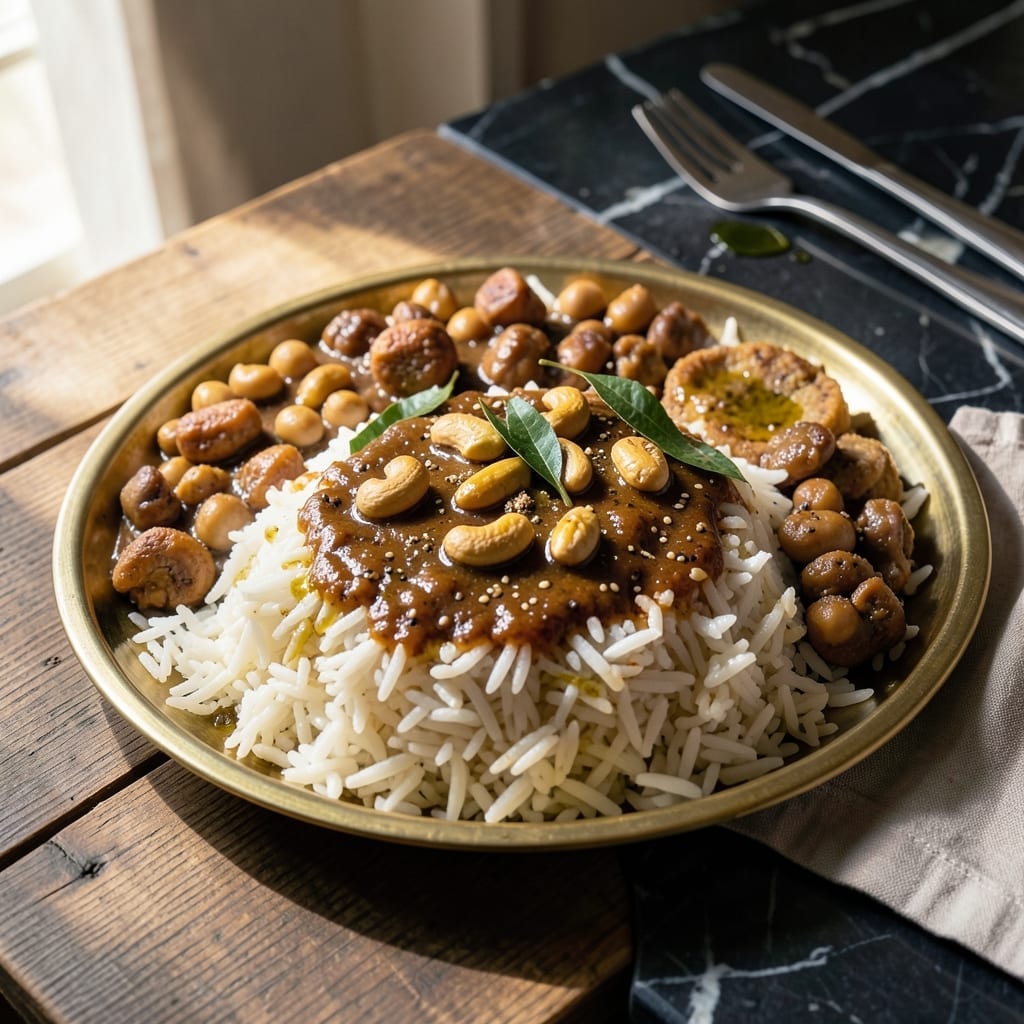
This South Indian classic transforms humble rice into a vibrant, tangy feast that’s impossible to resist. The secret lies in balancing tamarind’s sharpness with warming spices and the crunch of roasted nuts.
I’ve refined this method over years to ensure the rice stays separate and fragrant, with every grain coated in the bold puliyogare paste. The aroma alone will have your kitchen smelling like a Bangalore street food stall.
What you’ll get is a dish that’s bold, aromatic, and perfectly balanced—sour, spicy, and slightly sweet with a satisfying textural contrast. It’s a complete meal in itself, ready in under 45 minutes.
Serve it warm or at room temperature, with crispy papads on the side. This recipe stays true to tradition while keeping it effortless.
Ingredients for Puliyogare Rice
Every grain of rice soaks up tamarind’s tang and spices’ warmth for a bold South Indian dish.
| Ingredient | Amount | Notes |
|---|---|---|
| Raw Rice 🍚 | 2 cups | Short-grain or sona masoori preferred |
| Tamarind 🍋 | 2 tbsp | Pulp or concentrated paste |
| Peanuts 🥜 | ½ cup | Raw, skin-on for texture |
| Cashew Halves 🌰 | ¼ cup | Lightly roasted for crunch |
| Chana Dal 🌾 | 2 tbsp | Split chickpea lentils, rinsed |
| Urad Dal 🌾 | 1 tbsp | Split black gram, rinsed |
| Dried Red Chilies 🌶️ | 4 whole | Adjust for heat preference |
| Mustard Seeds 🌿 | 1 tsp | Black or yellow variety |
| Cumin Seeds 🌿 | 1 tsp | Whole, not ground |
| Turmeric Powder 🌶️ | ½ tsp | For color and earthiness |
| Asafoetida 🌿 | ¼ tsp | Hing, essential for flavor |
| Curry Leaves 🍃 | 8 whole | Fresh or dried, for aroma |
| Green Chilies 🌶️ | 2 whole | Slit lengthwise, seeds removed |
| Ginger 🌿 | 1 whole | 1-inch piece, finely grated |
| Jaggery 🍯 | 1 tbsp | Or brown sugar for sweetness |
| Salt 🧂 | 1 ½ tsp | Adjust to taste |
| Sesame Oil 🫒 | 3 tbsp | For tempering and depth |
The tamarind is non-negotiable—Indian grocery stores carry the concentrated pulp in blocks or jars. Sona masoori rice gives the authentic texture, but short-grain works too. For the dals, look for skinned split varieties in the bulk section. Peanuts and cashews add the crunch, so don’t skip them. Asafoetida (hing) is the secret umami boost, found near the spices at any Patel Brothers or similar.
No tamarind? Lime juice with a touch of jaggery mimics the tangy-sweet balance. Missing curry leaves? A pinch of dried fenugreek leaves adds depth. For heat, swap dried red chilies for fresh green ones or cayenne. The jaggery can be brown sugar or coconut sugar in a pinch. Sesame oil is key, but coconut oil works if that’s what’s in your pantry.
The paste keeps for 1 week refrigerated in an airtight container. Cooked rice stays fresh for 3 days at room temperature or 5 days chilled. Reheat gently with a splash of water to restore moisture.
Why You’ll Love This Recipe
- One Pot Meal: I love that everything—rice, tamarind, peanuts, and dal—cooks together with barely any cleanup.
- Tangy Comfort: The tamarind’s sharpness with the roasted peanuts and cashews hits that sweet-sour spot every time.
- Picnic Ready: I pack this for potlucks, lunchboxes, or sudden guests—it tastes even better at room temperature.
- Budget Stretcher: A handful of rice, some dal, and pantry spices feed my family for days without breaking the bank.
Step-by-Step Instructions for Puliyogare Rice
Master this South Indian classic with balanced flavors and perfect texture every time.
Step 1: Prepare the Rice and Tamarind Mixture
Cook the 2 cups Raw Rice until just tender—each grain should remain separate. While warm, drain and set aside. This prevents the rice from turning mushy when mixed with the tangy sauce later.
Soak the 2 tbsp Tamarind in ½ cup warm water for 10 minutes, then extract the pulp. Strain to remove any fibers, ensuring a smooth consistency for your puliyogare base.
Step 2: Temper the Spices and Nuts
Heat 3 tbsp Sesame Oil in a heavy-bottomed pan over medium heat. Add the 1 tsp Mustard Seeds and wait until they begin to pop—this signals they’re ready. Immediately add the 1 tsp Cumin Seeds, 4 whole Dried Red Chilies, 0.25 tsp Asafoetida, and 8 whole Curry Leaves.
Once the cumin sizzles and the chilies darken slightly, add the 0.5 cup Peanuts and 0.25 cup Cashew Halves. Stir constantly until the peanuts turn light golden brown and the cashews are fragrant. This toasting step builds depth and crunch, so keep the heat steady to avoid burning.
Add the 2 tbsp Chana Dal and 1 tbsp Urad Dal, stirring for 2-3 minutes until the dals turn light pink and release their nutty aroma. The dals should soften slightly but retain a bite.
Step 3: Build the Flavor Base
Reduce heat to low and add the 2 whole Green Chilies (slit lengthwise) and 1 whole Ginger (finely grated). Sauté for 1 minute until the raw smell of ginger dissipates. This step ensures the aromatic compounds bloom without scorching.
Stir in the 0.5 tsp Turmeric Powder, coating all ingredients evenly. The turmeric will deepen in color, signaling it’s fully activated. Add the prepared tamarind pulp, 1 tbsp Jaggery, and 1.5 tsp Salt. Simmer for 5-7 minutes until the mixture thickens into a glossy, tangy sauce.
Step 4: Combine and Finish
Add the cooked rice to the tamarind-spice mixture. Gently fold everything together, ensuring each grain is coated evenly with the sauce. The rice should glisten with a vibrant golden hue from the turmeric and tamarind.
Cook over low heat for an additional 3-4 minutes, stirring occasionally, to allow the flavors to meld. The final dish should have a balanced tang from the tamarind, a hint of sweetness from the jaggery, and a satisfying crunch from the peanuts and cashews.
Pro Tips For Making Puliyogare Rice
- Toast the Peanuts First: I learned this the hard way—if you add peanuts and chana dal at the same time, the peanuts burn while the dal stays raw. Give the peanuts a 2-minute head start on medium heat before adding the dal.
- Soak the Tamarind: My grandmother swore by this, and she was right: soak the tamarind in warm water for at least 20 minutes to extract all the pulp easily, saving you from a watery or weak puliyogare.
- Use Aged Rice: Sounds weird, but it works: old rice (at least 6 months) holds its shape better and soaks up the tamarind flavor without turning mushy—fresh rice just doesn’t cut it.
- Skip the Wet Tamarind: After burning three batches, I finally figured out that adding tamarind pulp directly can make the rice sticky. Squeeze the pulp through a strainer and use only the juice for even coating.
Make-Ahead Tips for This Dish
Prep the Paste
Make the puliyogare paste up to 3 days ahead and store it in an airtight container in the fridge. This lets the flavors meld beautifully—I always notice a richer taste after resting. 💡
Cook Rice Early
Cook and cool the 2 cups Raw Rice up to a day before serving. Spread it on a tray to cool completely, then refrigerate. Cold rice absorbs the tangy sauce better without turning mushy.
Portion for Later
Divide the cooled rice into single-serving portions in airtight containers. This makes reheating quicker and more even. I use glass containers to avoid any plastic odors.
Freeze for Longer
Both the paste and cooked rice freeze well for up to 3 months. Thaw overnight in the fridge before combining. Freeze them separately to maintain texture.
Reheat Gently
Warm the rice and paste together in a pan over low heat with a splash of water. Stir occasionally for 5-7 minutes to restore moisture and prevent sticking.
Room Temperature Serving
Puliyogare tastes great at room temperature, making it perfect for picnics or lunchboxes. Just bring it to room temp before packing to preserve freshness.
Nutrition Facts
Frequently Asked Questions
Can I use leftover rice for this?
Yes! Day-old rice works perfectly since it’s less sticky. Spread it out to cool completely before using to prevent mushiness.
How do I adjust the tanginess?
Add more tamarind pulp for extra sourness or a pinch of jaggery to balance acidity. Taste as you go.
Can I skip the nuts?
Not recommended—they add essential crunch. If allergic, try roasted sunflower seeds as a substitute.
Why does my rice turn mushy?
Overcooking rice or mixing while hot causes this. Use separate, cooled grains and fold gently.

- Jollof Rice Sauce Recipe: West African Tomato and Spice Infusion - September 25, 2026
- Japanese Rice Soup Recipe: Umami-Rich Comfort in a Bowl - September 25, 2026
- Homemade Cream Of Rice Recipe: Silk-Smooth Breakfast in Minutes - September 25, 2026