
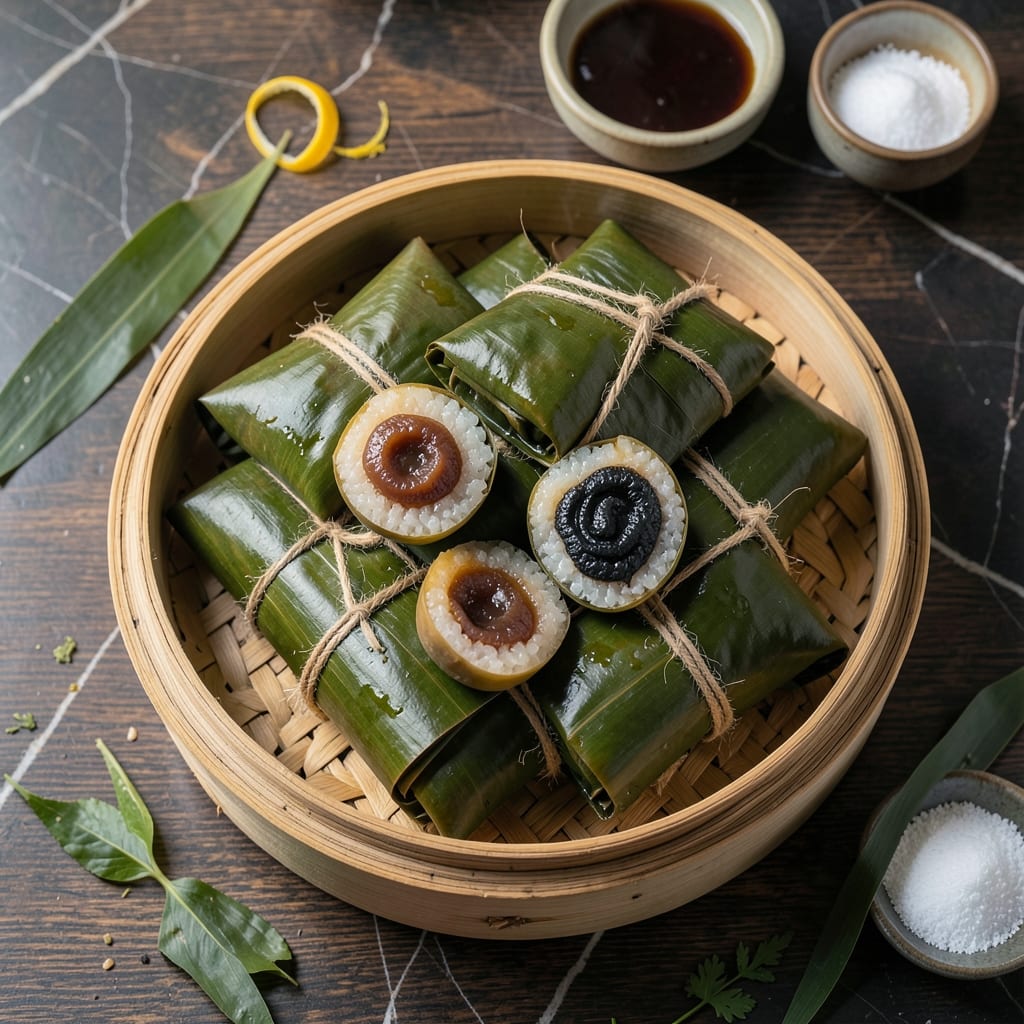
This traditional recipe transforms simple glutinous rice into sticky, fragrant dumplings that define festive celebrations. The process honors time-tested techniques while keeping preparation accessible for home cooks.
What sets this dish apart is the balance of textures: the rice becomes tender yet holds its shape, while the fillings add bursts of flavor. I’ve refined the wrapping method to ensure each dumpling looks as impressive as it tastes.
You’ll achieve perfectly cooked dumplings with a soft, slightly chewy exterior and a savory or sweet center. The aroma alone signals a special occasion.
Serve warm for the best experience, whether as a main dish or part of a larger spread.
Ingredients for Recipe for Chinese Rice Dumplings
Traditional glutinous rice flour and fragrant fillings create these festive sticky dumplings for celebrations.
| Ingredient | Amount | Notes |
|---|---|---|
| Glutinous Rice Flour 🌾 | 2 cups | Also called sweet rice flour |
| Warm Water 💧 | 1 ¼ cups | Divided for dough and filling |
| Red Bean Paste 🫘 | 1 cup | Sweet filling, store-bought or homemade |
| Black Sesame Paste ⚫ | ½ cup | For alternative filling option |
| Granulated Sugar 🍚 | ¼ cup | Adjust to taste for sweetness |
| Bamboo Leaves 🌿 | 12 pieces | For wrapping, soaked overnight |
| Cooking Twine 🧵 | 1 piece | For securing dumplings |
| Salt 🧂 | ½ tsp | For balancing sweetness |
| Vegetable Oil 🫒 | 1 tbsp | For greasing bamboo leaves |
| Lotus Leaves 🌸 | 4 pieces | Optional for lining steamer |
| Dried Shiitake Mushrooms 🍄 | ½ cup | Rehydrated and diced for savory filling |
| Scallions 🧅 | 2 whole | Thinly sliced for garnish |
The glutinous rice flour is non-negotiable—bob’s Red Mill is reliable, but Asian markets often carry it in bulk for better pricing. Look for vibrant white color and fine texture. Bamboo leaves are essential for authentic wrapping; find them at 99 Ranch Market or online. Soak them overnight in warm water to soften without cracking.
No red bean paste? Sweetened mung bean paste works beautifully. For savory dumplings, diced tofu with mushrooms mimics the texture. Black sesame paste can be swapped for peanut butter in a pinch (add a touch of sugar). The dough should be soft but not sticky—adjust water by 1 tbsp increments as needed.
Uncooked dumplings freeze well for up to 3 months—wrap tightly in plastic. Cooked dumplings keep 2 days refrigerated but are best served fresh. Reheat by steaming for 10 minutes until warmed through (don’t microwave—the texture suffers).
Why You’ll Love This Recipe
- Minimal Ingredients: I just need glutinous rice flour, warm water, and my choice of sweet fillings like red bean or black sesame paste.
- Sweet Satisfaction: That first bite of soft, chewy rice with the rich paste center? Honestly, it’s my idea of dessert heaven.
- Festival Ready: I make these for Lunar New Year, but they’re just as good for a regular Sunday craving.
- Budget Stretcher: A small bag of rice flour makes dozens, and the fillings go a long way. Between us, it’s my wallet’s favorite treat.
Step-by-Step Instructions for Chinese Rice Dumplings
Master the technique and produce perfectly textured dumplings with authentic flavor and presentation.
Step 1: Prepare the Bamboo Leaves and Fillings
Begin by soaking the 12 pieces bamboo leaves in warm water for 2 hours to soften them. Drain and pat dry with a clean towel, then lightly brush each leaf with the 1 tbsp vegetable oil to prevent sticking. This preparation ensures the leaves fold without cracking during assembly.
For the fillings, rehydrate the 0.5 cup dried shiitake mushrooms in warm water for 20 minutes, then dice finely. Mix the 1 cup red bean paste or 0.5 cup black sesame paste with the 0.25 cup granulated sugar and 0.5 tsp salt to taste, adjusting sweetness as desired. The filling should be thick but pliable for easy wrapping.
Step 2: Create the Glutinous Rice Dough
In a large bowl, gradually mix the 1.25 cups warm water into the 2 cups glutinous rice flour using your hands or a wooden spoon. The dough will initially appear crumbly, but continue working it until it forms a smooth, elastic ball that doesn’t stick to your fingers.
If the dough feels too dry, add warm water 1 teaspoon at a time; if too sticky, incorporate a bit more glutinous rice flour. Cover the bowl with a damp towel and let the dough rest for 30 minutes. This resting period allows the flour to fully hydrate, resulting in a more workable texture for shaping.
Divide the dough into 12 equal portions (about golf ball-sized) and roll each into a smooth ball. Keep unused dough covered with the damp towel to prevent drying out.
Step 3: Assemble the Dumplings
Place 1 tbsp of your chosen filling in the center of a bamboo leaf. Flatten a dough ball into a thin circle (about 4 inches in diameter) and place it over the filling. Gently press the dough around the filling, then fold the bamboo leaf to enclose the dumpling completely.
Secure the package with the 1 piece cooking twine, tying it tightly to maintain the shape during steaming. The leaf should completely encase the dumpling with no gaps. For added aroma, line your steamer with the 4 pieces lotus leaves before arranging the dumplings.
Step 4: Steam to Perfection
Arrange the dumplings in a single layer in your prepared steamer, leaving 1 inch of space between each to allow for expansion. Bring 2 inches of water to a rolling boil in the base of your steamer, then place the dumplings inside.
Cover tightly and steam over medium-high heat for 45-50 minutes. Check the water level periodically, adding more boiling water as needed to maintain consistent steam. The dumplings are done when the dough becomes translucent and the filling is heated through—test one by carefully unwrapping and checking the center.
Step 5: Serve and Garnish
Carefully remove the dumplings from the steamer using tongs. Let them cool for 5 minutes before serving—the filling will be extremely hot. Unwrap the bamboo leaves just before eating to reveal the glossy, slightly sticky dumplings.
Garnish with the 2 whole scallions, thinly sliced, for a fresh contrast to the sweet or savory fillings. Serve immediately while warm, as the texture is best fresh from the steamer. The dumplings should have a soft, chewy exterior with a rich, flavorful center.
Pro Tips For Making Recipe For Chinese Rice Dumplings
- Knead Hot: Use water just under boiling—around 190°F—to mix with the glutinous rice flour. I learned this the hard way: lukewarm water makes the dough gummy and hard to work with.
- Chill Before Wrapping: After kneading, let the dough rest in the fridge for 20-30 minutes. This makes it less sticky and easier to shape around the red bean or sesame paste fillings.
- Seal Tightly: Press the edges of the dumpling firmly to avoid cracks during boiling. A tiny gap can let water seep in and turn your fillings into a mushy mess.
- Boil Gently: Keep the water at a steady simmer, not a rolling boil, to prevent the dumplings from bursting. After they float, give them another 3 minutes to guarantee they’re fully cooked.
Troubleshooting recipe for chinese rice dumplings
Dough Too Sticky
If your dough sticks to your hands, you’ve likely added too much water. Add 1-2 tbsp glutinous rice flour at a time until it reaches a smooth, workable consistency. I find kneading for an extra 3-5 minutes often resolves the issue without adding more flour. 💡
Leaves Cracking
Bamboo leaves that crack during wrapping weren’t soaked long enough. Soak them for at least 2 hours in warm water, or overnight for older leaves. Pat them dry thoroughly before using, as excess moisture causes steaming issues.
Dumplings Falling Apart
This usually means the dough was too dry or not rested enough. Let it rest for the full 30 minutes after mixing. When wrapping, ensure the dough completely encases the filling with no gaps in the bamboo leaf.
Undercooked Centers
If the dough is still opaque inside after 45-50 minutes, your steamer may not have enough water. Maintain 2 inches of boiling water and check levels every 15 minutes. A tight lid is crucial for proper steam circulation. 🔥
Filling Leaking
Overfilling is the main culprit. Use exactly 1 tbsp of filling per dumpling and ensure it’s thick enough to hold its shape. Chill your filling for 20 minutes before assembling if it’s too runny.
Sticking to Steamer
Line your steamer with lotus leaves or parchment paper with holes poked in it. Brush the dumplings lightly with oil before steaming. Leave 1 inch between each to prevent them from fusing together during cooking.
Nutrition Facts
Frequently Asked Questions
What can I use instead of bamboo leaves?
If unavailable, use parchment paper or banana leaves as substitutes. Parchment won’t add aroma but works for steaming. Banana leaves provide a similar earthy flavor and are often sold frozen at Asian markets.
How do I store leftover dumplings?
Unwrapped dumplings keep in the fridge for 2 days in an airtight container. For longer storage, freeze for up to 3 months. Reheat by steaming for 10 minutes until warm.
Can I make these without a steamer?
Yes! Use a large pot with a heatproof rack or inverted bowl to lift dumplings above 2 inches of boiling water. Cover tightly with a lid to trap steam for 45-50 minutes.
Why did my dumplings turn out dense?
Dense texture usually means over-kneading the dough or using too much flour. Mix just until smooth, then rest for 30 minutes before shaping. Avoid compacting the rice when wrapping.

- Jollof Rice Sauce Recipe: West African Tomato and Spice Infusion - September 25, 2026
- Japanese Rice Soup Recipe: Umami-Rich Comfort in a Bowl - September 25, 2026
- Homemade Cream Of Rice Recipe: Silk-Smooth Breakfast in Minutes - September 25, 2026