
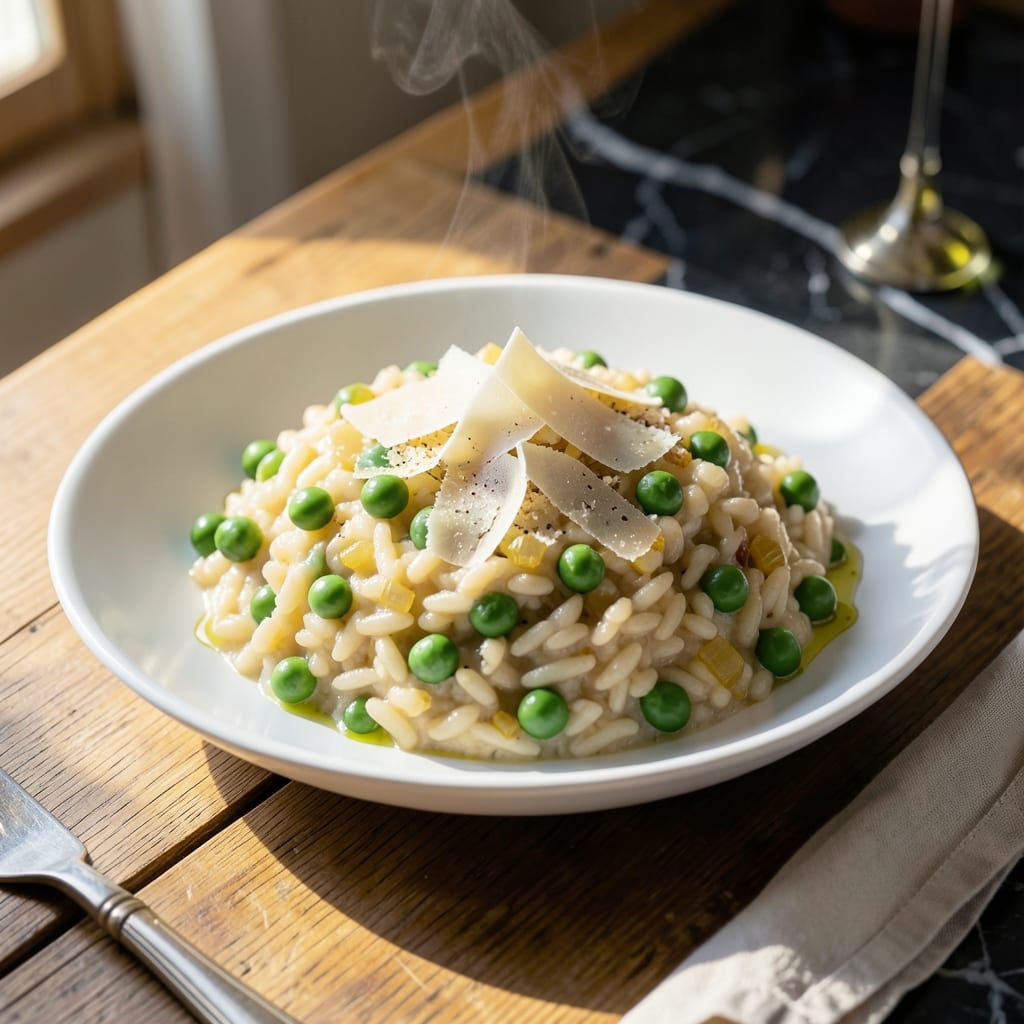
This Venetian classic transforms simple ingredients into a creamy, comforting dish that’s pure Italian soul food. I’ve refined this recipe to capture the traditional technique while keeping it accessible for home cooks.
The secret lies in slowly cooking the rice in broth until it reaches that signature creamy consistency. Fresh peas and parmesan add sweetness and depth, creating a balanced, satisfying meal.
What you’ll get is a bowl of rice so rich and velvety it feels indulgent, yet it’s made with humble ingredients. The peas bring a pop of color and freshness, while the parmesan lends a salty, nutty finish.
Perfect for a cozy weeknight dinner or a taste of Venice at home. Here’s how to make it.
Ingredients for Rice a Riso
Arborio rice, fresh peas, and parmesan create this Venetian classic with humble ingredients.
| Ingredient | Amount | Notes |
|---|---|---|
| Arborio Rice 🌾 | 1 ½ cups | Short-grain for creaminess |
| Fresh Green Peas 🌱 | 1 cup | Shelled, or frozen thawed |
| Parmesan Cheese 🧀 | ¾ cup | Freshly grated from wedge |
| Unsalted Butter 🧈 | 3 tbsp | Divided for cooking and finishing |
| Yellow Onion 🧅 | 1 whole | Finely diced for base |
| Vegetable Broth 💧 | 6 cups | Low-sodium preferred for control |
| Dry White Wine 🍷 | ½ cup | Crisp variety like Pinot Grigio |
| Garlic Cloves 🧄 | 2 cloves | Minced for aroma |
| Kosher Salt 🧂 | 1 tsp | Diamond Crystal preferred |
| Freshly Ground Black Pepper 🌶️ | ½ tsp | Adjust to taste |
| Extra-Virgin Olive Oil 🫒 | 1 tbsp | For sautéing onion |
| Fresh Flat-Leaf Parsley 🌿 | 2 tbsp | Chopped for garnish |
The rice is non-negotiable—Arborio or Carnaroli are the only varieties that release starch properly for that signature creaminess. Look for Italian-grown if available at Eataly or specialty grocers. The Parmesan must be Parmigiano-Reggiano; pre-grated versions contain anti-caking agents that ruin the texture. Fresh peas from the farmers market are ideal, but high-quality frozen work perfectly fine (just avoid canned).
No white wine? Substitute with additional warm broth plus 1 tbsp lemon juice for acidity. Vegetable broth can be swapped for chicken broth if dietary restrictions allow. Pecorino Romano offers a sharper alternative to Parmesan. For a richer dish, add 1 tbsp heavy cream at the end (though traditional versions omit this). The onion can be shallots for a milder flavor profile.
Leftover risotto stiffens as it cools—stir in 2-3 tbsp warm broth when reheating to restore creaminess. Stores 3-4 days refrigerated, but best consumed immediately. The butter can be softened in advance, though cold butter actually helps create a creamier emulsion when stirred in at the end.
Why You’ll Love This Recipe
- One Pot Wonder: I just sauté the onion, toast the Arborio rice, then let it simmer—minimal effort, maximum payoff.
- Rich and Creamy: The butter and Parmesan melt into the rice, creating that luxurious texture with every bite.
- Feeds a Crowd: Honestly, it’s my go-to for family dinners or when friends drop by unannounced.
- Budget Stretch: Between us, Arborio rice and peas are affordable, and a little Parmesan goes a long way.
Step-by-Step Instructions for Venetian-Style Creamy Rice With Peas and Parmesan
Master the technique for perfectly creamy risotto with this traditional Venetian approach.
Step 1: Sauté the Aromatic Base
Heat the 1 tbsp extra-virgin olive oil and 2 tbsp unsalted butter in a wide, heavy-bottomed pan over medium heat. Add the finely diced yellow onion and cook for 5-7 minutes until translucent and just beginning to soften.
Stir in the 2 minced garlic cloves and cook for an additional 30 seconds until fragrant but not browned. This base builds the flavor foundation for your risotto. Season with the 1 tsp kosher salt and 0.5 tsp freshly ground black pepper at this stage to layer the seasoning throughout.
Step 2: Toast the Rice and Deglaze
Add the 1.5 cups Arborio rice to the pan and stir to coat each grain with the fat. Toast for 2-3 minutes until the edges of the rice become slightly translucent and the grains make a gentle clicking sound against the pan.
Pour in the 0.5 cup dry white wine and stir constantly until fully absorbed. The wine should sizzle as it hits the hot pan and nearly evaporate completely before you add the next liquid. This step removes any raw starch flavor from the rice.
Step 3: Gradually Add Broth for Creamy Texture
Begin adding the 6 cups vegetable broth, 1 cup at a time, stirring frequently. Wait until each addition is almost fully absorbed before adding the next. This gradual addition is crucial for developing the rice’s natural creaminess.
After about 15 minutes, stir in the 1 cup fresh green peas. The rice should be al dente with a slight resistance in the center. Continue adding broth and stirring until the rice reaches your desired creaminess—typically 18-20 minutes total cooking time.
Step 4: Finish with Butter and Cheese
Once the rice is tender with a creamy consistency, remove the pan from heat. Stir in the remaining 1 tbsp unsalted butter and the 0.75 cup Parmesan cheese. The residual heat will melt these final additions into the risotto.
The mixture should be glossy and flow slightly when you tilt the pan. If it’s too thick, stir in a splash of warm broth to achieve the perfect creamy texture. Taste and adjust seasoning if needed, though the Parmesan will add significant saltiness.
Step 5: Rest and Garnish for Service
Let the risotto rest for 2 minutes off the heat. This brief pause allows the grains to settle and the flavors to meld. The texture should be luxurious and flowing, not stiff or dry.
Garnish with the 2 tbsp chopped fresh flat-leaf parsley just before serving. Each portion should have a beautiful sheen and maintain its shape briefly before spreading slightly on the plate. Serve immediately while at its creamiest consistency.
Pro Tips For Making Rice A Riso
- Toast the Rice First: Cook the Arborio in butter with the onion for 2-3 minutes before adding liquid—this builds a nutty base that carries the whole dish.
- Use Warm Broth: I learned this the hard way: cold broth shocks the rice and slows cooking. Keep it simmering in a pot next to the stove.
- Skip Rinsing Rice: The starch on Arborio is what makes risotto creamy, so resist the urge to rinse it off like regular rice.
- Finish with Cold Butter: Stir in a pat of cold butter at the end—it melts slowly and gives the risotto a silky finish that hot butter can’t.
Serving Suggestions for This Recipe
Plating Presentation
Serve this dish in shallow bowls to showcase its creamy texture. Use a ladle to portion the risotto, then gently shake the bowl to help it settle into a slight dome shape. This presentation highlights the luxurious consistency we worked so hard to achieve.
Garnish Ideas
A sprinkle of extra Parmesan cheese on top adds visual appeal and reinforces the flavor. I also love adding a few fresh pea shoots or microgreens for a pop of color. A drizzle of good olive oil right before serving enhances the sheen. 💛
Bread Pairing
Offer crusty Italian bread on the side to soak up every last bit of the creamy sauce. Ciabatta works particularly well because its open crumb structure absorbs the risotto beautifully. Warm the bread briefly before serving for maximum enjoyment.
Protein Addition
For a heartier meal, top with grilled shrimp or seared scallops. The seafood pairs perfectly with the Venetian flavors. I often add 4-6 shrimp per serving for a complete, elegant dinner.
Vegetable Sides
A simple arugula salad with lemon vinaigrette provides a peppery contrast. Toss 2 cups baby arugula with 1 tbsp olive oil and ½ tbsp lemon juice. The acidity cuts through the richness beautifully.
Wine Pairing
Serve with a crisp Venetian white wine like Soave or Pinot Grigio. The wine’s acidity complements the creaminess while its light body won’t overpower the dish. Chill to 45-50°F for optimal enjoyment.
Nutrition Facts
Frequently Asked Questions
What type of rice works best?
Use Arborio or Carnaroli for the creamiest texture. These short-grain varieties release starch naturally during cooking. Avoid long-grain rice as it won’t achieve the signature consistency.
Can I use frozen peas instead of fresh?
Yes, high-quality frozen peas work perfectly. Thaw them first and add at the same time as fresh. Avoid canned peas as they can become mushy and lack vibrant flavor.
Why does my risotto turn out mushy?
Over-stirring or adding too much broth too quickly can break the rice grains. Stir just enough to prevent sticking and add broth 1 cup at a time, waiting for absorption.
Can I make this ahead of time?
Risotto is best served immediately, but leftovers can be stored for 3-4 days. Reheat with 2-3 tbsp warm broth and stir vigorously to restore creaminess.

- Jollof Rice Sauce Recipe: West African Tomato and Spice Infusion - September 25, 2026
- Japanese Rice Soup Recipe: Umami-Rich Comfort in a Bowl - September 25, 2026
- Homemade Cream Of Rice Recipe: Silk-Smooth Breakfast in Minutes - September 25, 2026