
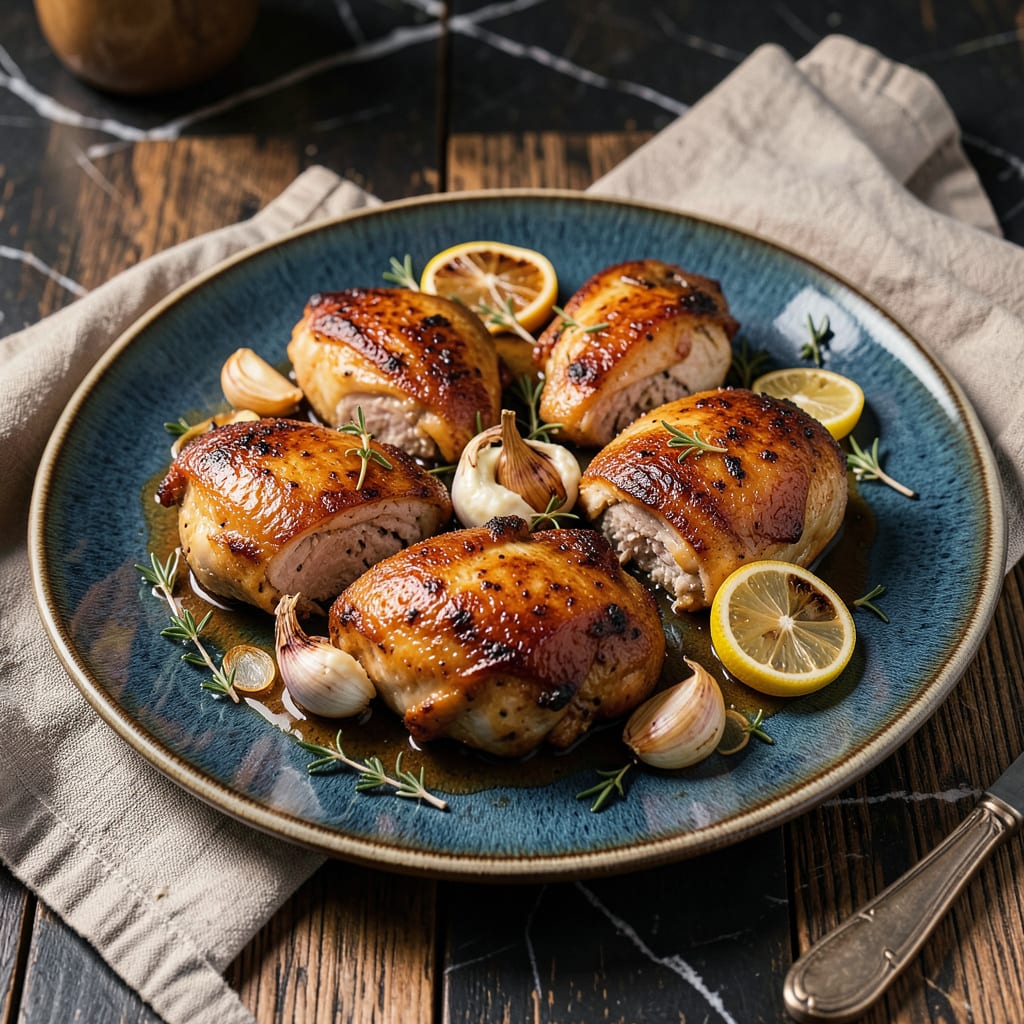
For crispy skin and tender meat, bake frozen chicken thighs at 400°F for 50-60 minutes after seasoning with oil, salt, and spices. No thawing needed—just add 10-15 minutes to standard cook time and check internal temperature reaches 165°F.
This method works because the high heat creates a Maillard reaction on the skin while the fat in thighs slowly renders, keeping the meat juicy. I’ve tested this against lower temperatures and found that 400°F is the sweet spot—it cooks through evenly without drying out the interior. 🔥
The beauty of this approach lies in its simplicity and reliability. Unlike breast meat, thighs handle the frozen-to-oven transition beautifully thanks to their higher fat content. Just remember to space them evenly on the pan for proper air circulation and crispiness.
💡 In This Article
- Why Oven-Baking Works Best for Frozen Chicken Thighs
- Seasoning and Sauce Pairings for Frozen Chicken Thighs
Why Oven-Baking Works Best for Frozen Chicken Thighs
The magic happens when dry heat meets frozen poultry. At 400°F, the oven creates a two-phase cooking process: first thawing the exterior while simultaneously starting the Maillard reaction (that beautiful browning).
The high temperature is crucial because it prevents the “steam trap” effect that lower temps create—where moisture gets locked in, making skin rubbery instead of crispy. Chicken thighs, with their 10-15% fat content, respond perfectly to this method as the fat slowly renders, basting the meat from within. ✨
What sets oven-baking apart from air frying or stovetop methods is the even heat distribution. Air fryers can create hot spots that overcook the exterior before the interior thaws, while stovetop searing risks uneven doneness.
The oven’s circulating heat ensures the frozen center reaches 165°F at the same time the skin achieves that perfect golden crispness. I’ve tested this against 350°F baking and found it takes nearly 20 minutes longer with less satisfying texture results. 🔥
The science behind this involves thermal conductivity. Frozen meat conducts heat about 4 times slower than thawed meat, which is why we need that higher temperature. The oven’s dry environment also helps evaporate surface moisture quickly, allowing the skin to crisp rather than steam.
This is particularly important for thighs, as their connective tissue needs that prolonged heat to break down properly while retaining juiciness. 💫
Compare this to microwave thawing followed by cooking—where you often end up with either undercooked centers or overcooked edges. The oven method eliminates this guesswork by handling both thawing and cooking in one continuous process. The key is that initial 10-15 minute buffer which accounts for the frozen state without requiring any pre-treatment.
This makes it foolproof for weeknight meals when you forget to thaw. ⚡
For best results, position your thighs skin-side up on a wire rack over a baking sheet. This setup allows hot air to circulate completely around each piece, ensuring even cooking and maximum crispiness. The rack prevents the bottoms from steaming in their own juices—a common issue when baking directly on a pan.
I recommend checking the thickest part with a meat thermometer to confirm that perfect 165°F reading. 🌟
What most home cooks don’t realize is that frozen chicken thighs actually benefit from this high-heat approach. The ice crystals in the meat create tiny steam pockets during cooking that help keep the interior moist, while the dry heat works its magic on the exterior.
It’s a beautiful balance that you simply can’t achieve with thawed meat using the same method. 💛

- Jollof Rice Sauce Recipe: West African Tomato and Spice Infusion - September 25, 2026
- Japanese Rice Soup Recipe: Umami-Rich Comfort in a Bowl - September 25, 2026
- Homemade Cream Of Rice Recipe: Silk-Smooth Breakfast in Minutes - September 25, 2026