
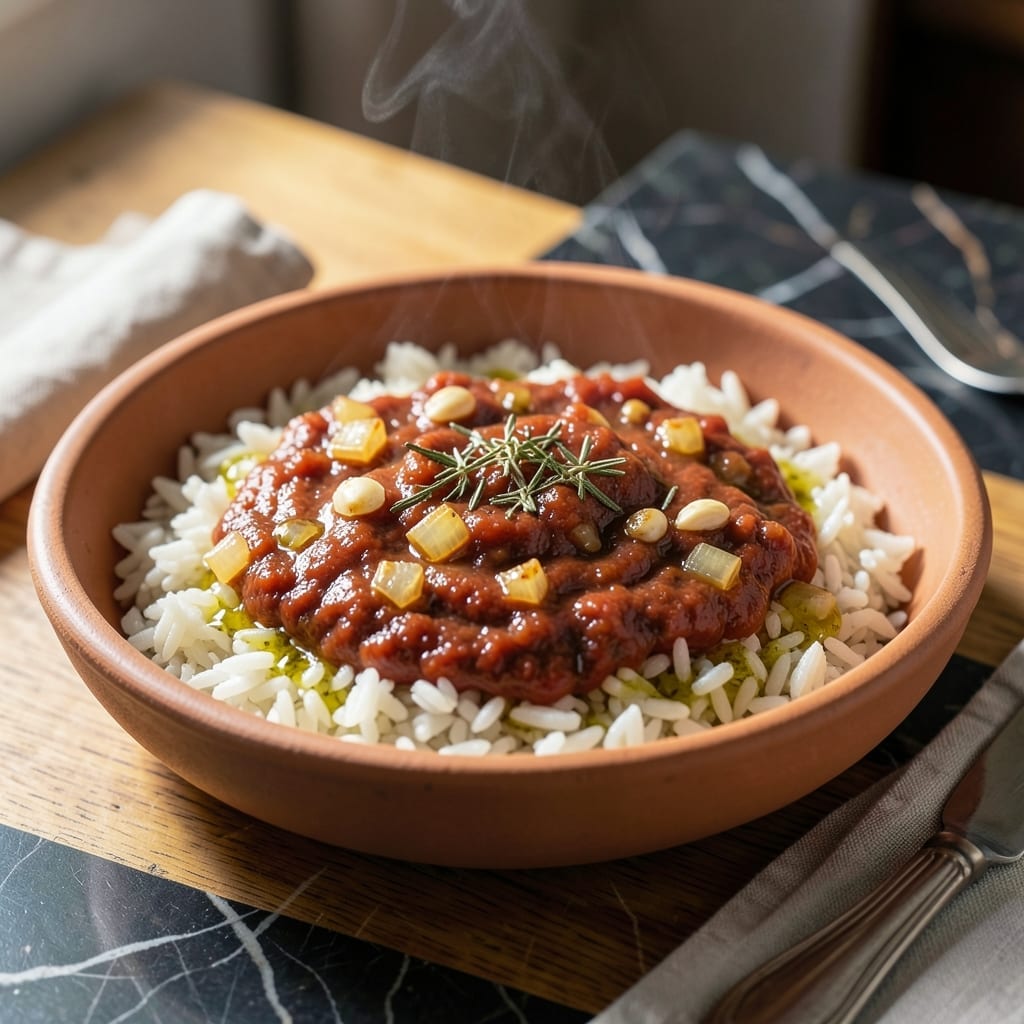
This versatile tomato-based sauce brings Italian flair to both rice and pasta with minimal effort. I developed this recipe to solve the age-old dilemma of needing one sauce that works for multiple meals without compromising flavor.
The secret lies in balancing acidity and sweetness while building depth through slow simmering. With just 30 minutes of cooking time, you create a rich, restaurant-quality base that adapts to any dish.
Use it as a foundation for baked pasta dishes or as a topping for rice bowls. The sauce freezes beautifully, making it perfect for meal prep.
Make a big batch and keep it on hand for quick, flavorful meals any day of the week.
Ingredients for Rice and Pasta Sauce
Ten simple ingredients transform into a rich, adaptable tomato sauce for any meal.
| Ingredient | Amount | Notes |
|---|---|---|
| Canned Crushed Tomatoes 🍅 | 28 oz | San Marzano preferred for sweetness |
| Tomato Paste 🍅 | 2 tbsp | Double-concentrated for depth |
| Extra-Virgin Olive Oil 🫒 | ¼ cup | High-quality, fruity notes preferred |
| Yellow Onion 🧅 | 1 whole | Finely diced for even cooking |
| Garlic Cloves 🧄 | 4 cloves | Minced for aromatic base |
| Dried Oregano 🌿 | 1 tsp | Mediterranean variety preferred |
| Dried Basil 🍃 | 1 tsp | Rubbed between fingers to release oils |
| Red Pepper Flakes 🌶️ | ½ tsp | Adjust for heat preference |
| Granulated Sugar 🍚 | 1 tsp | Balances acidity in tomatoes |
| Kosher Salt 🧂 | 1 ½ tsp | Diamond Crystal preferred for consistency |
| Freshly Ground Black Pepper 🌶️ | ½ tsp | Course grind for texture |
The tomatoes are everything here. San Marzano cans from Trader Joe’s or Whole Foods give that sweet, low-acid base you want. I always grab the 28-ounce cans—bigger than you need, but leftovers freeze perfectly. The olive oil should be something you’d drizzle on bread (I keep a bottle of California Olive Ranch just for cooking). Onion and garlic are non-negotiable for that aromatic foundation.
No crushed tomatoes? Whole peeled tomatoes work—just crush them by hand. Out of oregano? Thyme at half the amount gets you close. Want more depth? Add a pinch of smoked paprika. The sugar balances acidity, but if your tomatoes are already sweet, skip it. For a richer sauce, a splash of red wine deglazes the pan beautifully (use whatever’s open).
Sauce keeps 5 days in the fridge, but honestly tastes better after 24 hours as flavors meld. Freeze in 1-cup portions for up to 3 months. Pro tip: spread in a thin layer in a freezer bag for easy breaking (just snap off what you need).
Why You’ll Love This Recipe
- No-Fuss Cooking: I just dump the crushed tomatoes, paste, and sautéed onion and garlic in one pot—no fancy steps.
- Rich Tomato Depth: That combo of crushed tomatoes and paste gives it a thick, velvety texture with bold flavor.
- Pairs With Everything: I serve it over rice one night and toss it with pasta the next—endless options.
- Budget Staple: Honestly, canned tomatoes and pantry basics make this my cheapest, most reliable go-to.
Step-by-Step Instructions for Rice and Pasta Sauce
This method builds deep flavor layers while keeping the process simple and foolproof.
Step 1: Sauté the Aromatic Base
Heat the 0.25 cup extra-virgin olive oil in a heavy saucepan over medium-low heat. Add the finely diced yellow onion and cook for 8-10 minutes until translucent and sweet, stirring occasionally.
Here’s the thing—rushing this step creates raw onion flavor in your final sauce. I like to keep the heat gentle to coax out the natural sugars. When the onion starts to stick slightly to the pan, add a pinch of the 1.5 tsp kosher salt to help break it down faster.
Step 2: Build Depth with Garlic and Tomato Paste
Add the minced 4 cloves garlic cloves and cook for 1 minute until fragrant but not browned. Stir constantly—garlic burns easily and turns bitter. Then add the 2 tbsp tomato paste and cook for another 2 minutes.
This step is crucial for developing the sauce’s rich umami foundation. The tomato paste should darken slightly and start to stick to the bottom of the pan, creating a fond that will dissolve into your sauce. Watch for the color to deepen to a rusty red—this visual cue tells you it’s ready.
Step 3: Simmer the Tomatoes with Seasonings
Pour in the 28 oz canned crushed tomatoes, then add the 1 tsp dried oregano, 1 tsp dried basil, 0.5 tsp red pepper flakes, 1 tsp granulated sugar, remaining kosher salt, and 0.5 tsp freshly ground black pepper.
Stir well to combine, then reduce heat to low and let it simmer uncovered for 20-25 minutes. You’ll know it’s ready when the sauce thickens slightly and the oil starts to separate at the edges. I always rub the dried herbs between my fingers before adding them to release their essential oils.
Step 4: Adjust Consistency and Finish
After simmering, taste and adjust seasoning if needed. The granulated sugar should have balanced the tomatoes’ natural acidity. If the sauce seems too thick, stir in a splash of water. If too thin, let it reduce for another 5 minutes.
Give it a final stir and remove from heat. The sauce should coat the back of a spoon but still be fluid enough to pour easily. Real talk: this sauce improves with time, so if you can let it sit for 10-15 minutes before using, the flavors will meld even more beautifully.
Pro Tips For Making Rice And Pasta Sauce
- Sauté Onions Slowly: Cook the yellow onions over medium-low heat for at least 8-10 minutes until soft and translucent—I learned this the hard way when my sauce tasted harsh from rushed onions.
- Bloom the Tomato Paste: After adding the tomato paste, let it cook for 2-3 minutes in the olive oil until it darkens slightly and smells rich, or it’ll taste raw in the finished sauce.
- Skip the Watery Tomatoes: Drain excess liquid from the canned crushed tomatoes before adding them, or your sauce will take forever to thicken and taste diluted.
- Add Garlic Last: Stir in the minced garlic only after the onions are soft and tomato paste is bloomed—about 30 seconds before adding tomatoes—or it’ll burn and turn bitter.
Best Sauces and Condiments for These Flavors
Classic Pairings
For pasta, toss this sauce with 12 oz penne or spaghetti and finish with fresh Parmigiano-Reggiano and basil. The sauce clings perfectly to ridged shapes. I always reserve ½ cup pasta water to adjust consistency as needed. 🍝
Rice Bowl Toppings
Drizzle over steamed jasmine rice and top with grilled chicken, roasted veggies, or a fried egg. The sauce’s acidity cuts through rich proteins beautifully. A sprinkle of Pecorino Romano adds a salty finish.
Dipping Sauce
Serve warm in small bowls for garlic bread or mozzarella sticks. Thin with 2 tbsp water if needed for easier dipping. I love this with Trader Joe’s garlic spread on crusty bread.
Casserole Base
Use as the foundation for baked ziti or lasagna layers. Mix with ricotta cheese and shredded mozzarella before baking. The sauce’s thickness prevents a watery final dish.
Soup Enhancer
Stir 1 cup into 4 cups vegetable broth for instant minestrone. Add 1 can white beans and 1 cup ditalini pasta for a complete meal. The sauce provides depth without overpowering. 💡
Meatball Subs
Simmer 12 meatballs in 2 cups sauce for 15 minutes, then pile onto toasted rolls. Top with provolone cheese and broil until melted. This creates the perfect sandwich filling.
Nutrition Facts
Frequently Asked Questions
Can I use fresh tomatoes instead of canned?
Yes, but use 3 lbs of ripe tomatoes, peeled and crushed. Simmer for 30-40 minutes to cook down properly. Canned tomatoes are preferred for consistent flavor year-round.
How do I make it less acidic?
Add up to 1 additional tsp sugar or a pinch of baking soda. A splash of cream also balances acidity while adding richness. Taste as you go.
What if my sauce is too thin?
Simmer uncovered for 5-10 more minutes to reduce. Alternatively, mix 1 tsp cornstarch with water and stir in, cooking for 2 minutes.
Can I add protein to the sauce?
Brown 1 lb ground beef or Italian sausage first, then drain before adding tomatoes. For seafood, stir in cooked shrimp during the last 5 minutes of simmering.

- Rice Pudding Recipe With Eggs and Milk: Old-Fashioned Custard-Style Comfort - September 30, 2026
- Rice Noodle Sauce Recipe: Bold Umami Depth for Authentic Stir-Fry - September 30, 2026
- Rice Pilaf Recipe: Fragrant Basmati With Toasted Vermicelli - September 30, 2026