
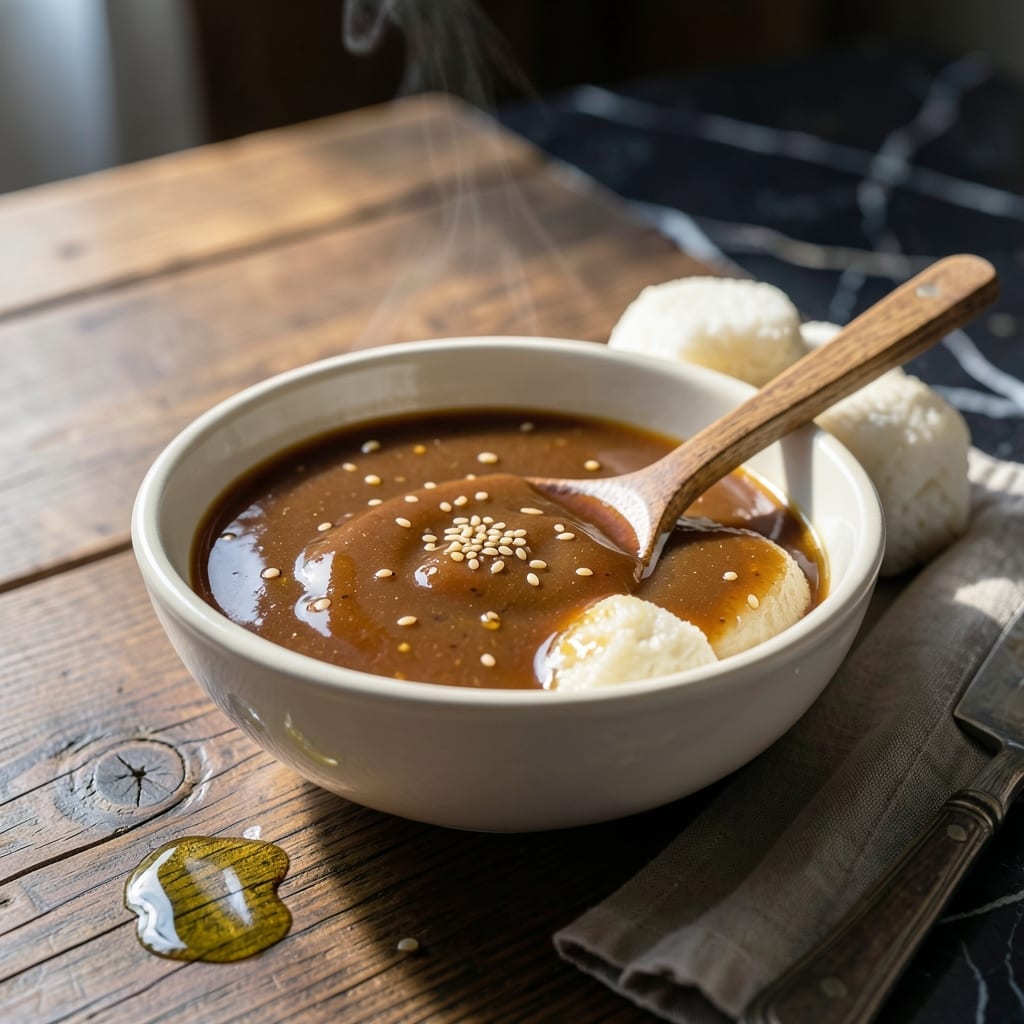
This sauce transforms plain rice cakes into a flavorful experience without overwhelming heat. I developed this recipe to capture the rich, umami depth of Korean flavors while keeping it approachable for all palates.
The foundation is a balanced blend of soy sauce, garlic, and sesame oil, creating a savory base that enhances without spice. A touch of sweetness from sugar or honey rounds out the profile, making it versatile for various dishes.
What you get is a smooth, glossy sauce that clings beautifully to rice cakes, adding layers of flavor with every bite. It’s perfect for those who prefer milder tastes but still want authentic Korean-inspired richness.
Store in an airtight container for up to a week, and use it to elevate rice cakes, noodles, or grilled meats.
Ingredients for Rice Cake Sauce Recipe Not Spicy
Nine simple ingredients create this smooth, savory Korean-inspired sauce with no spicy kick.
| Ingredient | Amount | Notes |
|---|---|---|
| Soy Sauce 🫒 | ½ cup | Low-sodium or regular variety |
| Garlic Cloves 🧄 | 4 cloves | Minced finely for smooth texture |
| Sesame Oil 🫒 | 2 tbsp | Toasted for rich aroma |
| Brown Sugar 🍚 | 2 tbsp | Maple syrup for vegan option |
| Rice Vinegar 🫒 | 1 tbsp | Adds subtle tanginess |
| Gochujang 🌶️ | ½ tbsp | Mild, skip for zero heat |
| Toasted Sesame Seeds 🌰 | 1 tbsp | For garnish and crunch |
| Green Onions 🧅 | 2 whole | Thinly sliced for freshness |
| Water 💧 | ¼ cup | Adjust for desired consistency |
Soy sauce is the backbone here. Kikkoman is my go-to, but any brand works as long as it’s not the super cheap stuff. The garlic should be fresh—pre-minced in jars lacks that bright, sharp bite. For sesame oil, Kadoya or Ottogi are reliable (found at most Asian markets or the international aisle). Look for pure toasted sesame oil, not the blended stuff.
No brown sugar? Coconut sugar or agave work just fine. Gochujang adds depth without heat, but skip it entirely if you want zero warmth. Rice vinegar can be swapped with apple cider vinegar if that’s what you’ve got. The sesame seeds and green onions are garnishes, so feel free to omit if you’re in a rush (but they add a nice touch).
This keeps beautifully in the fridge for up to 1 week in an airtight container. The flavors actually deepen after a day, so make it ahead if you can. Freezing isn’t ideal—it separates and loses that glossy texture.
Why You’ll Love This Recipe
- 5-Minute Mix: I just dump the soy sauce, garlic, sesame oil, brown sugar, and rice vinegar in a bowl and stir—no cooking required.
- Sweet-Savory Balance: The brown sugar caramelizes with the soy sauce while the garlic and sesame oil add depth without any heat.
- Pairs With Anything: I drizzle it over rice cakes for a snack, use it as a marinade for tofu, or toss it with veggies for a quick side.
- Keeps for Days: Honestly, it tastes even better the next day, and I can store it in the fridge for up to a week.
Step-by-Step Instructions for Rice Cake Sauce
Here’s how I make this mild, savory sauce that coats rice cakes perfectly every time.
Step 1: Sauté Garlic in Sesame Oil
Heat a small saucepan over medium-low heat. Add the 2 tbsp Sesame Oil and let it warm for 30 seconds until it becomes fragrant but doesn’t smoke. The oil should shimmer slightly when it’s ready.
Add the 4 cloves Garlic Cloves and sauté for 1-2 minutes, stirring constantly, until they turn light golden at the edges. Don’t let them brown too much—burnt garlic turns bitter and ruins the sauce. You’ll smell the aroma intensify as the garlic cooks, which tells you it’s working.
Step 2: Build the Sauce Base
Pour in the 0.5 cup Soy Sauce, 2 tbsp Brown Sugar, 1 tbsp Rice Vinegar, and 0.5 tbsp Gochujang. Stir well to combine. The mixture will bubble slightly as it heats through.
Let this simmer for 2-3 minutes until the brown sugar fully dissolves and the sauce takes on a glossy sheen. The gochujang adds depth without heat in this small amount, while the vinegar balances the sweetness. Keep the heat at a gentle simmer—you don’t want a rolling boil that might cause the sauce to separate.
Step 3: Thin and Finish the Sauce
Stir in the 0.25 cup Water and let the sauce cook for another 2 minutes. This thins it to the perfect consistency for coating rice cakes. The sauce should be thick enough to cling to a spoon but still pourable.
Taste and adjust the balance if needed. If it’s too salty, a splash more water helps. If it’s too sweet, a few drops of rice vinegar brightens it up. The flavor should be well-rounded with no single note dominating.
Step 4: Add Aromatics and Serve
Remove the sauce from heat and stir in the 2 whole Green Onions (thinly sliced). The residual heat will soften them slightly while keeping their fresh crunch. This adds a pop of color and a mild oniony brightness.
Sprinkle the 1 tbsp Toasted Sesame Seeds over the top and give it one final stir. These add a nutty aroma and a subtle texture contrast. Let the sauce cool for 5 minutes before using—it should be warm but not piping hot when tossed with rice cakes.
Pro Tips For Making Rice Cake Sauce Recipe Not Spicy
- Bloom the Garlic: Cook the minced garlic in sesame oil over low heat for 30 seconds until just fragrant—I learned this the hard way after burning three batches. It removes the raw bite without adding spice.
- Balance the Sweetness: Use 1 tablespoon of brown sugar per 2 tablespoons of soy sauce to offset saltiness. After skipping this once, my sauce tasted flat and one-dimensional.
- Avoid Over-Reducing: Simmer the sauce for only 2-3 minutes after combining ingredients. Resist the urge to thicken it too much, or it’ll turn into a sticky glue instead of a glossy drizzle.
- Finish with Vinegar: Stir in the rice vinegar at the very end, off the heat. My grandmother swore by this, and she was right—it keeps the acidity bright and fresh.
Common Mistakes When Making Perfect Results
Overcooking Garlic
Burnt garlic is the fastest way to ruin this sauce. When sautéing the 4 cloves Garlic Cloves in 2 tbsp Sesame Oil, keep the heat at medium-low and stir constantly. The moment it turns golden, remove it from heat—it continues cooking from residual warmth. 🌡️
Skipping the Simmer
Rushing the 2-3 minutes of simmering means the 2 tbsp Brown Sugar won’t fully dissolve, leaving a grainy texture. Patience here ensures a smooth, glossy finish that coats rice cakes perfectly.
Using the Wrong Vinegar
Substituting balsamic or white vinegar for 1 tbsp Rice Vinegar will throw off the balance. Rice vinegar’s mild tang complements the soy without overpowering. Stick to the recipe for that authentic mild Korean flavor.
Ignoring Consistency
Too thick? Add more 0.25 cup Water. Too thin? Let it reduce further. The sauce should cling to a spoon but still drizzle easily. I check this by dipping a spoon in—if it coats the back smoothly, it’s ready.
Adding Gochujang Late
Wait to add 0.5 tbsp Gochujang until the sauce base is built. Adding it too early can cause separation or clumping. Stir it in with the soy sauce and sugar for even distribution and depth without heat. 💡
Forgetting to Taste
Always taste before finishing. If it’s too salty, add a splash of water. If it’s too sweet, balance with a few drops of Rice Vinegar. This sauce should be harmonious, not one-note.
Nutrition Facts
Frequently Asked Questions
Can I make this sauce ahead of time?
In fact, the flavors deepen after 24 hours in the fridge. Store in an airtight container for up to 1 week.
What can I use instead of brown sugar?
Honey, maple syrup, or coconut sugar work perfectly. Use the same 2 tbsp measurement for any substitute.
How do I fix if the sauce is too salty?
Balance it with a splash of water or a pinch more sugar. Taste as you adjust to avoid over-diluting.
Can I skip the gochujang entirely?
Yes! Omit the 0.5 tbsp completely for zero heat. The sauce will still be flavorful and savory.

- Rice Pudding Recipe With Eggs and Milk: Old-Fashioned Custard-Style Comfort - September 30, 2026
- Rice Noodle Sauce Recipe: Bold Umami Depth for Authentic Stir-Fry - September 30, 2026
- Rice Pilaf Recipe: Fragrant Basmati With Toasted Vermicelli - September 30, 2026