
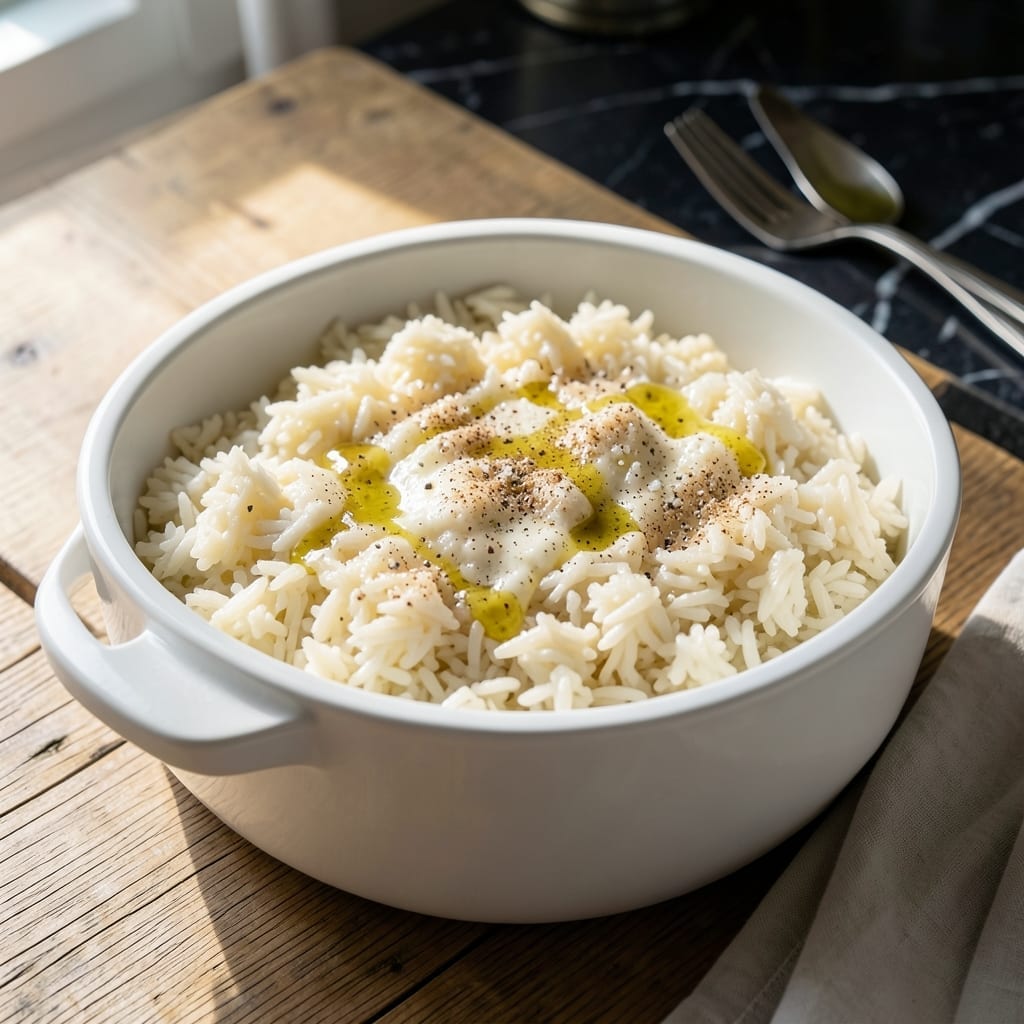
Achieving perfectly fluffy rice without watching the pot is easier than you think. This method delivers consistent results every time with minimal effort and maximum hands-off convenience.
The secret lies in the right ratio of liquid to rice and precise timing. No stirring, no monitoring—just set it and forget it. The slow cooker does all the work while you focus on other tasks.
What emerges is rice with distinct, separate grains that are tender yet firm. Each bite maintains its texture without turning mushy or dry. It’s the ideal base for any meal.
Whether serving as a side or the foundation for stir-fries or casseroles, this technique ensures perfect rice with no fuss. Let’s get started.
Ingredients for Rice Crockpot
Minimal ingredients, maximum flavor. Perfect rice with hands-off ease.
| Ingredient | Amount | Notes |
|---|---|---|
| Long-Grain White Rice 🍚 | 2 cups | Rinsed until water runs clear |
| Water 💧 | 4 cups | Or substitute with broth |
| Unsalted Butter 🧈 | 2 tbsp | Melted for richness |
| Kosher Salt 🧂 | 1 tsp | Diamond Crystal preferred |
| Garlic Powder 🧄 | ½ tsp | Optional for depth |
| Onion Powder 🧅 | ½ tsp | Balances flavor profile |
| Bay Leaf 🌿 | 1 whole | For aromatic infusion |
| Fresh Parsley 🌿 | 2 tbsp | Chopped, for garnish |
| Lemon Juice 🍋 | 1 tsp | Brightens final dish |
| Black Pepper 🌶️ | ¼ tsp | Freshly ground preferred |
The rice quality matters here. Long-grain white rice like Basmati or Jasmine delivers the distinct, separate grains promised. Avoid instant rice—it turns mushy in the slow cooker. Rinsing is non-negotiable; it removes excess starch that would make the rice gummy. For the liquid, filtered water prevents any off flavors, but low-sodium chicken broth adds depth if you have it.
No butter? Olive oil or coconut oil work in a pinch but lack the richness. Out of fresh parsley? Dried parsley at half the amount or skip it entirely—the texture won’t suffer. Bay leaf is subtle but recommended; if unavailable, a pinch of dried thyme offers a similar aromatic note. The garlic and onion powders are optional but elevate the flavor significantly.
Cooked rice holds in the slow cooker’s warm setting for up to 2 hours. Store leftovers in an airtight container in the fridge for 4-5 days, or freeze for up to 3 months. Reheat with a splash of water to restore moisture.
Why You’ll Love This Recipe
- Set-It Forget-It: I dump everything in before work and come home to fluffy rice—no stirring, no watching the pot.
- Buttery Garlic Magic: The butter and garlic powder turn plain rice into something rich and aromatic, with zero extra effort.
- Meal Prep MVP: I make a big batch on Sunday and it pairs with everything from grilled chicken to stir-fried veggies all week.
- Pocketbook Pleaser: Long-grain white rice and pantry staples keep this dish ridiculously cheap, even when feeding a crowd.
Step-by-Step Instructions for Crockpot Rice
This method delivers perfectly fluffy grains without constant supervision or stirring.
Step 1: Prepare and Rinse the Rice
Place the 2 cups Long-Grain White Rice in a fine-mesh strainer and rinse under cold running water until the water runs completely clear. This step removes excess starch, which prevents the grains from clumping together during the slow cooking process.
Shake the strainer gently to remove any lingering water droplets. Proper rinsing ensures each grain cooks evenly and results in that desirable light, separate texture. I find this preliminary step is what separates mediocre rice from exceptional.
Step 2: Combine Ingredients in the Crockpot
Transfer the rinsed rice to your crockpot insert. Add the 4 cups Water, 2 tbsp Unsalted Butter, 1 tsp Kosher Salt, 0.5 tsp Garlic Powder, 0.5 tsp Onion Powder, and 1 whole Bay Leaf. Stir gently to distribute the seasonings evenly throughout the liquid.
The butter should be fully melted before adding—this ensures it disperses properly rather than forming clumps. The bay leaf infuses a subtle aromatic depth, while the powders create a balanced savory foundation without overpowering the dish.
Step 3: Cook on High Until Tender
Cover the crockpot and cook on high heat for 2 to 2.5 hours. The rice is done when all the liquid has been absorbed and the grains are tender with no chalky center. Resist the urge to lift the lid during cooking—releasing steam extends the cooking time and can result in uneven doneness.
You’ll know it’s approaching completion when you see steam escaping from the edges of the lid and the aroma shifts from starchy to rich and fragrant. The surface should appear dry with small steam vents where the grains have absorbed all moisture.
Step 4: Rest and Fluff
Once the cooking time is complete, turn off the crockpot and let the rice rest, covered, for 10 minutes. This allows the grains to steam in their own residual heat, achieving maximum fluffiness. The rest period also lets the bay leaf continue its aromatic infusion without overcooking the rice.
After resting, remove the bay leaf and gently fluff the rice with a fork. The grains should separate easily, with a light, airy texture. This is when you’ll see the results of your patience—each grain distinct yet perfectly cooked.
Step 5: Finish and Serve
Stir in the 1 tsp Lemon Juice and 0.25 tsp Black Pepper to brighten the flavors. The acidity from the lemon cuts through the richness of the butter, creating a balanced finish. Taste and adjust seasoning if needed, though the initial measurements should provide perfect balance.
Sprinkle with the 2 tbsp Fresh Parsley just before serving. The parsley adds a fresh, herbal note that complements the savory depth of the rice. Serve immediately while hot and fluffy, as the texture is best straight from the crockpot.
Pro Tips For Making Rice Crockpot
- Rinse the Rice: I learned this the hard way—skipping the rinse leaves your rice gummy. A quick 30-second wash under cold water removes excess starch and guarantees fluffier grains.
- Use the Right Ratio: For long-grain white rice in a crockpot, stick to 1.5 cups water per 1 cup rice. Any more and you’ll end up with mushy porridge instead of tender grains.
- Don’t Lift the Lid: Steer clear of peeking during cooking—every time you lift the lid, you add 10-15 minutes to the cook time and risk uneven doneness.
- Add Butter Last: Sounds weird, but it works: stir in the unsalted butter after cooking instead of before. This keeps the rice from turning greasy and lets the garlic powder shine.
Dietary Considerations for This rice crockpot
Gluten-Free Friendly
This dish is naturally gluten-free since rice contains no gluten proteins. Just ensure your broth (if using) is certified gluten-free, as some brands add wheat-based thickeners. I always check labels for hidden sources. 💛
Vegan Adaptation
Swap the 2 tbsp Unsalted Butter for 2 tbsp olive oil or vegan butter. The texture remains identical, and you’ll still get that rich mouthfeel. Vegetable broth instead of water adds extra depth to plant-based versions.
Low-Sodium Option
Reduce Kosher Salt to ½ tsp or omit entirely if using low-sodium broth. The garlic and onion powders still provide plenty of flavor without excess salt. Taste before adding extra seasoning at the end.
Dairy-Free Version
Replace Unsalted Butter with 2 tbsp coconut oil for a dairy-free take. The subtle coconut aroma pairs well with long-grain rice. Avocado oil works too for a neutral taste.
Diabetic Considerations
For lower glycemic impact, use brown rice instead of white, but note it requires 4-5 hours on high. The fiber slows sugar absorption. Portion control is key—stick to ½ cup cooked rice per serving.
Allergy Notes
This recipe is free from nuts, soy, and eggs. The only potential allergen is dairy from butter, which is easily substituted. Always verify ingredient labels for cross-contamination warnings if allergies are severe.
Nutrition Facts
Frequently Asked Questions
Do I need to rinse the rice first?
Yes, rinsing removes excess starch and prevents clumping. Use a fine-mesh strainer and cold water until it runs clear.
Can I use brown rice instead?
Yes, but increase cook time to 4-5 hours on high. Brown rice needs more time to soften fully in the slow cooker.
What if my rice turns out mushy?
Overcooking or too much liquid causes this. Stick to the 1:2 rice-to-water ratio and avoid lifting the lid during cooking.
Can I keep it warm after cooking?
Yes, switch to the warm setting for up to 2 hours. Add a splash of water if it starts to dry out.

- Jollof Rice Sauce Recipe: West African Tomato and Spice Infusion - September 25, 2026
- Japanese Rice Soup Recipe: Umami-Rich Comfort in a Bowl - September 25, 2026
- Homemade Cream Of Rice Recipe: Silk-Smooth Breakfast in Minutes - September 25, 2026