
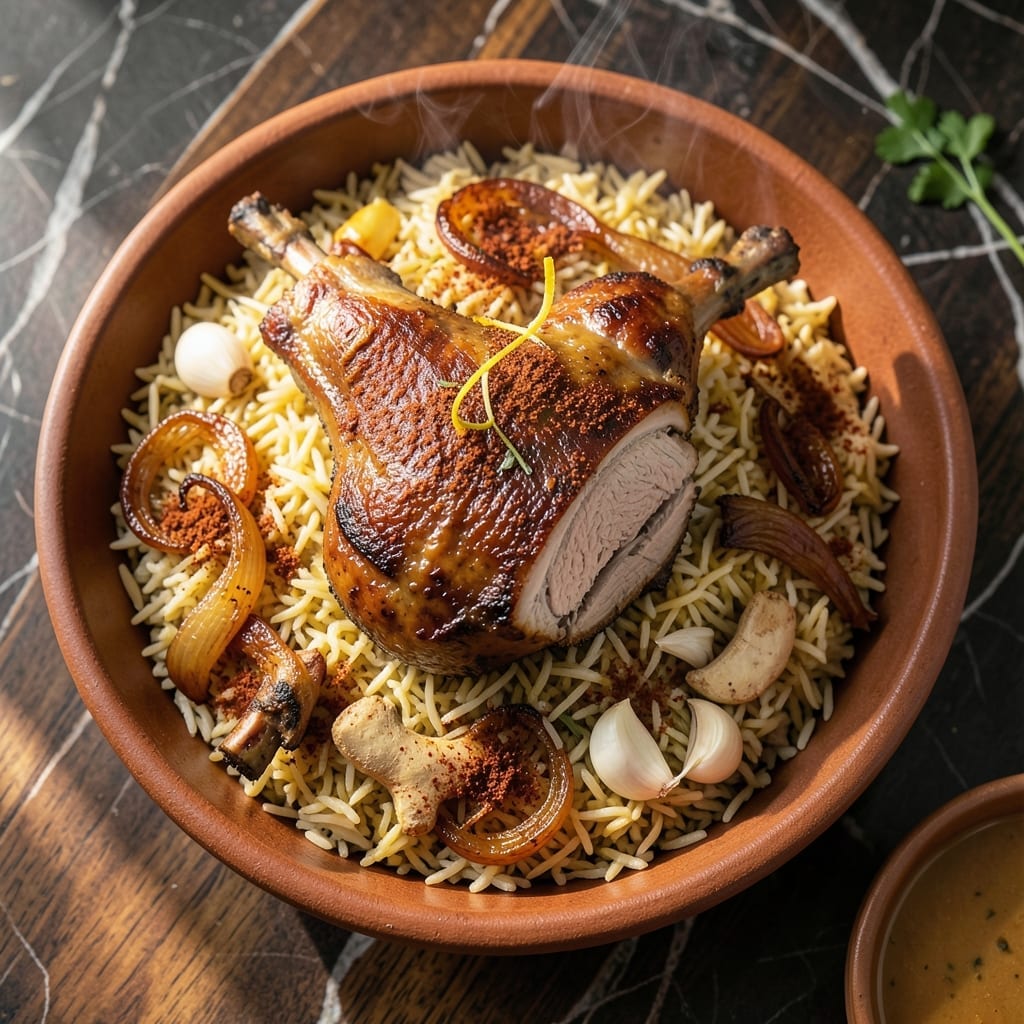
This Yemen-inspired mandi delivers perfectly spiced rice with fall-off-the-bone meat every time.
The secret lies in the traditional hawaij spice blend and slow cooking method that infuses every grain with aromatic flavor. The meat becomes tender through a special preparation technique that locks in juices while creating a crust that’s impossible to resist.
What sets this dish apart is the balance of warm spices and the unique cooking process that steams the rice to fluffy perfection. Each bite offers a harmonious blend of textures and flavors that’s both comforting and exotic.
This creation transforms a simple meal into an unforgettable experience. The results speak for themselves.
Ingredients for Mandi Rice
Basmati rice and warm spices create this aromatic Yemeni specialty with tender lamb.
| Ingredient | Amount | Notes |
|---|---|---|
| Basmati Rice 🌾 | 2 cups | Rinsed until water runs clear |
| Lamb Shoulder 🐑 | 2 lb | Bone-in, cut into large pieces |
| Hawaij Spice Blend 🌶️ | 3 tbsp | Traditional Yemeni mix preferred |
| Onions 🧅 | 2 whole | Large, thinly sliced |
| Garlic Cloves 🧄 | 6 cloves | Minced for depth of flavor |
| Ginger Root 🌿 | 1 whole | 2-inch piece, grated |
| Tomato Paste 🍅 | 2 tbsp | Concentrated for richness |
| Vegetable Oil 🫒 | ½ cup | Neutral flavor, high smoke point |
| Chicken Stock 🥣 | 4 cups | Low-sodium preferred |
| Ground Cumin 🌿 | 1 tsp | Freshly ground for best aroma |
| Ground Coriander 🌿 | 1 tsp | Toasted before grinding |
| Ground Cardamom 🌿 | ½ tsp | Freshly ground pods |
| Ground Cinnamon 🌿 | ½ tsp | Ceylon if available |
| Ground Cloves 🌿 | ¼ tsp | Sparingly for warmth |
| Salt 🧂 | 1 ½ tsp | Diamond Crystal kosher preferred |
The lamb shoulder is non-negotiable for authentic texture. Bone-in pieces from a reputable butcher or Middle Eastern market ensure the best results. Look for good marbling—this fat renders down during slow cooking, creating that signature tenderness. Hawaij spice blend can be found at specialty spice shops or online retailers like Kalustyan’s. If unavailable, the individual spices listed here will suffice.
No lamb? Goat shoulder offers similar richness and texture. Vegetable stock can replace chicken stock for a vegetarian version, though the flavor profile will differ. Fresh ginger and garlic are essential—powdered versions lack the depth required. The tomato paste can be substituted with tomato sauce reduced by half, but the concentrated flavor of paste is ideal for this preparation.
Store the hawaij blend in an airtight container away from light for up to 6 months. Cooked mandi keeps well in the refrigerator for 4 days and reheats beautifully. The rice actually improves in texture after a day, as it absorbs the remaining spices and stock.
Why You’ll Love This Recipe
- One Pot Meal: I love tossing everything—the lamb, rice, and hawaij spice—into a single pot and letting the oven do the work.
- Deep, Rich Flavor: The lamb slow-cooks in those warm spices until it’s fall-off-the-bone tender, and the garlic and onions soak into every grain of basmati.
- Feeds a Crowd: I’ve served this at weekend gatherings and weeknight dinners alike—it’s always the first dish to disappear.
- Tastes Better Next Day: Honestly, the leftovers are my favorite part. The flavors meld overnight, so lunch the next day is even more satisfying.
Step-by-Step Instructions for Yemen-Inspired Mandi Rice
Master the technique behind this dish with precise timing and layering for authentic results.
Step 1: Prepare the Lamb with Aromatic Spices
Cut the 2 lb Lamb Shoulder into large, even pieces if not pre-cut. In a large bowl, combine the lamb with 3 tbsp Hawaij Spice Blend, 1 tsp Ground Cumin, 1 tsp Ground Coriander, 0.5 tsp Ground Cardamom, 0.5 tsp Ground Cinnamon, and 0.25 tsp Ground Cloves. Massage the spices into the meat thoroughly, ensuring every piece is evenly coated.
This spice rub infuses the lamb with warm, complex flavors characteristic of Yemeni cuisine. Let it marinate while you prepare the remaining ingredients.
Step 2: Sauté Onions and Build the Base
Heat 0.5 cup Vegetable Oil in a large, heavy pot over medium-high heat. Add the 2 whole Onions, thinly sliced, and sauté for 8-10 minutes until deep golden brown and caramelized. Stir in the 6 cloves Garlic Cloves (minced) and the 1 whole Ginger Root (grated) and cook for 1-2 minutes until fragrant.
Add the spice-coated lamb to the pot and sear for 5-7 minutes, turning occasionally, until the meat browns on all sides. Stir in the 2 tbsp Tomato Paste and cook for 2 minutes to deepen the flavors. This builds a rich foundation for the rice.
Step 3: Simmer the Lamb to Tender Perfection
Pour in the 4 cups Chicken Stock and bring to a boil. Reduce the heat to low, cover, and let the lamb simmer for 1.5-2 hours. The lamb is ready when it’s fork-tender and nearly falling off the bone. Skim off any excess fat that rises to the surface during cooking.
This slow cooking process ensures the meat absorbs all the aromatic spices and becomes melt-in-your-mouth tender, a hallmark of authentic mandi.
Step 4: Cook the Rice in Spiced Broth
While the lamb simmers, rinse the 2 cups Basmati Rice until the water runs clear. Once the lamb is tender, remove the pieces and set aside. Strain the cooking liquid into a clean pot, discarding the onions and solids. Bring the spiced broth to a boil and add the drained rice along with 1.5 tsp Salt.
Return to a boil, then reduce heat to low, cover, and cook for 15-18 minutes until the rice is fluffy and all liquid is absorbed. Resist the urge to stir; this prevents breaking the grains.
Step 5: Layer and Steam for Final Touch
Preheat your oven to 300°F. In a large oven-safe dish, spread half the cooked rice as a base layer. Top with the tender lamb pieces, then cover with the remaining rice. Drizzle any reserved cooking liquid over the top. Cover tightly with foil and bake for 20-25 minutes.
This final steaming step allows the flavors to meld perfectly. Serve the mandi hot, with the lamb nestled in the fragrant, spiced rice. The rice should be light and separate, while the lamb is tender enough to pull apart with a fork.
Pro Tips For Making Mandi Rice
- Soak the Basmati: I learned this the hard way—soak the rice for at least 30 minutes before cooking so the grains stay separate and fluffy. Without this, your mandi rice can turn out gummy and dense.
- Brown the Lamb: Sear the lamb shoulder on high heat until deeply browned on all sides. This builds a rich crust that makes the meat taste way more complex once slow-cooked with the hawaij.
- Don’t Skimp on Hawaij: After burning a batch with weak flavor, I finally realized this spice blend is non-negotiable—use a full tablespoon per pound of lamb, even if it seems like a lot.
- Use Onion Layers: Sounds weird, but it works: place whole onion layers at the bottom of the pot under the lamb while cooking—they’ll steam the meat from below and infuse sweetness into the rice.
Dietary Considerations for mandi rice
Gluten-Free Naturally
This dish is inherently gluten-free as it relies on basmati rice and spices without wheat-based ingredients. The only potential concern is the hawaij blend—verify it’s free from additives or fillers. I always check labels for hidden gluten in spice mixes. 💪
Dairy-Free by Design
Traditional mandi contains no dairy products, making it safe for lactose-intolerant diners. The richness comes from lamb fat and aromatic spices instead of butter or cream. Just ensure your chicken stock is dairy-free—most store-bought versions are.
Nut Allergy Safe
No nuts are used in this preparation, but cross-contamination can occur with hawaij blends. I recommend making your own spice mix at home to eliminate risk. Store-bought blends from Kalustyan’s are processed in nut-free facilities.
Vegetarian Adaptation
Replace lamb with chickpeas or cauliflower for a hearty vegetarian version. Use vegetable stock instead of chicken stock. The same spice rub and cooking method work beautifully, though the texture will differ from traditional mandi.
Low-Sodium Options
Use low-sodium chicken stock and reduce added salt to 1 tsp. The hawaij blend and other spices provide plenty of flavor without excess sodium. I find the dish still tastes rich and satisfying with these adjustments.
Halal Considerations
For halal compliance, ensure your lamb is certified halal. Many Middle Eastern markets carry pre-cut halal lamb shoulder. The cooking method remains identical, preserving the dish’s authentic character. ✨
Nutrition Facts
Frequently Asked Questions
What’s the best rice for this dish?
Use basmati rice for authentic texture and flavor. Rinse it until water runs clear to remove excess starch and prevent clumping.
Can I use chicken instead of lamb?
Yes! Use bone-in chicken thighs and reduce simmering time to 45-60 minutes. The spices work equally well with poultry.
How do I know when the lamb is done?
It should pull apart easily with a fork after 1.5-2 hours of simmering. If it resists, cook for 15-20 minutes longer.
Why is my rice mushy?
Avoid stirring while cooking and use the exact 1:2 rice-to-liquid ratio. Overcooking or peeking too often releases steam, making rice soggy.

- Jollof Rice Sauce Recipe: West African Tomato and Spice Infusion - September 25, 2026
- Japanese Rice Soup Recipe: Umami-Rich Comfort in a Bowl - September 25, 2026
- Homemade Cream Of Rice Recipe: Silk-Smooth Breakfast in Minutes - September 25, 2026