
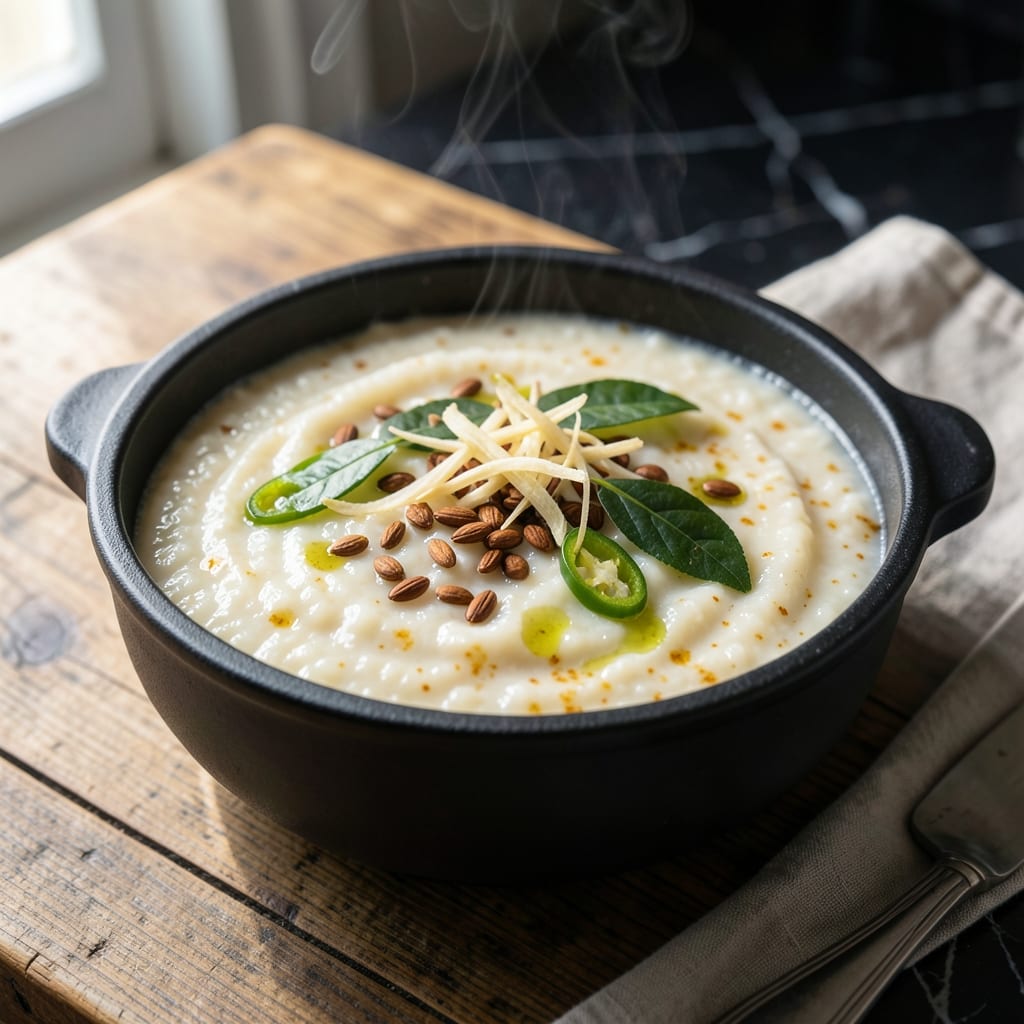
There’s something deeply soothing about a warm bowl of rice kanji, a traditional South Indian dish that transforms simple ingredients into pure comfort. This light yet nourishing porridge has been a staple in my kitchen for its ability to satisfy while being gentle on the stomach.
The beauty lies in its simplicity – rice cooked with just the right amount of water until it reaches a soft, porridge-like consistency. I’ve found that using short-grain rice yields the creamiest texture, while a pinch of cumin seeds adds subtle depth to the flavor.
What emerges is a dish that’s both humble and deeply satisfying, with a smooth texture that’s perfect for any time of day. The rice breaks down just enough to create a creamy base while maintaining some bite, making each spoonful comforting and wholesome.
Serve it hot with a drizzle of ghee or a sprinkle of salt to taste. This recipe delivers on its promise of warmth and nourishment in every bite.
Ingredients for Rice Kanji
Simple, wholesome ingredients transform into a comforting South Indian porridge with ease.
| Ingredient | Amount | Notes |
|---|---|---|
| Short-Grain Rice 🍚 | 1 cup | Rinsed until water runs clear |
| Water 💧 | 6 cups | For porridge consistency |
| Cumin Seeds 🌿 | ½ tsp | Lightly toasted for aroma |
| Salt 🧂 | 1 tsp | Adjust to taste |
| Fresh Ginger 🌱 | 1 piece | 1-inch, grated or minced |
| Green Chili 🌶️ | 1 whole | Slit lengthwise, optional |
| Curry Leaves 🍃 | 8 piece | Fresh, for authentic flavor |
| Asafoetida 🧅 | 0.125 tsp | Hing, for umami depth |
| Fresh Cilantro 🌿 | ¼ cup | Chopped, for garnish |
| Vegan Ghee 🫒 | 1 tbsp | Or coconut oil for drizzling |
| Lemon Juice 🍋 | 1 tsp | Freshly squeezed |
| Turmeric Powder 🌶️ | ¼ tsp | For color and earthiness |
The rice is the foundation here. Short-grain varieties like sona masoori or jasmine break down beautifully into that signature creamy texture. Look for unbroken grains at Indian grocery stores or well-stocked supermarkets. Cumin seeds and curry leaves are non-negotiable for authentic flavor—Patel Brothers or any South Asian market will have them fresh.
No fresh ginger? Ground ginger at one-third the amount works, but fresh is brighter. Skip the green chili if heat isn’t your thing. Asafoetida (hing) is the secret umami booster—substitute with a pinch of garlic powder if unavailable. Vegan ghee can be replaced with coconut oil or neutral oil. Turmeric adds color but isn’t critical.
Rice kanji keeps well in the fridge for 3-4 days. Reheat with a splash of water to loosen. Freezing isn’t ideal—the rice texture changes. Best made fresh, but leftovers still taste great (especially with extra ghee drizzled on top).
Why You’ll Love This Recipe
- One-Pot Wonder: I just toss the rice, water, cumin, and ginger in a pot and let it simmer. No fancy techniques, no stress.
- Warm Spiced Comfort: The cumin and fresh ginger make this simple rice kanji taste ridiculously soothing, like a hug in a bowl. Honestly, it’s my go-to when I need something gentle but flavorful.
- Breakfast or Dinner: This works as a light dinner or a comforting breakfast—yes, even on a Tuesday night. Between us, my kids love it both ways.
- Pennywise Perfection: Short-grain rice and basic pantry staples mean it’s budget-friendly. I’ll be real: it’s saved me more than once when the fridge was nearly empty.
Step-by-Step Instructions for Rice Kanji
Here is the method to achieve a smooth, comforting porridge with authentic South Indian flavors.
Step 1: Prepare and Toast the Spices
Heat a heavy-bottomed pot over medium heat. Add the 0.5 tsp Cumin Seeds and dry toast for 30-45 seconds until they release their aroma and turn slightly darker. Immediately add the 8 piece Curry Leaves, 1 piece Fresh Ginger (grated or minced), and 1 whole Green Chili (slit lengthwise).
Stir for 20-30 seconds until the ginger and curry leaves sizzle and the chili blisters slightly. This step wakes up the spices and builds the flavor base. Add the 0.125 tsp Asafoetida and stir once—it will melt instantly into the warm oil. Be careful not to burn the cumin, as it can turn bitter quickly.
Step 2: Bloom the Turmeric and Cook the Rice
Add the 0.25 tsp Turmeric Powder to the pot and stir for 10 seconds until it coats the spices and releases its earthy fragrance. Immediately pour in the 6 cups Water and add the 1 tsp Salt. Stir to combine, then bring the mixture to a rolling boil over medium-high heat.
Once boiling, add the 1 cup Short-Grain Rice (rinsed until water runs clear). Stir well to distribute the rice evenly and prevent clumping. Reduce the heat to low-medium and let it simmer uncovered for 10 minutes, stirring occasionally to prevent sticking.
Step 3: Simmer to Porridge Consistency
After 10 minutes, the rice will start to soften and the mixture will thicken. Reduce the heat to low and cover the pot with a lid, leaving a small gap for steam to escape. Cook for another 15-20 minutes, stirring every 5 minutes to prevent the rice from settling at the bottom.
The kanji is ready when the rice grains are fully broken down and the mixture reaches a smooth, porridge-like consistency. If it thickens too much before the rice is fully cooked, add ½ cup hot water and stir well. The final texture should be creamy and flowing, not stiff or dry.
Step 4: Finish with Ghee and Fresh Flavors
Remove the pot from heat. Stir in the 1 tbsp Vegan Ghee until it melts completely into the kanji, adding a rich, buttery depth. Taste and adjust the salt if needed—remember, the flavors will concentrate slightly as it cools.
Let the kanji sit covered for 5 minutes to allow the flavors to meld. Just before serving, stir in the 1 tsp Lemon Juice for a bright, tangy finish. Ladle into bowls and garnish each serving with a sprinkle of the 0.25 cup Fresh Cilantro for freshness.
Pro Tips For Making Rice Kanji
- Toast the Cumin: Heat the cumin seeds in a dry pan for 30 seconds until fragrant before adding water—this wakes up their flavor and prevents a raw, bitter taste.
- Rinse the Rice: Wash the short-grain rice under cold water until the water runs clear to remove excess starch, otherwise your kanji will turn gluey.
- Simmer Low and Slow: After the initial boil, drop the heat to the lowest setting and cover tightly—rushing with high heat makes the rice mushy and the ginger flavor uneven.
- Grate the Ginger: Use a fine grater for the fresh ginger so it infuses the broth fully without leaving stringy bits; I learned this the hard way after picking ginger fibers out of my teeth.
Wine and Beer Pairings for This Recipe
Light Beer Pairings
A crisp Indian lager like Kingfisher or Taj Mahal complements the mild spices without overpowering the dish. The light carbonation helps cleanse your palate between spoonfuls. I find the subtle bitterness balances the creamy texture perfectly. 🍺
Wheat Beer Options
A German-style hefeweizen with its banana and clove notes adds interesting contrast to the earthy cumin and turmeric. Weihenstephaner is my go-to choice for its smooth, slightly sweet profile. The cloudy appearance matches the comforting nature of this dish.
White Wine Choices
For wine lovers, an off-dry Riesling from Germany or Washington state works beautifully. The touch of sweetness complements the ginger and green chili, while the acidity cuts through the richness. I like Dr. Loosen Blue Slate for its mineral notes.
Herbal Tea Alternatives
Non-alcoholic options shine too. A hot cup of fennel tea aids digestion and enhances the cumin notes. Mint tea with a squeeze of lemon mirrors the dish’s fresh finish. Both are traditional pairings in South India.
Spiced Chai
For a cozy pairing, serve with masala chai made with cardamom and cinnamon. The warming spices echo those in the kanji while the milk richness complements the porridge. I use Tata Tea Premium leaves for authentic flavor. ✨
Nutrition Facts
Frequently Asked Questions
What’s the best rice for this porridge?
Short-grain rice like sona masoori or jasmine works best. These varieties break down beautifully into a creamy texture. Avoid long-grain rice as it stays firmer and won’t achieve the desired consistency.
Can I make this without cumin seeds?
While cumin adds authentic flavor, you can omit it. Try substituting with a pinch of fennel seeds for a milder taste. The dish will still be delicious but may lack some depth.
How do I store leftovers?
Keep in an airtight container in the fridge for 3-4 days. Reheat with a splash of water to restore the creamy texture. Avoid freezing as it changes the rice consistency.

- Jollof Rice Sauce Recipe: West African Tomato and Spice Infusion - September 25, 2026
- Japanese Rice Soup Recipe: Umami-Rich Comfort in a Bowl - September 25, 2026
- Homemade Cream Of Rice Recipe: Silk-Smooth Breakfast in Minutes - September 25, 2026