
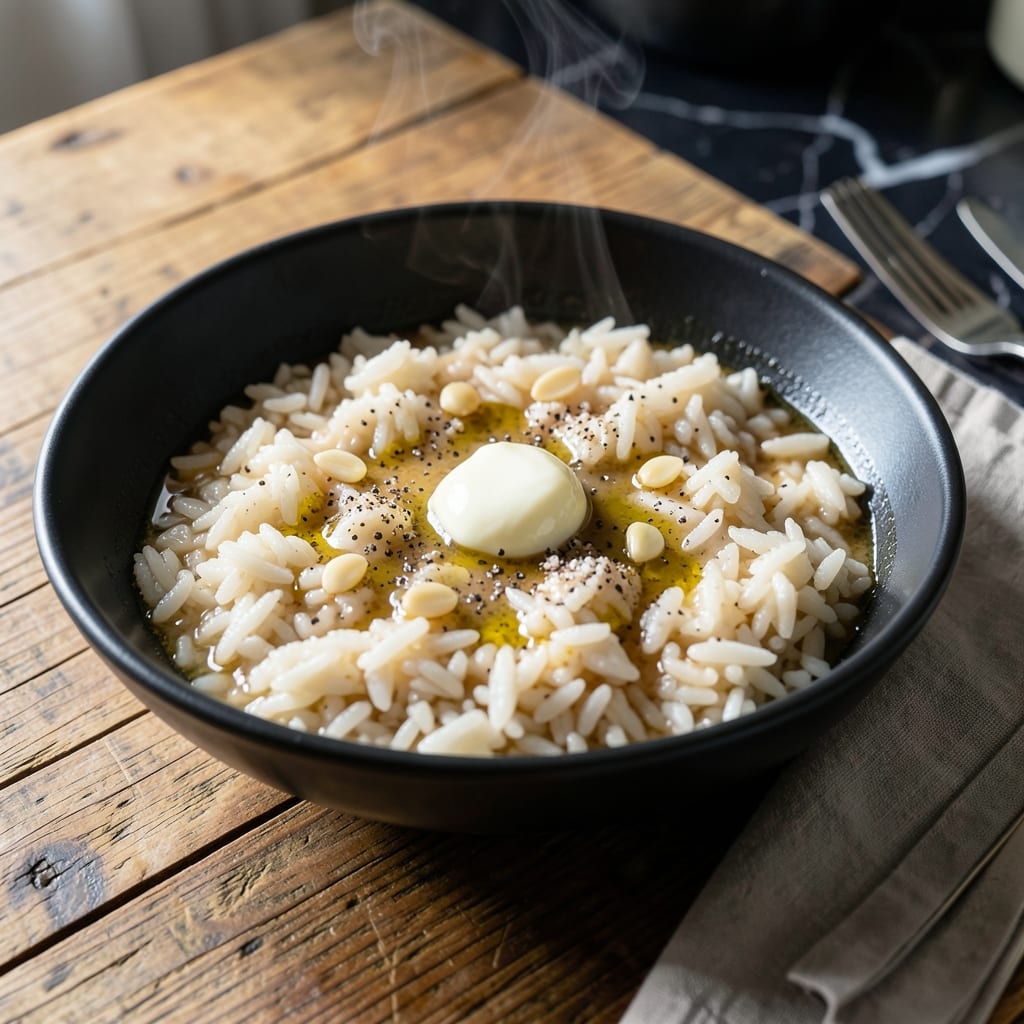
This simple technique transforms basic rice into a dish with restaurant-quality depth and flavor. Using chicken broth instead of water infuses every grain with rich savory notes that plain rice can’t match.
The method is foolproof: just substitute broth for water in your usual rice ratio. I’ve tested this with long-grain, basmati, and jasmine varieties, and each absorbs the broth’s flavor beautifully while maintaining perfect texture.
What you get is fluffy, fragrant rice that stands on its own as a side or base for heartier meals. The broth adds complexity without overwhelming the natural taste of the grain.
For a vegetarian version, simply swap in vegetable broth. The same principle applies with equally delicious results.
Ingredients for Rice Made with Chicken Broth
Nine simple ingredients transform plain rice into something extraordinary with savory depth.
| Ingredient | Amount | Notes |
|---|---|---|
| Long-Grain White Rice 🍚 | 2 cups | Rinsed until water runs clear |
| Low-Sodium Chicken Broth 🍲 | 4 cups | Homemade or quality store-bought |
| Unsalted Butter 🧈 | 2 tbsp | Optional for richness |
| Kosher Salt 🧂 | ½ tsp | Adjust to taste |
| Freshly Ground Black Pepper 🌶️ | ¼ tsp | To taste |
| Garlic Cloves 🧄 | 2 cloves | Minced, optional for extra flavor |
| Yellow Onion 🧅 | ½ whole | Finely diced, optional |
| Bay Leaf 🍃 | 1 whole | Optional for depth |
| Fresh Parsley 🌿 | 2 tbsp | Chopped, for garnish |
| Olive Oil 🫒 | 1 tbsp | For sautéing aromatics |
The broth is everything here. Swanson or Better Than Bouillon are my go-tos from the regular grocery store, but homemade chicken stock takes it to another level. I usually grab low-sodium so I can control the salt. The rice itself? Long-grain stays fluffy, but basmati or jasmine work beautifully too—just stick to the 1:2 rice-to-broth ratio no matter what.
No chicken broth? Vegetable broth works perfectly (as promised in the intro). Short on time? Instant bouillon cubes are a solid backup—just dissolve them in hot water first. The butter is optional but adds a richness that’s hard to beat. If you’re avoiding dairy, olive oil does the trick. Fresh herbs like thyme or rosemary can replace the parsley garnish if that’s what you’ve got.
Leftovers hold up surprisingly well—store in an airtight container for up to 4 days. Reheat with a splash of broth or water to keep it moist. This also freezes beautifully for 3 months, though I’ve never had any last that long (it’s that good).
Why You’ll Love This Recipe
- One Pot Wonder: I dump in the rice, broth, and butter, then let it simmer—no stirring, no fuss.
- Rich in Every Bite: The chicken broth soaks into the rice, giving it a deep, savory flavor that plain water just can’t match.
- Meal Prep MVP: Honestly, this rice pairs with everything—grilled chicken, roasted veggies, or even just a fried egg on top.
- Budget Stretch: A bag of rice and a carton of broth go a long way, and leftovers taste even better the next day.
Step-by-Step Instructions for Rice Made With Chicken Broth
This technique ensures perfectly fluffy grains infused with deep, savory flavor every time.
Step 1: Rinse and Prepare the Rice
Place the 2 cups Long-Grain White Rice in a fine-mesh strainer and rinse under cold water until the water runs completely clear. This removes excess starch and prevents gummy rice. I always use my hand to agitate the grains gently during rinsing.
Drain well and set aside. While the rice drains, finely dice the 0.5 whole Yellow Onion and mince the 2 cloves Garlic Cloves. Having these ready before you start cooking makes the process seamless and prevents burning.
Step 2: Sauté Aromatics for Depth of Flavor
Heat the 1 tbsp Olive Oil in a medium saucepan over medium heat until it shimmers. Add the diced onion and cook for 3-4 minutes until translucent and just beginning to soften. The onion should look glossy, not browned.
Stir in the minced garlic and cook for 30 seconds until fragrant. Add the 1 whole Bay Leaf at this stage to infuse its subtle earthiness into the oil. Be careful not to let the garlic brown—it can turn bitter quickly.
Step 3: Toast the Rice for Nutty Complexity
Add the drained rice to the saucepan and stir to coat the grains in the flavored oil. Cook for 1-2 minutes, stirring constantly, until the rice becomes slightly opaque and gives off a nutty aroma. This toasting step enhances the rice’s natural flavor.
Watch closely—you want the rice to look dry and separate, not clumped together. If it starts to brown, reduce the heat immediately. The goal is to develop flavor, not to cook the rice at this stage.
Step 4: Cook with Chicken Broth for Maximum Flavor
Pour in the 4 cups Low-Sodium Chicken Broth and bring to a boil. Add the 0.5 tsp Kosher Salt and 0.25 tsp Freshly Ground Black Pepper, then stir in the 2 tbsp Unsalted Butter until melted. The butter adds a subtle richness that complements the chicken broth beautifully.
Once boiling, reduce the heat to low, cover the saucepan with a tight-fitting lid, and simmer for 15-18 minutes. Don’t lift the lid during cooking—steam is crucial for even cooking and fluffy texture.
Step 5: Rest and Fluff for Perfect Texture
Remove the saucepan from heat and let the rice rest, covered, for 10 minutes. This allows the grains to absorb any remaining liquid and finish cooking through carryover heat. The rice should be tender with no hard centers.
Discard the bay leaf, then fluff the rice gently with a fork to separate the grains. Sprinkle with the 2 tbsp Fresh Parsley for a bright, fresh finish. Serve immediately while hot and fragrant.
Pro Tips For Making Rice Made With Chicken Broth
- Rinse the Rice: Always rinse your long-grain white rice until the water runs clear—this removes excess starch so your grains stay separate and fluffy, not gummy.
- Use Room-Temp Broth: I learned this the hard way—adding cold chicken broth straight from the fridge slows down cooking and can leave the rice underdone in the center.
- Butter at the End: Stir in the unsalted butter after the rice is cooked, not before, to keep the grains light and prevent a greasy texture.
- Salt the Broth: Since you’re using low-sodium chicken broth, taste and season it with kosher salt before adding the rice—this ensures even flavor throughout.
Essential Equipment for rice made with chicken broth
Quality Saucepan
A heavy-bottomed saucepan with a tight-fitting lid is essential. I use my All-Clad 3-quart with stainless steel interior—it distributes heat evenly and prevents hot spots. The lid must seal tightly to trap steam, which is crucial for fluffy results. 🔥
Fine-Mesh Strainer
Rinsing rice properly requires a fine-mesh strainer. I prefer the OXO Good Grips model because its non-slip handles stay secure while rinsing. This step removes excess starch that can make rice gummy.
Wooden Spoon
A wooden spoon is ideal for stirring rice while toasting. Unlike metal, it won’t scratch your saucepan or damage non-stick surfaces. I keep a 12-inch spoon dedicated to rice dishes for consistent results.
Sharp Chef’s Knife
For dicing onions and mincing garlic, a sharp 8-inch chef’s knife makes prep efficient. I use Wüsthof Pro—its weight and balance help with precision. Dull knives slip more easily, so keep yours properly honed.
Instant-Read Thermometer
While not strictly necessary, I check my broth temperature with a ThermoWorks Thermopop. Broth should be at a full boil (212°F) before adding rice. This ensures proper cooking from the start.
Rice Paddle
For fluffing finished rice, a rice paddle works better than a fork. The flat surface separates grains without crushing them. I use a bamboo paddle that’s gentle on cookware and easy to clean.
Nutrition Facts
Frequently Asked Questions
Can I use bouillon cubes instead of liquid broth?
Yes! Dissolve 4 cubes in 4 cups hot water to replace the liquid broth. This works in a pinch and delivers similar flavor, though liquid broth often has a richer taste.
Why rinse the rice before cooking?
Rinsing removes excess starch that can make the rice gummy or sticky. It ensures each grain stays separate and fluffy after cooking. Always rinse until the water runs clear.
What if my rice turns out undercooked?
If the grains are still firm after 15-18 minutes, add 2-3 tablespoons more broth or water, cover, and cook for another 5 minutes on low heat. Avoid lifting the lid too soon.
Can I make this in a rice cooker?
Use the same 1:2 rice-to-broth ratio and follow your cooker’s standard settings. The result will be just as flavorful with minimal effort.

- Rice A Roni Pork Fried Rice Recipe: Quick Wok-Style Meal with Savory Bites - September 25, 2026
- Mandhi Rice Recipe: Yemeni Spiced Lamb and Rice Feast - September 25, 2026
- Chuy’s Green Chili Rice Copycat Recipe: Spicy Southwest Flavor in Every Bite - September 25, 2026