
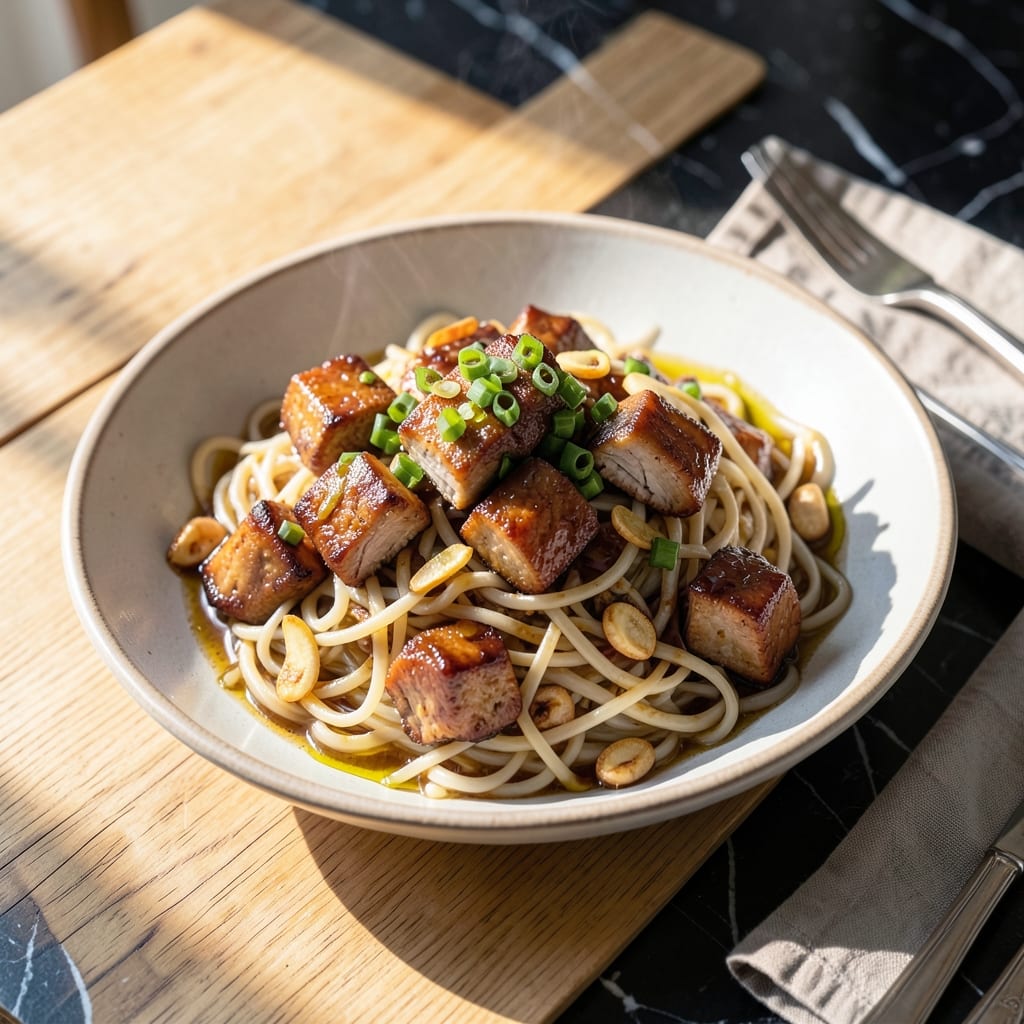
This dish captures the heart of Hawaiian comfort food with its savory pork and delicate noodles. A beloved local staple, it brings together simple ingredients in a way that feels both nostalgic and deeply satisfying.
The slow-cooked pork develops rich, tender flavor while the long rice noodles soak up every bit of the broth. It’s the kind of meal that warms you from the inside out, perfect for sharing with family.
Ingredients for Hawaiian Pork Long Rice
Simple pantry staples and a few fresh additions create this island-inspired comfort dish.
| Ingredient | Amount | Notes |
|---|---|---|
| Pork Shoulder 🥩 | 1 ½ lb | Boneless, cut into chunks |
| Long Rice Noodles 🍜 | 8 oz | Dried, also called cellophane noodles |
| Chicken Broth 🍲 | 4 cups | Low-sodium preferred |
| Soy Sauce 🫒 | ¼ cup | Use reduced-sodium if desired |
| Garlic Cloves 🧄 | 5 cloves | Minced for depth of flavor |
| Fresh Ginger 🌿 | 1 tbsp | Grated or finely minced |
| Green Onions 🧅 | 4 whole | Thinly sliced, for garnish |
| Brown Sugar 🍚 | 2 tbsp | Balances savory flavors |
| Sesame Oil 🫒 | 1 tbsp | Toasted for best aroma |
| Shiitake Mushrooms 🍄 | 4 oz | Dried or fresh, sliced |
| Salt 🧂 | 1 tsp | Adjust to taste |
| Black Pepper 🌶️ | ½ tsp | Freshly ground |
The pork is the foundation here. Pork shoulder (also called pork butt) gives the best texture—avoid lean cuts like tenderloin, which dry out. Most Asian markets carry pre-cut chunks, or Costco sells whole shoulders at a good price. Look for pieces with good marbling; this fat renders down for rich, tender meat. Dried shiitake mushrooms add umami depth (rehydrate before using).
Out of pork shoulder? Pork belly or country-style ribs work too, but adjust cooking time. No shiitake? Cremini or white button mushrooms are fine. For gluten-free, swap soy sauce for tamari. The long rice noodles must be the thin, translucent kind (not rice sticks). If you can’t find them locally, Amazon sells them in bulk. Brown sugar can be replaced with coconut sugar for a less refined sweetness.
This keeps well—leftovers taste even better after 24 hours as flavors meld. Store in the fridge for up to 4 days, or freeze for 3 months. Reheat gently to keep the noodles tender, adding a splash of broth if needed.
Why You’ll Love This Recipe
- Dump and Simmer: I just brown the pork shoulder, dump everything in one pot, and let it work its magic.
- Garlic Soy Bomb: The soy sauce and garlic cloves create this deep, savory richness that soaks right into the long rice noodles.
- Feeds the Crew: Between us, this stretches to feed six with leftovers for lunch the next day.
- Pocket-Friendly Comfort: Pork shoulder and noodles are cheap, but the flavor tastes like I spent hours on it.
Step-by-Step Instructions for Hawaiian Pork Long Rice
This method delivers authentic island comfort with perfectly tender noodles and rich, savory pork.
Step 1: Sear and Brown the Pork Shoulder
Heat the 1 tbsp sesame oil in a large pot over medium-high heat. Add the 1.5 lb pork shoulder chunks and sear for 5-6 minutes until browned on all sides. I press down gently with a wooden spoon to ensure even browning and prevent sticking.
Sprinkle with 1 tsp salt and 0.5 tsp black pepper during searing. You’ll notice the pork releases from the pan when it’s ready to turn. This step builds the foundation of flavor for the entire dish, so don’t rush it.
Step 2: Build the Aromatic Broth Base
Once the pork is browned, add the 5 cloves garlic cloves and 1 tbsp fresh ginger. Sauté for 1-2 minutes until fragrant. Then pour in the 4 cups chicken broth, 0.25 cup soy sauce, and 2 tbsp brown sugar.
Bring the mixture to a boil, then reduce heat to medium-low. Simmer for 30 minutes until the pork is tender and easily shredded with a fork. The broth should be deeply aromatic, with the pork absorbing all those island-inspired flavors.
Step 3: Add Mushrooms and Noodles
Stir in the 4 oz shiitake mushrooms and let them soften for 5 minutes. Then add the 8 oz long rice noodles, ensuring they’re fully submerged in the broth. These noodles cook differently than pasta—they’ll absorb liquid and expand, so don’t worry if they seem stiff at first.
Simmer for another 10-12 minutes until the noodles are soft and translucent. Stir occasionally to prevent sticking, but avoid over-stirring, which can break the noodles. The broth will thicken slightly as the noodles cook, creating that signature long rice consistency.
Step 4: Finish and Garnish for Serving
Taste and adjust seasoning if needed, though the soy sauce and brown sugar should provide a balanced savory-sweet profile. Remove from heat and let the dish sit for 5 minutes to allow the flavors to meld further.
Garnish with the 4 whole green onions, thinly sliced. Serve hot, with extra green onions on the side if desired. The noodles should glisten with the rich broth, and each bite should deliver tender pork, chewy noodles, and the umami depth from the mushrooms and soy.
Pro Tips For Making Hawaiian Pork Long Rice
- Sear the Pork First: Brown the pork shoulder in batches over medium-high heat until deeply caramelized—this builds a flavor base that simmering in broth alone can’t achieve. I learned this the hard way after making bland versions for years.
- Soak the Noodles: Cover the long rice noodles in warm water for 10-15 minutes before cooking. Sounds weird, but it works: they’ll cook evenly in the broth instead of staying stubbornly firm in the center.
- Skip the Boiling Broth: Keep the chicken broth at a gentle simmer, never a rolling boil, or the noodles will turn to mush. My grandmother swore by this, and she was right: low and slow wins the texture race.
- Double the Garlic: Use twice as much garlic as you think you need—at least 6-8 cloves for a standard batch. After burning three batches by under-seasoning, I finally figured out that garlic is what makes this dish sing.
Common Mistakes When Making This Dish
Overcooking the Pork
Pork shoulder needs 30 minutes of gentle simmering to become tender. I see many home cooks boil it vigorously, which makes the meat tough and dry. Keep it at a medium-low simmer and check with a fork after 25 minutes. 🌡️
Skipping the Sear
Browning the pork first develops deep flavor through the Maillard reaction. Don’t skip this 5-6 minute step over medium-high heat. Press down gently with a wooden spoon to ensure even browning.
Under-soaking Noodles
Long rice noodles expand significantly as they cook. If you pre-soak them, they’ll turn to mush during the 10-12 minute simmer. Just add them dry to the broth and trust the process.
Using Wrong Noodles
Only thin, translucent cellophane noodles work here. I’ve seen people try with rice sticks or udon – the texture won’t be right. Check Asian markets or Amazon for the correct 8 oz package.
Overcrowding the Pot
Give the pork space to brown properly. If your pot is too small, cook in batches. Crowding steams the meat instead of searing it, resulting in pale, flavorless pork.
Ignoring Mushrooms
Shiitake mushrooms add essential umami depth. If using dried, rehydrate them first in warm water for 20 minutes. Slice before adding to ensure even distribution throughout the dish.
Nutrition Facts
Frequently Asked Questions
Can I use a different cut of pork?
Yes, but stick to fatty cuts like pork belly or country-style ribs. Avoid lean cuts like tenderloin, as they dry out during the 30-minute simmer. Pork shoulder remains the best choice for authentic texture.
How do I know when the noodles are done?
They should be soft, translucent, and slightly chewy after 10-12 minutes. Stir occasionally to prevent sticking, but avoid over-handling which can break them. The broth will thicken as they absorb liquid.
Can I make this ahead of time?
Flavors deepen after 24 hours. Store in the fridge for up to 4 days or freeze for 3 months. Reheat gently with a splash of broth to revive the noodles.

- Jollof Rice Sauce Recipe: West African Tomato and Spice Infusion - September 25, 2026
- Japanese Rice Soup Recipe: Umami-Rich Comfort in a Bowl - September 25, 2026
- Homemade Cream Of Rice Recipe: Silk-Smooth Breakfast in Minutes - September 25, 2026