
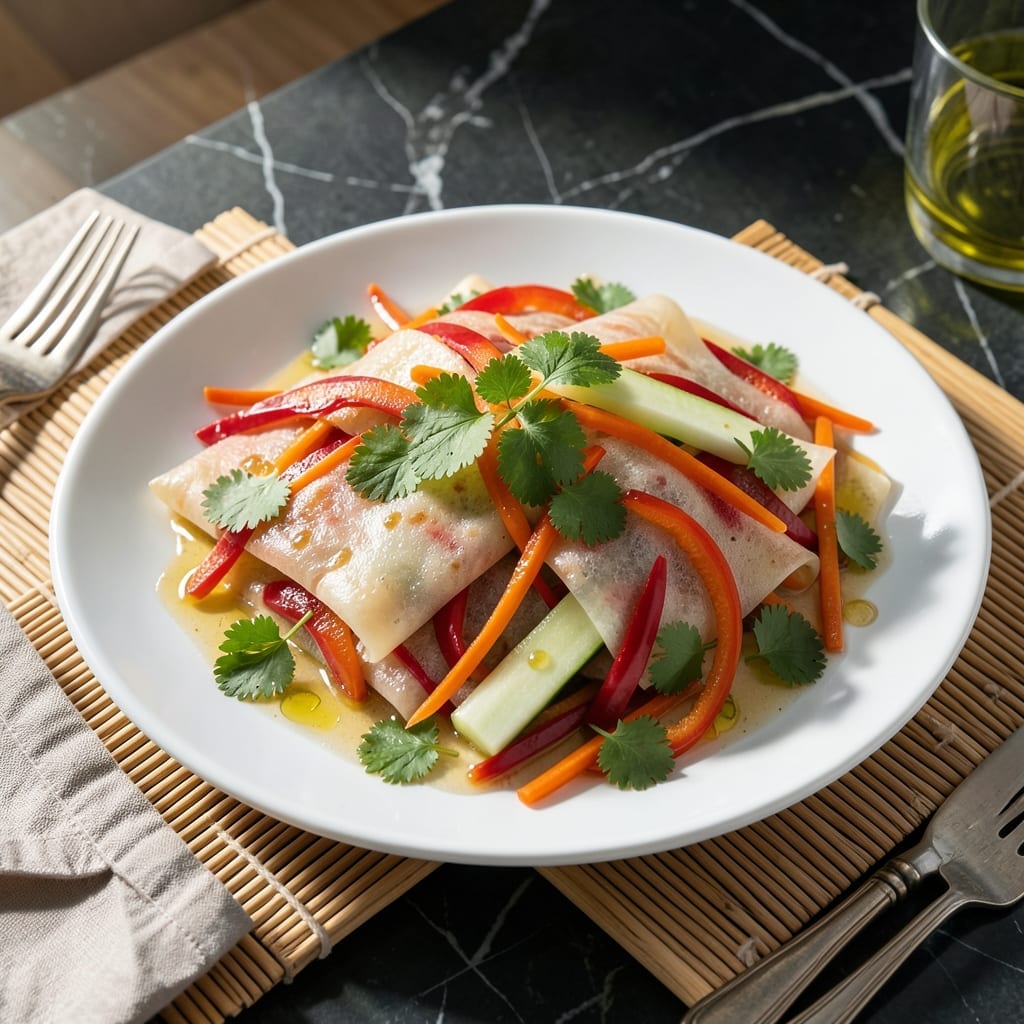
Rice paper transforms into crispy spring roll wraps with the right technique and fresh fillings. This method delivers restaurant-quality results at home with minimal effort.
The key is proper hydration and high heat. Soak the rice paper just until pliable, then fill with your choice of vegetables, herbs, and protein before frying to golden perfection.
Each bite offers a satisfying crunch followed by fresh, vibrant flavors from the fillings. The contrast between the crispy exterior and tender interior makes these wraps irresistible.
Perfect for appetizers, light meals, or party platters. This technique works with endless filling combinations to suit any taste preference.
Ingredients for Rice Paper Recipe Ideas
Rice paper, vibrant veggies, and tofu come together for crispy, restaurant-quality spring rolls at home.
| Ingredient | Amount | Notes |
|---|---|---|
| Rice Paper Wrappers 🍚 | 12 sheets | 22cm diameter, spring roll variety |
| Carrots 🥕 | 2 whole | Julienned for even cooking |
| Red Bell Pepper 🌶️ | 1 whole | Thinly sliced into strips |
| English Cucumber 🥒 | 1 whole | Seeds removed, julienned |
| Fresh Cilantro 🌿 | ½ cup | Stems removed, roughly chopped |
| Fresh Mint Leaves 🍃 | ½ cup | Whole leaves preferred |
| Extra-Firm Tofu 🧈 | 14 oz | Pressed and sliced into strips |
| Rice Vinegar 💧 | 2 tbsp | For dipping sauce base |
| Soy Sauce 🫒 | 3 tbsp | Low-sodium preferred |
| Agave Nectar 🍯 | 1 tbsp | Vegan sweetener alternative |
| Garlic Cloves 🧄 | 2 cloves | Minced finely for sauce |
| Red Chili Flakes 🔥 | ½ tsp | Adjust to heat preference |
| Vegetable Oil 🫒 | 2 cups | High smoke point for frying |
| Lime 🍋 | 1 whole | Juiced for dipping sauce |
| Sesame Seeds 🌾 | 1 tsp | Toasted for garnish |
The rice paper wrappers are the foundation here. Look for 22cm spring roll sheets at Asian markets or the international aisle—brands like Three Ladies or Spring Roll Skins are reliable. Ensure they’re labeled vegan (some contain egg). For the tofu, extra-firm pressed holds up best to frying. Pat it dry thoroughly before slicing to prevent splattering.
No tofu? Tempeh or thinly sliced mushrooms work beautifully. For the herbs, Thai basil or Vietnamese coriander add authentic flavor. The red bell pepper can be swapped for purple cabbage or zucchini. Agave nectar in the sauce? Maple syrup or date syrup at a 1:1 ratio. The dipping sauce can also handle a splash of sriracha for extra heat.
Rice paper keeps in a dry pantry for 6-12 months unopened. Once opened, store in an airtight container with a silica packet. The fresh herbs and veggies will last 5-7 days in the fridge. Prep all fillings ahead and store separately—assemble and fry just before serving for maximum crispiness.
Why You’ll Love This Recipe
- No Cook Needed: I just soak the rice paper, stuff it with shredded carrots and cucumber, and it’s ready—no stove, no fuss.
- Crunch in Every Bite: The raw red bell pepper and cucumber stay crisp against the soft wrapper, and the cilantro adds that fresh pop I crave.
- Picnic Perfect: I pack these for lunches or take them to potlucks, and they hold up without getting soggy or heavy.
- Pennywise Feast: A pack of rice paper and a handful of veggies feed four for less than a takeout salad, and leftovers taste just as good the next day.
Instructions
Master the technique for achieving perfectly crisp wrappers filled with vibrant, fresh ingredients.
Step 1: Prepare and Organize All Fillings
Begin by julienning the 2 whole Carrots and 1 whole Red Bell Pepper into thin, even strips. Remove the seeds from the 1 whole English Cucumber and julienne it as well. This uniform size ensures even cooking and a consistent texture in every bite.
Roughly chop the 0.5 cup Fresh Cilantro and keep the 0.5 cup Fresh Mint Leaves whole. Slice the pressed 14 oz Extra-Firm Tofu into thin strips. Arrange all prepared ingredients in separate bowls for easy assembly. Proper mise en place prevents the rice paper from drying out while you work.
Step 2: Hydrate and Softened the Rice Paper Wrappers
Fill a shallow, wide dish with warm water. Submerge one Rice Paper Wrapper at a time, ensuring it’s fully covered. Soak for 10-15 seconds until pliable but still slightly firm—this prevents tearing during assembly. Over-soaking leads to a gummy texture.
Remove the wrapper and lay it flat on a clean, damp kitchen towel. The towel prevents sticking and keeps the wrapper from drying out too quickly. Work with one wrapper at a time to maintain control. You’ll notice the wrapper continues to soften as you add fillings, so timing is crucial.
Step 3: Assemble the Spring Rolls with Precision
Place a portion of fillings in the lower third of the wrapper: a few strips each of carrots, red bell pepper, English cucumber, and extra-firm tofu, along with a sprinkle of fresh cilantro and fresh mint leaves. Avoid overfilling, which makes rolling difficult and can cause the wrapper to burst.
Fold the bottom edge over the fillings, then fold in the sides, and roll tightly upward, similar to a burrito. The fillings should be snug but not bursting. Place the finished roll seam-side down on a plate to maintain its shape while you work on the remaining wrappers.
Step 4: Fry to Crisp Perfection
Heat the 2 cups Vegetable Oil in a deep skillet or Dutch oven over medium-high heat until it reaches 350-375°F. To test, drop in a small piece of wrapper—it should sizzle immediately and rise to the surface. Fry the rolls in batches to avoid overcrowding, which lowers the oil temperature and results in soggy wrappers.
Fry for 2-3 minutes per side until golden brown and crisp. Use a slotted spoon to transfer the rolls to a paper towel-lined plate to drain excess oil. The crispiness is best served immediately, while the wrappers are still hot and brittle.
Step 5: Prepare the Dipping Sauce and Garnish
In a small bowl, whisk together the 2 tbsp Rice Vinegar, 3 tbsp Soy Sauce, 1 tbsp Agave Nectar, minced 2 cloves Garlic Cloves, and 0.5 tsp Red Chili Flakes. Squeeze in the juice from the 1 whole Lime and stir until smooth. Taste and adjust seasoning if needed.
Sprinkle the finished spring rolls with 1 tsp Sesame Seeds for added texture and visual appeal. Serve the dipping sauce alongside the crispy rolls for a balanced contrast of flavors and temperatures.
Pro Tips For Making Rice Paper Recipe Ideas
- Soak briefly: Dip rice paper in warm water for 5-7 seconds—any longer and it turns to mush before you can even fill it. I learned this the hard way after ruining three wrappers in a row.
- Juliennne thinly: Shave carrots and bell peppers into matchsticks, about 1/8-inch thick. Sounds tedious, but it actually changes the outcome—thick cuts tear the delicate wrappers.
- Dry the herbs: Pat cilantro completely dry after washing, or the extra moisture will make the rice paper slippery and hard to work with. Skip this and you’ll be chasing fillings across the counter.
- Prep first: Have all your veggies and herbs cut and ready before you start soaking the wrappers. After burning through a batch of over-soaked papers while chopping, I finally figured out timing is everything here.
Common Mistakes When Making This Recipe
Over-Soaking Wrappers
Soaking rice paper for more than 15 seconds makes it too soft and prone to tearing. I learned this the hard way when my first batch turned into a mushy disaster. The wrapper should be pliable but still slightly firm when you remove it from water.
Avoid Overfilling
Using too much filling causes the wrapper to burst during rolling or frying. Stick to about ¼ cup total filling per sheet. I recommend placing ingredients in the lower third, leaving room to fold the sides and roll tightly.
Oil Temperature Matters
Frying in oil that’s not hot enough (below 350°F) results in greasy, soggy rolls. Use a thermometer to maintain 350-375°F. If the oil smokes, it’s too hot—lower the heat slightly.
Skipping the Towel
Laying soaked wrappers directly on a dry surface causes sticking. Always use a damp kitchen towel as your work surface. This keeps the wrapper from drying out while you add fillings, giving you more control.
Crowding the Pan
Frying too many rolls at once lowers the oil temperature and leads to uneven cooking. Work in batches, leaving space between each roll. I typically fry 3-4 rolls at a time in my 12-inch skillet. 🔥
Neglecting Rest Time
Let finished rolls drain on a paper towel-lined plate for 1-2 minutes before serving. This allows excess oil to drip off and helps the wrapper set. Serving immediately ensures maximum crispiness.
Nutrition Facts
Frequently Asked Questions
Can I bake instead of frying?
Yes! Brush rolls with oil and bake at 400°F for 15-20 minutes, flipping halfway. They won’t be as crispy but will be healthier.
How do I store leftover rolls?
Store uncooked rolls in an airtight container with parchment between layers for 24 hours. Refrigerate and fry fresh when ready to serve.
What if my wrappers tear?
Patch small tears with a bit of dry wrapper, then seal with water. For large tears, start over—over-soaked or dry wrappers are the usual culprits.
Can I use other proteins?
Try shrimp, chicken, or even thinly sliced beef. For vegan options, tempeh or mushrooms work well. Adjust cooking times accordingly.

- Jollof Rice Sauce Recipe: West African Tomato and Spice Infusion - September 25, 2026
- Japanese Rice Soup Recipe: Umami-Rich Comfort in a Bowl - September 25, 2026
- Homemade Cream Of Rice Recipe: Silk-Smooth Breakfast in Minutes - September 25, 2026