
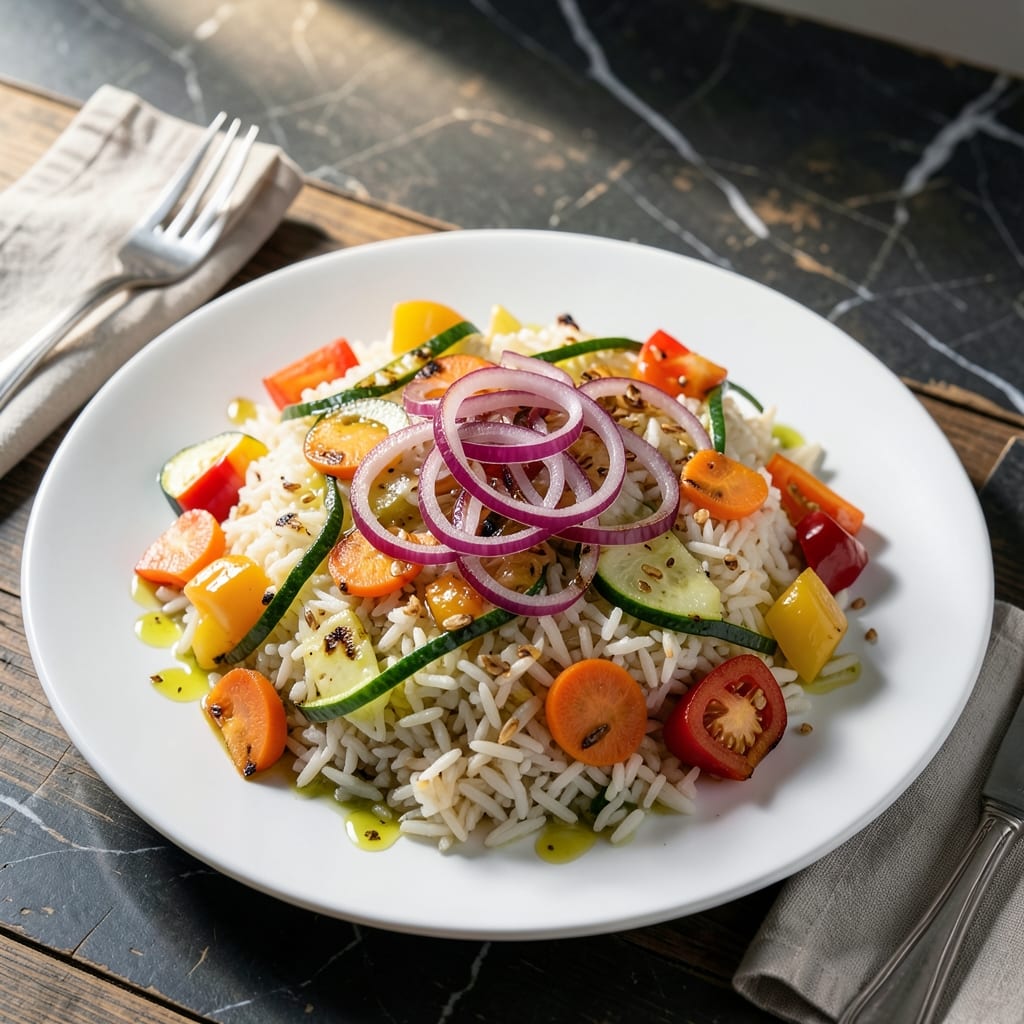
This vegetarian basmati rice dish transforms simple ingredients into a meal that satisfies both the eyes and the palate. The key lies in toasting the rice before cooking, which unlocks a subtle nutty depth that pairs beautifully with fresh garden vegetables.
What makes this recipe stand out is its balance of textures and flavors. Crisp-tender vegetables complement the fluffy basmati perfectly, while a light seasoning allows the natural flavors to shine through without competition.
By the time it’s ready, you’ll have a colorful, fragrant dish that works equally well as a main course or a hearty side. The technique ensures each grain stays separate while absorbing just enough flavor from the vegetables.
This creation proves that vegetarian meals can be both nourishing and deeply satisfying. Here’s how to make it perfectly every time.
Ingredients for Rice Vegetarian
Basmati rice and garden vegetables unite for a colorful, fragrant vegetarian centerpiece with nutty depth.
| Ingredient | Amount | Notes |
|---|---|---|
| Basmati Rice 🌾 | 1 ½ cups | Rinsed until water runs clear |
| Vegetable Broth 🥕 | 3 cups | Low-sodium preferred for control |
| Carrots 🥕 | 2 whole | Medium, diced into 1/4-inch pieces |
| Bell Peppers 🌶️ | 2 whole | Assorted colors, 1/2-inch dice |
| Zucchini 🥒 | 1 whole | Medium, diced similarly |
| Red Onion 🧅 | 1 whole | Small, finely diced |
| Garlic Cloves 🧄 | 3 cloves | Minced for aromatic base |
| Extra-Virgin Olive Oil 🫒 | 3 tbsp | Divided for toasting and sautéing |
| Unsalted Butter 🧈 | 2 tbsp | Optional for finishing richness |
| Ground Cumin 🌿 | 1 tsp | Toasted briefly with rice |
| Turmeric 🌶️ | ½ tsp | For color and earthy note |
| Fresh Cilantro 🍃 | ¼ cup | Chopped, for bright garnish |
| Kosher Salt 🧂 | 1 tsp | Adjust to taste at end |
| Freshly Ground Black Pepper 🌶️ | ½ tsp | Added during final seasoning |
| Lemon Juice 🍋 | 1 tbsp | Freshly squeezed for brightness |
The basmati rice quality is non-negotiable for that signature fluffy texture. Indian grocery stores often carry superior aged basmati at better prices than mainstream supermarkets. Look for brands like Daawat or Tilda—their grains elongate beautifully without turning mushy. The vegetable broth should be low-sodium to allow precise seasoning control as the rice absorbs the liquid.
No fresh cilantro? Fresh parsley or mint work as substitutes, though the flavor profile shifts slightly. Bell pepper colors can be mixed—red, yellow, and orange add visual appeal. For a heartier dish, eggplant or cauliflower can replace zucchini. The butter is optional but adds a luxurious finish; vegan butter works equally well for those avoiding dairy.
Toasted rice stores well in an airtight container for up to 5 days. Reheat gently with a splash of water to restore moisture. The dish freezes beautifully for 3 months—portion before freezing for easy reheating. Always bring to room temperature before reheating.
Why You’ll Love This Recipe
- One Pot Wonder: I just dump everything in, simmer, and the basmati soaks up that veggie broth like a dream.
- Veggie Packed: The carrots, bell peppers, and zucchini stay crisp but release this sweet, earthy flavor into every bite.
- Meal Prep Hero: Makes enough for three lunches, and honestly, it tastes even better the next day.
- Budget Stretcher: A pound of rice and seasonal veggies feeds my family for pennies. I’ll be real: that’s a win.
Step-by-Step Instructions for Nutty Basmati With Garden Vegetables
Master this technique for perfectly fluffy rice and vibrant, tender vegetables every time.
Step 1: Prepare the Rice Base with Aromatics
Rinse the 1.5 cups Basmati Rice under cold water until the water runs clear, then drain thoroughly. In a medium saucepan, heat 1 tablespoon Extra-Virgin Olive Oil over medium heat until shimmering. Add the drained rice and toast for 2-3 minutes, stirring constantly, until the grains turn translucent and emit a nutty aroma.
Immediately add the 1 tsp Ground Cumin and 0.5 tsp Turmeric, stirring for 30 seconds to bloom the spices. This step is crucial—it awakens their essential oils and infuses the rice with deep, complex flavors. The turmeric will lend a golden hue, while the cumin adds a warm, earthy foundation to the dish.
Step 2: Sauté the Vegetables to Perfection
In a large skillet, heat the remaining 2 tbsp Extra-Virgin Olive Oil over medium-high heat. Add the diced red onion and sauté for 3 minutes until softened and just beginning to turn translucent. Then add the minced 3 cloves Garlic Cloves, cooking for 30 seconds until fragrant—be careful not to let it brown, as it can turn bitter.
Incorporate the diced 2 whole Carrots, 2 whole Bell Peppers, and 1 whole Zucchini, Stir to combine and cook for 6-8 minutes until the vegetables are tender-crisp and the edges of the bell peppers are just starting to caramelize. The carrots should be slightly softened but still retain a bit of bite. Season lightly with 0.5 tsp Freshly Ground Black Pepper.
Step 3: Cook the Rice and Vegetables Together
Pour the 3 cups Vegetable Broth into the saucepan with the toasted rice and bring to a boil. Once boiling, reduce the heat to low, cover, and simmer for 12 minutes. Resist the urge to lift the lid—steam is essential for even cooking and fluffy texture.
After 12 minutes, remove the saucepan from the heat and let it sit, covered, for an additional 5 minutes to steam. The rice should be tender and the liquid fully absorbed. Transfer the cooked rice to the skillet with the sautéed vegetables and gently fold them together. Add the 2 tbsp Unsalted Butter and stir until melted and evenly distributed, coating the rice and vegetables in a glossy sheen.
Step 4: Season and Finish with Fresh Elements
Sprinkle the 1 tsp Kosher Salt over the rice and vegetables, adjusting to taste. The low-sodium broth allows you to control the seasoning precisely, so taste as you go. Stir gently to distribute the salt evenly, ensuring every bite is well-seasoned.
Finally, remove from heat and stir in the 1 tbsp Lemon Juice and chopped 0.25 cup Fresh Cilantro. The lemon juice adds a bright, acidic note that cuts through the richness of the dish, while the cilantro lends a fresh, herbal finish. Let it rest for 2-3 minutes to allow the flavors to meld before serving.
Pro Tips For Making Rice Vegetarian
- Rinse the Rice: Soak basmati rice for 10 minutes then rinse until water runs clear—removes excess starch so your grains stay fluffy, not gummy. I learned this the hard way after serving mushy rice to guests.
- Sauté the Veggies First: Cook carrots, bell peppers, and zucchini in the pot for 3-4 minutes before adding rice—brings out their sweetness and prevents them from turning soggy.
- Use Double the Broth: For every cup of basmati rice, use 1.75 to 2 cups of vegetable broth. Sounds like a lot, but basmati absorbs more than you think, and under-seasoned rice tastes flat.
- Cover and Steam: Once the rice and broth are in, resist the urge to stir—just cover, lower the heat, and let it steam for 12-15 minutes. Peeking or stirring breaks the grains and turns your dish into a starchy mess.
Make-Ahead Tips for Leftovers
Overnight Prep
You can prep all vegetables the night before—dice the carrots, bell peppers, zucchini, and red onion, then store in airtight containers. I keep mine in separate containers to maintain texture. Mince the garlic cloves and store in a small jar with 1 tsp olive oil to preserve freshness. 💡
Rice Toasting Advance
Toast the 1.5 cups Basmati Rice with spices up to 1 day ahead. Cool completely, then store in an airtight container at room temperature. This actually enhances the nutty flavor. When ready to cook, simply add the 3 cups vegetable broth and proceed with the recipe.
Partial Cooking
Cook the rice halfway (6 minutes simmering) and spread on a baking sheet to cool quickly. Refrigerate for up to 24 hours. Finish cooking with vegetables the next day—this method saves time while maintaining perfect texture and flavor.
Freezing for Later
Cook the entire dish, let it cool completely, then portion into freezer-safe containers. It freezes beautifully for up to 3 months. Thaw overnight in the fridge before reheating. I use glass containers to avoid plastic taste. ❄️
Reheating Tips
For refrigerated leftovers, add 2 tbsp water and reheat in a covered skillet over medium-low heat for 5-7 minutes, stirring occasionally. For frozen portions, thaw first, then reheat with ¼ cup broth to restore moisture.
Flavor Boost
If making ahead, underseason slightly—the flavors concentrate over time. Add the lemon juice and cilantro fresh when reheating for the brightest taste. This small step makes a big difference in the final dish.
Nutrition Facts
Frequently Asked Questions
Can I use a different type of rice?
Basmati is ideal for its fluffy texture, but jasmine or long-grain white rice work too. Adjust cooking time as needed—jasmine may need 2-3 minutes less. Avoid instant rice for best results.
How do I keep the vegetables crisp?
Sauté them separately first to lock in texture. Add to the rice only after cooking to prevent mushiness. 6-8 minutes of sautéing is perfect for tender-crisp results.
What if I don’t have vegetable broth?
Water works in a pinch, but add 1 tsp salt and 0.5 tsp turmeric for flavor. For extra depth, use miso paste or bouillon cubes dissolved in water.
Can I make this gluten-free?
Yes! The recipe is naturally gluten-free. Just verify your broth and spices are certified gluten-free to avoid cross-contamination.

- Jollof Rice Sauce Recipe: West African Tomato and Spice Infusion - September 25, 2026
- Japanese Rice Soup Recipe: Umami-Rich Comfort in a Bowl - September 25, 2026
- Homemade Cream Of Rice Recipe: Silk-Smooth Breakfast in Minutes - September 25, 2026