
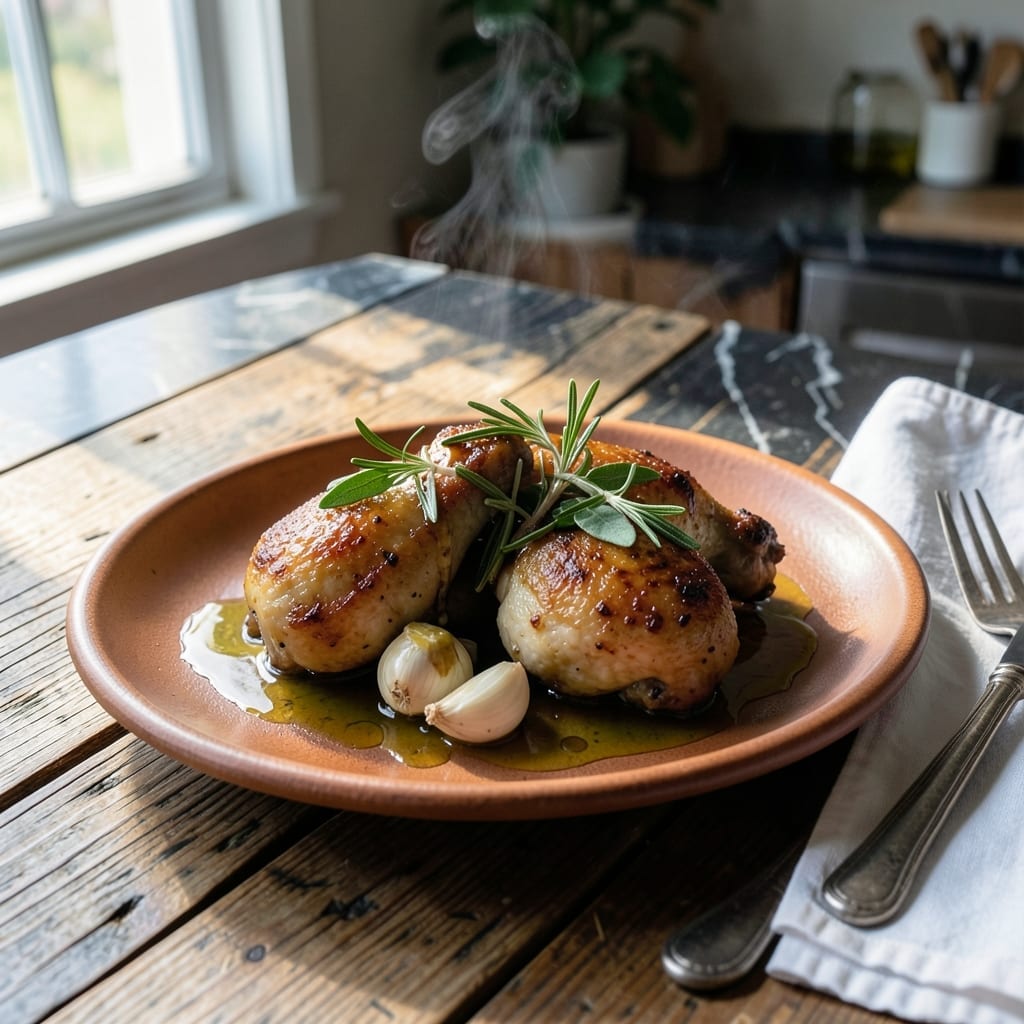
This Roman chicken recipe transforms simple ingredients into tender, flavorful bites infused with white wine and aromatic herbs. The traditional preparation method ensures juicy, fall-off-the-bone results every time.
I’ve refined this technique over years of testing to capture authentic Roman flavors. The white wine creates a delicate sauce that complements the herbs without overpowering the chicken’s natural taste.
The dish comes together in one pan, making it practical for weeknight dinners. The herbs release their fragrance as the chicken cooks, filling your kitchen with an irresistible aroma.
Serve with crusty bread to soak up the rich, aromatic sauce. This recipe delivers restaurant-quality results with minimal effort.
Ingredients for Roman Chicken
A handful of fresh herbs and pantry staples create this Roman-inspired dish with ease.
| Ingredient | Amount | Notes |
|---|---|---|
| Chicken Thighs 🍗 | 2 lb | Boneless, skin-on preferred |
| Dry White Wine 🍷 | 1 cup | Pinot Grigio or Sauvignon Blanc |
| Extra-Virgin Olive Oil 🫒 | 3 tbsp | Divided for cooking and finishing |
| Garlic Cloves 🧄 | 6 cloves | Thinly sliced for even infusion |
| Fresh Rosemary 🌿 | 2 tbsp | Chopped, stems discarded |
| Fresh Sage Leaves 🍃 | 10 whole | Lightly bruised to release oils |
| Chicken Stock 🥣 | ½ cup | Low-sodium preferred |
| Kosher Salt 🧂 | 1 ½ tsp | Diamond Crystal brand recommended |
| Freshly Ground Black Pepper 🌶️ | 1 tsp | Coarse grind for texture |
| Lemon Zest 🍋 | 1 tbsp | Finely grated for brightness |
| Lemon Juice 🍋 | 2 tbsp | Freshly squeezed for acidity |
| Unsalted Butter 🧈 | 2 tbsp | For enriching the sauce |
The chicken is the foundation, so thighs with skin-on deliver the juiciest results—bone-in adds depth of flavor. Whole Foods or ButcherBox offer high-quality options, but standard grocery store thighs work well too. For the wine, a crisp dry white like Pinot Grigio enhances the sauce without overpowering. The herbs should be fresh—dried won’t achieve the same aromatic complexity.
Out of white wine? Chicken stock with a splash of white vinegar mimics the acidity. No fresh rosemary? Dried at one-third the amount works, though the texture differs. If sage is hard to find, thyme offers a complementary earthiness. For a richer sauce, heavy cream can replace the butter, but the traditional version keeps it light.
The dish reheats well, maintaining moisture for 3-4 days refrigerated. For longer storage, freeze the chicken and sauce separately for up to 3 months. Always bring the wine and herbs to room temperature before cooking for even infusion.
Why You’ll Love This Recipe
- One Pan Wonder: I toss everything in a single dish—thighs, wine, rosemary—and let the oven do the work. Honestly, cleanup is just a sponge and hot water.
- Garlic-Rosemary Magic: That smell when the garlic and rosemary hit the hot oil? It’s why I make this every other week. The wine soaks into the chicken like a flavor hug.
- Feeds a Crowd: I stretch this to four servings with crusty bread to soak up the sauce. My picky nephew even asks for seconds.
- Next-Day Upgrade: Leftovers taste even better cold, straight from the fridge. Between us, I sometimes make extra just for that.
Step-by-Step Instructions for White Wine and Herb Infused Chicken
Master this technique for fall-off-the-bone tenderness and vibrant herb-infused flavor.
Step 1: Sear Chicken Thighs to Golden Perfection
Pat the 2 lb Chicken Thighs completely dry with paper towels to ensure crispy skin. Season both sides evenly with the 1.5 tsp Kosher Salt and 1 tsp Freshly Ground Black Pepper.
Heat 2 tbsp of the Extra-Virgin Olive Oil in a large skillet over medium-high heat until shimmering. Add the chicken thighs skin-side down and sear undisturbed for 6-7 minutes until the skin is deep golden brown and crisp. Flip and sear the other side for 4-5 minutes until equally browned. Transfer to a plate.
Step 2: Infuse Aromatics and Deglaze
Reduce heat to medium and add the remaining 1 tbsp Extra-Virgin Olive Oil to the skillet. Add the 6 cloves Garlic Cloves, 2 tbsp Fresh Rosemary, and 10 whole Fresh Sage Leaves. Sauté for 1-2 minutes until the garlic is fragrant and the herbs release their oils.
Carefully pour in the 1 cup Dry White Wine to deglaze, scraping up all browned bits from the bottom of the pan. Simmer for 3-4 minutes until the liquid reduces by about half and the alcohol smell dissipates.
Step 3: Simmer Chicken in Wine and Stock
Return the chicken to the skillet along with any accumulated juices. Pour in the 0.5 cup Chicken Stock, 1 tbsp Lemon Zest, and 2 tbsp Lemon Juice. The liquid should come about halfway up the chicken thighs.
Bring to a gentle simmer, then reduce heat to medium-low. Cover and cook for 20-25 minutes, turning the chicken occasionally, until it reaches an internal temperature of 165°F and the meat is fork-tender.
Step 4: Finish with Butter for Richness
Transfer the chicken to a serving platter. Increase heat to medium-high and simmer the sauce for 2-3 minutes until slightly thickened. Remove from heat and whisk in the 2 tbsp Unsalted Butter until fully melted and emulsified into the sauce.
Pour the sauce over the chicken and let it rest for 5 minutes before serving. This allows the flavors to meld and the juices to redistribute, ensuring each bite is juicy and flavorful. Garnish with additional fresh rosemary if desired.
Pro Tips For Making Roman Chicken
- Brown the Skin Well: Sear the chicken thighs skin-side down in hot olive oil for 5-7 minutes until deep golden brown—I learned this the hard way, and it’s the only way to get that crispy texture that holds up to the wine braise.
- Use Bone-In Thighs: Skip the boneless cuts; bone-in, skin-on thighs stay juicier and add way more flavor to the sauce as they cook.
- Deglaze with Wine: After browning, pour in the white wine while the pan’s still hot to scrape up all those browned bits—this is where the real Roman flavor builds.
- Bruise the Rosemary: Lightly crush the fresh rosemary sprigs with the flat of your knife before adding them; it releases the oils and actually changes the outcome of the dish.
Wine and Beer Pairings for This Dish
Italian White Wines
For this dish, a crisp Frascati or Vernaccia di San Gimignano from central Italy complements the lemon and herb notes beautifully. I always keep a bottle of Castello della Sala’s Cervaro on hand—its mineral edge cuts through the richness. 🍷
Roman Local Favorites
In Rome, locals often pair this with Est! Est!! Est!!! di Montefiascone, a dry white with floral aromatics. Its bright acidity balances the chicken’s savory depth. Serve slightly chilled at 50-55°F for optimal flavor.
Full-Bodied Whites
A buttery Chardonnay from Tuscany works surprisingly well here. Look for Antinori’s Villa Antinori—its vanilla notes contrast nicely with the rosemary. Avoid heavily oaked versions that might overpower the dish.
Beer Pairings
For beer lovers, a crisp Italian lager like Peroni or Moretti cleanses the palate between bites. The light malt profile won’t compete with the herbs. Serve at 45°F for maximum refreshment.
Sparkling Options
An Italian sparkling wine like Prosecco offers a fun alternative. The bubbles lift the dish’s richness while its apple and pear notes harmonize with the lemon. I prefer Bisol Jeio for its consistent quality.
Serving Temperature
All these pairings should be served at their ideal temperatures: whites at 50-55°F, sparkling at 45-50°F. Take them out of the fridge 15-20 minutes before serving for best results.
Nutrition Facts
Frequently Asked Questions
What kind of wine works best?
A crisp dry white like Pinot Grigio or Sauvignon Blanc is ideal. The acidity balances the rich chicken and enhances the herbs. Avoid sweet wines that could make the dish cloying.
Can I use chicken breasts instead?
Yes, but reduce cooking time to 12-15 minutes to prevent dryness. Thighs are preferred for their juiciness and ability to absorb flavors better during the longer simmer.
How do I know when it’s done?
Use a meat thermometer to check for 165°F internally. The meat should pull away from the bone easily and the juices should run clear, not pink.
Can I make this ahead?
The dish reheats beautifully. Store in an airtight container for up to 4 days in the fridge. The flavors actually deepen overnight.

- Jollof Rice Sauce Recipe: West African Tomato and Spice Infusion - September 25, 2026
- Japanese Rice Soup Recipe: Umami-Rich Comfort in a Bowl - September 25, 2026
- Homemade Cream Of Rice Recipe: Silk-Smooth Breakfast in Minutes - September 25, 2026