
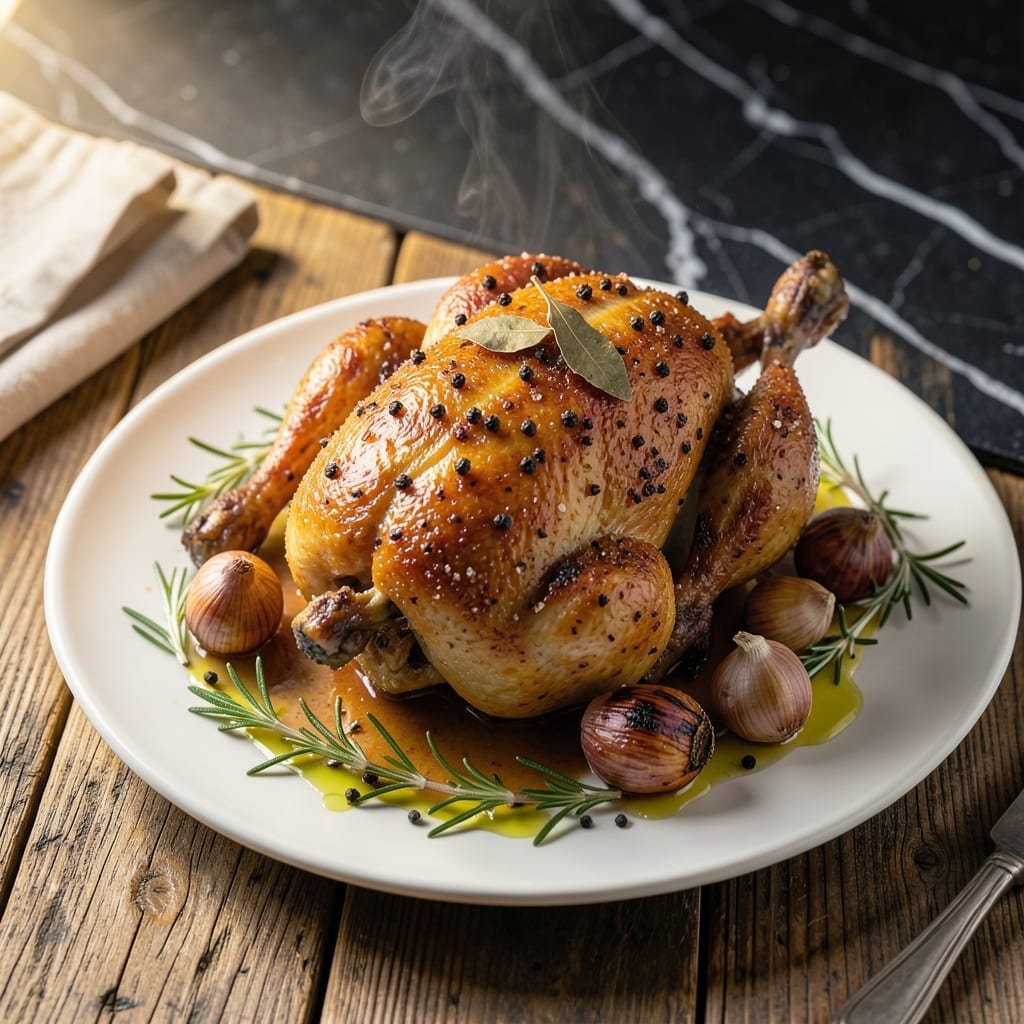
Brining chicken in a salt solution transforms it from dry to juicy and flavorful every time. This proven technique ensures meat that stays moist through cooking while absorbing seasoning deeply.
The process requires just salt, water, and a little patience. A 12-hour brine allows the solution to penetrate the meat completely, changing its structure for better moisture retention.
After brining, the chicken cooks evenly with enhanced natural flavors. The result is tender meat with perfectly seasoned interior and golden exterior that locks in all that juicy goodness.
This method works for whole chickens, pieces, or even turkey. The science of brining delivers consistent results that will change how you prepare poultry.
Ingredients for Salt Chicken
A few simple ingredients transform chicken into a juicy, flavorful masterpiece through brining.
| Ingredient | Amount | Notes |
|---|---|---|
| Whole Chicken 🍗 | 4 lb | Cut into pieces or left whole |
| Kosher Salt 🧂 | ¾ cup | Diamond Crystal preferred for brining |
| Cold Water 💧 | 8 cups | Enough to fully submerge chicken |
| Black Peppercorns 🌶️ | 1 tbsp | Lightly crushed for brine |
| Bay Leaves 🍃 | 4 pieces | Dried, for aromatic depth |
| Fresh Garlic Cloves 🧄 | 6 cloves | Smashed to release flavor |
| Fresh Rosemary Sprigs 🌿 | 3 pieces | Optional, for herbaceous notes |
| Lemon Slices 🍋 | 2 slices | For bright acidity in brine |
| Olive Oil 🫒 | 2 tbsp | For post-brine searing |
| Unsalted Butter 🧈 | 2 tbsp | For basting while cooking |
| Fresh Thyme Sprigs 🌿 | 4 pieces | Optional, for earthy undertones |
The salt selection is critical here. Diamond Crystal kosher salt is the gold standard for brining due to its consistent texture and clean flavor. Morton’s works but requires a slight reduction in quantity (about 25% less). Use cold water to ensure even brining—ice cubes can help maintain temperature if your tap water isn’t cold enough. The chicken should be fully submerged for optimal penetration.
No kosher salt? Table salt at half the volume (since it’s finer), but avoid iodized if possible. Fresh herbs can be swapped for dried at one-third the amount. Missing bay leaves? A pinch of ground bay leaf works in a pinch. For the lemon, lime or orange slices add a nice twist. The olive oil can be replaced with avocado oil for a higher smoke point.
Brine the chicken in the coldest part of your fridge for up to 12 hours—no longer, or the texture can turn mushy. Post-brine, the chicken keeps for 2 days in the fridge or can be frozen for 3 months. Always pat the chicken dry before cooking to ensure a perfect golden crust.
Why You’ll Love This Recipe
- Minimal Effort: I just mix salt, water, and a few spices, then let the chicken soak—no fancy techniques required.
- Juicy Perfection: The brine keeps every bite tender, with just the right hint of bay leaf and peppercorn.
- Feeds the Week: I roast one on Sunday and we’re set for sandwiches, salads, and quick dinners all week long.
- Budget Stretcher: A whole chicken and pantry staples make this my go-to for filling, affordable meals.
Step-by-Step Instructions for Salt Chicken
This brining method ensures maximum flavor penetration and consistent juiciness throughout the meat.
Step 1: Prepare the Brine Solution
In a large pot, combine the 8 cups Cold Water with the 0.75 cup Kosher Salt. Stir until the salt completely dissolves—this ensures even distribution throughout the brine. Add the 1 tbsp Black Peppercorns, 4 pieces Bay Leaves, 6 cloves Fresh Garlic Cloves, 3 pieces Fresh Rosemary Sprigs, and 2 slices Lemon Slices.
I lightly crush the black peppercorns to release their essential oils, and smash the garlic cloves to maximize their flavor infusion. The water should be cold to prevent premature cooking of the chicken during brining.
Step 2: Submerge and Brine the Chicken
Place the 4 lb Whole Chicken in the brine solution, ensuring it is fully submerged. If necessary, add a few ice cubes to keep the brine cold, especially if your kitchen is warm. Cover the pot and refrigerate for 12-24 hours.
This extended brining time allows the salt to penetrate deep into the meat, breaking down proteins for a more tender result. For the optional herbaceous notes, add the 4 pieces Fresh Thyme Sprigs to the brine as well.
Step 3: Remove, Rinse, and Dry the Chicken
After brining, remove the chicken from the solution and discard the brine. Rinse the chicken briefly under cold water to remove excess salt, then pat it completely dry with paper towels. This step is crucial—residual moisture will prevent proper browning during cooking.
Let the chicken rest uncovered in the refrigerator for 1 hour to allow the skin to dry further, which will help achieve crispier skin when cooked.
Step 4: Sear and Finish Cooking
Preheat your oven to 375°F. In an oven-safe skillet or Dutch oven, heat the 2 tbsp Olive Oil over medium-high heat. Once shimmering, add the chicken and sear until the skin is deep golden brown, about 5-7 minutes per side.
Add the 2 tbsp Unsalted Butter to the pan and baste the chicken with the melted butter for an additional 2-3 minutes. Transfer the skillet to the preheated oven and roast for 45-60 minutes, or until the internal temperature reaches 165°F.
Let the chicken rest for 10-15 minutes before carving to allow the juices to redistribute, ensuring every bite is moist and flavorful.
Pro Tips For Making Salt Chicken
- Brine Overnight: I learned this the hard way—soak the chicken in the saltwater brine for at least 12 hours, or the seasoning won’t penetrate deeply enough.
- Use Kosher Salt: Diamond Crystal kosher salt dissolves more evenly than table salt, and I finally stopped getting those annoying undissolved grains at the bottom of my brine.
- Rinse Before Cooking: After brining, give the chicken a quick rinse under cold water, or your dish will taste unpleasantly harsh from the surface salt.
- Add Ice to Brine: Sounds weird, but it works: toss a handful of ice cubes in your brine to keep it cold while the chicken soaks, especially if your kitchen runs warm.
Troubleshooting salt chicken
Too Salty Flavor
If your chicken tastes overly salty, you likely brined it for too long. Stick to the 12-24 hour window—any longer and the salt penetrates too deeply. For a quick fix, soak the cooked chicken in cold milk for 30 minutes to draw out excess salt. 💡
Dry or Tough Texture
This usually happens if the chicken wasn’t fully submerged in the brine. Ensure the 4 lb whole chicken is completely covered in the solution. Also, overcooking can dry it out—pull it from the oven at 165°F internal temperature and let it rest to redistribute juices.
Pale or Soggy Skin
Pale skin often means the chicken wasn’t dried properly after brining. Pat it completely dry with paper towels, then let it air-dry in the fridge for 1 hour before cooking. This ensures a crisp, golden exterior when seared in olive oil.
Uneven Cooking
If some parts are overdone while others are undercooked, your oven may have hot spots. Rotate the pan halfway through cooking and use an oven thermometer to verify 375°F. For whole chickens, spatchcocking (removing the backbone) helps it cook more evenly.
Brine Not Dissolving
Cold water slows salt dissolution. Use warm water to dissolve the 0.75 cup kosher salt first, then add ice cubes to cool the brine before adding the chicken. Stirring vigorously for 2-3 minutes ensures complete dissolution.
Weak Flavor
If the chicken lacks depth, boost your brine with more aromatics. Add extra garlic, fresh thyme, or a splash of apple cider vinegar for brightness. Don’t skip smashing the 6 cloves fresh garlic—it releases far more flavor when crushed. 🌟
Nutrition Facts
Frequently Asked Questions
How long should I brine the chicken?
Brine for 12-24 hours in the fridge for best results. Any shorter and the salt won’t penetrate deeply; much longer and the texture can turn mushy. This window ensures optimal moisture retention and flavor.
Can I use table salt instead of kosher?
Yes, but reduce the amount by 25% since table salt is finer. For this recipe, use 3/8 cup instead of 0.75 cup. Avoid iodized salt if possible, as it can impart a metallic taste.
Why rinse the chicken after brining?
Rinsing removes excess surface salt that could make the exterior overly salty. Pat it dry immediately after rinsing to ensure crispy skin when cooking. This step doesn’t wash away the flavor inside.
Can I brine frozen chicken?
Always thaw chicken completely first. Brining frozen meat prevents even salt absorption and can lead to uneven texture. Thaw in the fridge overnight before starting the 12-24 hour brine.

- Jollof Rice Sauce Recipe: West African Tomato and Spice Infusion - September 25, 2026
- Japanese Rice Soup Recipe: Umami-Rich Comfort in a Bowl - September 25, 2026
- Homemade Cream Of Rice Recipe: Silk-Smooth Breakfast in Minutes - September 25, 2026