
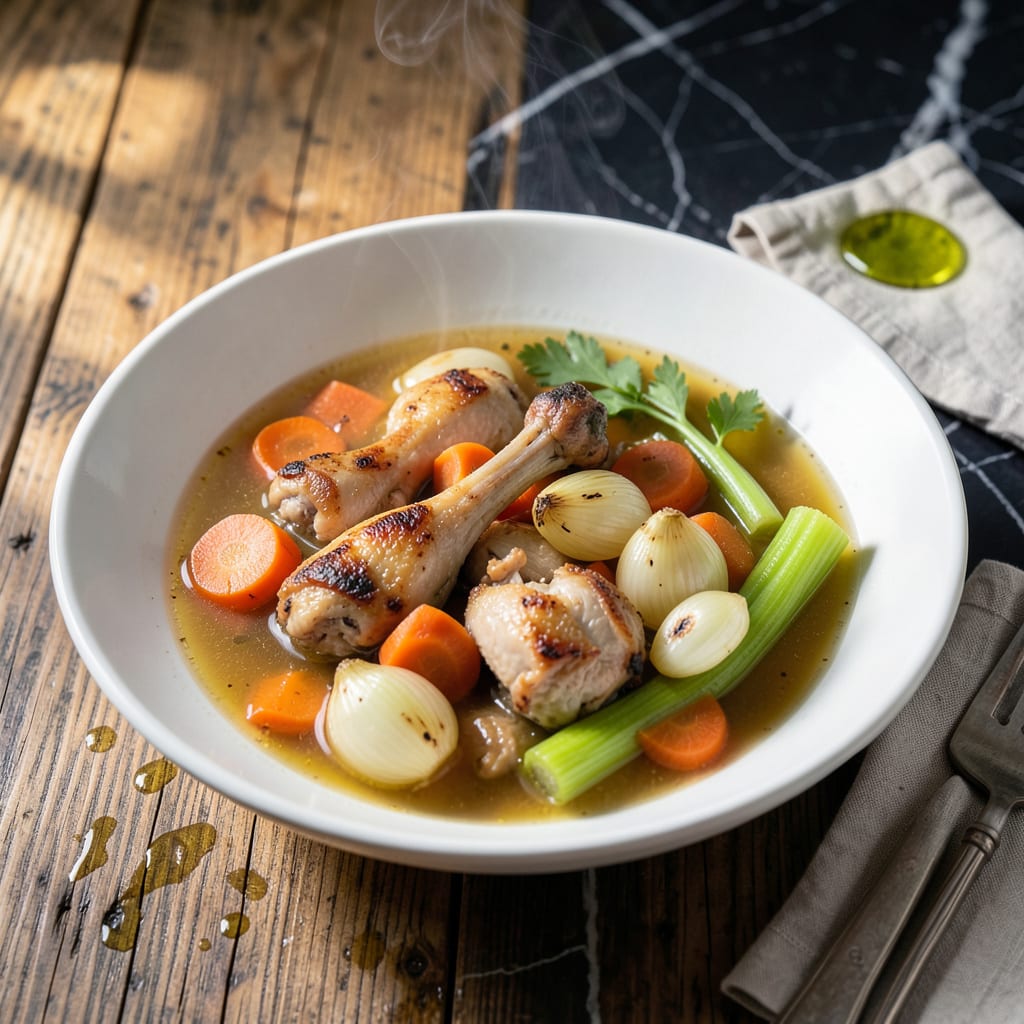
I developed this homemade bouillon to capture deep chicken flavor without relying on salt. The secret lies in slow-simmering bones and aromatic vegetables to extract rich, natural taste.
This method creates a concentrated base perfect for soups, sauces, or cooking grains. The result is pure, clean flavor that lets other ingredients shine while keeping your dishes sodium-free.
Ingredients for Salt Free Chicken Bouillon
Rich, aromatic ingredients for a sodium-free, flavor-packed chicken bouillon base.
| Ingredient | Amount | Notes |
|---|---|---|
| Chicken Bones 🍗 | 2 lb | Backs, necks, or carcasses preferred |
| Yellow Onions 🧅 | 2 whole | Quartered with skin on |
| Carrots 🥕 | 2 whole | Roughly chopped, unpeeled |
| Celery Stalks 🌿 | 3 whole | Including leaves if available |
| Garlic Cloves 🧄 | 6 cloves | Smashed, unpeeled |
| Bay Leaves 🍃 | 2 whole | Dried, whole leaves |
| Black Peppercorns 🌶️ | 1 tbsp | Lightly crushed |
| Fresh Thyme Sprigs 🌿 | 4 pieces | Whole sprigs |
| Fresh Parsley Stems 🌿 | ½ cup | With leaves attached |
| Cold Water 💧 | 4 cups | To cover ingredients |
| White Wine Vinegar 🍷 | 2 tbsp | For acidity balance |
| Lemon Peel 🍋 | 1 whole | Peeled in strips |
[recipeingredientscaler]
The chicken bones are critical for depth of flavor—back and neck bones yield the most gelatin. Source from a trusted butcher or Whole Foods for quality assurance. Organic or pasture-raised bones (available at Costco or local farms) produce a cleaner taste. The vegetables should be fresh but don’t need peeling, as the skins contribute color and body to the final stock.
For the bones, turkey or duck carcasses work as substitutes. No fresh herbs? Dried thyme at one-third the amount is acceptable, but fresh delivers superior nuance. White wine vinegar can be replaced with apple cider vinegar if needed. Skipping the lemon peel is fine—it adds brightness but isn’t essential.
Bouillon keeps 5 days refrigerated or 6 months frozen. Strain and portion into ice cube trays for easy use. For maximum flavor, avoid boiling—maintain a gentle simmer to extract clean, pure chicken essence.
Why You’ll Love This Recipe
- Set It and Forget: I just toss the chicken bones, onions, carrots, and celery into the pot and let it simmer while I do other things.
- Deep Rich Flavor: The garlic and slow-cooked veggies create a base so flavorful, I don’t miss the salt at all.
- Meal Prep Hero: I make a big batch on Sunday and use it all week for soups, grains, and sauces.
- Pantry Savior: Between us, it’s cheaper than store-bought and uses up scraps I’d otherwise throw away.
Step-by-Step Instructions for Salt Free Chicken Bouillon
This method extracts maximum flavor from the ingredients while maintaining precise control over the final product.
Step 1: Prepare and Roast the Aromatics
Preheat your oven to 400°F. Place the 2 lb Chicken Bones on a sheet pan along with the 2 whole Yellow Onions (quartered with skin on), 2 whole Carrots (roughly chopped, unpeeled), and 3 whole Celery Stalks (including leaves if available).
Roast for 25-30 minutes until the vegetables develop deep golden-brown edges and the chicken bones release their fat. This caramelization step is crucial for developing the rich, complex base flavors that define a quality bouillon.
Step 2: Combine and Simmer the Ingredients
Transfer the roasted ingredients to a large stockpot. Add the 6 cloves Garlic Cloves (smashed, unpeeled), 2 whole Bay Leaves, 1 tbsp Black Peppercorns (lightly crushed), 4 pieces Fresh Thyme Sprigs, 0.5 cup Fresh Parsley Stems (with leaves attached), and the 1 whole Lemon Peel (peeled in strips).
Pour in the 4 cups Cold Water and 2 tbsp White Wine Vinegar. The vinegar helps extract minerals from the bones while balancing the overall flavor profile. Bring to a gentle boil, then reduce heat to maintain a slow simmer.
Step 3: Skim and Simmer for Depth
As the liquid heats, a foam will rise to the surface. Skim this off with a fine-mesh strainer or spoon for the first 15-20 minutes of simmering. This removes impurities that could cloud your finished bouillon.
Once skimmed, partially cover the pot and maintain a gentle simmer for 2-3 hours. The surface should show occasional bubbles breaking, not a rolling boil. You’ll notice the liquid gradually taking on a rich, golden color as the flavors meld and intensify.
Step 4: Strain and Finish
After simmering, strain the bouillon through a fine-mesh sieve into a clean container, pressing gently on the solids to extract all liquid. Discard the solids—they’ve given all their flavor to the broth.
Let the strained bouillon cool to room temperature, then refrigerate. As it chills, any remaining fat will solidify at the surface, allowing you to easily remove it for a cleaner final product. Your bouillon should have a clear, amber appearance with a rich, concentrated chicken flavor.
Pro Tips For Making Salt Free Chicken Bouillon
- Roast the Bones: Toss the chicken bones with a little oil and roast at 400°F for 20-30 minutes first—I learned this the hard way after my early batches tasted flat and weak.
- Char the Veggies: Don’t just chop the onions, carrots, and celery; let them sit in the hot pan until they start to brown, about 5-7 minutes. Sounds weird, but it works for adding depth without salt.
- Skip the Boiling: Keep the stock at a gentle simmer, never a rolling boil, or it’ll turn cloudy and bitter. After burning three batches, I finally figured out the temperature sweet spot.
- Use Cold Water: Start with cold water and the bones, then slowly bring it up to heat—this pulls out more gelatin and flavor. My grandmother swore by this, and she was right.
Perfect Pairings for This salt free chicken bouillon
Soup Pairings
This bouillon shines as a base for minestrone or chicken noodle soup. I love adding 1 cup diced zucchini and ½ cup ditalini pasta for a light, veggie-packed meal. The clean flavor lets each ingredient stand out beautifully.
Grain Cooking
Use it to cook quinoa or brown rice instead of water. Replace 2 cups water with bouillon when cooking 1 cup grains for extra depth. The result is perfectly seasoned grains without any added sodium.
Sauce Reduction
Simmer 1 cup bouillon with 2 tbsp cornstarch for a quick pan sauce. I often add 1 tsp Dijon mustard for tang. This works beautifully with roasted chicken or vegetables.
Vegetable Enhancer
Steam broccoli or green beans in a shallow bath of bouillon. Use ½ cup in the bottom of your steamer. The vegetables absorb the flavor while staying crisp-tender. 🌟
Risotto Base
Replace traditional stock with this bouillon in risotto recipes. Add ½ cup at a time while stirring. The lack of salt lets you control the seasoning perfectly as the dish develops.
Marinade Boost
Combine ½ cup bouillon with 2 tbsp olive oil for a simple chicken marinade. I add 1 tsp dried oregano for extra flavor. Marinate for 2-4 hours before cooking. 💡
Nutrition Facts
Frequently Asked Questions
Can I use chicken meat instead of bones?
You can, but bones create richer flavor. Use 1 lb bone-in chicken if that’s all you have. The meat will add flavor but less gelatin than bones.
How long can I store the bouillon?
It keeps 5 days refrigerated or 6 months frozen. Portion into ice cube trays for easy use. Always cool completely before storing.
Why add vinegar to the bouillon?
The 2 tbsp vinegar extracts minerals from bones. It balances flavors without adding sodium. Don’t worry—it won’t taste vinegary in the end.
Can I make this in a slow cooker?
Cook on low for 8-10 hours. Skip the oven roasting—add all ingredients directly to the slow cooker with water.

- Jollof Rice Sauce Recipe: West African Tomato and Spice Infusion - September 25, 2026
- Japanese Rice Soup Recipe: Umami-Rich Comfort in a Bowl - September 25, 2026
- Homemade Cream Of Rice Recipe: Silk-Smooth Breakfast in Minutes - September 25, 2026