
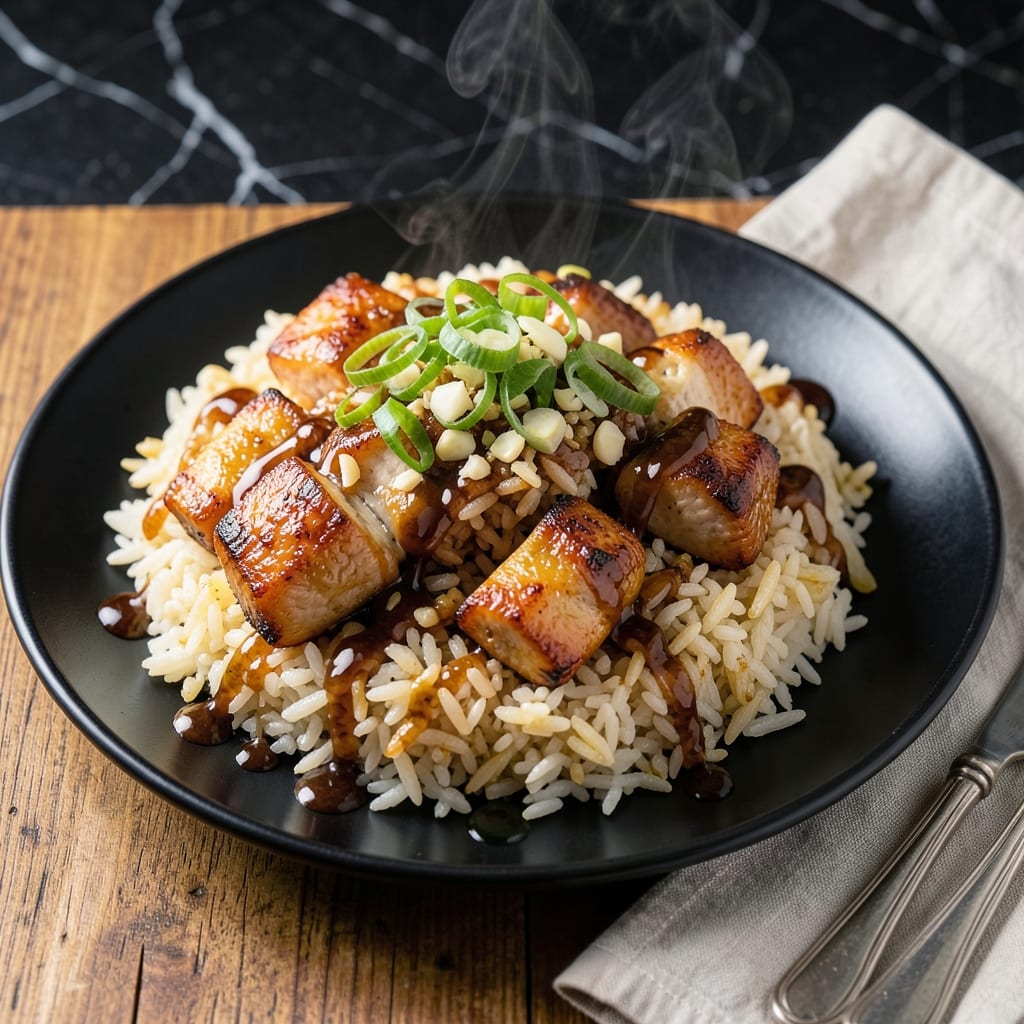
There’s a reason this wok-seared dish stands out in my kitchen—it delivers bold umami and crunchy texture without pretension. The technique is simple: high heat, quick hands, and a balance of soy, ginger, and garlic.
I learned the importance of prep from Chef Chen—every ingredient must be ready before the wok hits the flame. Chicken, rice, and vegetables cook fast, so organization is key to that authentic wok-hei flavor.
What emerges is a dish with layers: tender chicken, crisp scallions, and rice that’s slightly charred at the edges. The soy-ginger sauce ties it all together, creating a plate that’s greater than the sum of its parts.
Serve it hot, straight from the wok, for the best experience. This is how fried rice should be done.
Ingredients for Samurai Chicken Fried Rice
High heat, bold flavors, and that signature wok-seared crunch come from these ingredients.
| Ingredient | Amount | Notes |
|---|---|---|
| Boneless Chicken Thighs 🍗 | 1 ½ lb | Cut into small bite-sized pieces |
| Day-Old Cooked White Rice 🍚 | 4 cups | Cold, preferably overnight |
| Scallions 🧅 | 6 whole | Thinly sliced, whites and greens separated |
| Garlic Cloves 🧄 | 4 cloves | Minced finely |
| Fresh Ginger Root 🌿 | 1 whole | Peeled and grated |
| Soy Sauce 💧 | ⅓ cup | Low-sodium preferred |
| Oyster Sauce 🫒 | 2 tbsp | For umami depth |
| Sesame Oil 🫒 | 1 tbsp | Toasted variety for aroma |
| Neutral Cooking Oil 🫒 | 3 tbsp | High smoke point, like vegetable or peanut |
| Large Eggs 🥚 | 2 whole | Lightly beaten |
| Frozen Peas 🟢 | ¾ cup | Thawed (or fresh if available) |
| Carrot 🥕 | 1 whole | Small dice, about 1/4-inch pieces |
| Diamond Crystal Kosher Salt 🧂 | ½ tsp | Adjust to taste |
| Freshly Ground Black Pepper 🌶️ | ¼ tsp | Coarse grind preferred |
| Shaoxing Wine 🍶 | 2 tbsp | Or dry sherry as substitute |
The chicken needs to be thighs—breasts dry out too fast under the high heat. Costco or Asian markets usually have good deals on boneless, skinless. Day-old rice is non-negotiable (fresh turns to mush). Jasmine or long-grain works best—avoid instant. For the scallions, grab a bunch with firm white ends and bright green tops (the wilted ones taste bitter).
No oyster sauce? Vegetarian oyster sauce or hoisin gets you 90% there. Shaoxing wine can be skipped, but dry sherry in a pinch adds that missing depth. Fresh ginger is key—powdered won’t cut it (too harsh). Peas can be swapped for corn or bell peppers, but keep the dice small so everything cooks evenly in the wok’s heat.
Prep everything before firing up the wok—mise en place isn’t optional here. Leftovers keep 3-4 days in the fridge, but honestly it’s best fresh. Freezing isn’t ideal (rice gets mushy), but if you must, it’ll hold for 1 month.
Why You’ll Love This Recipe
- One Pan Wonder: I love that everything comes together in a single skillet—no extra dishes, just flavor.
- Umami Bomb: The garlic and ginger with those juicy chicken thighs? Ridiculously good.
- Feeds a Crowd: Between us, it’s my go-to for leftovers that taste even better the next day.
- Budget Hero: Honestly, day-old rice and thighs keep this dish cheap but still crave-worthy.
Step-by-Step Instructions for Samurai Chicken Fried Rice
This is the method. High heat, quick hands, restaurant-quality results at home.
Step 1: Veloute the Aromatics and Protein
Heat 1 tablespoon neutral cooking oil in a wok over high heat until it shimmers—this is non-negotiable for that authentic wok hei. Add the 1.5 lb boneless chicken thighs in a single layer and let them sear undisturbed for 1-2 minutes until the edges turn opaque white.
Break up the chicken with your spatula and add the 4 cloves minced garlic and 1 whole grated fresh ginger root. Stir-fry for 30 seconds until the garlic is light golden and fragrant. The ginger should release its spicy aroma—this is your cue it’s ready.
Pour in the 2 tbsp Shaoxing wine and cook until the liquid nearly evaporates. This deglazes the pan and adds depth to the dish. Transfer the chicken to a plate and set aside.
Step 2: Execute the Egg Ribbons
Return the wok to high heat and add another 1 tablespoon neutral cooking oil. Pour in the 2 whole beaten large eggs and let them set for 10 seconds before gently scraping with your spatula to create soft, flowing ribbons.
Cook until the eggs are just set but still slightly runny—about 30 seconds. Remove the eggs and add them to the plate with the chicken. The residual heat will finish cooking them perfectly.
Step 3: Stir-Fry the Vegetables to Precision
Add the final 1 tablespoon neutral cooking oil to the wok. Toss in the 1 whole diced carrot and stir-fry for 1 minute until the edges begin to soften. Add the 0.75 cup thawed frozen peas and the whites of the 6 scallions, cooking for another 30 seconds until the peas turn bright green.
The carrots should retain a slight bite—this adds texture contrast to the final dish. Don’t overcook the vegetables at this stage; they’ll soften further when combined with the rice.
Step 4: Combine and Season with Umami Depth
Add the 4 cups day-old cooked white rice to the wok, breaking up any clumps with your spatula. The rice should be cold and dry—this prevents it from turning mushy during stir-frying.
Return the chicken and eggs to the wok. Drizzle the 0.33 cup soy sauce, 2 tbsp oyster sauce, and 1 tbsp sesame oil around the edges of the wok. Sprinkle with 0.5 tsp Diamond Crystal kosher salt and 0.25 tsp freshly ground black pepper.
Stir-fry everything together for 2-3 minutes until the rice is uniformly coated and heated through. The grains should glisten slightly from the sauces, not look soggy.
Step 5: Finish with Scallion Crunch and Serve
Remove from heat and stir in the scallion greens. The residual heat will soften them just enough while retaining their vibrant green color and crisp texture.
Taste and adjust seasoning if needed, though the soy and oyster sauces should provide plenty of saltiness. Serve immediately while the rice is hot and the chicken is tender. Each bite should deliver a balance of savory, sweet, and umami with that signature scallion crunch.
Pro Tips For Making Samurai Chicken Fried Rice
- Chill the Rice: Use day-old rice straight from the fridge—it’s drier and fries up fluffier instead of turning mushy. I learned this the hard way after ruining two batches with fresh rice.
- Small Chicken Pieces: Cut the boneless thighs into ½-inch cubes so they cook through fast and stay juicy. Sounds obvious, but I used to rush this and ended up with chewy bits.
- Hot Wok, Quick Cook: Crank the heat to high and keep the ingredients moving—this is how you get that smoky, restaurant-style sear without steaming the chicken.
- Ginger-Garlic First: Sauté the minced garlic and grated ginger for just 15-20 seconds before adding chicken to wake up their flavors without burning them. My grandmother swore by this, and she was right.
Common Mistakes When Making This Dish
Overcrowding the Wok
This is the most common mistake I see. A wok should never be more than ⅔ full—otherwise, temperatures drop and you end up with steamed food instead of stir-fried. Work in batches if needed. 🔥
Using Fresh Rice
Freshly cooked rice is too moist and will turn to mush under high heat. Always use day-old, cold rice—I spread mine on a sheet pan to dry out completely before cooking.
Low Heat Cooking
Your wok needs to be screaming hot—high heat is non-negotiable for that signature wok hei flavor. If your oil isn’t shimmering when you add the chicken, you’re not hot enough.
Overcooking the Eggs
Eggs should be soft ribbons, not rubbery chunks. Cook them just until set—about 30 seconds—then remove them. They’ll finish cooking when combined with the hot rice later.
Skipping the Mise en Place
With high-heat cooking, everything must be prepped and within reach. I learned this the hard way from Chef Chen—once that wok is hot, there’s no time to chop garlic. 💡
Over-Seasoning Early
Soy and oyster sauces are salty. Season lightly at first, then adjust at the end. I taste before adding the final ½ tsp salt—the rice often needs less than you think.
Nutrition Facts
Frequently Asked Questions
Can I use chicken breast instead of thighs?
Not recommended. Thighs stay juicy under high heat, while breasts dry out quickly. If you must, cut into very small pieces and cook for 1 minute less.
What if I don’t have day-old rice?
Spread freshly cooked rice on a baking sheet and refrigerate for 30 minutes to dry it out. This mimics day-old texture.
How do I get that smoky wok flavor at home?
Crank your wok to maximum heat and let the oil shimmer before adding ingredients. A well-seasoned wok helps too.
Can I make this without Shaoxing wine?
Dry sherry works as a substitute. Skip it entirely if needed, but add an extra ½ tsp sugar for balance.

- Jollof Rice Sauce Recipe: West African Tomato and Spice Infusion - September 25, 2026
- Japanese Rice Soup Recipe: Umami-Rich Comfort in a Bowl - September 25, 2026
- Homemade Cream Of Rice Recipe: Silk-Smooth Breakfast in Minutes - September 25, 2026