
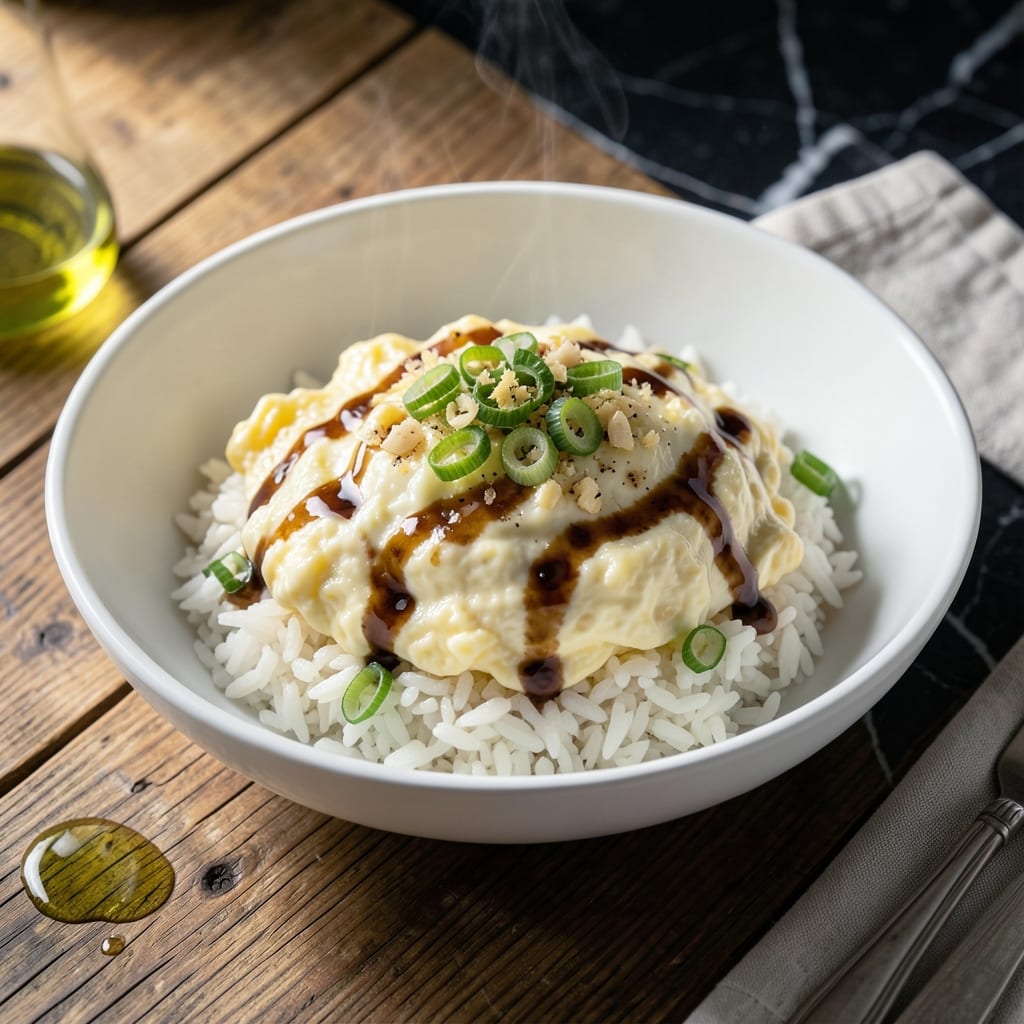
This Asian-inspired breakfast bowl transforms simple ingredients into a fast, satisfying meal. Scrambled eggs meet fluffy rice for a dish that’s both hearty and comforting.
Perfect for busy mornings, this recipe delivers restaurant-quality results with minimal effort. The eggs stay tender, the rice absorbs the flavors, and every bite feels intentional.
Ingredients for Scrambled Eggs with Rice
Transform simple pantry staples into this restaurant-quality breakfast bowl with ease.
| Ingredient | Amount | Notes |
|---|---|---|
| Large Eggs 🥚 | 8 whole | Room temperature preferred |
| Cooked White Rice 🍚 | 3 cups | Day-old or chilled preferred |
| Unsalted Butter 🧈 | 2 tbsp | Or substitute neutral oil |
| Soy Sauce 🥢 | 2 tbsp | Low-sodium if preferred |
| Green Onions 🧅 | 3 whole | Thinly sliced, green parts only |
| Garlic Cloves 🧄 | 2 cloves | Minced for maximum flavor |
| Fresh Ginger Root 🌿 | 1 tbsp | Peeled and finely grated |
| Sesame Oil 🫒 | 1 tsp | Toasted variety for depth |
| Salt 🧂 | ½ tsp | Diamond Crystal kosher preferred |
| Ground White Pepper 🌶️ | ¼ tsp | Subtle heat without color |
| Neutral Oil 🫒 | 1 tbsp | For cooking eggs |
| Sesame Seeds 🌰 | 1 tsp | Toasted for garnish |
The rice quality matters here. Day-old jasmine or long-grain white rice holds its shape best—avoid freshly cooked rice as it turns mushy. For authentic flavor, Kikkoman soy sauce is the gold standard, but any quality brand works. Whole Foods or Asian markets carry the best selection of fresh ginger and garlic. Always grate ginger with the grain for maximum juice extraction.
No white rice? Jasmine or basmati work equally well. Swap soy sauce for tamari for gluten-free or coconut aminos for a lighter taste. Green onions can be replaced with chives or shallots at a 1:1 ratio. For extra richness, add a splash of oyster sauce (vegetarian versions available). The sesame oil is non-negotiable for that nutty aroma.
Cooked rice keeps for 4-5 days refrigerated, while fresh ginger and garlic last 1 week in the fridge. Store sesame oil in a cool, dark place for up to 6 months. The dish reheats beautifully—microwave with a damp paper towel to retain moisture.
Why You’ll Love This Recipe
- One Pan Wonder: I just crack, scramble, and stir—no fancy techniques, and the rice soaks up all the buttery, soy-kissed goodness.
- Umami Bomb: The soy sauce hits the eggs and rice with this salty-savory depth, and the green onions add that fresh bite I crave.
- Breakfast for Dinner: I’ve served this for rushed mornings, lazy Sundays, and even as a midnight snack. It just works.
- Leftover Hero: Honestly, it’s the best way to use up that extra rice from last night. Fills me up without emptying my wallet.
Step-by-Step Instructions for Scrambled Eggs With Rice
Master this technique for a fast, flavorful breakfast that comes together in minutes.
Step 1: Prepare the Aromatics and Rice Base
Finely mince the 2 cloves Garlic Cloves and peel and grate the 1 tbsp Fresh Ginger Root. Thinly slice the 3 whole Green Onions, using only the green parts as noted. These aromatics build the foundation of flavor for your dish.
Heat the 3 cups Cooked White Rice in a microwave for 30-45 seconds to take the chill off if it’s cold. Day-old rice works best here as it’s drier and fries up beautifully without turning mushy. Set the rice aside while you prepare the eggs.
Step 2: Scramble the Eggs to Silky Perfection
In a large non-stick skillet, heat the 1 tbsp Neutral Oil and 2 tbsp Unsalted Butter over medium-high heat until the butter is foamy but not browned. Crack all 8 whole Large Eggs into a bowl, add the 0.5 tsp Salt and 0.25 tsp Ground White Pepper, and whisk vigorously until no streaks remain.
Pour the eggs into the hot pan. Let them sit undisturbed for 5 seconds until the edges just begin to set, then gently push the cooked portions toward the center with a silicone spatula, allowing the uncooked egg to flow to the edges. Repeat this process until the eggs are softly set but still slightly wet—about 2-3 minutes total. Remove from heat while they’re still slightly underdone; they’ll continue cooking from residual heat.
Step 3: Combine Rice and Eggs with Seasonings
Add the warmed rice to the skillet with the eggs. Drizzle the 2 tbsp Soy Sauce and 1 tsp Sesame Oil evenly over the mixture. The soy sauce should sizzle slightly as it hits the hot pan, releasing its aroma.
Gently fold everything together for 2-3 minutes until the rice is heated through and coated with the egg mixture. The grains should be separate and slightly crispy where they’ve contacted the pan. Taste and adjust seasoning if needed, though the soy sauce provides most of the saltiness.
Step 4: Finish and Garnish for Serving
Transfer the scrambled eggs with rice to a serving bowl or individual plates. The texture should be creamy from the eggs with distinct rice grains throughout. The color will be a beautiful mix of golden egg and white rice speckled with green from the onions.
Sprinkle the sliced green onions and 1 tsp Sesame Seeds evenly over the top. The sesame seeds add a subtle nutty crunch that contrasts perfectly with the soft eggs and rice. Serve immediately while hot—the eggs will continue to set slightly as they cool, so don’t delay.
Pro Tips For Making Scrambled Eggs With Rice
- Preheat the Pan: I learned this the hard way—cold butter in a cold pan leads to greasy, unevenly cooked eggs. Heat the pan over medium-low first, then add the butter so it melts evenly before the eggs go in.
- Use Day-Old Rice: Fresh rice turns mushy when scrambled with eggs. Day-old, slightly dried-out rice holds its texture and soaks up the soy sauce better.
- Skip the Overcrowding: Resist the urge to dump all the rice and eggs in at once. Cook in batches if needed—this keeps the eggs fluffy and the rice from steaming into a clump.
- Finish with Fresh Scallions: Add the green onions at the very end, just before serving. Tossing them in too early turns them limp and dulls their sharp, fresh flavor.
Perfect Pairings for This Dish
Fresh Garnishes
Cilantro adds bright, citrusy notes that cut through the richness. I toss ¼ cup chopped cilantro on top just before serving. For heat, add 1 sliced Thai chili or a dash of sriracha sauce. 🌶️
Side Dish Ideas
A simple cucumber salad with rice vinegar and 1 tsp sugar offers refreshing contrast. Quick-pickled radishes (4 thinly sliced with 2 tbsp vinegar) add crunch and tang.
Drink Pairings
Jasmine tea’s floral aroma complements the dish beautifully. For coffee lovers, a light roast with 1 tsp condensed milk balances the savory flavors. Iced green tea works for a cooler option. 🍵
Protein Add-Ons
Crispy bacon bits or char siu pork add depth. For seafood lovers, shrimp sautéed with 1 tsp garlic and 1 tsp ginger blends seamlessly.
Extra Toppings
Fried shallots (2 tbsp) add crunch and sweetness. A soft-boiled egg on top creates a luxurious touch. Furikake seasoning brings umami and texture.
Nutrition Facts
Frequently Asked Questions
Can I use freshly cooked rice?
Day-old rice works best as it’s drier and fries up fluffier. Fresh rice tends to be too moist and can turn mushy when mixed with the eggs. If using fresh, spread it on a tray and refrigerate for 20-30 minutes first.
How do I keep the eggs creamy?
Remove the eggs from heat while they’re still slightly wet—they’ll finish cooking from residual heat. Use medium-high heat and stir gently to create soft curds. Overcooking leads to dry eggs.
What can I substitute for soy sauce?
Tamari is a great gluten-free option with a similar flavor. For a lighter taste, try coconut aminos. If avoiding sodium, reduce the amount and add a pinch of salt to taste.
Can I make this ahead of time?
Yes! Store leftovers in an airtight container in the fridge for up to 2 days. Reheat in a skillet with a splash of water to restore moisture. Avoid microwaving, as it can make the eggs rubbery.

- Rice Pudding Recipe With Eggs and Milk: Old-Fashioned Custard-Style Comfort - September 30, 2026
- Rice Noodle Sauce Recipe: Bold Umami Depth for Authentic Stir-Fry - September 30, 2026
- Rice Pilaf Recipe: Fragrant Basmati With Toasted Vermicelli - September 30, 2026