
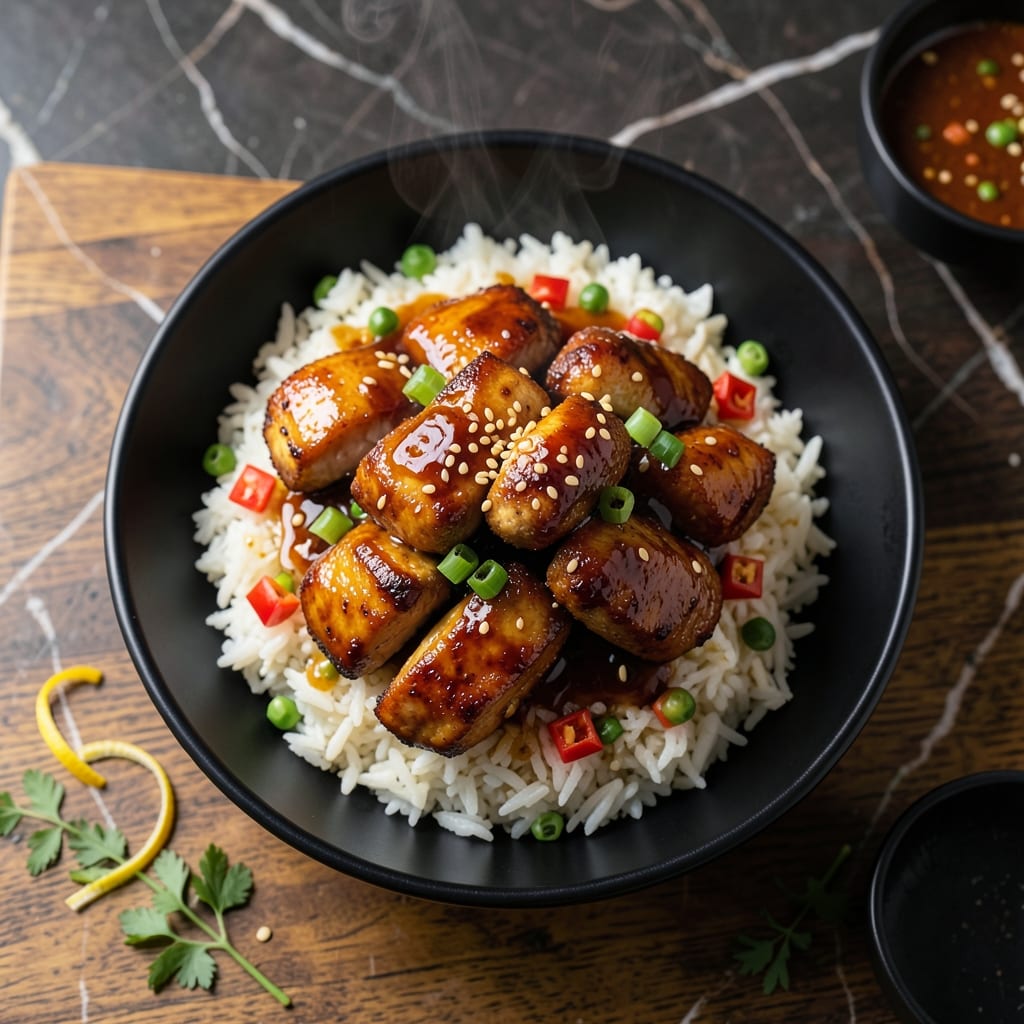
This recipe delivers tender chicken and perfectly charred fried rice with authentic wok flavors at home.
High heat and precise timing create that signature texture—crispy edges on the rice and juicy, glaze-coated chicken. The sesame sauce ties everything together with deep, nutty richness.
Each component builds on the last: velvety chicken pairs with savory rice for a balanced, restaurant-quality meal. No takeout required.
The result is a dish with complex layers of flavor and satisfying textures that will impress every time.
Ingredients for Sesame Chicken and Fried Rice
Quality ingredients deliver authentic wok-hei and tender chicken every time.
| Ingredient | Amount | Notes |
|---|---|---|
| Boneless Skinless Chicken Thighs 🍗 | 1 ½ lb | Cut into 1-inch pieces |
| Long-Grain White Rice 🍚 | 2 cups | Day-old preferred for texture |
| Soy Sauce 🫒 | ⅓ cup | Low-sodium recommended for balance |
| Sesame Oil 🫒 | 2 tbsp | Toasted for depth of flavor |
| Honey 🍯 | 3 tbsp | For glaze sweetness |
| Rice Vinegar 💧 | 2 tbsp | Adds essential acidity |
| Garlic Cloves 🧄 | 5 cloves | Minced for maximum flavor |
| Fresh Ginger 🌿 | 1 tbsp | Finely grated or minced |
| Green Onions 🧅 | 4 whole | Thinly sliced, whites and greens separated |
| Frozen Peas and Carrots 🥕 | 1 cup | Thawed before using |
| Large Eggs 🥚 | 2 whole | Lightly beaten for rice |
| Sesame Seeds 🌰 | 2 tbsp | Toasted for garnish |
| Vegetable Oil 🫒 | ¼ cup | High smoke point for frying |
| Cornstarch 🌾 | 2 tbsp | For velveting chicken |
| Red Pepper Flakes 🌶️ | ½ tsp | Adjust to heat preference |
The chicken thighs are non-negotiable for texture—boneless, skinless from a trusted butcher or Whole Foods works best. Day-old rice is essential; fresh rice turns mushy. Kikkoman soy sauce offers consistent quality, but any reputable brand suffices. For sesame oil, seek toasted varieties at Asian markets for authentic depth. Fresh ginger and garlic should be firm and aromatic; avoid pre-minced for superior flavor.
Swap chicken thighs for breasts if preferred, though they may dry out. Tamari replaces soy sauce at a 1:1 ratio. Honey can be substituted with maple syrup or agave for vegan adaptation. No rice vinegar? Apple cider vinegar at half the amount works. Frozen vegetable blends may include bell peppers—perfectly acceptable. Skip the eggs for a simpler version.
Store raw chicken in the coldest part of the fridge for up to 2 days. Cooked dish keeps 4-5 days refrigerated or 3 months frozen. Reheat in a skillet to restore texture rather than microwaving. Sesame oil and soy sauce last 1 year unopened, 6 months once opened.
Why You’ll Love This Recipe
- One Pan Meal: I toss the chicken, rice, and sauce together in a single skillet—minimal cleanup, maximum flavor.
- Sweet & Savory: The honey and soy sauce combo hits that ideal balance, and the sesame oil ties it all together.
- Feeds the Family: It’s a hit with kids and adults alike, and I love that it’s filling enough for leftovers.
- Budget Stretch: Boneless thighs and rice go a long way, and I’ll be real: it costs less than takeout.
Step-by-Step Instructions for Sesame Chicken and Fried Rice
Master the technique for perfect texture and balance in this classic wok preparation.
Step 1: Velvet the Chicken Thighs
Cut the 1.5 lb boneless skinless chicken thighs into 1-inch pieces and place them in a bowl. Add the 2 tbsp cornstarch, 0.33 cup soy sauce, 2 tbsp sesame oil, 3 tbsp honey, and 2 tbsp rice vinegar. Toss to coat evenly—this marinade tenderizes while adding layers of flavor.
Let the chicken marinate for 15-20 minutes at room temperature. The cornstarch creates a velvety coating that locks in moisture, ensuring the pieces stay juicy during high-heat cooking. Stir once halfway through to redistribute the marinade.
Step 2: Cook the Chicken Until Crispy
Heat the 0.25 cup vegetable oil in a wok or large skillet over medium-high heat until shimmering. Working in batches to avoid crowding, add the marinated chicken in a single layer. Cook undisturbed for 2-3 minutes until the bottoms develop a deep golden crust.
Flip and cook another 2-3 minutes until the chicken is cooked through and crispy on all sides. Transfer to a paper towel-lined plate to drain excess oil. The chicken should be tender inside with a sticky, caramelized exterior from the honey and soy.
Step 3: Stir-Fry the Aromatics and Rice
In the same wok, add the 5 cloves minced garlic, 1 tbsp fresh ginger, and the white parts of the 4 whole green onions. Stir-fry for 30-45 seconds until fragrant but not browned. Push the aromatics to one side and pour the 2 whole beaten large eggs into the center, scrambling quickly until just set.
Add the 2 cups day-old long-grain white rice, breaking up any clumps with your spatula. Stir-fry for 2-3 minutes until the rice is heated through and begins to toast slightly. Incorporate the 1 cup thawed frozen peas and carrots and cook for another 1-2 minutes.
Step 4: Combine and Finish
Return the crispy chicken to the wok with the rice. Add the 0.5 tsp red pepper flakes and toss everything together over high heat for 1-2 minutes to marry the flavors. The chicken should glaze slightly from the residual marinade.
Garnish with the green parts of the green onions and the 2 tbsp toasted sesame seeds. Serve immediately while the chicken is still crispy and the rice has a subtle wok-hei aroma. The dish should have a balance of sweet, savory, and umami with a slight kick from the red pepper flakes.
Pro Tips For Making Sesame Chicken And Fried Rice
- Velocity the Wok: Get your pan screaming hot before the chicken hits—about 2 minutes on high with oil shimmering. I learned this the hard way after too many batches of sesame chicken that steamed instead of seared.
- Dry Your Thighs: Pat those boneless thighs bone-dry with paper towels first. The sauce clings better and you’ll actually get that golden crust instead of sad, pale meat.
- Skip Fresh Rice: Use day-old, cold rice for the fried portion—fresh stuff turns to mush. Spread it on a tray the night before if you’re planning ahead, or microwave leftover rice for 30 seconds to dry it out in a pinch.
- Toast the Sesame: Add the sesame oil at the very end of cooking the chicken, just 30 seconds before pulling it from the pan. It burns easily and turns bitter if it hits the heat too early.
Wine and Beer Pairings for This Recipe
Wine Pairings
An off-dry Riesling from Germany or Washington State works beautifully here. Its slight sweetness complements the honey in the sauce while its acidity cuts through the richness. I recommend Dr. Loosen Blue Slate for a reliable, food-friendly option.
Light Red Options
A lightly chilled Beaujolais or Pinot Noir offers red fruit flavors that don’t overpower the dish. The Louis Jadot Beaujolais Villages has bright cherry notes that pair well with the sesame glaze. Serve slightly cooler than room temperature.
Beer Pairings
For beer lovers, a crisp Asian lager like Sapporo or Asahi cleanses your palate between bites. Their light body and subtle sweetness enhance the dish’s umami without competing. I always keep a few in my fridge for takeout nights. 🍺
Craft Alternatives
A witbier with its citrus and coriander notes provides interesting contrast to the savory flavors. Hoegaarden or Allagash White are widely available choices. Avoid hop-heavy IPAs that will clash with the sesame sauce.
Non-Alcoholic
For a zero-proof option, ginger beer offers spicy kick that complements the red pepper flakes. Fever-Tree makes an excellent version. Alternatively, jasmine green tea (chilled or hot) enhances the dish’s Asian-inspired flavors. 💡
Nutrition Facts
Frequently Asked Questions
Can I use chicken breast instead of thighs?
Yes, but thighs stay juicier. If using breasts, reduce cooking time to 2 minutes per side and slice thinner to prevent drying out.
Why does the recipe call for day-old rice?
Fresh rice is too moist and turns mushy when stir-fried. Day-old rice has dried slightly, creating that perfect separate, slightly crispy texture.
How do I prevent the chicken from sticking to the wok?
Make sure your wok is very hot and use enough oil. Don’t move the chicken for the first 2-3 minutes to develop a proper crust.
Can I make this dish gluten-free?
Substitute tamari for soy sauce and ensure your cornstarch is certified gluten-free. All other ingredients are naturally gluten-free.

- Jollof Rice Sauce Recipe: West African Tomato and Spice Infusion - September 25, 2026
- Japanese Rice Soup Recipe: Umami-Rich Comfort in a Bowl - September 25, 2026
- Homemade Cream Of Rice Recipe: Silk-Smooth Breakfast in Minutes - September 25, 2026