
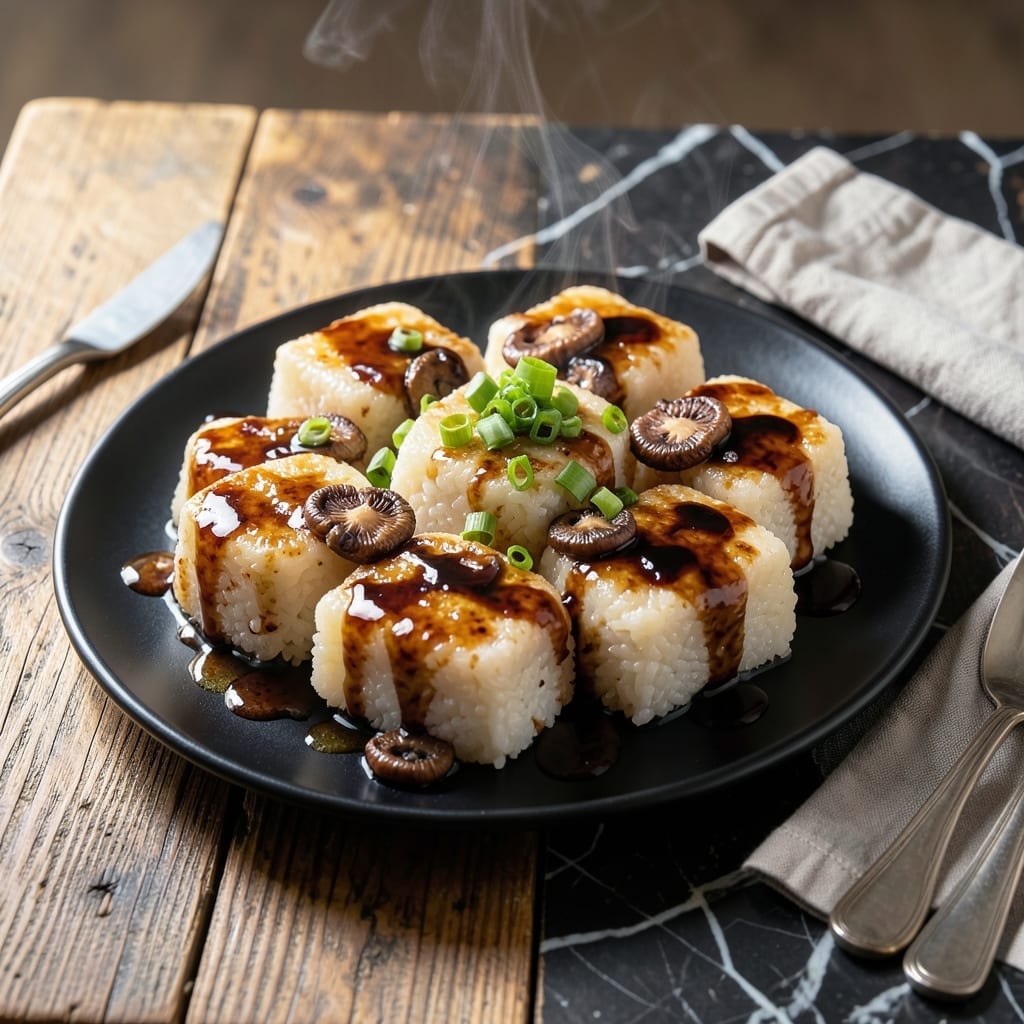
This traditional dish brings the authentic flavors of Shanghai to your kitchen with its signature chewy texture and rich savory glaze.
The secret lies in properly soaking the rice cakes and cooking them until they develop a slightly crisp exterior while maintaining their tender bite. The soy-based glaze adds depth and umami, making every mouthful irresistibly satisfying.
Ingredients for Shanghai Rice Cake
Authentic Shanghai flavors come alive with these carefully selected ingredients for perfect texture and savory depth.
| Ingredient | Amount | Notes |
|---|---|---|
| Shanghai Rice Cakes 🍚 | 1 lb | Dried, cylindrical variety |
| Light Soy Sauce 🫒 | ⅓ cup | Low-sodium preferred |
| Dark Soy Sauce 🫒 | 2 tbsp | For color and depth |
| Shaoxing Wine 🍶 | 3 tbsp | Chinese cooking wine |
| Sugar 🍚 | 1 tbsp | Granulated white |
| Vegetable Oil 🫒 | 3 tbsp | High smoke point |
| Garlic Cloves 🧄 | 4 cloves | Minced finely |
| Fresh Ginger 🌿 | 1 tbsp | Minced or grated |
| Green Onions 🧅 | 4 whole | Thinly sliced, white and green parts separated |
| Dried Shiitake Mushrooms 🍄 | 4 whole | Rehydrated and sliced |
| Ground White Pepper 🌶️ | ¼ tsp | For authentic flavor |
| Sesame Oil 🫒 | 1 tsp | Toasted, for finishing |
| Red Chili Flakes 🌶️ | ½ tsp | Optional, for heat |
The rice cakes are non-negotiable for authenticity. Asian grocery stores carry the dried cylindrical variety—avoid the fresh ones, as they lack the necessary chew. Look for brands like Three Rings or Lung Fung. Proper soaking is key: they should be pliable but not mushy. The Shaoxing wine adds complexity; substitute dry sherry if unavailable, but avoid cooking wines with added salt.
For the soy sauces, Pearl River Bridge offers excellent quality at a reasonable price. No dark soy sauce? Use regular soy sauce plus a pinch of brown sugar for color. Fresh ginger and garlic are essential—powdered versions won’t deliver the same punch. The mushrooms can be swapped for fresh shiitake or wood ear mushrooms (hydrate if dried).
Store rice cakes in a cool, dry place indefinitely. Once soaked, cook immediately or refrigerate for up to 24 hours. The finished dish keeps 3-4 days refrigerated but is best served fresh. Reheat gently to maintain the signature chewy texture.
Why You’ll Love This Recipe
- I’ll be real: it’s my go-to for potlucks because it stretches far and everyone always asks for the recipe.
- One Pan Wonder: I just toss the rice cakes in with the soy sauces and Shaoxing wine—no fancy techniques, no mess.
- Umami Bomb: The combo of light and dark soy sauce gives it this deep, savory-sweet flavor that’s honestly addictive.
- Feeds a Crowd: I’ll be real: it’s my go-to for potlucks because it stretches far and everyone always asks for the recipe.
Step-by-Step Instructions for Shanghai Rice Cakes
Master the technique for perfectly chewy rice cakes with a rich, savory glaze every time.
Step 1: Prepare and Soak the Rice Cakes
Begin by soaking the 1 lb Shanghai Rice Cakes in warm water for 30 minutes. This softens their texture and prevents them from becoming overly dense during cooking. Drain thoroughly before use—excess water will dilute the glaze and prevent proper searing.
I recommend using a large bowl with enough water to fully submerge the cakes. If they float, place a small plate on top to keep them immersed. After soaking, they should be pliable but still hold their cylindrical shape. Pat them dry with a clean towel just before cooking.
Step 2: Rehydrate the Mushrooms and Prepare Aromatics
Soak the 4 whole Dried Shiitake Mushrooms in hot water for 20 minutes until softened. Slice them thinly, reserving the soaking liquid for potential use later. Meanwhile, mince the 4 cloves Garlic Cloves and 1 tbsp Fresh Ginger finely—this ensures even distribution of flavor in every bite.
Thinly slice the 4 whole Green Onions, keeping the white and green parts separate. The whites will go into the stir-fry for depth, while the greens make an excellent garnish. This separation maximizes both flavor and presentation. Have all your aromatics prepped before you start cooking; the process moves quickly once it begins.
Step 3: Create the Savory Glaze
In a small bowl, combine the 0.33 cup Light Soy Sauce, 2 tbsp Dark Soy Sauce, 3 tbsp Shaoxing Wine, and 1 tbsp Sugar. Stir until the sugar fully dissolves. The dark soy sauce adds depth and color, while the light soy sauce provides saltiness without overpowering.
Add the 0.25 tsp Ground White Pepper and optional 0.5 tsp Red Chili Flakes for a subtle kick. This glaze will caramelize slightly during cooking, coating the rice cakes in a glossy, umami-rich sauce. Taste and adjust seasoning if needed, but remember the flavors will concentrate as it reduces.
Step 4: Stir-Fry for Optimal Texture
Heat 3 tbsp Vegetable Oil in a wok or large skillet over medium-high heat until shimmering. Add the sliced mushrooms and stir-fry for 3-4 minutes until they begin to soften and develop color. Then add the minced garlic, ginger, and the white parts of the green onions. Cook for 30 seconds until fragrant but not browned.
Add the drained Shanghai Rice Cakes and pour the glaze over them. Stir-fry for 8-10 minutes, tossing frequently, until the rice cakes are fully coated and have absorbed most of the liquid. They should be chewy on the inside with slightly crispy edges. If the mixture seems dry, add a splash of the reserved mushroom soaking liquid.
Step 5: Finish and Serve
Remove from heat and drizzle with 1 tsp Sesame Oil. Toss once more to distribute evenly. The sesame oil adds a final layer of aroma that ties all the flavors together. Garnish with the reserved green onion tops for a fresh, vibrant finish.
Serve immediately while hot. The rice cakes will continue to absorb flavors as they sit, so for the best texture, enjoy them right away. The dish should have a balance of chewy, tender rice cakes with a glossy, deeply savory sauce clinging to each piece.
Pro Tips For Making Shanghai Rice Cake
- Soak the Cakes: I learned this the hard way—soak the rice cakes in warm water for 15-20 minutes before cooking, or they’ll stay rock-hard in the center no matter how long you stir-fry them.
- High Heat First: Crank the heat to medium-high when you start searing the rice cakes. Sounds aggressive, but it’s the only way to get those slightly crispy edges before they absorb the sauce.
- Balance the Soy: Use a 2:1 ratio of light to dark soy sauce—any more dark soy and your dish will taste bitter and look like a tar pit. My grandmother swore by this, and she was right.
- Deglaze with Wine: After browning the rice cakes, pour in the Shaoxing wine while the pan’s still hot to lift all those sticky, flavorful bits. I skip this when I’m lazy, but the dish is noticeably richer when I don’t.
Perfect Pairings for This Recipe
Vegetable Sides
Pair this dish with stir-fried bok choy or baby spinach for a fresh contrast to the rich glaze. I toss 4 cups of greens with 1 tbsp garlic and 2 tsp sesame oil for 2 minutes in a hot wok. The bitterness balances the sweetness perfectly. 🥗
Protein Additions
For heartier meals, serve with steamed fish or soy-gon braised pork belly. The mild flavors let the rice cakes shine. I often add ½ lb shrimp to the stir-fry during the last 3 minutes of cooking for a seafood twist.
Soup Companions
A light egg drop soup or wonton soup makes an excellent starter. The warm broth prepares your palate for the chewy texture. I prefer hot and sour soup for its tangy contrast to the savory glaze. 🍜
Drink Pairings
Jasmine tea is the classic choice—its floral notes complement the umami. For beer lovers, a crisp Tsintgtao or Sapporo cleanses the palate. I enjoy a chilled green tea with lemon for a refreshing finish.
Pickled Accents
Add pickled radish or preserved mustard greens on the side for a tangy crunch. Just ¼ cup per serving adds brightness. These traditional condiments are staples in Shanghai households and cut through the richness beautifully.
Nutrition Facts
Frequently Asked Questions
How do I get the perfect chewy texture?
Soak the rice cakes for exactly 30 minutes in warm water. This softens them without making them mushy. Stir-frying for 8-10 minutes on medium-high heat develops the ideal chew with crispy edges.
Can I substitute dark soy sauce?
Yes! Mix 2 tbsp regular soy sauce with ½ tsp brown sugar for color and depth. The sugar mimics the caramel notes while maintaining the rich flavor.
Why did my rice cakes turn out hard?
They likely didn’t soak long enough or were cooked too quickly. Ensure they’re pliable after soaking and stir-fry gradually to absorb the glaze.
Can I make this dish ahead of time?
It’s best served fresh, but you can prep ingredients in advance. Soaked rice cakes keep refrigerated for 24 hours. Reheat gently to preserve texture.

- Jollof Rice Sauce Recipe: West African Tomato and Spice Infusion - September 25, 2026
- Japanese Rice Soup Recipe: Umami-Rich Comfort in a Bowl - September 25, 2026
- Homemade Cream Of Rice Recipe: Silk-Smooth Breakfast in Minutes - September 25, 2026