
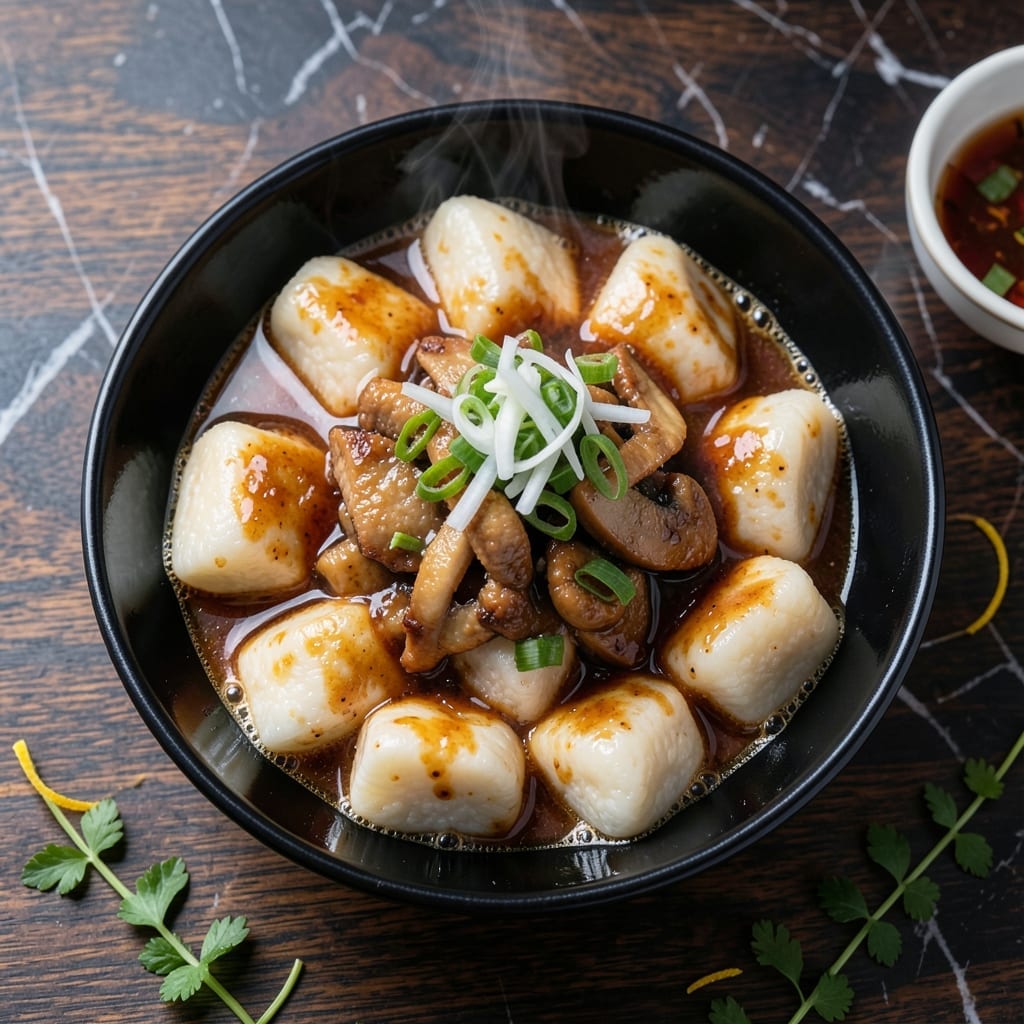
This traditional dish brings together chewy rice cakes with a rich, savory-sweet glaze that defines Shanghainese cuisine. The texture is the star here—soft yet resistant, with a satisfying bite that absorbs every layer of flavor.
What makes this version special is the balance of sweetness and umami, achieved through a slow-cooked reduction that coats each piece. The result is a dish that feels both comforting and celebratory, perfect for sharing at the table.
Ingredients for Shanghainese Rice Cake
Traditional Shanghainese ingredients create that signature chewy texture and savory-sweet depth everyone loves.
| Ingredient | Amount | Notes |
|---|---|---|
| Shanghai Rice Cakes 🍚 | 1 lb | Pre-soaked if dried variety |
| Light Soy Sauce 🫒 | ½ cup | Low-sodium preferred for balance |
| Dark Soy Sauce 🫒 | 2 tbsp | For depth and color |
| Brown Sugar 🍚 | ¼ cup | Light or dark works |
| Shaoxing Wine 🍷 | 2 tbsp | Dry sherry as substitute |
| Vegetable Stock 🥕 | 1 cup | Low-sodium for control |
| Soybean Paste 🫒 | 1 tbsp | Fermented for umami depth |
| Fresh Ginger 🌿 | 1 whole | Peeled and minced |
| Green Onions 🧅 | 4 whole | Thinly sliced for garnish |
| Sesame Oil 🫒 | 1 tsp | Toasted for aroma |
| Dried Shiitake Mushrooms 🍄 | 4 whole | Rehydrated and sliced |
| Cornstarch 🌾 | 1 tbsp | For thickening glaze |
| Neutral Cooking Oil 🫒 | 2 tbsp | For stir-frying |
| White Pepper 🌶️ | ¼ tsp | Ground for subtle heat |
The rice cakes are everything here. Asian markets carry fresh ones in the refrigerated section (look for nian gao), but dried work too—just soak them overnight. Shaoxing wine is non-negotiable for authenticity, though dry sherry in a pinch won’t ruin the dish. Fermented soybean paste adds that deep umami backbone; yellow or brown varieties both work. If your market has a Chinese section, check the labels carefully.
No Shaoxing wine? Dry sherry is your best bet. Mushroom soy sauce can stand in for dark soy in a 1:1 ratio if you’re missing it. Fresh ginger is ideal but ground ginger at half the amount works. The brown sugar can be swapped for rock sugar if you want a more traditional touch (just crush it first). For a gluten-free version, use tamari instead of soy sauce.
The rice cakes dry out fast once opened, so keep them sealed tight and use within 3 days (or freeze for 1 month). The glaze thickens as it cools—reheat with a splash of water to loosen. Leftovers? They’ll keep 4-5 days in the fridge, but the rice cakes are best fresh.
Why You’ll Love This Recipe
- One Pan Wonder: I just toss the rice cakes with soy sauces, sugar and wine, then let the pan do the work.
- Sweet-Savory Magic: The brown sugar caramelizes with the soy sauces, creating this sticky, umami-rich glaze that clings to every chewy bite.
- Feeds a Hungry Crowd: I make a big batch for potlucks—it’s filling, satisfies meat-eaters and vegetarians alike, and always gets devoured.
- Leftovers? Even Better: The flavors deepen overnight, and reheating takes seconds. Honestly, I sometimes make extra just for the next-day treat.
Step-by-Step Instructions for Shanghainese Rice Cakes
Master these precise techniques to achieve the ideal balance of chewy texture and rich, savory-sweet flavor.
Step 1: Prepare the Rice Cakes and Aromatics
If using dried Shanghai rice cakes, soak them in warm water for 20-30 minutes until pliable and slightly expanded. Drain thoroughly and pat dry with a clean towel to prevent splattering during cooking. This rehydration step ensures even cooking and optimal texture.
Meanwhile, mince the fresh ginger finely and thinly slice the green onions, separating the white and green parts. Rehydrate the dried shiitake mushrooms in hot water for 15 minutes, then slice them into thin strips. These preparations form the aromatic foundation of the dish.
Step 2: Create the Savory-Sweet Glaze
In a small bowl, combine the 0.5 cup light soy sauce, 2 tbsp dark soy sauce, 0.25 cup brown sugar, 2 tbsp Shaoxing wine, 1 cup vegetable stock, 1 tbsp soybean paste, and 0.25 tsp white pepper. Whisk until the brown sugar fully dissolves and the mixture is smooth.
This glaze delivers the signature Shanghai flavor profile—deep umami from the soybean paste, balanced sweetness from the sugar, and complex savory notes from the dual soy sauces. The consistency should be thin enough to coat the back of a spoon but thick enough to cling to the rice cakes during cooking.
Step 3: Stir-Fry the Aromatics and Mushrooms
Heat the 2 tbsp neutral cooking oil in a wok or large skillet over medium-high heat until shimmering. Add the minced ginger and white parts of the green onions, stir-frying for 30-45 seconds until fragrant but not browned. Immediately add the sliced shiitake mushrooms and cook for 3-4 minutes until they soften and begin to release their moisture.
The ginger and onions should perfume the oil without burning, as burnt aromatics will impart bitterness to the final dish. The mushrooms should absorb some of the oil while contributing their earthy depth to the base flavors.
Step 4: Cook the Rice Cakes and Finish with Glaze
Add the prepared Shanghai rice cakes to the wok, stirring gently to coat them in the oil and aromatics. Pour the glaze mixture evenly over the rice cakes, then stir to ensure complete coverage. Cook for 5-7 minutes, stirring occasionally, until the rice cakes absorb most of the liquid and develop a glossy sheen.
The rice cakes should become transluscent at the edges while maintaining their chewy center. As the glaze reduces, it will thicken slightly, coating each piece with its rich, savory-sweet essence. Avoid over-stirring, which can break the delicate rice cakes.
Step 5: Thicken and Garnish
In a small bowl, mix the 1 tbsp cornstarch with 2 tbsp of water to create a slurry. Stir this into the rice cakes and cook for an additional 1-2 minutes until the sauce thickens to a syrupy consistency that clings to the rice cakes.
Remove from heat, drizzle with the 1 tsp sesame oil, and garnish with the green parts of the green onions. The sesame oil adds a final layer of aroma, while the green onions provide a fresh, crisp contrast to the rich, sticky rice cakes. Serve immediately while hot.
Pro Tips For Making Shanghainese Rice Cake
- Pre-soak the cakes: Soak the rice cakes in warm water for 10-15 minutes before cooking—I learned this the hard way after ending up with rock-hard pieces in my stir-fry.
- Balance the soy sauces: Use a 2:1 ratio of light to dark soy sauce for that perfect mix of saltiness and deep color without overpowering the dish.
- Deglaze with wine: After searing the rice cakes, pour in the Shaoxing wine while the pan is still hot to lift all those browned bits—this adds a serious depth of flavor.
- Skip the crowding: Cook the rice cakes in a single layer and resist the urge to stir constantly, or they’ll turn mushy instead of getting that slight crispness on the edges.
Flavor Customization for These Flavors
Spicy Kick
Add ½ tsp chili oil or 1 minced fresh red chili to the glaze for heat without overpowering. I love the subtle warmth this adds. For extra depth, include 1 tsp Sichuan peppercorns during the final minute of cooking. 🌶️
Umami Boost
Enhance the savory profile with 1 tbsp oyster sauce or 1 tsp fish sauce in your glaze. These add complexity without altering the sweet-savory balance. I often use Lee Kum Kee oyster sauce for consistent quality.
Extra Veggies
Stir in ½ cup diced carrots or ¼ cup sliced bell peppers with the mushrooms. The vegetables add color and texture while soaking up the delicious sauce. Just ensure they’re cut small for even cooking.
Protein Addition
For a heartier dish, add ½ lb thinly sliced pork shoulder or ¼ lb shrimp when stir-frying the aromatics. The protein pairs perfectly with the chewy rice cakes and rich glaze.
Nutty Crunch
Toast 2 tbsp crushed peanuts or 1 tbsp sesame seeds and sprinkle over the finished dish. This adds a delightful contrast in texture that elevates every bite. 💫
Herb Infusion
Finish with fresh herbs like cilantro or Thai basil for a bright, aromatic touch. I prefer cilantro for its citrusy notes that cut through the richness of the dish.
Nutrition Facts
Frequently Asked Questions
Can I use fresh rice cakes instead of dried?
Yes! Fresh rice cakes work perfectly and skip the soaking step. Just rinse them briefly to remove excess starch before cooking. They’ll have a slightly softer texture than rehydrated dried ones.
Why did my sauce turn out too thin?
This usually means the cornstarch slurry didn’t have enough time to thicken. Cook for an extra 1-2 minutes after adding it, or mix another ½ tbsp cornstarch with water and stir in gradually.
How do I prevent the rice cakes from sticking?
Use medium-high heat and stir gently but frequently. Add a splash of stock if they start sticking. A well-seasoned wok or nonstick pan helps too.
Can I make this ahead of time?
Cook the rice cakes and sauce separately, then combine and reheat gently with a splash of water. They’ll keep in the fridge for 2-3 days, though fresh is best for texture.

- Jollof Rice Sauce Recipe: West African Tomato and Spice Infusion - September 25, 2026
- Japanese Rice Soup Recipe: Umami-Rich Comfort in a Bowl - September 25, 2026
- Homemade Cream Of Rice Recipe: Silk-Smooth Breakfast in Minutes - September 25, 2026