
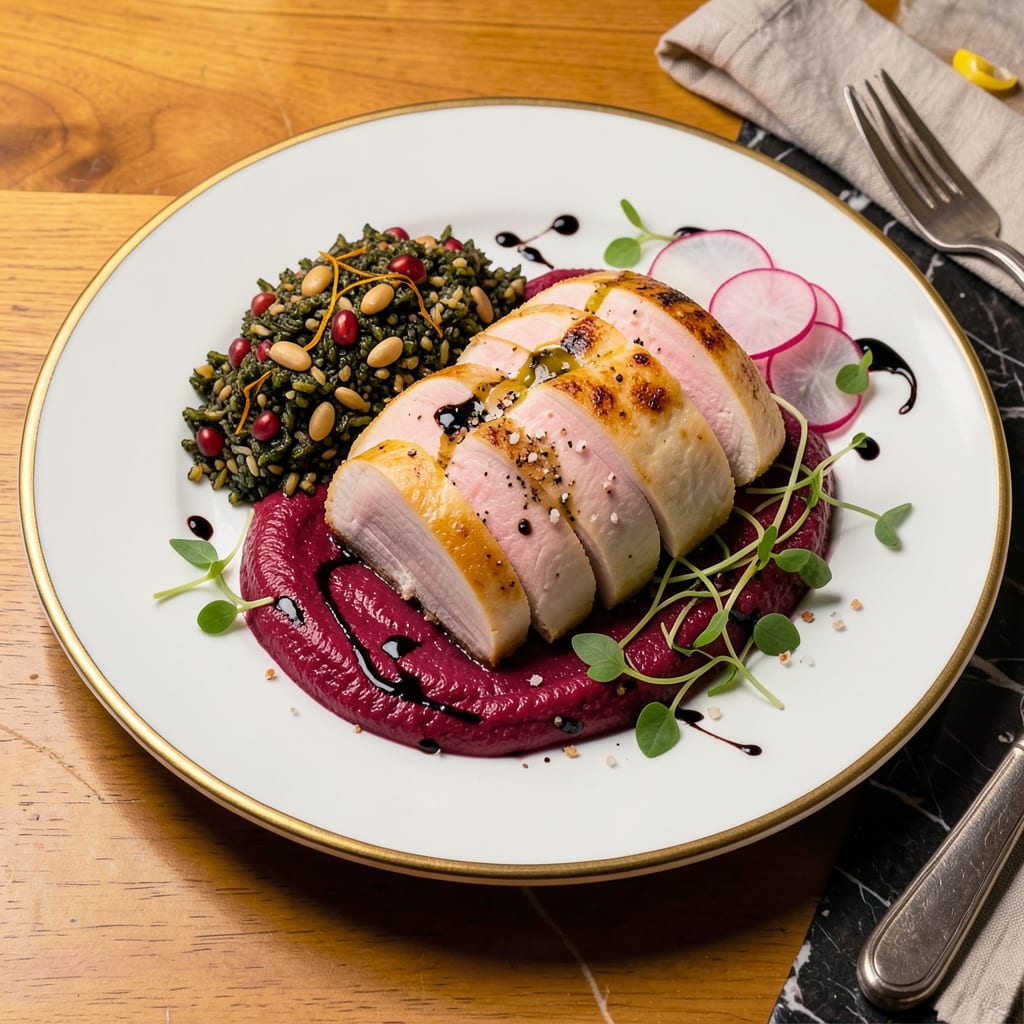
Sous vide chicken often appears pink due to myoglobin, a protein that remains stable at low cooking temperatures. It’s safe to eat if cooked to 145°F (63°C) for at least 9 minutes, though higher temps (165°F/74°C) are recommended for texture and safety.
This pink hue often catches people off guard because we associate color with doneness, but sous vide changes the game. 🔥 The controlled, low-temperature environment preserves myoglobin’s natural state, unlike high-heat methods that turn it brown. I’ve found that even perfectly cooked sous vide chicken can look underdone to the untrained eye—this is why a reliable thermometer becomes your best kitchen ally.
What’s fascinating is how temperature precision affects both safety and texture. At 145°F, you’re hitting the pasteurization sweet spot, but the meat stays juicier than traditional methods. However, bumping it to 165°F gives you that familiar opaque appearance while still keeping moisture locked in. ✨
💡 In This Article
- Why Sous Vide Chicken Stays Pink After Cooking
- Sous Vide Chicken Safety: Temperature and Time Guidelines
Why Sous Vide Chicken Stays Pink After Cooking
The pink color in sous vide chicken comes from myoglobin, a protein that stores oxygen in muscle tissues. Unlike traditional high-heat cooking, sous vide’s precise temperature control (typically 130-165°F) doesn’t break down myoglobin enough to turn it brown. This protein remains in its oxygenated state, giving the meat that rosy hue even when fully cooked.
The controlled environment prevents the rapid denaturation that occurs with grilling or frying. 🔥
What’s fascinating is how temperature affects myoglobin’s behavior. At 145°F, the protein begins to unfold but doesn’t fully convert to metmyoglobin (the brown form). Traditional methods blast through this range quickly, but sous vide holds the temperature steady.
This means chicken cooked at 145°F for 2 hours might look pinker than chicken cooked at 165°F for 1 hour, even though both are safe. The longer exposure at lower temps preserves more of the original color. ✨
Hemoglobin from blood vessels also contributes to the pink appearance. In sous vide, these vessels don’t rupture as violently as with high-heat methods, so the hemoglobin stays distributed throughout the meat. This is why even well-cooked sous vide chicken can have a uniform pink tint rather than the gradient you’d see in grilled chicken.
The absence of charring or browning reactions (like the Maillard reaction) further enhances the pink appearance. 💫
Compare this to traditional cooking: a grilled chicken breast at 375°F turns opaque quickly because the intense heat forces myoglobin to denature rapidly. Sous vide’s gentle approach maintains the protein’s structure, which is why the color can be misleading.
The texture, however, is noticeably different—sous vide chicken at 145°F feels tender and moist, while traditionally cooked chicken at the same temp might seem underdone. ⚡
Another factor is the chicken’s age and diet. Younger birds have more myoglobin, which can intensify the pink color. Free-range or pasture-raised chickens often exhibit deeper pink hues due to higher muscle activity. This is why two pieces of chicken cooked identically might show different shades of pink. The key takeaway?
Color alone isn’t a reliable indicator of doneness in sous vide cooking. 🌟
To put it into perspective, think of rare steak—it’s safely edible at 125°F and bright red inside. The same principle applies here, but with chicken, we’re working within a narrower safe temperature window. The pink color in sous vide chicken is simply the protein’s natural state at these controlled temperatures. It’s science, not undercooking! 💛

- Jollof Rice Sauce Recipe: West African Tomato and Spice Infusion - September 25, 2026
- Japanese Rice Soup Recipe: Umami-Rich Comfort in a Bowl - September 25, 2026
- Homemade Cream Of Rice Recipe: Silk-Smooth Breakfast in Minutes - September 25, 2026