
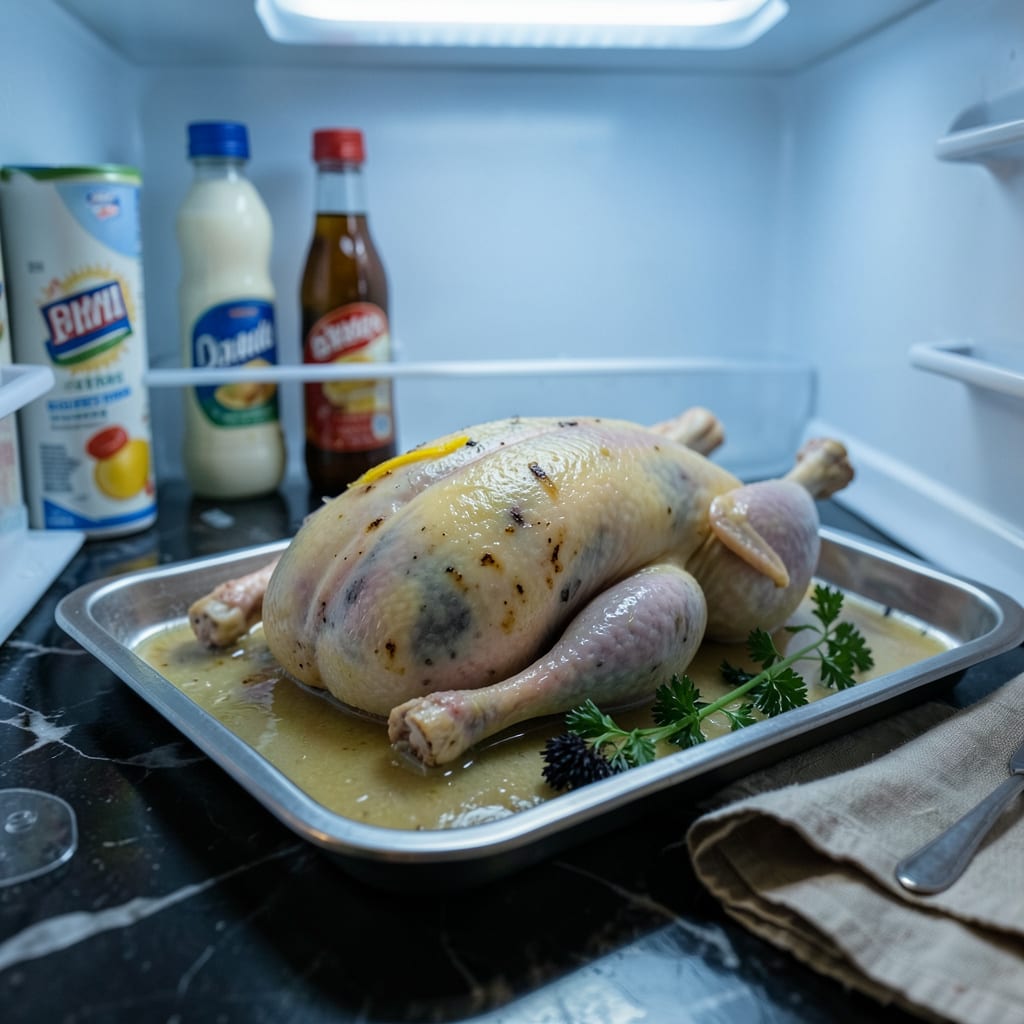
Defrosted raw chicken should not be kept in the fridge for more than 1-2 days according to USDA guidelines. After 3 days, it’s likely unsafe due to bacterial growth, even if refrigerated. Discard it if it smells sour, feels slimy, or has a grayish tint.
This tight window isn’t arbitrary—it’s based on how quickly harmful bacteria like Salmonella and Campylobacter multiply at fridge temperatures. 🔥 Even at 40°F or below, these pathogens can reach dangerous levels within days, especially if the chicken was thawed improperly or left at room temperature too long. I always recommend treating defrosted chicken like fresh raw poultry: use it fast or freeze it again immediately if plans change.
What many people overlook is that refrigeration only slows spoilage—it doesn’t stop it. The moisture from thawing creates an ideal breeding ground for bacteria, while enzymes in the meat continue breaking down proteins. That’s why the USDA’s 2-day rule is non-negotiable for safety. ✨
💡 In This Article
- Why Defrosted Chicken Spoils Quickly in the Fridge
- Safe Handling and Storage Tips for Defrosted Chicken
Why Defrosted Chicken Spoils Quickly in the Fridge
The moment chicken begins to thaw, two critical processes kick into high gear: bacterial proliferation and enzymatic breakdown. At refrigerator temperatures (35-40°F), pathogens like Salmonella and Campylobacter don’t stop growing—they just slow down. These bacteria double every 20-30 minutes at room temperature, but even in the fridge, they can reach dangerous levels within 48-72 hours.
The thawing process releases moisture that creates a perfect breeding ground. 🔥
What most people don’t realize is that thawed chicken contains more surface moisture than frozen chicken, which accelerates spoilage. This moisture combines with natural meat enzymes that continue breaking down proteins even at cold temperatures. The result? A rapid increase in volatile organic compounds that create off-odors.
Studies show that chicken’s pH rises during thawing (from ~5.7 to ~6.2), making it even more hospitable to bacterial growth. 💫
The USDA’s 2-day guideline isn’t arbitrary—it’s based on microbial growth curves. At 40°F, Salmonella can increase from 10 cells to over 1 million in just 3 days. The danger zone begins when counts exceed 100,000 CFUs/g, which typically happens between days 2-3.
This is why professional kitchens follow strict “first in, first out” protocols with poultry. ⚡
Temperature fluctuations make matters worse. Every time you open the fridge door, the temperature can spike by 5-10°F, giving bacteria growth spurts. The outer layers of thawed chicken warm faster than the center, creating microenvironments where pathogens thrive. Even in a perfectly maintained fridge, the clock starts ticking the moment thawing begins. 🌟
Oxidation plays a sneaky role too. As chicken thaws, iron from myoglobin reacts with oxygen, creating that unappetizing grayish tint. While not always dangerous, this color change often coincides with bacterial growth.
The combination of moisture, enzyme activity, and oxidation explains why thawed chicken has such a short fridge life compared to other proteins like beef. ✨
Here’s the kicker: freezing only pauses bacterial growth—it doesn’t kill existing bacteria. When you thaw chicken, any bacteria present before freezing wake up and start multiplying immediately. This is why previously frozen chicken often spoils faster than fresh chicken—it’s essentially getting a “head start” on bacterial growth. 💥
The bottom line? That 3-day-old defrosted chicken isn’t just “questionable”—it’s a microbial time bomb. The bacteria counts at this stage can easily exceed safety thresholds, even if the chicken looks and smells “okay.” When in doubt, remember that foodborne pathogens don’t always announce their presence with obvious spoilage signs. 💛

- Jollof Rice Sauce Recipe: West African Tomato and Spice Infusion - September 25, 2026
- Japanese Rice Soup Recipe: Umami-Rich Comfort in a Bowl - September 25, 2026
- Homemade Cream Of Rice Recipe: Silk-Smooth Breakfast in Minutes - September 25, 2026