
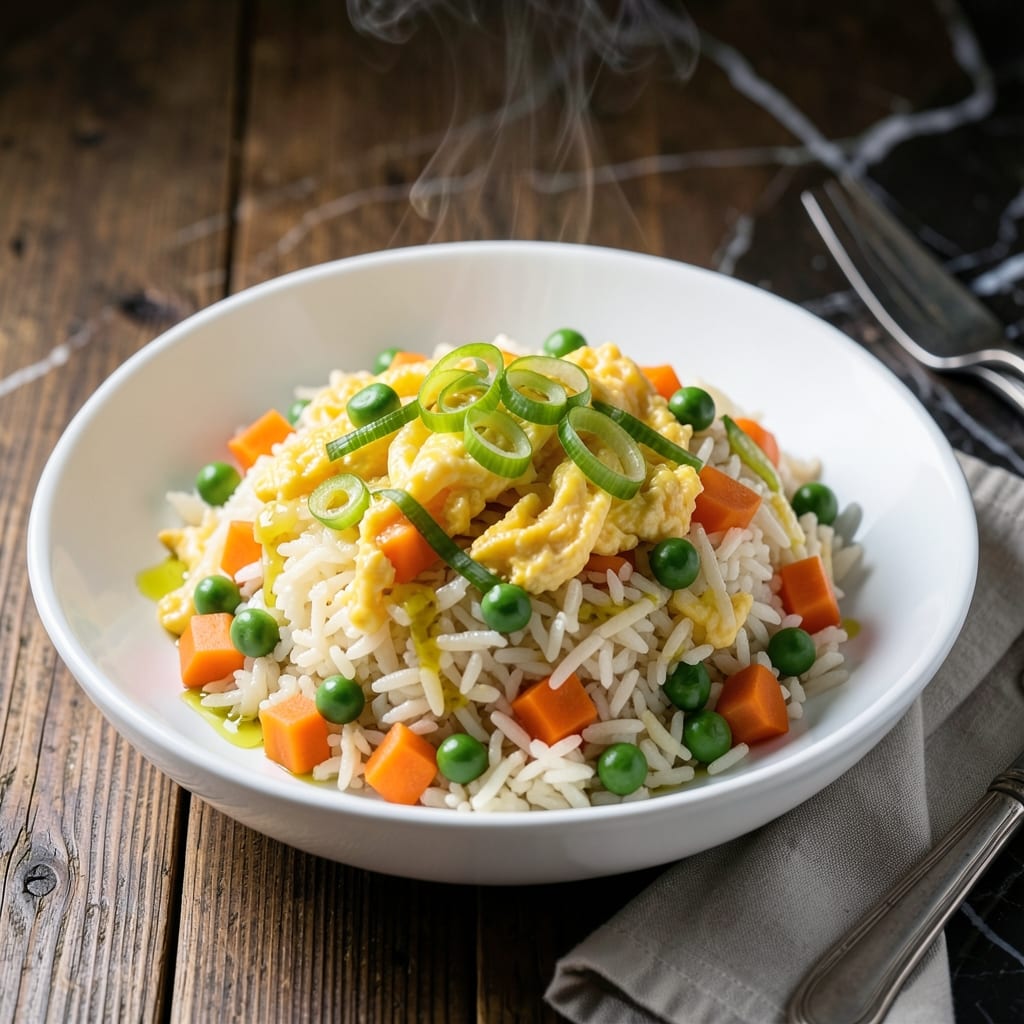
This method transforms leftover rice into a restaurant-quality dish with minimal effort. High heat and quick cooking create that signature wok-charred flavor that makes every bite exciting.
The beauty lies in its versatility—use whatever vegetables or proteins you have on hand. A hot wok and 5 minutes of active cooking time deliver perfectly seared ingredients with distinct textures.
You’ll achieve that coveted balance of smoky, savory, and slightly crispy elements that defines great stir-fry. The technique is simple but the results are anything but ordinary.
Ideal for busy weeknights when you want a flavorful meal without complicated prep. This approach works every time.
Ingredients for Stirfry Rice
Transform day-old rice into a flavor-packed dish with these essential ingredients.
| Ingredient | Amount | Notes |
|---|---|---|
| Cooked White Rice 🍚 | 4 cups | Day-old, chilled preferred |
| Vegetable Oil 🫒 | 3 tbsp | High smoke point required |
| Large Eggs 🥚 | 2 whole | Lightly beaten |
| Carrots 🥕 | 2 whole | Medium, julienned |
| Green Onions 🧅 | 4 whole | Thinly sliced, white and green parts separated |
| Frozen Green Peas 🌱 | 1 cup | Thawed and drained |
| Soy Sauce 💧 | 3 tbsp | Low-sodium preferred |
| Oyster Sauce 🍶 | 1 tbsp | Vegan oyster sauce if needed |
| Sesame Oil 🫒 | 1 tsp | Toasted variety for aroma |
| Garlic Cloves 🧄 | 3 cloves | Minced finely |
| Fresh Ginger 🌿 | 1 tbsp | Peeled and grated |
| Salt 🧂 | ½ tsp | Or to taste |
| White Pepper 🌶️ | ¼ tsp | Freshly ground |
The rice quality is paramount. Day-old jasmine or long-grain white rice provides the ideal dry, separated texture—freshly cooked rice steams rather than fries. Avocado oil or peanut oil offers the necessary high smoke point for authentic wok-hei. For proteins, Costco’s frozen shrimp or Trader Joe’s pre-diced chicken breast streamline prep without sacrificing quality.
No oyster sauce? Hoisin or fish sauce at half the amount delivers similar umami depth. Substitute bell peppers or snap peas for the carrots if preferred. For a gluten-free version, tamari or coconut aminos replace soy sauce seamlessly. Fresh ginger is non-negotiable here—ground ginger at one-quarter the amount works only in a true emergency.
Leftover stir-fry keeps 3-4 days refrigerated in airtight containers. Reheat in a skillet with a splash of water to revive texture. For meal prep, undercook the rice slightly—it firms up perfectly when chilled overnight and stir-fried the next day.
Why You’ll Love This Recipe
- One Pan Meal: I toss everything into a single skillet—rice, eggs, veggies—and it’s done in 15 minutes flat.
- Crave-Worthy Bites: The eggs scramble into soft curds, while the carrots keep a little crunch. Honestly, I sneak bites straight from the pan.
- Weeknight Hero: It’s my go-to for busy Tuesdays, but also shines as a lazy weekend lunch with a fried egg on top.
- Leftovers Champion: Day-old rice works better, and the extras taste even more flavorful reheated for lunch the next day.
Step-by-Step Instructions for Stirfry Rice
Master the wok technique and you’ll achieve restaurant-quality results with perfect texture every time.
Step 1: Prep and Heat the Wok Properly
Place your wok over high heat and add 2 tbsp of the vegetable oil. Allow it to heat until it just begins to shimmer—this takes about 1-2 minutes. The oil should ripple across the surface, indicating it’s hot enough to create that signature wok hei (breath of the wok) flavor.
While the wok heats, ensure all your ingredients are prepped and within reach. I organize my mise en place in small bowls: the julienned carrots, thawed frozen green peas, minced garlic, grated fresh ginger, and thinly sliced green onions. This preparation prevents burning as you work through the rapid cooking process.
Step 2: Scramble the Eggs and Aromatics
Add the remaining 1 tbsp of vegetable oil to the wok. Pour in the lightly beaten large eggs and let them set for 10 seconds before scrambling with a spatula. Cook just until softly set, about 30 seconds, then remove to a plate.
In the same hot wok, add the minced garlic cloves and grated fresh ginger. Stir constantly for 15-20 seconds until fragrant but not browned—this builds the aromatic foundation. Immediately add the julienned carrots and cook for 1 minute until they begin to soften slightly.
Step 3: Combine Rice and Vegetables
Add the chilled cooked white rice to the wok, breaking up any clumps with your spatula. The rice should sizzle audibly when it hits the hot surface. Stir-fry for 2-3 minutes until the rice is heated through and beginning to toast.
Incorporate the thawed frozen green peas and the scrambled large eggs back into the wok. Add the white and green parts of the sliced green onions, reserving some green tops for garnish. Continue stir-frying for another 1-2 minutes until everything is uniformly hot.
Step 4: Season and Finish
Create a well in the center of the wok and add the soy sauce, oyster sauce, salt, and white pepper. Stir the sauces together briefly before mixing them thoroughly into the rice. The rice should turn an even golden color as it absorbs the seasonings.
Drizzle the sesame oil over the stirfry rice and toss everything together for 30 seconds. The sesame oil adds a final aromatic note that signals the dish is complete. Taste and adjust seasoning if needed, though the combination of soy and oyster sauce typically provides perfect balance.
Transfer to serving plates, garnish with the reserved green onion tops, and serve immediately while hot.
Pro Tips For Making Stirfry Rice
- Use Day-Old Rice: Fresh rice is too moist and will turn to mush—spread leftover cooked white rice on a tray and refrigerate overnight to dry it out.
- Crank the Heat: High heat is non-negotiable for that classic wok-seared flavor; if your oil isn’t shimmering, your stir-fry will steam instead of sizzle.
- Prep Before Cooking: Chop your carrots and green onions, beat the eggs, and have everything ready—stir-frying moves fast, and you won’t have time to slice once it starts.
- Push Eggs to the Side: Scramble the eggs first, then push them to one side of the pan before adding veggies so they don’t overcook and stay in soft, distinct pieces.
Make-Ahead Tips for Leftovers
Rice Prep Ahead
Cook your rice 1-2 days before making stir-fry and refrigerate it uncovered for 1 hour first. This dries the surface for that perfect separated texture. I always use jasmine rice for its fragrant, slightly sticky quality. 💡
Veggie Prep
Julienne carrots and slice green onions the night before, storing them in airtight containers. Thaw frozen peas in the fridge overnight. This cuts your active prep time to just 5 minutes on cooking day.
Sauce Mix
Combine soy sauce, oyster sauce, sesame oil, and white pepper in a small bowl. This can sit in your fridge for up to 3 days without losing flavor. Just give it a quick stir before using.
Protein Options
For meat lovers, cook 1 lb chicken breast or shrimp ahead and refrigerate. Slice chicken into ½-inch pieces before storing. Add proteins at the end when reheating to prevent overcooking.
Storage Tips
Store prepped ingredients separately in the fridge for up to 2 days. Keep rice in a shallow container to maintain dryness. I use glass containers from Pyrex for visibility and durability.
Day-Of Assembly
When ready to cook, just heat your wok and combine all prepped elements. The entire cooking process should take no more than 7-8 minutes. This method makes weekday dinners effortless. ⚡
Nutrition Facts
Frequently Asked Questions
Why use day-old rice?
Day-old rice has less moisture, preventing a mushy texture. Fresh rice steams in the wok instead of frying.
Can I add raw meat directly?
No, always cook proteins separately first to avoid undercooking. Add back at the end to warm through.
How do I prevent soggy results?
Use high heat and avoid overcrowding the wok. Cook in batches if needed.
What’s the best oil for high heat?
Peanut, avocado, or vegetable oil work best. Their high smoke points prevent burning.

- Jollof Rice Sauce Recipe: West African Tomato and Spice Infusion - September 25, 2026
- Japanese Rice Soup Recipe: Umami-Rich Comfort in a Bowl - September 25, 2026
- Homemade Cream Of Rice Recipe: Silk-Smooth Breakfast in Minutes - September 25, 2026