
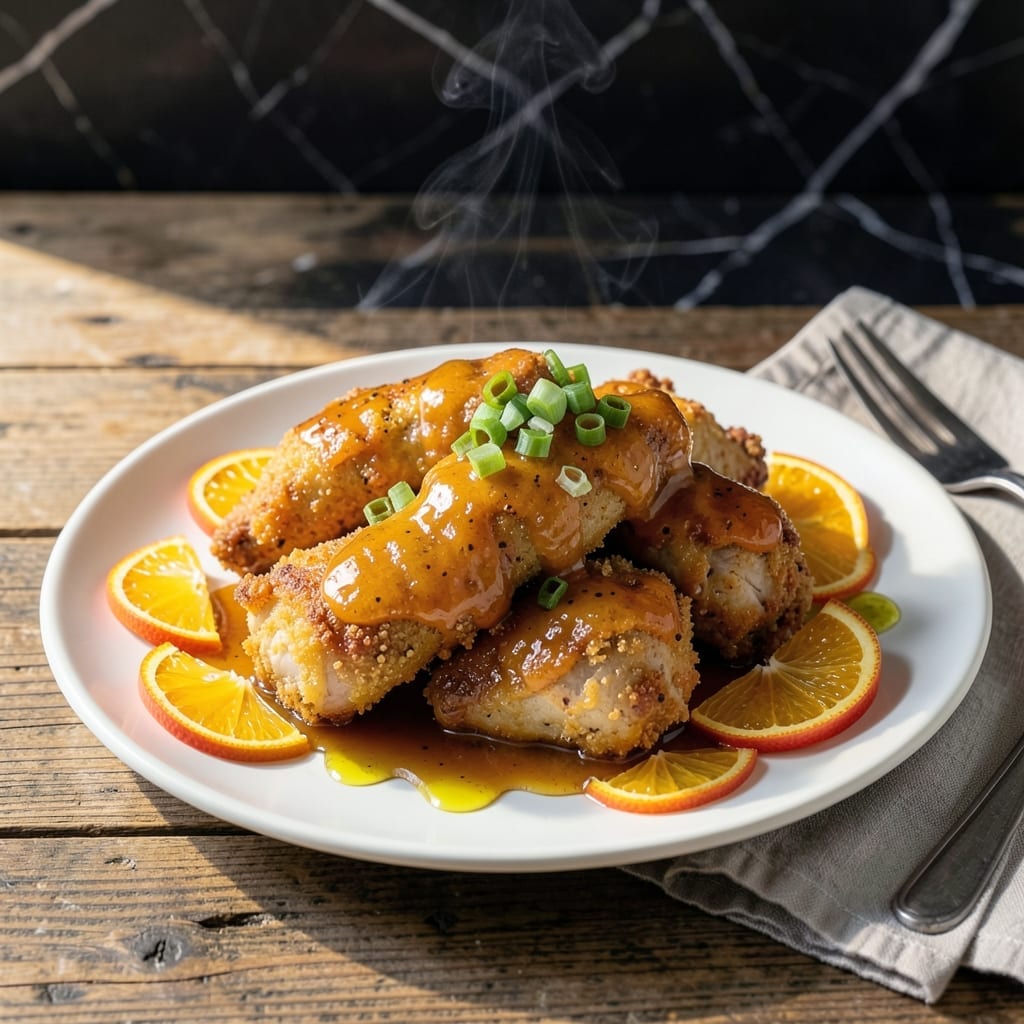
This dish delivers on texture and flavor with perfectly crispy chicken pieces coated in a glossy citrus glaze. I developed this method after testing multiple techniques to achieve that ideal balance of crunch and tenderness.
The secret lies in double-frying the chicken for maximum crispiness before tossing it in the sweet orange sauce. This ensures the coating stays shatteringly crispy even after being glazed, preventing the soggy outcome that plagues many takeout versions.
What you get is golden chicken with a slightly sticky, tangy-sweet orange coating that clings to every bite. The sauce reduces to a perfect consistency that enhances rather than overpowers the chicken’s texture.
Serve immediately over rice with steamed broccoli for a complete meal that rivals your favorite restaurant version.
Ingredients for Sweet Orange Chicken
Crispy chicken meets tangy citrus glaze with these bold, fresh ingredients ready to shine.
| Ingredient | Amount | Notes |
|---|---|---|
| Boneless Skinless Chicken Thighs 🍗 | 1 ½ lb | Cut into 1-inch pieces |
| Cornstarch 🌾 | ½ cup | For crispy coating |
| All-Purpose Flour 🌾 | ¼ cup | Lightly dredges chicken |
| Large Eggs 🥚 | 2 whole | Beaten for binding |
| Orange Zest 🍊 | 1 tbsp | Finely grated, fresh |
| Fresh Orange Juice 🍊 | ¾ cup | Newly squeezed preferred |
| Soy Sauce 🫒 | ¼ cup | Low-sodium recommended |
| Rice Vinegar 🍚 | 2 tbsp | Balances sweetness |
| Brown Sugar 🍯 | ⅓ cup | Packed, light or dark |
| Garlic Cloves 🧄 | 3 cloves | Minced for sauce |
| Fresh Ginger 🌿 | 1 tbsp | Grated, peeled |
| Vegetable Oil 🫒 | 3 cups | For frying, neutral flavor |
| Green Onions 🧅 | 4 whole | Thinly sliced, garnish |
| Sesame Seeds 🌾 | 1 tsp | Toasted, for garnish |
| Red Pepper Flakes 🌶️ | ½ tsp | Optional for heat |
The chicken is everything here. Thighs stay juicier than breasts when fried twice—look for skinless, boneless at Whole Foods or your local butcher. Cornstarch is non-negotiable for that shatteringly crispy coating (don’t swap for flour). Fresh orange zest and juice make a massive difference compared to bottled. I grab mine from Trader Joe’s when they’re in season.
No fresh ginger? Ground ginger at half the amount works in a pinch. Swap honey for brown sugar if that’s what you’ve got (the flavor’s slightly different but still good). For gluten-free, tamari instead of soy sauce and rice flour for the dredge. Vegetable oil can be peanut or canola—just pick something with a high smoke point. The green onions? Skip the garnish if you must, but don’t (they add freshness).
Fry and serve immediately—this doesn’t hold well. Leftovers keep in the fridge for 2-3 days but the coating softens. Reheat in the oven at 375°F to crisp back up. The sauce thickens as it cools, so thin with a splash of water if needed before tossing.
Why You’ll Love This Recipe
- One-Bowl Wonder: I just toss the chicken thighs in cornstarch and flour right in the bowl, no extra dishes to wash.
- Zesty Crunch: That orange zest in the coating gives every bite a bright, citrusy kick you can’t get from jarred sauce.
- Feeds the Crew: I stretch it with rice and veggies for a full meal that satisfies even my hungriest teens.
- Next-Day Magic: Honestly, it tastes even better reheated—those flavors meld overnight in the fridge.
Step-by-Step Instructions for Sweet Orange Chicken
Here’s the method I use to achieve that perfect crispy coating with a sticky, citrusy glaze every time.
Step 1: Coat the Chicken for Maximum Crispiness
Cut the 1.5 lb boneless skinless chicken thighs into 1-inch pieces and pat them thoroughly dry with paper towels. This ensures the coating adheres properly and creates that signature crunch.
In a large bowl, whisk together the 0.5 cup cornstarch and 0.25 cup all-purpose flour. In a separate bowl, beat the 2 whole large eggs until smooth. Dip each chicken piece in the egg, letting any excess drip off, then toss in the cornstarch-flour mixture. I press gently to ensure full coverage. The combination of cornstarch and flour gives you that extra-crispy texture that stays crunchy even after tossing in the sauce.
Step 2: Fry to Golden Perfection
Heat the 3 cups vegetable oil in a large, deep skillet or Dutch oven over medium-high heat until it reaches 350°F. A small piece of coated chicken should sizzle immediately when dropped in.
Working in batches to avoid crowding the pan, carefully add the chicken pieces and fry for 4-5 minutes, turning occasionally, until they’re golden brown and cooked through. The internal temperature should reach 165°F. Drain on a wire rack set over a paper towel-lined baking sheet. This setup keeps the chicken crispy by allowing air circulation underneath. Don’t use a plate or the bottoms will get soggy.
Step 3: Prepare the Orange Glaze
In a clean skillet, combine the 0.75 cup fresh orange juice, 0.25 cup soy sauce, 2 tbsp rice vinegar, 0.33 cup brown sugar, 1 tbsp orange zest, minced 3 cloves garlic cloves, and grated 1 tbsp fresh ginger. Bring to a boil over medium-high heat.
Once boiling, reduce heat to medium and let it simmer for 5-7 minutes until the sauce thickens slightly and coats the back of a spoon. The brown sugar will dissolve completely and the mixture will take on a glossy appearance. If you want a bit of heat, stir in the 0.5 tsp red pepper flakes at this point.
Step 4: Toss and Garnish
Add all the fried chicken to the skillet with the orange glaze. Toss gently with a spatula to coat every piece evenly. The sauce should cling to the chicken and create a beautiful, sticky sheen. If it seems too thick, add a splash of water to loosen it slightly.
Transfer to a serving platter and garnish with the thinly sliced 4 whole green onions and toasted 1 tsp sesame seeds. The green onions add a fresh contrast to the rich, sweet-savory sauce, while the sesame seeds provide a nutty crunch. Serve immediately while the chicken is still crispy and the sauce is hot and glossy.
Pro Tips For Making Sweet Orange Chicken
- Double-Fry for Crisp: Fry the chicken once at 350°F for 3 minutes, rest it 2 minutes, then fry again at 400°F for 1-2 minutes. I learned this the hard way—single frying leaves it soggy under the sauce.
- Zest First, Juice Later: Grab that orange zest before juicing the oranges for the sauce. Sounds obvious, but I’ve ruined three oranges by juicing first and then scraping sad, pulpy bits off the rind.
- Skip Cold Chicken: Let the thighs sit at room temp for 15-20 minutes before coating. Cold chicken makes the coating slide off and the oil temperature plummet—your crust won’t set right.
- Thin Sauce Fix: If your orange sauce thickens too much while reducing, splash in 1-2 tablespoons of water or chicken broth. After burning one batch, I now keep a ladle of warm liquid nearby just in case.
Make-Ahead Tips for This Dish
Prep Ahead Strategy
You can prep the chicken coating and sauce 1 day ahead. Cut and coat the chicken, then refrigerate uncovered on a rack for 1 hour to set the crust. This actually improves crispiness by drying the surface further. 💡
Sauce Make-Ahead
Mix all sauce ingredients except cornstarch slurry and store in an airtight container for up to 3 days. The flavors meld beautifully overnight. Just bring to a simmer and thicken with slurry when ready to cook.
Partial Cook Method
Fry the chicken once 8 hours ahead, cool completely, then refrigerate. When ready, finish with the second fry and sauce. This saves time while maintaining quality. The first fry can be done at a lower temp of 325°F.
Freezing Uncooked Chicken
Coated chicken freezes well for up to 1 month. Spread pieces on a tray to freeze individually, then transfer to bags. Fry from frozen, adding 1-2 minutes per side. Avoid freezing cooked chicken as it loses texture.
Sauce Freezing
The orange glaze freezes perfectly for 2 months. Portion into ice cube trays for easy single-serving use. Thaw in the microwave at 50% power to prevent scorching.
Reheating Tips
To revive leftovers, spread on a wire rack in a 400°F oven for 8-10 minutes. This recrisps the coating better than a microwave. Spritz with water before reheating to prevent drying. 🔥
Nutrition Facts
Frequently Asked Questions
Can I use chicken breast instead of thighs?
Thighs stay juicier due to higher fat content, but breasts work in a pinch. Cut them into 1-inch pieces and reduce frying time by 1-2 minutes to prevent dryness.
How do I make the sauce thicker?
Simmer it longer over medium heat until it coats a spoon. For quick fixing, mix 1 tsp cornstarch with 1 tbsp water, stir into the sauce, and cook for 1-2 minutes.
Why did my coating turn out soggy?
This usually happens if the chicken isn’t drained properly after frying. Use a wire rack, not paper towels, to keep air circulating. Also, toss in sauce just before serving.
Can I bake instead of frying?
Yes, but the texture won’t be as crispy. Bake at 400°F for 20-25 minutes, flipping halfway. Toss in sauce immediately after baking.

- Jollof Rice Sauce Recipe: West African Tomato and Spice Infusion - September 25, 2026
- Japanese Rice Soup Recipe: Umami-Rich Comfort in a Bowl - September 25, 2026
- Homemade Cream Of Rice Recipe: Silk-Smooth Breakfast in Minutes - September 25, 2026