
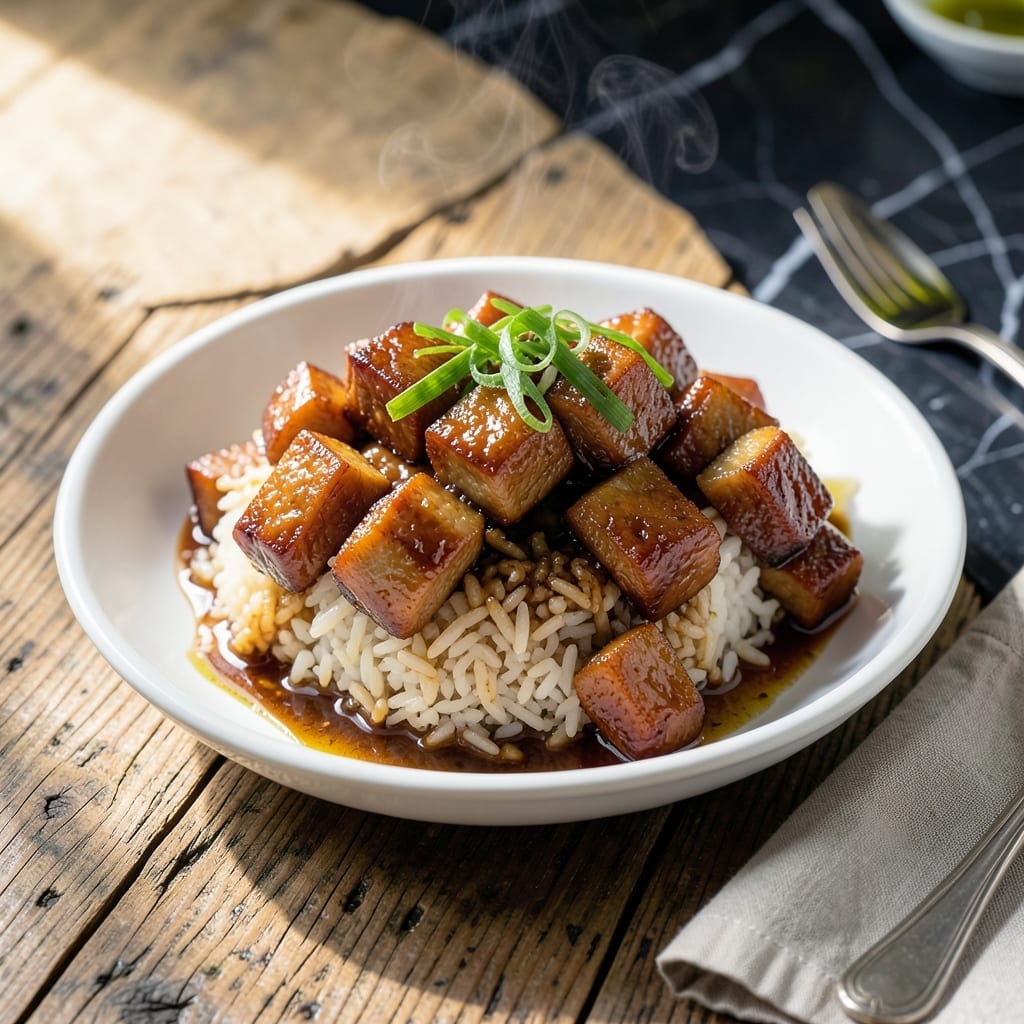
This dish captures the essence of Taiwanese comfort food with its slow-simmered pork belly and fragrant rice. The traditional method transforms humble ingredients into a rich, savory masterpiece.
I’ve perfected this classic recipe to bring authentic street food flavor to your kitchen. The pork braises until melt-in-your-mouth tender, while the rice soaks up every bit of that deeply seasoned sauce.
Ingredients for Taiwan Braised Pork Rice
Slow-simmered pork belly meets fragrant jasmine rice in this authentic street food masterpiece.
| Ingredient | Amount | Notes |
|---|---|---|
| Pork Belly 🥩 | 1 ½ lb | Cut into 1-inch cubes, skin-on |
| Jasmine Rice 🍚 | 2 cups | Rinsed until water runs clear |
| Soy Sauce 🫒 | ½ cup | Low-sodium preferred for balance |
| Dark Soy Sauce 🫒 | 2 tbsp | For depth and color |
| Shaoxing Wine 🍷 | ¼ cup | Chinese cooking wine, essential |
| Rock Sugar 🍬 | 2 tbsp | Or substitute with brown sugar |
| Garlic Cloves 🧄 | 6 cloves | Smashed and peeled |
| Fresh Ginger 🌿 | 1 whole | Sliced into thick coins |
| Green Onions 🧅 | 4 whole | Cut into 2-inch pieces |
| Star Anise Pods ⭐ | 2 whole | Lightly toasted |
| Dried Shiitake Mushrooms 🍄 | 4 whole | Rehydrated, stems removed |
| Water 💧 | 2 cups | For braising liquid |
| Five-Spice Powder 🌶️ | 1 tsp | Freshly ground if possible |
| Sesame Oil 🫒 | 1 tbsp | Toasted, for finishing |
Pork belly quality is paramount for melt-in-your-mouth texture. Seek out skin-on pork belly from a reputable butcher or Asian specialty market—the fat-to-meat ratio should be even. Shaoxing wine is non-negotiable; look for it at H Mart or 99 Ranch. Rock sugar lends authentic sweetness, but brown sugar works in a pinch. Fresh ginger and garlic are essential—avoid pre-minced versions for optimal flavor.
No Shaoxing wine? Dry sherry makes a serviceable substitute. Dark soy sauce at Asian markets is deeper than regular soy—don’t skip it. Star anise is traditional, but a pinch of ground anise can work. Dried shiitakes add umami depth; fresh mushrooms lack the same intensity. For a shortcut, some Taiwanese cooks use pre-made braising sauce, but homemade is superior.
Braised pork improves overnight as flavors meld. Store in an airtight container for up to 5 days in the fridge or 3 months frozen. Reheat gently to preserve texture. Cooked rice is best fresh but can be refrigerated for 2 days—reheat with a splash of water to restore moisture.
Why You’ll Love This Recipe
- One Pot Wonder: I brown the pork belly, then let it simmer with the rice—same pot, minimal cleanup.
- Umami Bomb: Shaoxing wine and dark soy sauce create this deep, savory richness that soaks into every bite.
- Meal Prep Hero: Makes enough for 3 days of lunches, and honestly, it tastes even better reheated.
- Budget Stretch: Pork belly is affordable, and a little goes a long way with the rice to fill everyone up.
Step-by-Step Instructions for Taiwan Braised Pork Rice
Master the technique behind this slow-simmered classic with precise timing and layering.
Step 1: Sear and Aromatize the Pork Belly
Heat a heavy pot over medium-high heat until hot. Add the 1.5 lb Pork Belly cubes, skin-side down, and sear undisturbed for 5-6 minutes until the fat renders slightly and skin turns golden brown. This builds the foundation of flavor.
Add the 6 cloves Garlic Cloves, 1 whole Fresh Ginger slices, 4 whole Green Onions, 2 whole Star Anise Pods, and 4 whole Dried Shiitake Mushrooms to the pot. Stir for 1-2 minutes until the aromatics release their fragrance—this infuses the pork with complexity.
Step 2: Build the Braising Liquid
Pour in the 0.25 cup Shaoxing Wine to deglaze the pot, scraping up any browned bits with a wooden spoon. Let it simmer for 2 minutes until the alcohol smell dissipates and the liquid reduces slightly.
Add the 0.5 cup Soy Sauce, 2 tbsp Dark Soy Sauce, 2 tbsp Rock Sugar, 1 tsp Five-Spice Powder, and 2 cups Water. Stir until the rock sugar dissolves completely. The mixture should turn a deep amber color, signaling the sauce is on track.
Step 3: Braise to Tender Perfection
Return the pork to the pot, ensuring it’s mostly submerged in the liquid. Bring to a boil, then reduce heat to low. Cover and simmer for 1.5 hours, stirring occasionally.
The pork is done when it’s fork-tender and the liquid has reduced to a thick, glossy consistency. If it’s not tender enough, extend the braising time in 15-minute increments—patience ensures melt-in-your-mouth results.
Step 4: Finish and Serve with Rice
While the pork braises, cook the 2 cups Jasmine Rice according to package instructions. Once the pork is done, discard the star anise pods and shiitake mushrooms (they’ve infused their flavor).
Drizzle the pork with the 1 tbsp Sesame Oil and stir to combine. Spoon the pork and its rich sauce over the steamed rice. The dish should have a balance of savory, sweet, and aromatic notes, with the pork so tender it nearly falls apart.
Pro Tips For Making Taiwan Braised Pork Rice
- Parboil the Belly: Blanch pork belly slices in boiling water for 2-3 minutes first to remove impurities and tighten the meat—I learned this the hard way after my first few batches tasted bitter.
- Balance the Soy: Use a 2:1 ratio of regular soy sauce to dark soy sauce for depth without overpowering sweetness. My grandmother swore by this, and she was right.
- Simmer Low and Slow: After the initial sear, keep the braise at a gentle simmer for at least 45 minutes—resist the urge to crank the heat or the pork will turn tough.
- Use Day-Old Rice: Sounds weird, but it works: leftover jasmine rice soaks up the braising liquid better than fresh, and saves time too.
Make-Ahead Tips for Leftovers
Overnight Flavor Boost
This dish actually tastes better the next day as the flavors meld. I always braise the pork a day ahead—store it in an airtight container in the fridge for up to 5 days. The pork will absorb more of that rich sauce, becoming even more tender. 💪
Freezing for Later
Braised pork freezes beautifully for up to 3 months without losing texture. I portion it into quart-sized freezer bags, squeezing out excess air to prevent freezer burn. Thaw overnight in the fridge before reheating.
Rice Prep Timing
Cook the jasmine rice fresh on serving day for best texture. If you must prep ahead, cook it 1 day in advance and store in the fridge. Reheat with a splash of water and a tight lid to restore moisture.
Reheating Methods
For stovetop reheating, warm the pork and sauce over medium-low heat for 8-10 minutes, stirring occasionally. Add 2-3 tbsp water if the sauce thickens too much. The microwave works in 1-minute intervals at 70% power.
Sauce Consistency Tip
If the sauce thickens too much in storage, thin it with ¼ cup water or pork broth when reheating. I often add a pinch of rock sugar to balance flavors after storage—just ½ tsp does the trick. ✨
Nutrition Facts
Frequently Asked Questions
Can I use pork shoulder instead of pork belly?
Yes, pork shoulder works well as a leaner alternative. It will have less fat but still becomes tender after 1.5-2 hours of braising. The flavor will be slightly different but still delicious.
Why is my sauce too watery?
Uncover the pot for the last 20-30 minutes of cooking to let excess liquid evaporate. If it’s still thin, simmer uncovered a bit longer until it reaches your desired thickness.
Is there a substitute for Shaoxing wine?
Dry sherry is the best substitute in a pinch. Use the same ¼ cup amount. Avoid cooking wine with added salt, as it can make the dish too salty.
How do I fix overly salty pork?
Add ½ cup water and a pinch of rock sugar to balance the saltiness. Simmer for an additional 10-15 minutes to meld the flavors.

- Jollof Rice Sauce Recipe: West African Tomato and Spice Infusion - September 25, 2026
- Japanese Rice Soup Recipe: Umami-Rich Comfort in a Bowl - September 25, 2026
- Homemade Cream Of Rice Recipe: Silk-Smooth Breakfast in Minutes - September 25, 2026