
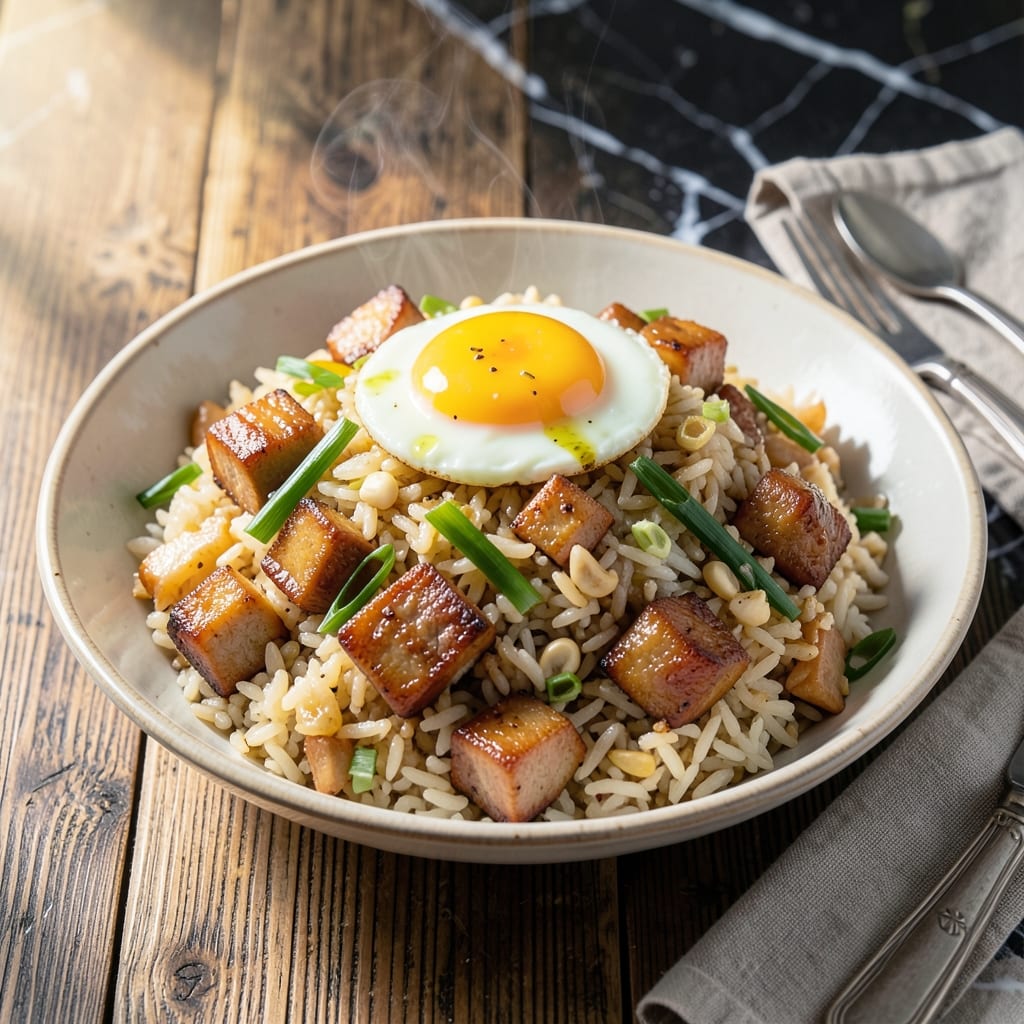
This recipe transforms leftover rice into a crispy, umami-packed meal with tender pork belly bites. The secret is high heat and precise timing to achieve that perfect sear on each piece.
You’ll get a dish with layered textures—crispy pork, fluffy rice, and a savory depth that’s hard to resist. Simple ingredients, professional results.
Ingredients for Pork Belly Fried Rice
Pantry staples meet premium pork belly for this restaurant-quality dish with layered textures and bold flavors.
| Ingredient | Amount | Notes |
|---|---|---|
| Pork Belly 🥓 | 1 lb | Skin-on, cut into 1-inch cubes |
| Cooked White Rice 🍚 | 4 cups | Day-old, cold, long-grain |
| Large Eggs 🥚 | 3 whole | Lightly beaten for scrambling |
| Green Onions 🧅 | ½ cup | Thinly sliced, white and green parts separated |
| Garlic Cloves 🧄 | 4 cloves | Minced finely for maximum flavor |
| Fresh Ginger Root 🌿 | 1 tbsp | Peeled and grated |
| Soy Sauce 💧 | 3 tbsp | Low-sodium preferred for balance |
| Oyster Sauce 🫒 | 1 tbsp | Essential for umami depth |
| Sesame Oil 🫒 | 1 tbsp | Toasted variety for nuttiness |
| Neutral Cooking Oil 🫒 | 3 tbsp | High smoke point like vegetable or peanut |
| Frozen Peas 🌱 | ½ cup | Thawed before cooking |
| Carrot 🥕 | 1 whole | Small dice for even cooking |
| Rice Vinegar 🍶 | 1 tbsp | Adds bright acidity |
| White Pepper 🌶️ | ½ tsp | Freshly ground for subtle heat |
| Salt 🧂 | ½ tsp | Kosher or sea salt preferred |
The pork belly is non-negotiable here. Source skin-on cuts from a reputable butcher or Asian market—pre-cubed saves time but lacks the crispy skin texture. Look for pieces with even fat marbling. Whole Foods or H-Mart typically carry quality options. For best results, par-cook the belly before frying to render excess fat (worth the extra step).
No oyster sauce? Vegan oyster sauce or hoisin sauce at half the amount works in a pinch. Swap pork belly for thick-cut bacon if needed (cook separately first). Fresh ginger is ideal, but ground ginger at one-quarter the amount can substitute. The rice must be cold—freshly cooked rice turns mushy. Carrots can be omitted, but peas add sweetness to balance the savory notes.
This keeps 3-4 days refrigerated in airtight containers. Reheat in a skillet to revive the crispiness—microwaves make it soggy. Pork belly can be pre-cooked and stored separately for 5 days, making weeknight assembly faster. Always bring rice to room temperature before frying for even cooking.
Why You’ll Love This Recipe
- One Pan Wonder: I toss everything into a single wok—pork belly, eggs, garlic—and it’s ready before I can set the table.
- Rich and Savory: The crispy pork belly with garlic and green onions makes every bite ridiculously good.
- Meal Prep Hero: I make a big batch on Sunday and it reheats like a dream for lunches all week.
- Budget Stretcher: Pork belly goes a long way, and leftover rice gets a delicious second life.
Step-by-Step Instructions for Pork Belly Fried Rice
Master the technique behind this dish with precision and attention to texture contrast.
Step 1: Crisp the Pork Belly
Heat 1 tablespoon of the neutral cooking oil in a wok or large skillet over medium-high heat. Add the 1 lb Pork Belly cubes and cook undisturbed for 3-4 minutes to develop a golden crust on the first side.
Flip the pieces and continue cooking for another 3-4 minutes until all sides are deep golden brown and crispy. The fat should render out, creating a slightly caramelized exterior while keeping the interior tender. Remove the pork belly with a slotted spoon and set aside, leaving the rendered fat in the pan.
This step ensures the signature crispy texture that defines this dish. Don’t rush the process—proper browning builds the deep, savory foundation for the entire preparation.
Step 2: Scramble the Eggs and Sauté Aromatics
In the same pan with the rendered pork fat, add the remaining 2 tablespoons of neutral cooking oil. Pour in the 3 whole Large Eggs and scramble quickly over medium heat until just set but still slightly runny, about 1-2 minutes.
Add the 1 tbsp Fresh Ginger Root and 4 cloves Garlic Cloves, stirring constantly for 30 seconds until fragrant. Be careful not to burn the garlic—it should turn golden at the edges but not darken. The combination of ginger, garlic, and pork fat creates an aromatic base that infuses every grain of rice.
Step 3: Combine Rice and Vegetables
Increase the heat to high and add the 4 cups Cooked White Rice, breaking up any clumps with the back of your spatula. Stir-fry for 2 minutes to toast the rice slightly and absorb the flavors from the pan.
Add the 1 whole Carrot (small dice) and 0.5 cup Frozen Peas, cooking for another 2 minutes until the vegetables are tender. The cold rice should begin to sizzle and develop a slight crispness at the edges. This step ensures each component is heated through while maintaining distinct textures.
Step 4: Season and Finish
Drizzle the 3 tbsp Soy Sauce, 1 tbsp Oyster Sauce, and 1 tbsp Sesame Oil evenly over the rice mixture. Stir well to coat every grain. The soy sauce provides saltiness, while the oyster sauce adds a rich, velvety depth.
Return the crispy pork belly to the pan, along with the 0.5 cup Green Onions (white parts), 0.5 tsp Salt, and 0.5 tsp White Pepper. Toss everything together for 1-2 minutes until uniformly combined and heated through. Finish with the 1 tbsp Rice Vinegar for a subtle brightness that cuts through the richness.
The green onion tops can be sprinkled on top just before serving for a fresh, vibrant garnish. Each bite should deliver crispy pork, tender vegetables, and rice that’s perfectly seasoned with a slight sheen from the sauces.
Pro Tips For Making Pork Belly Fried Rice
- Use Day-Old Rice: Fresh rice is too moist and will turn to mush—I learned this the hard way after my first three attempts. Day-old, cold rice from the fridge fries up fluffy and separate.
- Render the Fat First: Start the pork belly in a cold pan to slowly render out the fat, then crank the heat to crisp the edges. About 5-7 minutes on medium-low does the trick.
- Skip the Overcrowding: Resist the urge to dump all the rice in at once—cook in batches if needed. Steaming from too much in the pan makes it soggy instead of crisp.
- Beat Eggs Separately: Whisk the eggs with a pinch of salt before adding to the pan, then scramble just until set. Sounds simple, but it actually changes the outcome, giving you soft, distinct curds instead of rubbery bits.
Essential Equipment for Perfect Results
High-Heat Wok
A carbon steel wok is my top choice for its rapid heat distribution and traditional non-stick properties when properly seasoned. Look for 14-inch diameter with a flat bottom that works on most home stoves. I season mine with flaxseed oil for durability. 🔥
Heavy Skillet Alternative
If you don’t have a wok, a 12-inch cast iron skillet works well—just preheat it for 5 minutes to get it screaming hot. The weight helps maintain temperature when adding cold ingredients. Lodge makes reliable, affordable options.
Wooden Spatula
Use a wooden or bamboo spatula to avoid scratching your wok’s seasoning. The flat edge helps press rice into the hot surface for that coveted crispy texture. I prefer 12-inch length for reach and control without burning my hand.
Sharp Chef’s Knife
A 8-inch chef’s knife makes quick work of dicing pork and vegetables. Keep it razor-sharp for clean cuts—this ensures even cooking and professional presentation. I use Wüsthof and hone it before each use.
Fine Mesh Strainer
For draining rendered pork fat or rinsing rice, a fine mesh strainer is essential. The small holes catch tiny bits of food while allowing liquid to pass through. OXO makes a sturdy, heat-resistant version that fits over most sinks.
Instant Read Thermometer
While not traditional, I always keep a digital instant-read thermometer nearby to check pork belly doneness. Aim for 195°F internal for perfectly tender meat. ThermoWorks models give readings in 3 seconds or less. 🌡️
Nutrition Facts
Frequently Asked Questions
Can I use fresh rice instead of day-old?
No, fresh rice contains too much moisture and will turn mushy when stir-fried. Always use cold, day-old rice for the best texture. Spread freshly cooked rice on a tray to cool quickly if you’re in a hurry.
How do I make the pork extra crispy?
Pat the cubes dry before cooking and render the fat slowly over medium-high heat. Don’t crowd the pan—cook in batches if needed. The rendered fat creates the perfect crispy crust.
What can I substitute for oyster sauce?
Use vegan oyster sauce or hoisin sauce at half the amount. Both add the needed umami depth, though hoisin is slightly sweeter. Adjust soy sauce to taste if needed.
Why did my rice turn out soggy?
This usually happens with fresh rice or low heat. Use cold rice and cook over high heat to evaporate moisture quickly. Stir-fry in small batches for best results.

- Jollof Rice Sauce Recipe: West African Tomato and Spice Infusion - September 25, 2026
- Japanese Rice Soup Recipe: Umami-Rich Comfort in a Bowl - September 25, 2026
- Homemade Cream Of Rice Recipe: Silk-Smooth Breakfast in Minutes - September 25, 2026