
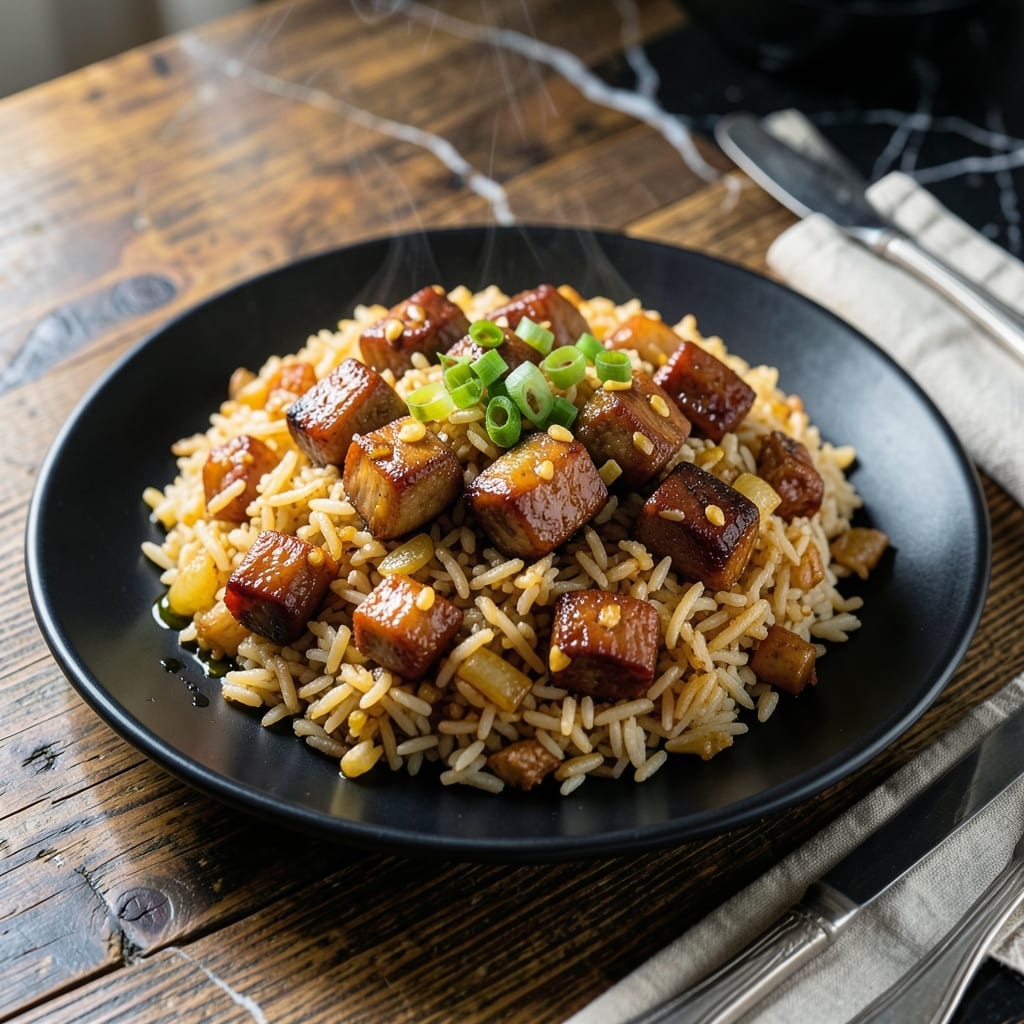
This recipe brings a beloved Filipino classic into your kitchen with a simple yet flavorful approach.
The pork is first braised in a tangy soy-vinegar mixture until tender and infused with bold, savory notes. That same adobo pork then gets folded into hot rice with garlic, onions, and a touch of its cooking liquid for maximum flavor.
What you get is fried rice that’s rich, slightly tangy, and packed with the deep, umami-packed taste of adobo. Each bite delivers the familiar comfort of the dish with an extra layer of complexity.
Perfect for using up leftovers or making a hearty one-pan meal. The result is always satisfying.
Ingredients for Pork Adobo Fried Rice
Pantry staples and a few fresh items bring this Filipino favorite to life.
| Ingredient | Amount | Notes |
|---|---|---|
| Pork Shoulder 🥩 | 1 ½ lb | Cut into 1-inch cubes |
| Cooked White Rice 🍚 | 4 cups | Day-old and cold preferred |
| Soy Sauce 🫒 | ½ cup | Low-sodium if available |
| White Vinegar 💧 | ¼ cup | Or apple cider vinegar |
| Garlic Cloves 🧄 | 6 cloves | Minced finely |
| Yellow Onion 🧅 | 1 whole | Diced medium |
| Bay Leaves 🌿 | 3 pieces | Dried or fresh |
| Black Peppercorns 🌶️ | 1 tsp | Whole or ground |
| Green Onions 🧅 | 4 whole | Thinly sliced for garnish |
| Large Eggs 🥚 | 2 whole | Optional, beaten |
| Vegetable Oil 🫒 | 2 tbsp | For frying pork and rice |
| Water 💧 | ½ cup | For braising pork |
| Salt 🧂 | ½ tsp | Adjust to taste |
| Sugar 🍚 | 1 tsp | Balances the tang |
The pork is everything here. Pork shoulder gives you that melt-in-your-mouth texture—pork butt works too. Most supermarkets sell it pre-cut, but I like grabbing a whole piece from Costco for better marbling. Look for vibrant pink color with some fat streaks (that’s flavor). If you’re short on time, pre-cubed pork from the meat section saves a step.
No white vinegar? Apple cider vinegar works just as well. For a deeper flavor, try cane vinegar if you can find it at an Asian market. Day-old rice is key for that perfect fried rice texture—freshly cooked rice gets mushy. If you’re out of green onions, chives or shallots add a similar fresh bite. And if you’re skipping the egg, a drizzle of sesame oil at the end adds richness.
This keeps 3-4 days in the fridge—reheat in a skillet with a splash of water. Freezes for up to 3 months (portion before freezing). The adobo flavor actually deepens overnight, so it’s even better the next day. Store the pork braising liquid too—it’s liquid gold for extra flavor.
Why You’ll Love This Recipe
- One Pan Wonder: I toss everything in my biggest skillet—pork, rice, soy, vinegar—and let the garlic do the heavy lifting.
- Crave-Worthy Tang: That sharp vinegar hit balanced by soy sauce makes me go back for seconds every single time.
- Weeknight Hero: Between us, this is my Tuesday night lifesaver when I need dinner on the table fast.
- Stretches Further: Pork shoulder’s richness means a little goes a long way, and leftovers taste even better the next day.
Step-by-Step Instructions for Pork Adobo Fried Rice
Here’s how I make this classic dish with perfectly balanced tangy-savory flavors every time.
Step 1: Braise the Pork Shoulder in Adobo Sauce
Heat 1 tbsp vegetable oil in a large skillet over medium-high heat. Add the 1.5 lb pork shoulder cubes and sear until lightly browned on all sides, about 5-6 minutes. This builds a flavor foundation.
Add the 1 diced yellow onion and cook for 2 minutes until softened. Stir in the 6 minced garlic cloves, 3 bay leaves, and 1 tsp black peppercorns, cooking for 30 seconds until fragrant.
Pour in the 0.5 cup soy sauce, 0.25 cup white vinegar, 0.5 cup water, 0.5 tsp salt, and 1 tsp sugar. Bring to a boil, then reduce heat to medium-low and simmer for 30-35 minutes until the pork is tender and the liquid has mostly evaporated.
Step 2: Cook the Eggs and Prep the Rice
While the pork cooks, heat the remaining 1 tbsp vegetable oil in a separate large skillet or wok over medium-high heat. Pour in the 2 beaten large eggs and scramble until just set, about 1-2 minutes. Remove from the pan and set aside.
Break up the 4 cups cooked white rice with your hands to remove any clumps. Day-old, cold rice works best for this dish as it fries up fluffier. If using fresh rice, spread it on a baking sheet and refrigerate for 15 minutes to cool.
Step 3: Fry the Rice with Pork and Eggs
Increase the heat to high under the skillet you used for the eggs. Add the cooked pork with any remaining adobo sauce and the 4 cups cooked white rice. Stir-fry for 3-4 minutes, breaking up any remaining rice clumps with your spatula.
Add the scrambled eggs back to the pan and mix everything together. The rice should be evenly coated with the adobo sauce and slightly crispy in spots. Taste and adjust seasoning with a bit more soy sauce or salt if needed.
Step 4: Garnish and Serve
Remove from heat and stir in half of the 4 thinly sliced green onions. Transfer to a serving dish and top with the remaining green onions. The dish should have that characteristic adobo tang balanced with savory depth from the pork.
Serve immediately while hot. The rice should have a slight sheen from the adobo sauce with bits of crispy pork and fluffy egg throughout. Each bite delivers that classic Filipino adobo flavor with the comforting texture of perfectly fried rice.
Pro Tips For Making Pork Adobo Fried Rice
- Dry the Pork: Pat the pork shoulder dry with paper towels before browning—this guarantees a good sear instead of steamed meat. I learned this the hard way after too many gray, soggy batches.
- Use Day-Old Rice: Fresh rice turns to mush in the wok. Spread leftover rice on a tray and refrigerate overnight, or at least 2 hours, to dry it out for that perfect fried rice texture.
- Balance the Vinegar: White vinegar can overpower if added all at once. Taste as you go—start with half the amount, then adjust. My grandmother swore by this, and she was right.
- High Heat, Quick Stir: Crank the heat to medium-high and keep the pork and rice moving constantly. After burning three batches, I finally figured out that lingering too long in one spot means burnt garlic and bitter edges.
Dietary Considerations for This pork adobo fried rice
Gluten-Free Adaptation
This dish can easily be made gluten-free by swapping the soy sauce for tamari or a certified gluten-free soy sauce like San-J. The rest of the ingredients are naturally gluten-free, so no other adjustments are needed. I always keep a bottle of tamari on hand for guests with gluten sensitivities. 💡
Lower Sodium Option
Use low-sodium soy sauce and reduce the amount to ⅓ cup. You can boost flavor with extra garlic, a splash of fish sauce, or a pinch of MSG if you’re comfortable with it. I find the vinegar and peppercorns still deliver that signature adobo tang without the salt overload.
Vegetarian Version
Replace the pork with extra-firm tofu pressed and cubed. Marinate the tofu in the adobo mixture for 30 minutes before pan-frying until crispy. Add mushrooms for extra umami depth. The rice absorbs the flavors just as beautifully.
Dairy-Free and Egg-Free
Simply omit the eggs—this dish works wonderfully without them. For added richness, stir in 1 tbsp toasted sesame oil at the end. The adobo pork provides plenty of flavor and protein, so you won’t miss the eggs at all.
Low-Carb Adjustment
Swap the white rice for cauliflower rice. Sauté it in the adobo liquid until tender, about 5-7 minutes. The pork and sauce will still shine, giving you that same bold flavor with fewer carbs. I’ve made this version for friends watching their carb intake, and they love it. ✨
Allergy-Friendly Notes
This recipe is naturally free from nuts, dairy, and most common allergens. Just be mindful of your soy sauce choice—some brands process their products in facilities that handle wheat. Always check labels if allergies are a concern.
Nutrition Facts
Frequently Asked Questions
Can I use leftover adobo pork for this?
Leftover adobo pork works perfectly and saves time. Just chop it into small pieces and add it with 2-3 tbsp of its sauce when stir-frying the rice.
Why use day-old rice?
Day-old rice is drier, which prevents mushiness when stir-frying. Fresh rice has too much moisture and can turn your dish into a soggy mess. Spread fresh rice on a tray and refrigerate for 15 minutes if needed.
How do I make it less salty?
Use low-sodium soy sauce and reduce the amount by 1-2 tbsp. Balance the flavor with extra vinegar or a pinch of sugar. Taste as you cook and adjust gradually.
Can I add other vegetables?
Yes! Try adding diced carrots, peas, or bell peppers when stir-frying the rice. Cook them briefly so they stay crisp. 1 cup of mixed veggies works well.

- Jollof Rice Sauce Recipe: West African Tomato and Spice Infusion - September 25, 2026
- Japanese Rice Soup Recipe: Umami-Rich Comfort in a Bowl - September 25, 2026
- Homemade Cream Of Rice Recipe: Silk-Smooth Breakfast in Minutes - September 25, 2026