
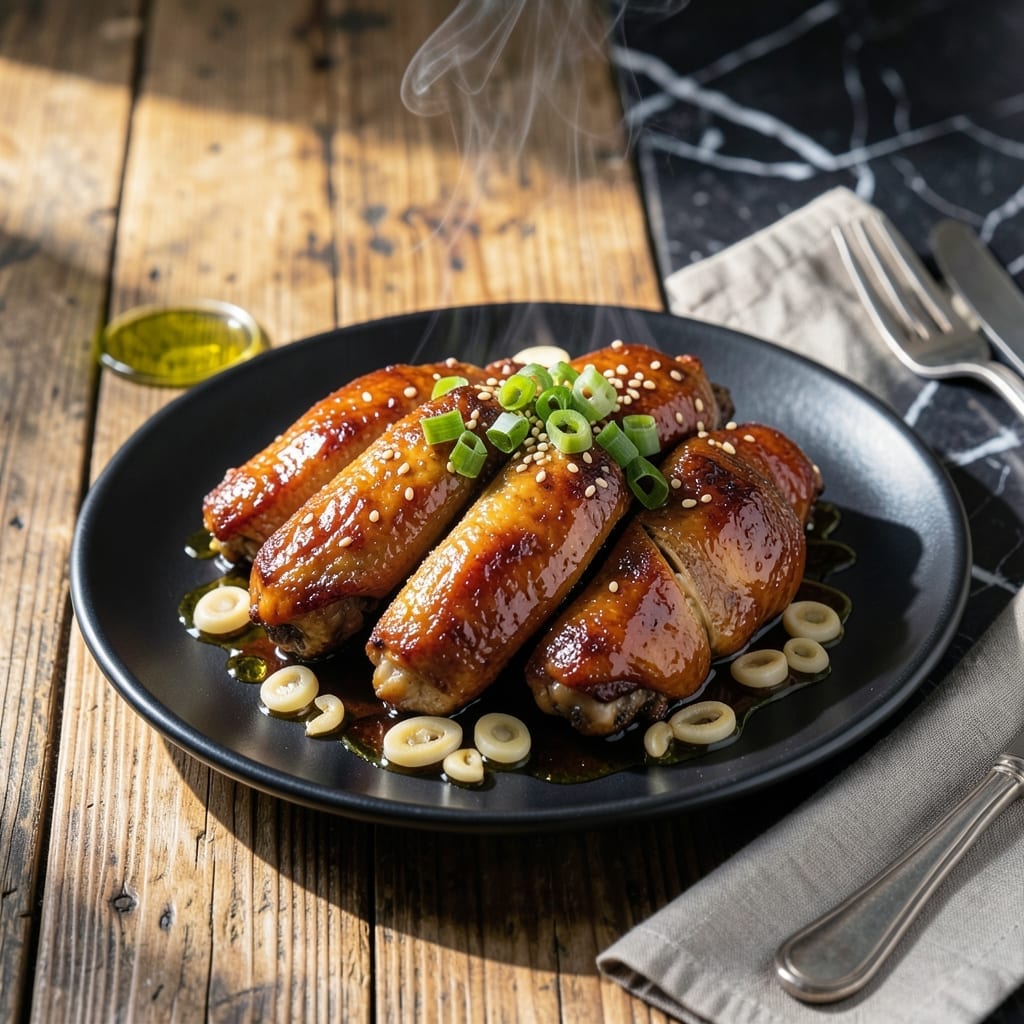
This traditional Taiwanese dish brings bold flavors to your kitchen with its signature three-cup sauce ratio. I’ve refined this method to capture the authentic balance of soy, sesame oil, and rice wine that defines the original.
The secret lies in slow-cooking the chicken until it absorbs the aromatic sauce, while fresh basil leaves add a fragrant finish. Each bite delivers tender meat coated in a glossy, savory glaze that’s rich without being heavy.
What sets this apart is the technique: simmering the chicken in the sauce until it reduces to a thick, clingy consistency. The result is restaurant-quality flavor that’s deeply satisfying.
Serve over steamed rice to soak up every last drop of the sauce. This dish is ready in under an hour.
Ingredients for Taiwanese Chicken
Traditional ingredients create bold flavors with that signature three-cup balance everyone loves.
| Ingredient | Amount | Notes |
|---|---|---|
| Chicken Thighs 🍗 | 2 lb | Boneless, skin-on preferred |
| Soy Sauce 🫙 | ½ cup | Regular or light variety |
| Sesame Oil 🫒 | 3 tbsp | Toasted for depth |
| Rice Wine 🍶 | ½ cup | Shaoxing or dry sherry |
| Garlic Cloves 🧄 | 6 cloves | Smashed and peeled |
| Fresh Ginger 🌿 | 1 whole | 2-inch piece, sliced |
| Fresh Thai Basil 🌿 | 1 cup | Loosely packed leaves |
| Brown Sugar 🍚 | 2 tbsp | Light or dark works |
| Green Onions 🧅 | 4 whole | Cut into 2-inch pieces |
| Dried Red Chilies 🌶️ | 3 whole | Optional for heat |
| Neutral Cooking Oil 🫒 | 2 tbsp | For searing chicken |
| Steamed Rice 🍚 | 2 cups | For serving |
The chicken is key here. Thighs work best—dark meat stays juicy during the long simmer. Look for skin-on, bone-in for extra flavor (remove skin if you prefer). Most Asian markets carry Shaoxing rice wine, but dry sherry from the grocery store works in a pinch. The basil must be Thai basil—regular basil doesn’t have the same anise-like aroma that defines this dish.
No rice wine? Dry sherry or mirin can substitute. Out of Thai basil? Italian basil plus a pinch of anise seeds gets you close. The soy sauce should be regular or light—skip the dark soy for this. Dried chilies not your thing? Red pepper flakes at half the amount bring the heat without the texture. Brown sugar can be swapped for honey or coconut sugar if needed.
Leftovers keep 3-4 days in the fridge, though the basil loses its vibrant color. Reheat gently to avoid drying out the chicken. The sauce thickens as it cools—just loosen with a splash of water when reheating. Freezes well for up to 3 months.
Why You’ll Love This Recipe
- One Pan Wonder: I toss everything in—chicken, soy sauce, garlic, rice wine—and let the oven do the work.
- Umami Bomb: The soy sauce and sesame oil combo hits that deep, savory note I crave every time.
- Weeknight Hero: Between us, it’s my Tuesday night lifesaver when time’s tight but flavor can’t be.
- Budget Stretch: Chicken thighs stay cheap, and this feeds my family of four with leftovers for lunch.
Step-by-Step Instructions for Three-Cup Basil Chicken
Master the balance of soy, sesame, and rice wine with this traditional technique.
Step 1: Sear the Chicken Thighs
Heat the 2 tbsp neutral cooking oil in a large skillet or wok over medium-high heat until shimmering. Add the 2 lb chicken thighs skin-side down and sear undisturbed for 5-6 minutes until the skin turns deep golden brown and crispy.
Flip the chicken and sear the other side for 4-5 minutes until equally browned. The chicken should release easily from the pan when properly seared. Remove the chicken and set aside, leaving the rendered fat in the pan.
Step 2: Build the Aromatic Base
In the same pan, add the 6 cloves garlic cloves, 1 whole fresh ginger slices, 4 whole green onions, and 3 whole dried red chilies. Stir-fry for 1-2 minutes until the garlic turns light golden and the aromatics become fragrant.
Add the 0.5 cup soy sauce, 0.5 cup rice wine, 3 tbsp sesame oil, and 2 tbsp brown sugar. Stir well to dissolve the sugar and combine the liquids. This creates the signature three-cup sauce base that defines the dish.
Step 3: Simmer the Chicken in Sauce
Return the seared chicken thighs to the pan, skin-side up. The sauce should come about halfway up the chicken. Cover and simmer on medium-low heat for 15-20 minutes, occasionally spooning the sauce over the chicken to baste.
You’ll know it’s ready when the chicken is cooked through (internal temperature of 165°F) and the sauce has reduced slightly, becoming glossy and clinging to the chicken. The green onions should be tender but still retain some bite.
Step 4: Finish with Thai Basil
Remove from heat and stir in the 1 cup fresh Thai basil. The residual heat will wilt the leaves slightly while preserving their bright green color and aromatic flavor. Taste the sauce and adjust seasoning if needed—though the soy sauce typically provides enough saltiness.
Let the dish rest for 5 minutes to allow the flavors to meld. The basil should be just wilted, not mushy, and the sauce should have a beautiful sheen from the sesame oil.
Step 5: Serve Over Steamed Rice
Transfer the chicken and sauce to a serving platter or individual plates. Spoon the reduced sauce over the top, ensuring each piece is well-coated. The sauce should be thick enough to cling but still fluid.
Serve immediately over 2 cups steamed rice to soak up the rich, aromatic sauce. Each bite should deliver tender chicken, fragrant basil, and the perfect balance of savory, sweet, and umami flavors from the three-cup sauce.
Pro Tips For Making Taiwanese Chicken
- Marinate Longer: Give the chicken at least 4 hours in the soy sauce, rice wine, and sesame oil mix—I learned this the hard way after rushing it and getting bland results.
- Use Thighs with Skin: Sounds obvious, but skin-on thighs stay juicier and crisp up better than boneless breasts, especially when pan-fried.
- Don’t Overcrowd the Pan: After burning three batches, I finally figured out that giving each piece space guarantees a proper sear instead of steamed chicken.
- Toast the Garlic: My grandmother swore by this, and she was right: lightly browning the garlic cloves in oil before adding the chicken deepens the flavor significantly.
Pro Cooking Tips for Perfect Results
Perfect Searing Technique
Pat the 2 lb chicken thighs completely dry before adding to the pan—this ensures a proper deep golden brown sear. Use a heavy-bottomed skillet like Lodge cast iron for even heat distribution. Don’t overcrowd the pan, or the chicken will steam instead of sear. 🔥
Sauce Reduction Control
The key to that glossy finish is letting the sauce reduce by about 25% during simmering. If it reduces too quickly, add 2-3 tbsp water to slow the process. The sauce should coat the back of a spoon but still drizzle easily.
Basil Timing
Add the 1 cup fresh Thai basil only after removing from heat. The residual heat will wilt the leaves perfectly without turning them muddy. Stir gently to preserve their vibrant green color and delicate aroma.
Flavor Layering
Blooming the 6 cloves garlic and 1 whole fresh ginger in the rendered chicken fat before adding liquids builds a deeper flavor base. This step takes just 1-2 minutes but makes a noticeable difference. 💡
Resting Importance
Let the dish rest for the full 5 minutes after adding basil. This allows the juices to redistribute and the flavors to fully meld. Skipping this step can result in dry chicken and separated sauce.
Sauce Consistency Check
Before serving, the sauce should be thick enough to cling to the chicken but still pourable. If it’s too thin, simmer uncovered for 2-3 more minutes. If too thick, stir in 1 tbsp hot water to loosen.
Nutrition Facts
Frequently Asked Questions
Can I use chicken breast instead of thighs?
Thighs are ideal for their juiciness, but breast works if cooked carefully. Reduce simmering time to 10-12 minutes to prevent dryness. The flavor will be less rich but still delicious.
Why is it called three-cup chicken?
The name comes from the traditional 1:1:1 ratio of soy sauce, sesame oil, and rice wine. This balance creates the signature glossy, aromatic sauce that defines the dish.
Can I make this ahead of time?
Yes! The flavors deepen if made 1 day ahead. Store in an airtight container and reheat gently. Add fresh basil just before serving for best results.

- Jollof Rice Sauce Recipe: West African Tomato and Spice Infusion - September 25, 2026
- Japanese Rice Soup Recipe: Umami-Rich Comfort in a Bowl - September 25, 2026
- Homemade Cream Of Rice Recipe: Silk-Smooth Breakfast in Minutes - September 25, 2026