
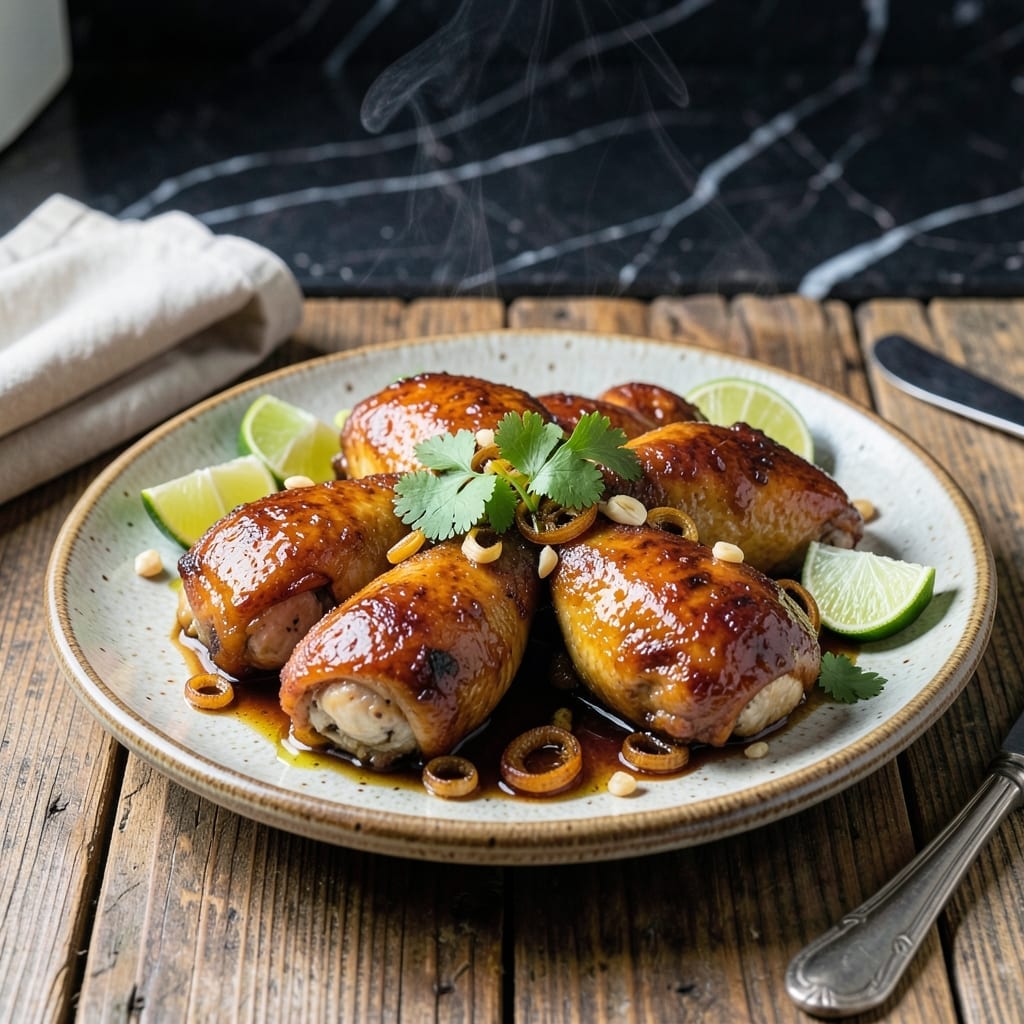
This tamarind chicken brings the bold, balanced flavors of Thai street food to your home kitchen.
The recipe combines tangy tamarind with sweet palm sugar and savory fish sauce, creating a perfectly glazed chicken dish that’s both sticky and irresistible. It uses simple ingredients but delivers complex, restaurant-worthy results.
Each bite offers tender chicken coated in a glossy, sweet-sour sauce that clings beautifully. The aroma alone will transport you to a bustling Bangkok market, while the taste proves authentic flavors don’t require complicated techniques.
Serve with steamed jasmine rice and fresh cilantro for a complete meal that’s ready in under an hour.
Ingredients for Tamarind Chicken
Simple ingredients transform into bold, authentic Thai street food flavors right at home.
| Ingredient | Amount | Notes |
|---|---|---|
| Boneless Chicken Thighs 🍗 | 1 ½ lb | Skin-on for extra flavor |
| Tamarind Paste 🌿 | ½ cup | Seedless variety preferred |
| Palm Sugar 🍚 | ½ cup | Or substitute light brown sugar |
| Fish Sauce 🐟 | 3 tbsp | Thai brand recommended |
| Soy Sauce 🫒 | 2 tbsp | Low-sodium if preferred |
| Garlic Cloves 🧄 | 4 cloves | Minced finely |
| Shallots 🧅 | 2 whole | Thinly sliced |
| Red Chili Flakes 🌶️ | 1 tsp | Adjust to heat preference |
| Jasmine Rice 🍚 | 2 cups | Uncooked, for serving |
| Fresh Cilantro 🌿 | ½ cup | Chopped, for garnish |
| Vegetable Oil 🫒 | 2 tbsp | For cooking chicken |
| Lime 🍋 | 1 whole | Juiced, for acidity |
| Cornstarch 🌾 | 1 tbsp | For thickening sauce |
The tamarind paste is non-negotiable for that signature tang—look for seedless at Asian markets or the international aisle. Palm sugar adds authentic sweetness, but light brown sugar works in a pinch (the flavor’s slightly different but still good). Thai fish sauce brands like Red Boat or Tiparos deliver the right umami depth. For the chicken, thighs stay juicier than breasts during cooking.
No palm sugar? Light brown sugar’s your best bet. Short on tamarind? Lime juice plus a touch of brown sugar mimics the sweet-sour balance, though it won’t be identical. Fish sauce substitutions are tricky, but soy sauce with a dash of Worcestershire gets you close. The cilantro can be swapped for Thai basil if you’re serving purists. Shallots add a subtle sweetness—red onion works too.
Tamarind paste keeps in the fridge for up to 6 months once opened. Palm sugar hardens over time—microwave briefly to soften. The sauce thickens as it cools, so don’t overcook it. Leftovers? 3 days in the fridge, but it’s best fresh. Reheat gently to keep the glaze glossy.
Why You’ll Love This Recipe
- One Pan Wonder: I just toss the chicken thighs with tamarind paste and palm sugar, let it simmer—minimal cleanup, maximum flavor.
- Sweet-Tangy Magic: The tamarind and fish sauce create this ridiculous balance of sour, sweet, and umami. I’ll be real: I lick the plate every time.
- Feeds a Crowd: Between us, this is my go-to for potlucks. It’s hearty, stretches easily, and everyone asks for the recipe.
- Leftovers for Days: Honestly, it tastes even better the next day. The flavors deepen, and reheating takes 30 seconds in a pan.
Step-by-Step Instructions for Tamarind Chicken
Master the balance of sweet, sour, and savory with this authentic Thai-inspired cooking method.
Step 1: Prepare the Chicken and Aromatics
Pat the 1.5 lb boneless chicken thighs dry with paper towels to ensure proper browning. Trim any excess fat if desired, though leaving some adds richness. Thinly slice the 2 whole shallots and mince the 4 cloves garlic cloves—fine mincing ensures even flavor distribution throughout the dish.
In a small bowl, combine the 0.5 cup tamarind paste, 0.5 cup palm sugar, 3 tbsp fish sauce, 2 tbsp soy sauce, and 1 tsp red chili flakes. Whisk until the palm sugar is mostly dissolved. This forms the base of your sauce, balancing tangy, sweet, and umami notes.
Step 2: Sear the Chicken for Maximum Flavor
Heat the 2 tbsp vegetable oil in a large, heavy skillet over medium-high heat until it shimmers. Add the chicken thighs skin-side down (if using skin-on) and sear undisturbed for 5-6 minutes until the skin is deep golden brown and crisp. This step builds a flavorful fond in the pan, which will later enrich the sauce.
Flip the chicken and cook for another 3-4 minutes until lightly browned. Remove the chicken to a plate and set aside. In the same skillet, add the sliced shallots and cook for 2-3 minutes until softened and beginning to caramelize. Add the minced garlic and cook for 30 seconds until fragrant—be careful not to burn it.
Step 3: Simmer in Tamarind Sauce
Pour the tamarind mixture into the skillet with the shallots and garlic. Stir to combine, scraping up any browned bits from the bottom of the pan. Bring the mixture to a gentle simmer over medium heat and cook for 2-3 minutes to meld the flavors.
Return the chicken to the skillet along with any accumulated juices. Spoon the sauce over the chicken to coat evenly. Reduce the heat to medium-low and let it simmer for 8-10 minutes, turning the chicken occasionally, until the chicken is cooked through and the sauce has thickened slightly.
Step 4: Thicken and Finish the Dish
In a small bowl, mix the 1 tbsp cornstarch with 2 tablespoons of cold water to create a slurry. Stir this into the simmering sauce and cook for an additional 1-2 minutes until the sauce has thickened enough to coat the back of a spoon. The sauce should be glossy and cling to the chicken.
Remove the skillet from heat and stir in the juice of the 1 whole lime. Taste and adjust the seasoning if needed—though the balance of tamarind, sugar, and fish sauce should already be harmonious. The lime adds a bright, finishing note that cuts through the richness.
Garnish with the 0.5 cup chopped fresh cilantro and serve immediately over steamed 2 cups jasmine rice to soak up the flavorful sauce.
Pro Tips For Making Tamarind Chicken
- Sear Thighs First: Brown the chicken thighs in a hot pan for 3-4 minutes per side before adding the sauce—this locks in juices and prevents them from stewing in the tamarind mixture.
- Dilute Tamarind Paste: I learned this the hard way—mix the tamarind paste with 2 tablespoons of warm water first so it blends smoothly into the sauce instead of clumping.
- Skip the Boiling: After adding palm sugar and sauces, keep the heat at a gentle simmer—boiling makes the tamarind sauce bitter and can toughen the chicken.
- Rest Before Serving: Let the chicken sit in the sauce for 5-10 minutes off the heat—it soaks up the tangy-sweet flavors and stays tender when you serve it.
Perfect Pairings for tamarind chicken
Rice and Herbs
Steamed jasmine rice is the classic base for this dish. its mild floral aroma complements the bold tamarind glaze. I always use a 1:1.5 rice-to-water ratio for perfectly fluffy grains. Top with extra fresh cilantro for a bright finish. 🥗
Fresh Vegetables
A crisp Thai cucumber salad balances the richness beautifully. Thinly slice 1 English cucumber and toss with 1 tbsp rice vinegar and a pinch of sugar. For crunch, try quick-pickled red onions with lime juice.
Beverage Pairings
An ice-cold Thai iced tea with its creamy sweetness cuts through the tangy sauce. For beer lovers, a crisp Singha or Chang beer enhances the street food experience. A Riesling wine offers refreshing acidity. 🍺
Extra Garnishes
Sprinkle crushed peanuts for texture and nuttiness. Fresh Thai basil leaves add an aromatic touch. A wedge of lime on the side lets guests add extra zing to their taste. These small additions elevate the dish significantly.
Nutrition Facts
Frequently Asked Questions
Can I use chicken breast instead of thighs?
Yes, but thighs stay juicier. If using breast, reduce cooking time to 6-7 minutes per side to prevent dryness. Brining the chicken first helps maintain moisture.
How do I adjust the sweetness?
Taste the sauce before adding chicken. Need more sweetness? Add 1-2 tbsp extra palm sugar. Prefer less? Balance with 1 tbsp lime juice.
What if my sauce is too thin?
Mix 1 tsp cornstarch with 1 tbsp cold water and stir into simmering sauce. Cook for 1-2 minutes until thickened. Avoid overcooking as it will thicken more when cooled.
Can I make this ahead?
Cook and refrigerate for up to 3 days. Reheat gently on low heat adding a splash of water if needed. The flavors deepen overnight.

- Jollof Rice Sauce Recipe: West African Tomato and Spice Infusion - September 25, 2026
- Japanese Rice Soup Recipe: Umami-Rich Comfort in a Bowl - September 25, 2026
- Homemade Cream Of Rice Recipe: Silk-Smooth Breakfast in Minutes - September 25, 2026