
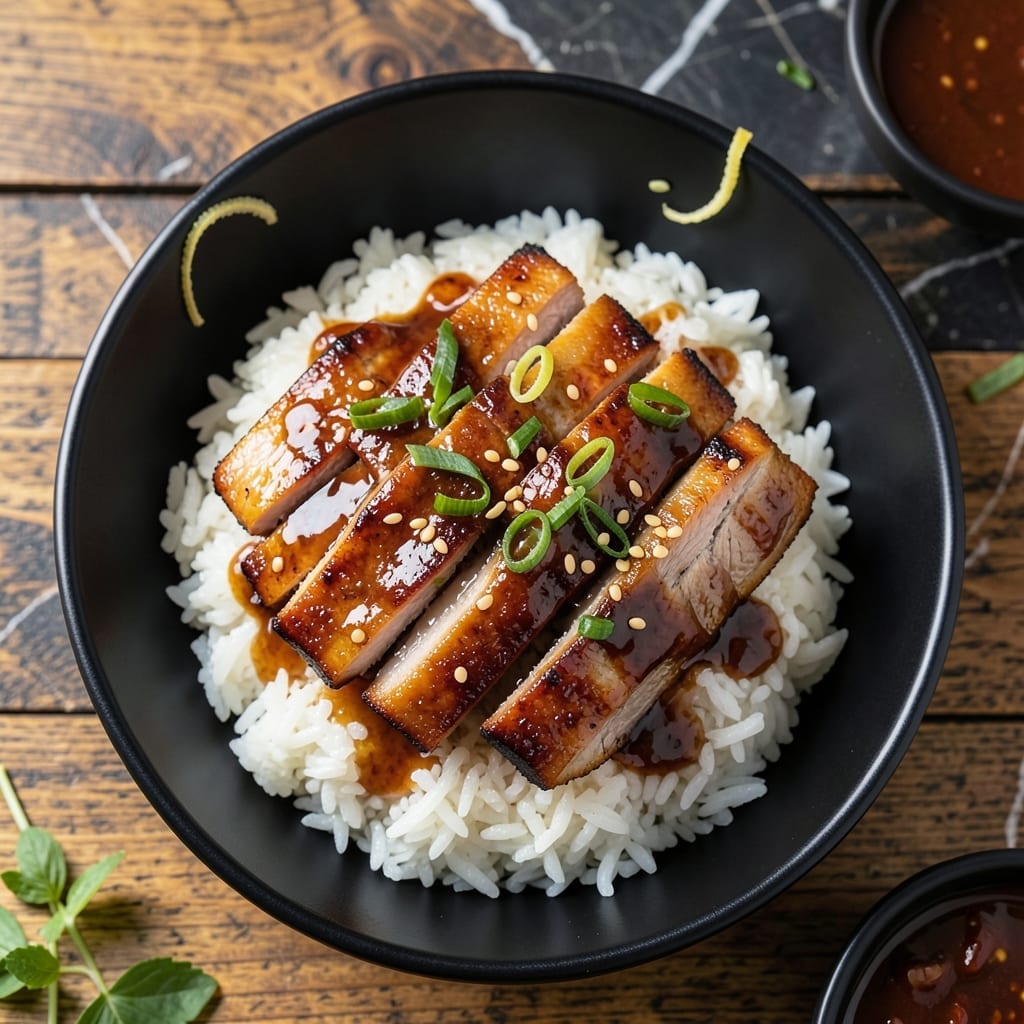
This teriyaki pork rice bowl brings together tender, glazed protein and perfectly cooked grains in one satisfying dish. The combination of sweet and savory flavors creates a meal that’s both comforting and restaurant-worthy.
I’ve refined this recipe to ensure the pork stays juicy while the teriyaki sauce caramelizes beautifully. The rice is fluffy and light, providing the ideal base for soaking up every drop of that rich glaze.
What makes this dish special is its balance—sweet, salty, and umami all in one bite. The pork is marinated and cooked just long enough to develop deep flavor without drying out.
Serve it hot, with the sauce drizzled generously over the top. This is a meal that feels indulgent but comes together with simple, straightforward steps.
Ingredients for Teriyaki Pork Rice Bowl
Tender pork, fluffy rice, and a glossy teriyaki glaze come together beautifully here.
| Ingredient | Amount | Notes |
|---|---|---|
| Pork Shoulder 🥩 | 1 ½ lb | Boneless, cut into strips |
| Jasmine Rice 🍚 | 2 cups | Uncooked, rinsed well |
| Soy Sauce 🫒 | ½ cup | Low-sodium preferred |
| Brown Sugar 🍚 | ½ cup | Light or dark works |
| Mirin 🍶 | ¼ cup | Sweet rice wine essential |
| Fresh Ginger 🌿 | 1 tbsp | Grated, peeled first |
| Garlic Cloves 🧄 | 4 cloves | Minced for marinade |
| Cornstarch 🌾 | 1 tbsp | For thickening sauce |
| Vegetable Oil 🫒 | 2 tbsp | Neutral flavor, high smoke point |
| Green Onions 🧅 | 4 whole | Thinly sliced for garnish |
| Sesame Seeds 🌰 | 1 tbsp | Toasted for garnish |
| Water 💧 | ¼ cup | For cornstarch slurry |
| Rice Vinegar 🍶 | 1 tbsp | Adds brightness to sauce |
The pork is non-negotiable—pork shoulder stays juicy through cooking, while leaner cuts dry out. Look for good marbling at Whole Foods or your local butcher. The rice should be jasmine or short-grain for that sticky texture that grabs the sauce. Lundberg Family Farms is a reliable brand for jasmine rice. Fresh ginger and garlic make a huge difference; skip the powdered versions here.
No mirin? Substitute 1 tbsp sugar plus 1 tbsp water per tablespoon of mirin. Brown sugar can be swapped with honey or maple syrup, but the flavor profile shifts slightly. For a gluten-free version, use tamari instead of soy sauce. The cornstarch slurry is essential for that thick, glossy glaze—don’t skip it. Vegetable oil can be any neutral oil like canola or avocado.
This dish reheats well—store leftovers in airtight containers for up to 4 days in the fridge. The sauce will thicken as it cools, so thin with a splash of water when reheating. Freezes beautifully for up to 3 months (the pork may lose a bit of texture but retains flavor).
Why You’ll Love This Recipe
- One Pot Wonder: I brown the pork shoulder right in the same pot I cook the rice in—less mess, more flavor.
- Sweet-Savory Magic: The brown sugar and mirin caramelize into this glossy teriyaki glaze that clings to every bite.
- Meal Prep MVP: Honestly, it reheats like a dream, so I make a big batch for lunches all week.
- Budget Stretcher: Pork shoulder stays tender and affordable, and jasmine rice is my cheap, filling sidekick.
Step-by-Step Instructions for Teriyaki Pork Rice Bowl
Here’s the method. Straightforward, tested, works every time.
Step 1: Prepare the Teriyaki Marinade
In a large bowl, whisk together the 0.5 cup Soy Sauce, 0.5 cup Brown Sugar, 0.25 cup Mirin, 1 tbsp Fresh Ginger, and 4 cloves Garlic Cloves until the sugar dissolves completely. This creates the base of your teriyaki glaze with the perfect balance of sweet and savory.
I always taste the marinade at this point—it should be rich and slightly sweet with a gentle ginger bite. The mirin adds depth and helps the sauce thicken later. Set this aside while you prep the pork.
Step 2: Cook the Jasmine Rice
Rinse the 2 cups Jasmine Rice under cold water until the water runs clear. This removes excess starch and ensures fluffy, separate grains. Add the rinsed rice to a pot with 4 cups water and bring to a boil.
Once boiling, reduce heat to low, cover, and simmer for 15 minutes. Remove from heat and let it steam, covered, for another 10 minutes. Don’t peek during cooking—this disturbs the steam and can lead to uneven cooking.
Step 3: Sear and Glaze the Pork
Heat 2 tbsp Vegetable Oil in a large skillet over medium-high heat. Add the 1.5 lb Pork Shoulder strips and sear for 5-6 minutes until browned on all sides. You want a good sear to lock in the juices and create a flavorful base for the sauce.
Pour the marinade over the pork and simmer for 8-10 minutes until the pork is cooked through and the sauce begins to thicken. Stir occasionally to coat the pork evenly and prevent the sugar from burning.
Step 4: Thicken the Sauce and Assemble
In a small bowl, mix the 1 tbsp Cornstarch with the 0.25 cup Water and 1 tbsp Rice Vinegar to create a slurry. Stir this into the skillet with the pork and simmer for 2-3 minutes until the sauce thickens to a glossy glaze.
The sauce should coat the back of a spoon and cling to the pork. If it’s too thick, add a splash of water. Remove from heat once the pork is fully glazed and tender.
Step 5: Plate and Garnish
Spoon the cooked jasmine rice into bowls and top with the teriyaki pork and its glaze. Drizzle any remaining sauce from the pan over the top for extra flavor. Garnish with the 4 whole Green Onions, thinly sliced, and the 1 tbsp Sesame Seeds.
Serve immediately while the pork is hot and the sauce is still glossy. The rice should be fluffy, the pork tender, and every bite should have a perfect balance of sweet, salty, and umami flavors.
Pro Tips For Making Teriyaki Pork Rice Bowl
- Sear the Pork First: I learned this the hard way—browning the pork shoulder in a hot pan for 2-3 minutes per side locks in moisture and adds depth to the teriyaki flavor.
- Rinse the Rice: Jasmine rice can get gummy, so rinse it under cold water until the water runs clear to remove excess starch and get fluffier grains.
- Simmer the Sauce: After burning two batches, I finally figured out that mirin and brown sugar need a gentle simmer for 3-4 minutes to thicken without scorching.
- Slice Against the Grain: Sounds weird, but it works: cutting pork shoulder against the grain makes it way more tender and easier to chew in your rice bowl.
Perfect Pairings for This Dish
Vegetable Sides
Steamed broccoli florets with a sprinkle of sesame seeds add a fresh crunch that cuts through the richness. I blanch 3 cups for 2 minutes then shock in ice water to keep the bright green color. 🌱
Quick Pickles
Thinly sliced cucumbers and carrots tossed with rice vinegar, a pinch of sugar, and salt make a tangy contrast. Let them sit for 20 minutes while you cook the pork. The acidity balances the sweet teriyaki beautifully.
Wine Pairing
A chilled Riesling with its slight sweetness complements the dish without overpowering it. I prefer a German Kabinett for its crisp apple and peach notes. For beer lovers, a light Japanese lager like Sapporo works perfectly. 🍷
Extra Toppings
Add sliced avocado for creaminess or pickled ginger for a zesty kick. Both add texture and freshness. I always keep a jar of pickled ginger in my fridge for sushi nights—it’s just as good here.
Dessert Pairing
Finish with green tea ice cream or mochi for a light, refreshing end. The subtle bitterness of matcha cleanses your palate after the rich, savory flavors of the bowl. 💚
Nutrition Facts
Frequently Asked Questions
Can I use a different cut of pork?
Pork tenderloin works but may dry out faster. Stick to shoulder or butt for juiciest results. Avoid lean cuts like loin for this dish.
How do I prevent the sauce from burning?
Keep heat at medium and stir frequently once sugar is added. The cornstarch slurry helps stabilize the sauce and prevents scorching.
Can I make this gluten-free?
Yes! Substitute tamari for soy sauce and ensure all other ingredients are certified gluten-free. The rice and pork are naturally gluten-free.
How long will leftovers keep?
Store in an airtight container in the fridge for up to 4 days. Reheat gently with a splash of water to revive the sauce.

- Jollof Rice Sauce Recipe: West African Tomato and Spice Infusion - September 25, 2026
- Japanese Rice Soup Recipe: Umami-Rich Comfort in a Bowl - September 25, 2026
- Homemade Cream Of Rice Recipe: Silk-Smooth Breakfast in Minutes - September 25, 2026