
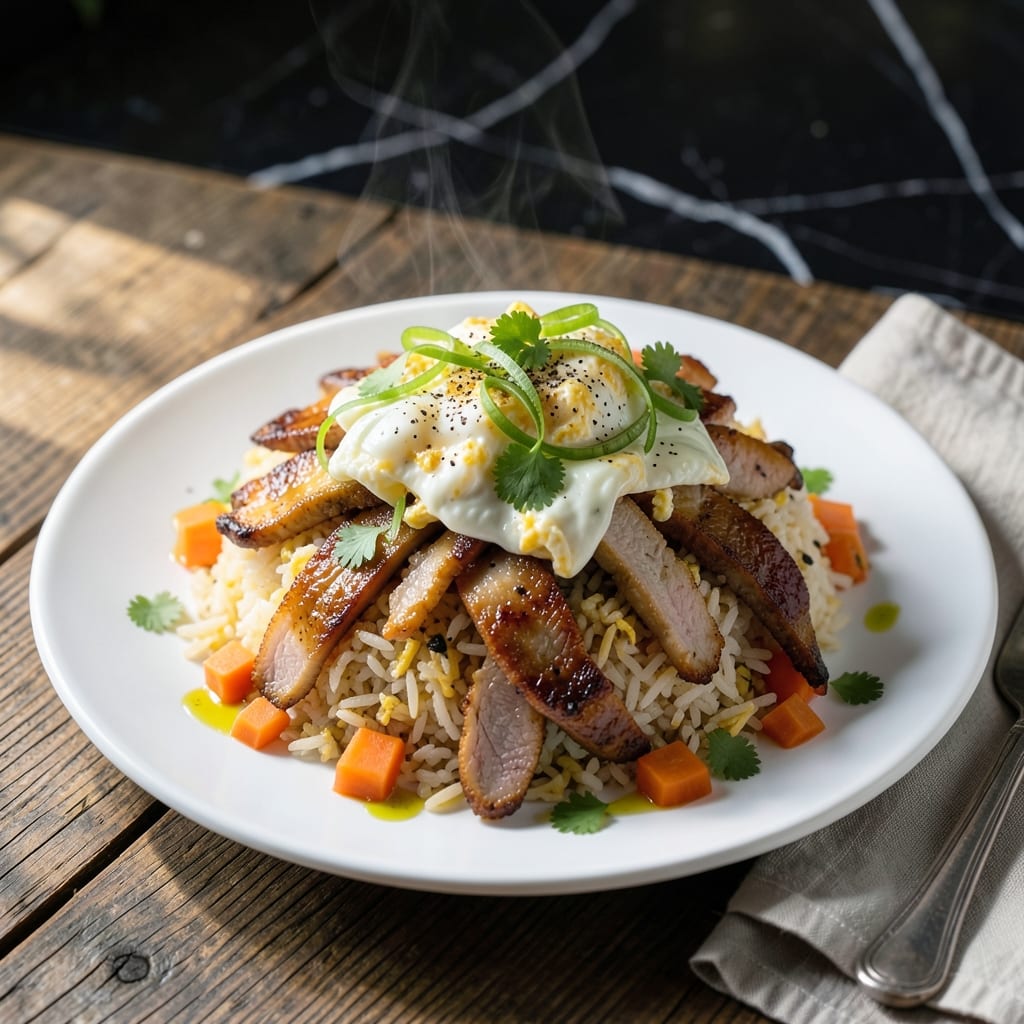
This Thai-inspired pork fried rice brings authentic street food flavor to your kitchen table. The dish captures the essence of Bangkok’s bustling markets with its bold, balanced flavors.
The secret lies in using day-old jasmine rice and cooking over high heat to achieve that signature wok-fried texture. Each bite delivers tender pork, crisp vegetables, and a savory-sweet sauce that ties everything together.
I’ve perfected this method to ensure restaurant-quality results at home. The key is quick cooking and constant stirring to prevent sticking while building layers of flavor.
You’ll end up with a vibrant, aromatic dish that’s ready in under 30 minutes. Serve it hot with fresh cilantro and a squeeze of lime for the full experience.
Ingredients for Thai Pork Fried Rice
Day-old rice, tender pork, and bold flavors make this dish sing.
| Ingredient | Amount | Notes |
|---|---|---|
| Jasmine Rice 🍚 | 3 cups | Day-old, cooked and cooled |
| Pork Shoulder 🍖 | 1 lb | Boneless, thinly sliced |
| Large Eggs 🥚 | 2 whole | Lightly beaten |
| Carrot 🥕 | 1 whole | Medium, finely diced |
| Green Onions 🧅 | 4 whole | Thinly sliced, white and green separated |
| Garlic Cloves 🧄 | 3 cloves | Minced |
| Fish Sauce 🐟 | 2 tbsp | Thai variety preferred |
| Soy Sauce 🥢 | 2 tbsp | Low-sodium if possible |
| Oyster Sauce 🦪 | 1 tbsp | Or vegetarian oyster sauce |
| Sugar 🍚 | 1 tsp | White or brown |
| Vegetable Oil 🫒 | 3 tbsp | High smoke point, for frying |
| Fresh Cilantro 🌿 | ½ cup | Chopped, for garnish |
| Lime 🍋 | 1 whole | Cut into wedges for serving |
| Red Chili 🌶️ | 1 whole | Thinly sliced, optional for heat |
| Salt 🧂 | ½ tsp | Adjust to taste |
The rice is non-negotiable—day-old jasmine from the fridge (the good stuff, not fresh) gives you that authentic texture. For the pork, shoulder or tenderloin works best—both stay juicy after high-heat cooking. I grab mine from Whole Foods or any Asian market (they usually have pre-sliced options). Fish sauce is key—Red Boat or Thai Kitchen are solid choices you’ll find at most supermarkets.
No pork? Chicken or shrimp swap in easily (just cook shrimp last—it overcooks fast). Missing oyster sauce? Hoison or a little extra soy gets you close. The green onions can be subbed with shallots if that’s what you’ve got. Fresh cilantro is ideal, but Thai basil (if you can find it) adds a cool twist. And hey, frozen peas work in a pinch for extra veg.
Leftover fried rice is a rare thing in my house, but if you do have some, it’ll keep 3-4 days in the fridge. Reheat in a skillet with a splash of water to revive the texture. Doesn’t freeze well though—the rice gets mushy.
Why You’ll Love This Recipe
- One Pan Wonder: I toss everything into a single wok—jasmine rice, pork shoulder, and veggies—so cleanup is a breeze.
- Umami Bomb: The pork shoulder soaks up the fish sauce and lime, making every bite ridiculously good.
- Lunchbox Hero: Packed with protein and veggies, it’s my go-to for meal prep that actually tastes fresh the next day.
- Budget Stretcher: Pork shoulder is cheap, and a little goes a long way with the rice and eggs filling it out.
Step-by-Step Instructions for Thai Pork Fried Rice
This is how I nail that authentic street-food flavor at home every time.
Step 1: Prep All Ingredients Before Heating the Wok
I always start by slicing the pork shoulder into thin strips—about ¼-inch thick. Then I finely dice the carrot and mince the 3 cloves garlic cloves. Separate the 4 whole green onions into white and green parts, slicing both thinly.
Lightly beat the 2 whole large eggs in a small bowl. Measure out the 2 tbsp fish sauce, 2 tbsp soy sauce, 1 tbsp oyster sauce, 1 tsp sugar, and 0.5 tsp salt. Having everything ready is crucial—once the wok heats up, things move fast.
Step 2: Velvet the Pork for Maximum Tenderness
Heat 1 tbsp vegetable oil in a wok over high heat until it shimmers. Add the sliced pork shoulder and stir-fry for 2-3 minutes until it’s no longer pink on the outside but still slightly undercooked inside.
This is where I add a trick: sprinkle the pork with 1 tsp sugar and 1 tbsp oyster sauce during cooking. The sugar helps caramelize the meat, while the oyster sauce adds depth. Remove the pork from the wok and set aside—it’ll finish cooking when added back later.
Step 3: Scramble Eggs and Vegetables
Add another 1 tbsp vegetable oil to the wok. Pour in the beaten large eggs and scramble quickly until just set but still slightly runny. This takes about 30-45 seconds.
Push the eggs to one side, then add the remaining 1 tbsp vegetable oil, carrot, and the white parts of the green onions. Stir-fry for 2 minutes until the carrots soften slightly. Add the minced garlic cloves and cook for 30 seconds until fragrant—don’t let it burn.
Step 4: Combine Everything with Rice and Season
Add the 3 cups jasmine rice to the wok, breaking up any clumps with your spatula. Stir-fry for 1-2 minutes until the rice is heated through and starts to crisp slightly.
Return the pork to the wok. Drizzle in the 2 tbsp fish sauce and 2 tbsp soy sauce. Toss everything together for 2-3 minutes until the rice is uniformly coated and the pork is fully cooked. Taste and adjust seasoning with more salt if needed—the flavors should be bold and balanced.
Step 5: Finish and Garnish Like a Pro
Turn off the heat and stir in the green parts of the green onions. Transfer to a serving platter and top with the chopped 0.5 cup fresh cilantro.
Serve immediately with lime wedges for squeezing over the top. For heat, scatter thin slices of red chili on top. The rice should be slightly crispy in spots, with each grain distinct and coated in the savory-sweet sauce. That first bite with the bright lime juice is pure magic.
Pro Tips For Making Thai Pork Fried Rice
- Use Day-Old Rice: Fresh jasmine rice turns to mush in the wok—I learned this the hard way after three sad, soggy attempts. Cook your rice the day before, spread it out to dry, and you’ll get those perfect, separate grains.
- Velvet the Pork: Thinly slice the pork shoulder, then toss it with 1 teaspoon cornstarch and 1 tablespoon soy sauce before frying. Sounds weird, but it keeps the pork tender and juicy, even at high heat.
- Crank the Heat: High heat is non-negotiable for that smoky wok flavor. If your home stove struggles, work in small batches—overcrowding steams the rice instead of frying it.
- Char the Carrots: Dice the carrots small and let them sit in the hot wok for 30 seconds before stirring. This gives them a slight char and sweetness that fresh, crunchy carrots just can’t match.
Regional Styles of This Dish
Bangkok Street Style
This is the version you’ll find at Yaowarat Road night markets, where vendors cook over blazing charcoal woks. The key difference is using pork belly instead of shoulder for richer flavor, and adding Thai basil leaves at the end for an aromatic finish. 🗺️
Northern Thai
In Chiang Mai, they incorporate fermented soybean paste (tao jiew) for a deeper umami punch. The rice often includes dried chillies and kaffir lime leaves for a more complex, citrusy profile. I love the balance of heat and sourness.
Isaan Variation
The northeastern region adds lemongrass and galangal to the pork marinade, giving it a distinct herbal note. They also use sticky rice instead of jasmine, which creates a chewier texture. The dish often comes with a side of sompong (Thai pickled vegetables).
Southern Thai
Expect more heat here with bird’s eye chilies and shrimp paste added to the mix. The pork is often minced rather than sliced, and the dish includes pineapple chunks for a sweet-tangy contrast. This version packs serious spice.
Royal Thai
For a more refined take, the royal version uses crab meat alongside pork and adds edible gold leaf for presentation. The rice is often tinted yellow with turmeric and includes raisins for sweetness. It’s fit for a king—literally.
Nutrition Facts
Frequently Asked Questions
Why use day-old rice?
Day-old jasmine rice has less moisture, preventing mushiness. Fresh rice turns gummy when stir-fried.
Can I substitute chicken for pork?
Use boneless chicken thighs for best results. Cook for 3-4 minutes until no longer pink.
How do I prevent soggy fried rice?
Cook over high heat and keep ingredients moving. Add sauces at the end to avoid steaming the rice.
What if I don’t have a wok?
A large skillet works fine. Use medium-high heat and cook in batches to avoid overcrowding.

- Jollof Rice Sauce Recipe: West African Tomato and Spice Infusion - September 25, 2026
- Japanese Rice Soup Recipe: Umami-Rich Comfort in a Bowl - September 25, 2026
- Homemade Cream Of Rice Recipe: Silk-Smooth Breakfast in Minutes - September 25, 2026