
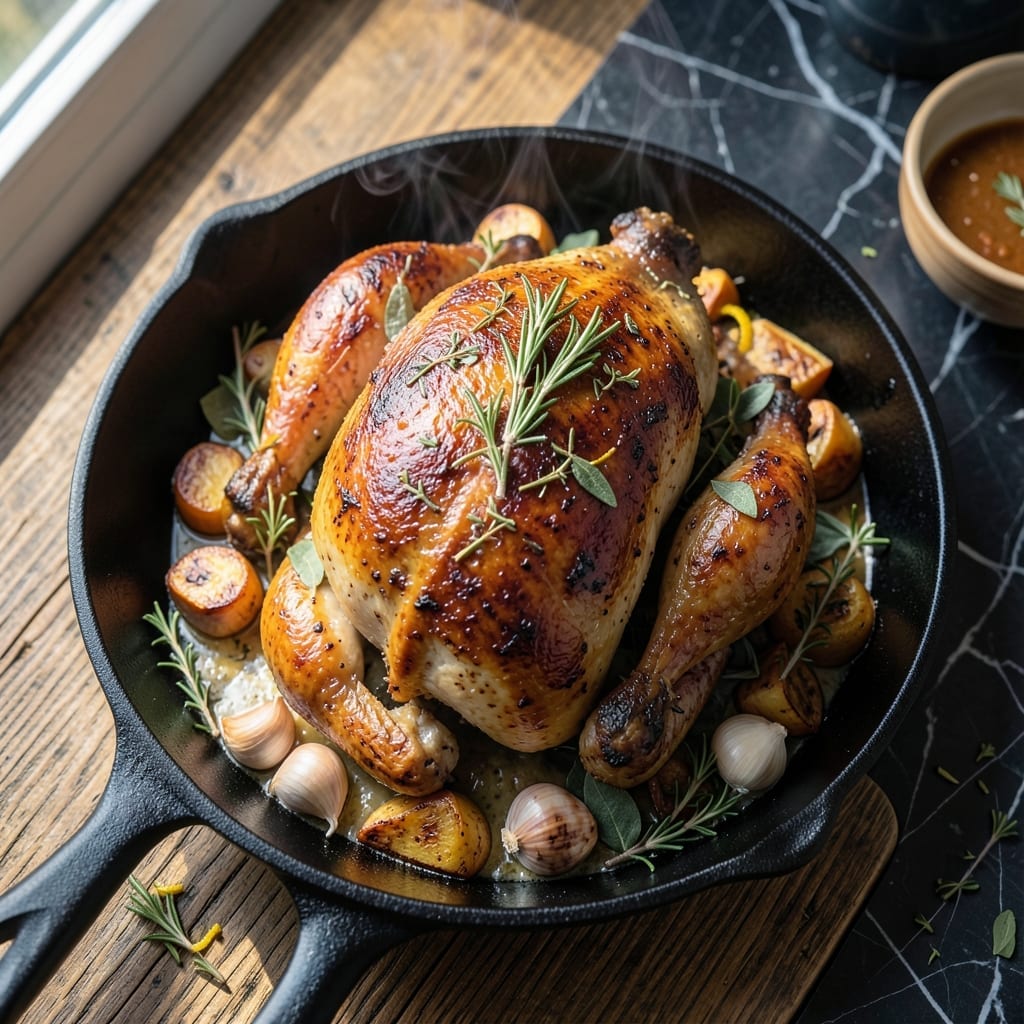
This Thanksgiving roasted chicken delivers holiday perfection with minimal effort and maximum flavor.
The secret lies in a fragrant herb rub that infuses the meat with seasonal warmth. Roasting at high heat ensures crispy skin while keeping the inside juicy and tender. It’s the centerpiece that impresses without the fuss of a whole turkey.
Simple ingredients and straightforward steps make this ideal for cooks of all levels. The aroma alone will have everyone gathered around the table, eager to dig in.
Pair it with classic sides like stuffing or green beans for a complete holiday meal that feels both traditional and fresh.
Ingredients for Thanksgiving Roasted Chicken
Whole roasting chicken and aromatic herbs create this holiday centerpiece with ease.
| Ingredient | Amount | Notes |
|---|---|---|
| Whole Chicken 🍗 | 4 lb | Pat dry inside and out |
| Unsalted Butter 🧈 | ½ cup | Softened for herb rub |
| Fresh Rosemary 🌿 | 2 tbsp | Finely chopped, stems discarded |
| Fresh Thyme 🍃 | 2 tbsp | Finely chopped, stems discarded |
| Fresh Sage Leaves 🌿 | 1 tbsp | Finely chopped |
| Garlic Cloves 🧄 | 6 cloves | Minced for rub |
| Kosher Salt 🧂 | 1 tbsp | Diamond Crystal preferred |
| Freshly Ground Black Pepper 🌶️ | 1 tsp | Coarse grind ideal |
| Lemon 🍋 | 1 whole | Zest and juice reserved |
| Yellow Onion 🧅 | 1 whole | Quartered for cavity |
| Carrots 🥕 | 3 whole | Cut into large chunks |
| Celery Stalks 🥬 | 3 pieces | Cut into large chunks |
| Chicken Stock 💧 | ½ cup | Low-sodium preferred |
| Olive Oil 🫒 | 1 tbsp | For basting |
The chicken quality is paramount for this dish. Opt for air-chilled, free-range birds from Whole Foods or Local butcher shops—they yield superior texture and flavor. The herb combination of rosemary, thyme, and sage is non-negotiable for that classic holiday aroma. Ensure your butter is truly unsalted to control the seasoning precisely. For the stock, homemade is ideal, but quality store-bought works.
Short on fresh herbs? Dried at one-third the quantity works, though the flavor profile will be less vibrant. No whole chicken? Bone-in, skin-on thighs can substitute, though adjust cooking time. The lemon can be swapped for orange for a sweeter note. For the stock, vegetable broth works in a pinch, but chicken stock provides the most authentic flavor base.
This roasts best when brought to room temperature first—about 1 hour on the counter. Leftovers keep well in the fridge for 3-4 days or can be frozen for up to 3 months. The herbs can be prepped a day ahead and stored in damp paper towels to maintain freshness.
Why You’ll Love This Recipe
- One Pan Magic: Honestly, I just rub butter and herbs on the chicken, pop it in the oven, and let the rosemary, thyme, and sage do their thing.
- Herb Infused Perfection: That butter-soaked combo of fresh rosemary, thyme, and sage makes the skin crisp and the meat so flavorful.
- Holiday or Tuesday: I serve this for Thanksgiving, but also just because—it’s impressive enough for guests, simple enough for a weeknight.
- Leftovers Win: The meat shreds beautifully for sandwiches or soup, and I always make extra to stretch the meal.
Step-by-Step Instructions for Thanksgiving Roasted Chicken
This method delivers a holiday-worthy bird with crisp skin and herb-infused juiciness.
Step 1: Prepare and Season the Chicken
Pat the 4 lb Whole Chicken completely dry inside and out with paper towels. This ensures crispy skin. In a small bowl, combine the 0.5 cup Unsalted Butter with 2 tbsp Fresh Rosemary, 2 tbsp Fresh Thyme, 1 tbsp Fresh Sage Leaves, 6 cloves Garlic Cloves, 1 tbsp Kosher Salt, and 1 tsp Freshly Ground Black Pepper.
Gently separate the chicken skin from the breast and thighs, then rub half the herb butter mixture underneath. Rub the remaining butter all over the outside of the chicken. The zest from the 1 whole Lemon can also be added to the butter for extra brightness.
Step 2: Stuff and Truss for Even Cooking
Place the quartered 1 whole Yellow Onion, large chunks of 3 whole Carrots, and 3 pieces Celery Stalks into the cavity. These aromatics infuse flavor as the chicken roasts. Tuck the wings under the body and tie the legs together with kitchen twine to maintain a compact shape.
This trussing technique promotes even cooking and prevents the chicken from drying out. The cavity should be generously filled but not overstuffed. Place the chicken breast-side up on a roasting rack set in a pan.
Step 3: Roast at High Heat for Crispy Skin
Preheat the oven to 425°F. Roast the chicken for 20 minutes at this high temperature to start the browning process. Then reduce the heat to 375°F and continue roasting.
Baste the chicken with 1 tbsp Olive Oil and 0.5 cup Chicken Stock every 20 minutes to keep the skin moist and enhance browning. The chicken is done when an instant-read thermometer inserted into the thickest part of the thigh reads 165°F.
Step 4: Rest and Serve
Transfer the chicken to a cutting board and tent loosely with foil. Let it rest for 15-20 minutes to allow the juices to redistribute. This resting period ensures moist, flavorful meat when carved.
Carve the chicken and serve with the roasted vegetables from the cavity. The skin should be a deep golden brown and the meat tender and aromatic from the herb rub. Squeeze a bit of lemon juice over the carved chicken just before serving for a final touch of freshness.
Pro Tips For Making Thanksgiving Roasted Chicken
- Pat It Dry: Use paper towels to thoroughly dry the chicken skin before buttering—this guarantees a crispy, golden-brown finish instead of soggy skin.
- Room Temp First: Take the chicken out of the fridge 45 minutes before roasting; it cooks more evenly and the butter-herb rub clings better to the warmer surface.
- Butter Under Skin: Gently loosen the skin and spread some of the rosemary-thyme butter underneath—this flavors the meat directly and keeps it juicy, not just the surface.
- Rest Before Carving: Let the chicken rest 15 minutes after roasting; I learned this the hard way after serving dry meat when I cut too soon.
Wine and Beer Pairings for thanksgiving roasted chicken
White Wine Pairings
A crisp Chardonnay from Sonoma with its balanced acidity and apple notes complements the herb rub beautifully. For a lighter option, try a Sauvignon Blanc from New Zealand—I love Kim Crawford’s version for its zesty citrus that cuts through the richness. 🍷
Red Wine Pairings
A light-bodied Pinot Noir from Oregon, like Domaine Serene, offers red fruit flavors that harmonize with the roasted chicken. For bolder tastes, a Grenache from Spain brings raspberry and spice notes that elevate the dish without overpowering it.
Beer Options
An American amber ale, such as Fat Tire, provides caramel and toasted malt notes that pair well with the crispy skin. I also enjoy a Belgian Tripel like Westmalle—its fruity esters and slight sweetness balance the savory herbs perfectly. 🍺
Non-Alcoholic Choices
Sparkling apple cider from Martinelli’s offers effervescence and sweetness that cleanse the palate. For a more sophisticated option, serve a dry hard cider like Angry Orchard Traditional Dry—its crisp finish complements the dish beautifully.
Serving Temperature
Serve white wines chilled to 45-50°F and reds slightly below room temperature at 60-65°F. For beer, aim for 45-50°F to highlight its flavors. Proper temperature enhances the pairing experience significantly.
Nutrition Facts
Frequently Asked Questions
Should I brine the chicken before roasting?
Brining isn’t necessary for this recipe. The herb butter and proper roasting technique ensure juicy meat. If you prefer, a 24-hour dry brine with salt can enhance flavor and moisture.
How do I prevent the breast from drying out?
Start with the chicken breast-side up, then flip it halfway through cooking. Basting every 20 minutes with pan juices also helps. Use a meat thermometer to avoid overcooking—remove at 165°F.
Can I use dried herbs instead of fresh?
Yes, but use 1/3 the amount since dried herbs are more concentrated. The flavor will be slightly different but still delicious. Rehydrate them in a bit of warm stock for better infusion.
What’s the best way to carve the chicken?
Remove the legs and thighs first, then separate the wings. Slice the breast meat against the grain for tender pieces. Always let it rest for 15-20 minutes before carving.

- Jollof Rice Sauce Recipe: West African Tomato and Spice Infusion - September 25, 2026
- Japanese Rice Soup Recipe: Umami-Rich Comfort in a Bowl - September 25, 2026
- Homemade Cream Of Rice Recipe: Silk-Smooth Breakfast in Minutes - September 25, 2026