
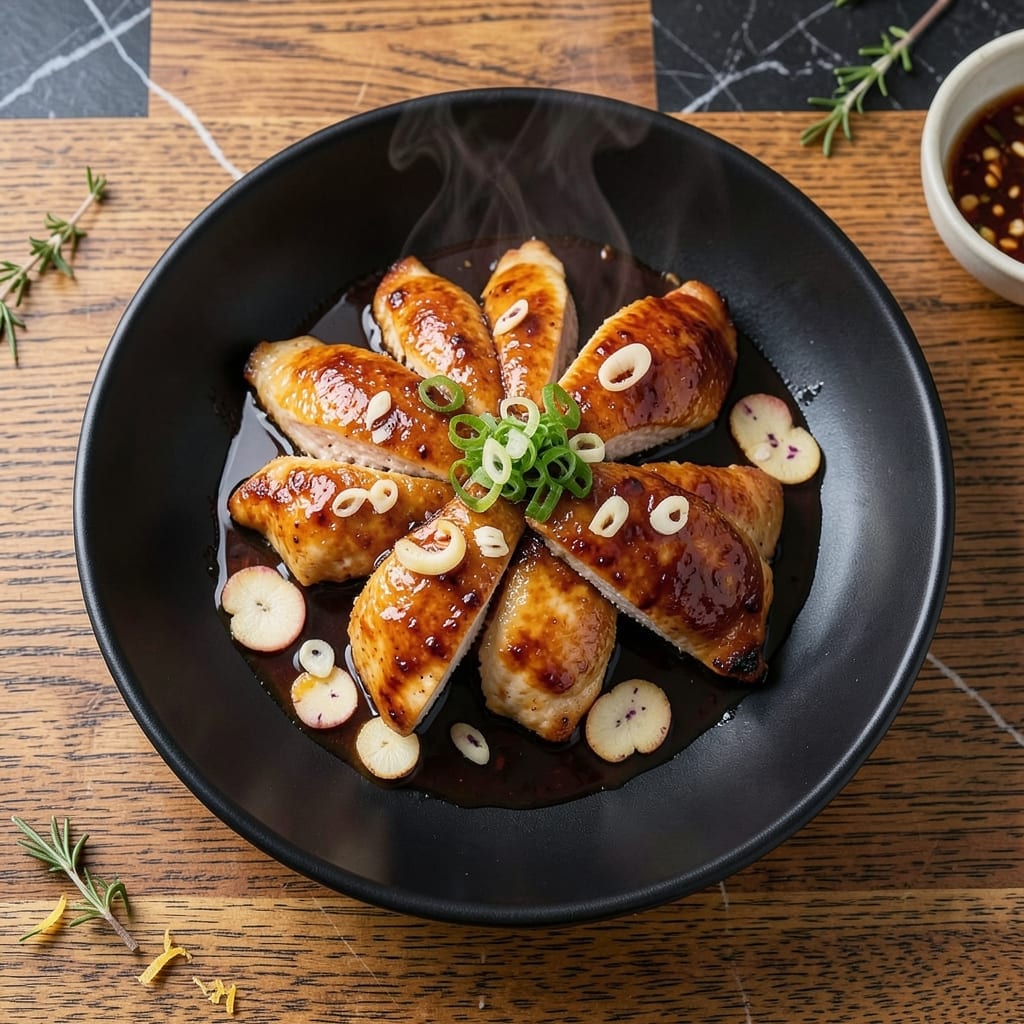
There’s a reason traditional teriyaki chicken endures—its balance of sweet, salty, and umami is unmatched. This recipe captures that authentic flavor without requiring a grill, using a foolproof method for achieving charred edges and a glossy glaze.
The key lies in the sauce: a precise blend of soy sauce, mirin, and sugar, reduced to a thick, sticky consistency. I’ve tested this approach repeatedly to ensure it clings perfectly to the chicken while delivering deep, caramelized flavor.
What results is tender, juicy chicken with a rich, glossy coating that’s both savory and slightly sweet. The technique ensures every bite carries the signature teriyaki taste, whether served over rice or on its own.
No special equipment is needed—just a skillet and a little patience. Here’s how to make it.
Ingredients for Traditional Teriyaki Chicken
Traditional teriyaki chicken requires just a handful of authentic ingredients for that signature glossy glaze.
| Ingredient | Amount | Notes |
|---|---|---|
| Boneless Skinless Chicken Thighs 🍗 | 1 ½ lb | Thighs preferred for juiciness |
| Soy Sauce 🫒 | ½ cup | Low-sodium for controlled seasoning |
| Mirin 🍶 | ⅓ cup | Authentic Japanese sweet rice wine |
| Granulated Sugar 🍚 | 3 tbsp | For caramelized glaze |
| Fresh Ginger 🌿 | 1 tbsp | Peeled and finely grated |
| Garlic Cloves 🧄 | 4 cloves | Minced for aromatic depth |
| Vegetable Oil 🫒 | 2 tbsp | High smoke point for searing |
| Cornstarch 🌾 | 1 tbsp | Thickens the sauce |
| Water 💧 | 2 tbsp | For cornstarch slurry |
| Green Onions 🧅 | 4 whole | Thinly sliced, for garnish |
| Sesame Seeds 🌰 | 1 tsp | Toasted for garnish |
| White Rice 🍚 | 2 cups | Uncooked, for serving |
The chicken thighs are non-negotiable for optimal texture and flavor. Boneless, skinless ensures even cooking and maximum sauce absorption. For soy sauce, Kikkoman low-sodium is widely available and reliable. Mirin can be found in the Asian aisle of most Whole Foods or H-Mart locations—avoid aji-mirin, which contains added salt.
No mirin on hand? Substitute dry sherry plus 1/2 tsp sugar per tablespoon. Thighs swapped for breasts? Reduce cooking time by 3-4 minutes to prevent dryness. For a gluten-free version, tamari works perfectly in place of soy sauce. The ginger and garlic must be fresh—powdered versions lack the necessary aromatic intensity.
The sauce can be made 2 days ahead and refrigerated. Cooked chicken keeps for 4 days in the fridge or 3 months frozen. Reheat gently to preserve the glaze’s glossy finish.
Why You’ll Love This Recipe
- One Pan Wonder: I just toss the thighs with soy, mirin, and sugar, then let the oven do the work—minimal dishes, maximum flavor.
- Sweet & Sticky: That glaze from the soy-mirin mix caramelizes into this ridiculously good coating, and the ginger adds just the right kick.
- Meal Prep Magic: It reheats like a dream, so I make a double batch for lunches all week—still tastes fresh out of the fridge.
- Budget Hero: Chicken thighs stay juicy and cheap, and a little ginger goes a long way. Honestly, my wallet and my taste buds both win.
Step-by-Step Instructions for Traditional Teriyaki Chicken
Master the technique for authentic flavor and that signature glossy, caramelized finish.
Step 1: Marinate the Chicken Thighs
In a bowl, whisk together the 0.5 cup soy sauce, 0.33 cup mirin, and 3 tbsp granulated sugar until the sugar fully dissolves. This is your teriyaki base—sweet, salty, and deeply umami.
Add the 1.5 lb boneless skinless chicken thighs, 1 tbsp fresh ginger, and 4 cloves minced garlic cloves to the marinade. Coat the thighs thoroughly, ensuring every piece is well saturated. Let it marinate for at least 30 minutes at room temperature, or up to 4 hours refrigerated for maximum flavor penetration.
Real talk: the longer it marinates, the more pronounced the teriyaki flavor will be in the final dish.
Step 2: Sear the Chicken to Charred Perfection
Heat the 2 tbsp vegetable oil in a large skillet over medium-high heat until it shimmers but doesn’t smoke. Remove the chicken from the marinade (reserve the marinade) and pat it dry—this ensures a proper sear rather than steaming.
Sear the thighs for 4-5 minutes per side until deeply browned and nearly cooked through. You’re looking for that grill-free char: dark, almost blackened edges where the sugars in the marinade caramelize. Don’t move the chicken too soon—let it develop a crust before flipping.
Step 3: Create the Glossy Teriyaki Glaze
Pour the reserved marinade into the skillet and bring it to a gentle simmer. In a small bowl, mix the 1 tbsp cornstarch with the 2 tbsp water to create a slurry. Slowly drizzle the slurry into the skillet while stirring constantly.
The sauce will thicken within 1-2 minutes, transforming from a thin liquid into a glossy, syrup-like consistency that clings to the back of a spoon. This is the hallmark of traditional teriyaki.
Step 4: Finish and Garnish
Return the seared chicken to the skillet and spoon the thickened glaze over each piece. Simmer for an additional 2-3 minutes, turning the chicken to coat evenly. The glaze should reduce further, creating a lacquered finish that’s sticky and shiny.
Transfer the chicken to a serving platter. Thinly slice the 4 whole green onions and sprinkle them over the top, along with the 1 tsp sesame seeds. Serve immediately with the 2 cups white rice to soak up every drop of that rich, savory-sweet sauce.
Pro Tips For Making Traditional Teriyaki Chicken
- Sear First, Sauce Later: I learned this the hard way—sear the chicken thighs in a dry pan until golden before adding the teriyaki sauce, or you’ll end up with steamed, pale meat instead of that caramelized crust. —
- Grind the Ginger: Sounds weird, but it works: finely grate or mince the fresh ginger—about 1 tablespoon—so it melts into the sauce instead of leaving chewy bits in your teriyaki. —
- Reduce the Sauce: After removing the chicken, simmer the soy, mirin, and sugar for 3-4 minutes until it thickens slightly—this keeps it from sliding right off the meat. —
- Slice Against Grain: Before serving, slice the thighs against the grain into ½-inch strips—makes a real difference in tenderness, especially with thigh meat.
Flavor Customization for This traditional teriyaki chicken
Sweeter Glaze
For a more dessert-like flavor, increase the granulated sugar to 5 tbsp and add 2 tbsp honey to the marinade. The extra sweetness pairs beautifully with the salty soy, creating a candied effect on the chicken.
Spicy Kick
Add 1 tbsp sriracha or 1 tsp red pepper flakes to the teriyaki sauce for a subtle heat. I love how the spice cuts through the richness while keeping that traditional glossy finish. 🌶️
Umami Boost
Stir in 1 tbsp oyster sauce or 1 tsp fish sauce to deepen the savory profile. This small addition enhances the teriyaki’s natural umami without overpowering the dish.
Citrus Twist
Brighten the glaze with 1 tbsp orange juice and 1 tsp zest. The acidity balances the sweetness, and the citrus notes add a refreshing contrast to the rich, caramelized sauce.
Ginger-Garlic Intensity
Double the fresh ginger and minced garlic for a more aromatic, pungent flavor. This works especially well if you’re serving the chicken with steamed vegetables to round out the meal. 💡
Thicker Glaze
For a sauce that clings even more, increase the cornstarch slurry to 2 tbsp cornstarch mixed with 3 tbsp water. The result is a thicker, more syrupy coating that’s perfect for drizzling over rice.
Nutrition Facts
Frequently Asked Questions
Can I use chicken breasts instead of thighs?
Yes, but reduce cooking time by 3-4 minutes to prevent dryness. Thighs are preferred for their juiciness and ability to absorb the glaze better.
Why does my glaze turn out thin?
It likely needs more reduction time. Simmer the sauce for 1-2 minutes after adding the cornstarch slurry to achieve the signature glossy thickness.
How long can I store leftovers?
Cooked chicken keeps for 4 days in the fridge or 3 months frozen. Reheat gently to maintain the glaze’s sticky texture.
Is there a gluten-free alternative?
Use tamari instead of soy sauce for a gluten-free version. It delivers the same umami depth without the gluten.

- Jollof Rice Sauce Recipe: West African Tomato and Spice Infusion - September 25, 2026
- Japanese Rice Soup Recipe: Umami-Rich Comfort in a Bowl - September 25, 2026
- Homemade Cream Of Rice Recipe: Silk-Smooth Breakfast in Minutes - September 25, 2026