
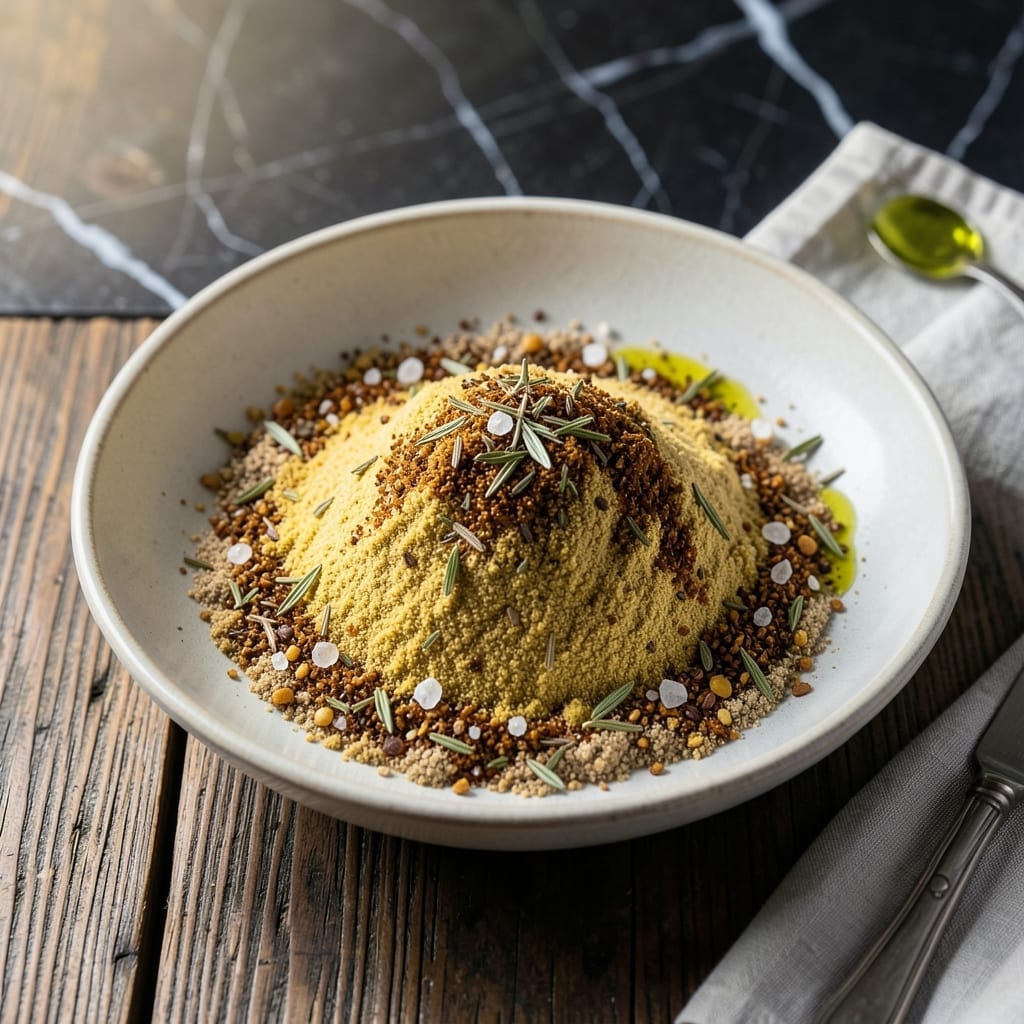
This plant-based seasoning blend delivers that familiar savory depth without any animal products. I developed this mix to add authentic chicken-like flavor to vegan dishes, from stir-fries to soups.
The key is a precise balance of nutritional yeast, onion powder, and other umami-rich ingredients. It takes 5 minutes to mix and lasts 6 months in your pantry.
Sprinkle this powder into sauces, coat proteins, or use it as a rub. It transforms tofu, tempeh, and vegetables into dishes with that classic chicken character.
Store in an airtight container away from light and heat. This blend stays fresh and potent for all your plant-based cooking needs.
Ingredients for Vegan Chicken Powder
Nine plant-based ingredients create this savory, chicken-like seasoning blend with serious umami power.
| Ingredient | Amount | Notes |
|---|---|---|
| Nutritional Yeast Flakes 🧀 | ½ cup | Fortified, for cheesy umami depth |
| Onion Powder 🧅 | 2 tbsp | Fine grind for even distribution |
| Garlic Powder 🧄 | 1 tbsp | Not garlic salt substitute |
| Dried Thyme 🌿 | 1 tsp | Crushed between fingers to release aroma |
| Dried Rosemary 🌿 | 1 tsp | Finely ground or crushed |
| Sea Salt 🧂 | 1 tsp | Fine grain for even mixing |
| Black Pepper 🌶️ | ½ tsp | Freshly ground preferred |
| Turmeric Powder 🌿 | ½ tsp | For golden color and earthiness |
| White Miso Powder 🥣 | 1 tbsp | Dried version for shelf stability |
Nutritional yeast is the backbone here—Bragg or Bob’s Red Mill are solid choices. Look for fortified versions with B12 for extra nutrition. The onion and garlic powders need to be fresh (old ones lose their punch fast). Penzeys has amazing quality if you’re restocking your spice cabinet. For the miso powder, Miso Master brand is my go-to; it’s potent stuff, so don’t skip it.
No white miso powder? Soy sauce powder at half the amount works in a pinch. Out of fresh rosemary? Dried sage at the same quantity gives a similar earthy note. If you’re avoiding salt, reduce the sea salt by half and add a pinch of MSG (yes, it’s vegan) for that extra savory kick. The turmeric is mostly for color, so you can skip it if you’re not worried about appearance.
This keeps for 6 months in an airtight container in a cool, dark place. I make a double batch and store the extra in the freezer—stays vibrant and ready for months. Glass jars work best (plastic can absorb odors).
Why You’ll Love This Recipe
- 5-Minute Mix: I dump all the spices and nutritional yeast in a bowl, stir, and boom—done. No cooking required.
- Umami Bomb: The nutritional yeast gives that rich, savory depth while the rosemary and thyme make it taste like Sunday dinner.
- Pantry Staple: I sprinkle this on tofu, chickpeas, even popcorn. Honestly, it’s my secret weapon for lazy meals.
- Budget Friendly: A batch costs pennies and lasts for weeks. I’ll be real: it’s cheaper than store-bought seasoning blends.
Step-by-Step Instructions for Vegan Chicken Powder
This simple blending process creates a versatile umami powder ready for any plant-based dish.
Step 1: Measure and Prepare All Dry Ingredients
Gather the 0.5 cup Nutritional Yeast Flakes, 2 tbsp Onion Powder, and 1 tbsp Garlic Powder. I always measure these first since they form the flavor foundation. The nutritional yeast provides that signature cheesy depth, while the onion and garlic powders create the savory base.
Check that your Nutritional Yeast Flakes are fortified—this ensures the best umami punch. If your onion or garlic powder has clumped, break it up with your fingers or the back of a spoon before measuring for accuracy.
Step 2: Add the Aromatic Herbs and Seasonings
Measure the 1 tsp Dried Thyme, 1 tsp Dried Rosemary, 1 tsp Sea Salt, and 0.5 tsp Black Pepper. The thyme and rosemary add earthy warmth that mimics traditional chicken seasoning. Crush the dried herbs between your fingers as you add them to release their essential oils.
For the Dried Rosemary, if it’s in whole-leaf form, grind it finely in a mortar and pestle or between your palms. This prevents any large pieces from overpowering individual bites. The Sea Salt should be fine grain to distribute evenly throughout the blend.
Step 3: Incorporate the Finishing Touches
Add the 0.5 tsp Turmeric Powder and 1 tbsp White Miso Powder. The turmeric gives the mix a subtle golden hue, while the white miso powder deepens the umami profile with its fermented richness. These two ingredients are what make this blend taste distinctly “chicken-like.”
If your turmeric has been sitting in the pantry for a while, give it a quick smell to ensure it’s still potent. The White Miso Powder should be completely dry—if it’s at all sticky or clumped, it may not blend evenly.
Step 4: Blend Until Fully Combined
Transfer all the measured ingredients to a high-speed blender or spice grinder. Pulse in 5-second bursts until the mixture becomes a fine, uniform powder. You should see no visible specks of individual spices—just a consistent, golden-yellow blend.
Stop and scrape down the sides with a spatula halfway through. This ensures every bit gets incorporated. If you don’t have a blender, a whisk and a bit of elbow grease in a large bowl will also work, though the texture may be slightly coarser.
Step 5: Store for Maximum Freshness
Transfer the finished blend to an airtight container, ideally glass to preserve freshness. Label it with the date and use within 3 months for peak flavor. Store in a cool, dark place away from heat and light, which can degrade the spices over time.
Before sealing, give the container a gentle shake to settle the powder. This blend is concentrated, so a little goes a long way—start with 1 teaspoon per pound of plant-based protein or per batch of broth and adjust to taste.
Pro Tips For Making Vegan Chicken Powder
- Toast the Yeast: Lightly dry-toast the nutritional yeast in a pan for 30 seconds before mixing—it deepens the umami flavor and removes any raw aftertaste.
- Grind the Herbs: Pulse the dried thyme and rosemary in a spice grinder or mortar first; their oils release better when finely ground, making the seasoning more potent.
- Skip the Salt: Leave out added salt until you’ve mixed and tasted the blend—onion and garlic powders often contain enough to start, and you can adjust later.
- Rest the Mix: Let the powder sit for 10 minutes after blending so the flavors meld—I learned this the hard way after tasting flat batches straight from the bowl.
Essential Equipment for This Dish
High-Speed Blender
A quality blender is essential for achieving that fine, uniform powder texture. I use my Vitamix 5200—it pulverizes the nutritional yeast and spices into a consistent blend in seconds. Even a budget-friendly Ninja model works well for this task.
Spice Grinder
For smaller batches, a dedicated coffee/spice grinder gives you perfect control. I recommend the Krups Electric Spice Grinder—it’s compact, powerful, and easy to clean. Pulse in 3-second bursts to avoid overheating the spices, which can dull their flavor.
Precision Scale
Accurate measurements ensure consistent flavor in every batch. My OXO Good Grips 11lb Scale has a pull-out display that’s perfect for large bowls. Weighing ingredients like nutritional yeast (16g per ¼ cup) guarantees precision over volume measurements.
Glass Storage Jars
Glass containers preserve freshness better than plastic, which can absorb odors. I use Ball Mason jars with airtight lids—the 8 oz size holds a double batch perfectly. Dark glass or a pantry away from light keeps the blend potent for the full 6 months. 💡
Mortar and Pestle
For crushing whole dried herbs like rosemary, a granite mortar and pestle works beautifully. I use a RSVP Endurance set—its weight and texture make quick work of herbs. This step releases essential oils for maximum flavor impact.
Fine Mesh Sifter
After blending, sift the powder through a fine mesh strainer to catch any stubborn clumps. This extra step ensures a silky-smooth texture. I use a Cuisinox sifter—it’s durable and the perfect mesh size for spice blends.
Nutrition Facts
Frequently Asked Questions
What can I use instead of white miso powder?
Use soy sauce powder at half the amount as a substitute. For liquid options, 1 tsp soy sauce per 1 tbsp miso powder works, but dry ingredients blend better for storage.
How long does this blend stay fresh?
Stored in an airtight container in a cool, dark place, it lasts 6 months at peak flavor. For longer storage, freeze half the batch—it keeps for up to 1 year.
Can I use fresh herbs instead of dried?
No, fresh herbs contain moisture that would create clumps and shorten shelf life. Stick with dried for this powder recipe. If needed, dry fresh herbs in a 170°F oven for 2-3 hours first.

- Jollof Rice Sauce Recipe: West African Tomato and Spice Infusion - September 25, 2026
- Japanese Rice Soup Recipe: Umami-Rich Comfort in a Bowl - September 25, 2026
- Homemade Cream Of Rice Recipe: Silk-Smooth Breakfast in Minutes - September 25, 2026