
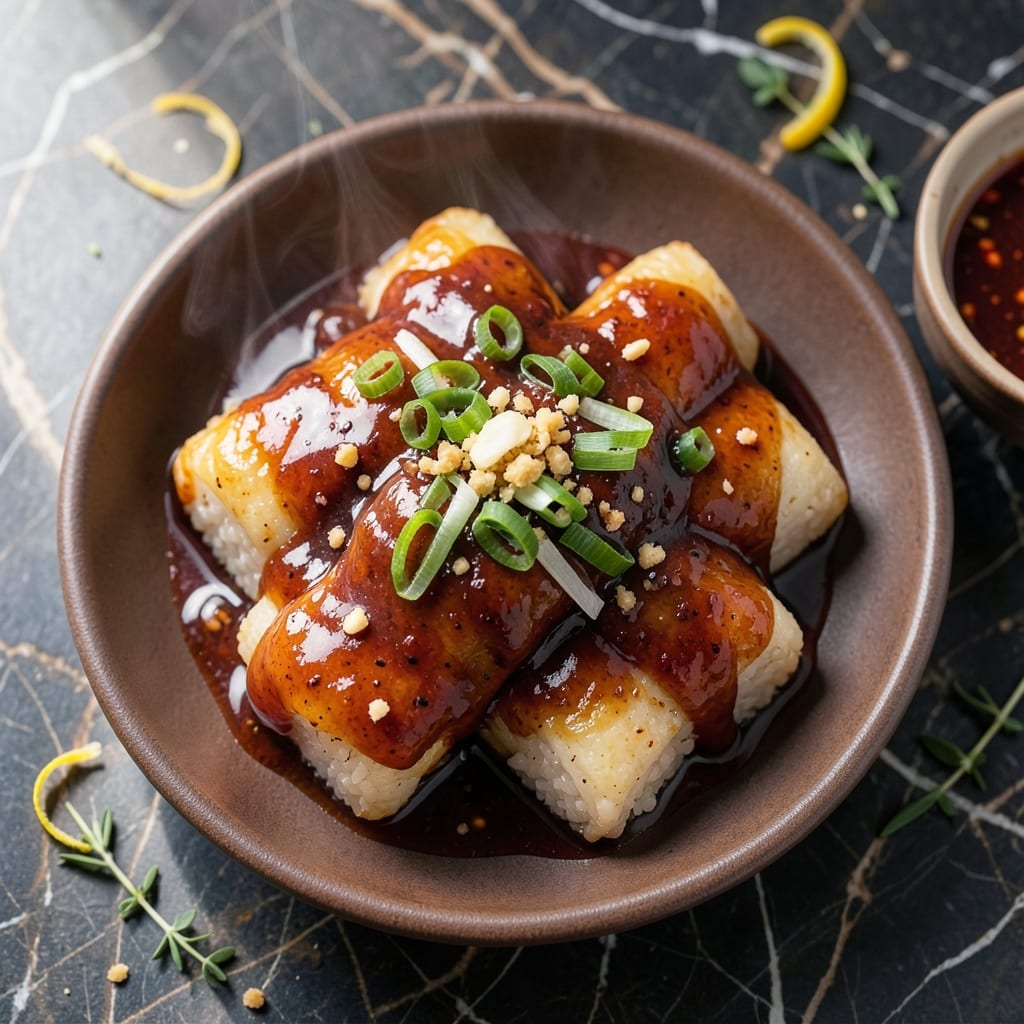
This vegan take on Korean rice cakes delivers the authentic chewy texture you expect, with a spicy gochujang glaze that packs serious flavor. I developed this version after realizing how few plant-based options captured the true essence of tteokbokki.
The key is using cylinder-shaped rice cakes and a carefully balanced sauce that’s rich, slightly sweet, and fiercely spicy. Vegetable broth replaces traditional fish-based ingredients while maintaining depth. The rice cakes absorb the sauce beautifully during cooking.
You’ll get tender yet resilient rice cakes coated in a glossy, vibrant red sauce that clings perfectly. The dish comes together in under 30 minutes, making it ideal for quick weeknight meals.
Serve immediately for best texture, as the rice cakes firm up as they cool. This recipe stays true to Korean flavors while being completely plant-based.
Ingredients for Vegan Korean Rice Cake
Fresh rice cakes and bold Korean flavors come together for this plant-based dish.
| Ingredient | Amount | Notes |
|---|---|---|
| Cylinder-Shaped Rice Cakes 🍚 | 1 lb | Korean tteok, fresh or frozen |
| Gochujang 🌶️ | ½ cup | Korean red chili paste |
| Vegetable Broth 🥕 | 2 cups | Low-sodium preferred |
| Soy Sauce 🫒 | 3 tbsp | Or tamari for gluten-free |
| Brown Sugar 🍚 | 2 tbsp | Or coconut sugar alternative |
| Garlic Cloves 🧄 | 4 cloves | Minced for maximum flavor |
| Fresh Ginger 🌿 | 1 tbsp | Peeled and grated |
| Rice Vinegar 🍶 | 1 tbsp | Adds tangy brightness |
| Sesame Oil 🫒 | 1 tbsp | Toasted for depth |
| Green Onions 🧅 | 4 whole | Thinly sliced for garnish |
| Sesame Seeds 🌰 | 1 tbsp | Toasted for garnish |
| Red Pepper Flakes 🌶️ | 1 tsp | Adjust to spice preference |
| Cornstarch 🌾 | 1 tbsp | Slurry for thickening sauce |
| Water 💧 | 2 tbsp | For cornstarch slurry |
The rice cakes are non-negotiable here. H Mart or your local Asian market will have the cylinder-shaped ones (look for ‘tteok’ on the label). If frozen, thaw them in warm water first—they should be soft but not mushy. I grab Sempio gochujang for the glaze; it’s got the right balance of heat and sweetness. Avoid the stuff with added sugar if you’re watching intake (the sauce has enough already).
No gochujang? Sriracha plus a spoon of miso paste gets you surprisingly close. Out of rice cakes? Thick udon noodles work in a pinch (they soak up sauce differently though). For the broth, Better Than Bouillon No Chicken Base has a great depth of flavor. The cornstarch slurry is essential for that glossy finish—don’t skip it (or the sauce stays runny).
This tastes best fresh—serve immediately once the sauce clings. Leftovers keep 3-4 days in the fridge but reheat with a splash of water. Freezing isn’t ideal (the rice cakes turn to cement).
Why You’ll Love This Recipe
- One Pot Wonder: I just toss the rice cakes, gochujang, and broth in a pan—no fancy prep, no mess.
- Sweet Heat Perfection: The brown sugar balances the gochujang’s spice so well I always go back for seconds.
- Meal Prep Hero: Here’s what sold me—it reheats beautifully for lunches all week.
- Budget Stretcher: A bag of rice cakes and pantry staples feed my family for less than takeout.
Step-by-Step Instructions for Vegan Korean Rice Cakes
This method ensures perfectly chewy rice cakes with a glossy, spicy-sweet glaze every time.
Step 1: Prep and Soak the Rice Cakes
If using fresh cylinder-shaped rice cakes, give them a quick rinse under cold water to remove any excess starch. For frozen ones, don’t thaw—place them directly in a bowl of cold water and let soak for 15-20 minutes until pliable but still slightly firm to the touch.
Drain and pat dry with a clean towel. Soaking prevents them from becoming gummy during cooking while also ensuring they absorb the sauce flavors beautifully. Real talk: skipping this step often leads to uneven textures, so don’t rush it.
Step 2: Build the Gochujang Sauce Base
In a large skillet or wide pot, combine the 2 cups Vegetable Broth, 0.5 cup Gochujang, 3 tbsp Soy Sauce, 2 tbsp Brown Sugar, minced 4 cloves Garlic Cloves, 1 tbsp Fresh Ginger, 1 tbsp Rice Vinegar, and 1 tsp Red Pepper Flakes. Whisk vigorously until the gochujang fully dissolves into the liquid.
Bring the mixture to a gentle simmer over medium heat. You’ll notice the sauce thicken slightly and develop a deep, aromatic scent as the flavors meld. This is where the magic happens—let it cook for 3-4 minutes until it reaches a velvety consistency.
Step 3: Cook the Rice Cakes in the Sauce
Add the soaked cylinder-shaped rice cakes to the simmering sauce, stirring gently to coat them evenly. Reduce heat to medium-low and cover. Cook for 8-10 minutes, stirring occasionally, until the rice cakes are tender but still retain a slight bounce when bitten.
Here’s the thing—you want them to absorb most of the sauce without turning mushy. If the mixture looks too thick, add a splash of water. If it’s too thin, let it reduce uncovered for another 2-3 minutes. The rice cakes should glisten with a thick, clingy glaze.
Step 4: Thicken and Finish the Glaze
In a small bowl, mix the 1 tbsp Cornstarch with 2 tbsp Water to create a slurry. Pour this into the skillet and stir immediately. The sauce will transform within 1-2 minutes, thickening into a glossy coating that clings to the rice cakes.
Drizzle in the 1 tbsp Sesame Oil and stir to incorporate. This adds a nutty depth that balances the heat and sweetness. Taste and adjust seasoning—more gochujang for heat, a pinch of brown sugar for sweetness, or a splash of rice vinegar for tang.
Step 5: Garnish and Serve
Transfer the rice cakes to a serving dish, ensuring each piece is generously coated with the sauce. Sprinkle with thinly sliced 4 whole Green Onions and 1 tbsp Sesame Seeds for crunch and freshness. The green onions add a bright contrast to the rich, spicy glaze.
Serve immediately while hot, as the rice cakes are best enjoyed fresh. The sauce should be thick enough to coat the back of a spoon but still flow slightly. Each bite should deliver that signature chewy texture with layers of spicy, sweet, and umami flavors.
Pro Tips For Making Vegan Korean Rice Cake
- Soak the Rice Cakes: I learned this the hard way—if you skip soaking the cylinder-shaped rice cakes in warm water for 10-15 minutes, they’ll stay rock-hard in the center no matter how long you simmer them.
- Bloom the Gochujang: Cook the gochujang in a little oil for 1-2 minutes before adding liquids—it deepens the flavor and removes that raw, pasty edge.
- Skip the Overcrowding: Resist the urge to dump all the rice cakes in at once; they’ll stick together and steam instead of absorbing the sauce. Work in batches if needed.
- Use Fresh Broth: Sounds weird, but it works: swap water for fresh vegetable broth—it adds a depth that even good seasoning can’t fake.
Make-Ahead Tips for This Dish
Prep Ahead Strategy
You can soak the rice cakes in cold water for up to 2 hours before cooking. This prevents last-minute rushing. Store them in the fridge in a bowl of water, changing it once if soaking longer than 1 hour. 💡
Sauce Pre-Mixing
Combine all sauce ingredients except cornstarch slurry in a jar the night before. Store in the fridge for up to 2 days. The flavors deepen as it sits, making the final dish even more vibrant.
Partial Cook Method
Cook the rice cakes in the sauce for just 5 minutes, then stop. Cool and refrigerate for up to 24 hours. Finish cooking when ready to serve, adding a splash of water to loosen the sauce.
Freezing Caution
Freezing isn’t ideal as rice cakes turn rubbery. If necessary, freeze cooked rice cakes in sauce for up to 1 month. Thaw overnight in the fridge before reheating gently.
Reheating Tips
Reheat on the stovetop over medium-low heat with 2 tbsp water to restore the glossy sauce. Microwave works in 30-second bursts, stirring between each. The texture changes slightly but remains delicious. 🔥
Garnish Storage
Slice green onions and toast sesame seeds up to 2 days ahead. Store separately in airtight containers. Add fresh garnishes just before serving for the best texture and flavor.
Nutrition Facts
Frequently Asked Questions
Can I use a different chili paste?
Yes, sriracha mixed with a spoon of miso makes a good substitute. The key is balancing heat and depth, so taste as you go. Gochujang is ideal but not mandatory for great flavor.
How do I prevent mushy rice cakes?
Soak frozen ones for 15-20 minutes only, then cook just until tender. Over-soaking or overcooking turns them gummy. Watch closely near the end.
What if my sauce is too thin?
Simmer uncovered for 2-3 minutes to reduce. If still thin, mix extra cornstarch with water and stir in. It will thicken as it cools slightly.
Can I make this gluten-free?
Swap soy sauce for tamari and ensure your gochujang is gluten-free. Check all labels carefully for hidden wheat.

- Jollof Rice Sauce Recipe: West African Tomato and Spice Infusion - September 25, 2026
- Japanese Rice Soup Recipe: Umami-Rich Comfort in a Bowl - September 25, 2026
- Homemade Cream Of Rice Recipe: Silk-Smooth Breakfast in Minutes - September 25, 2026