
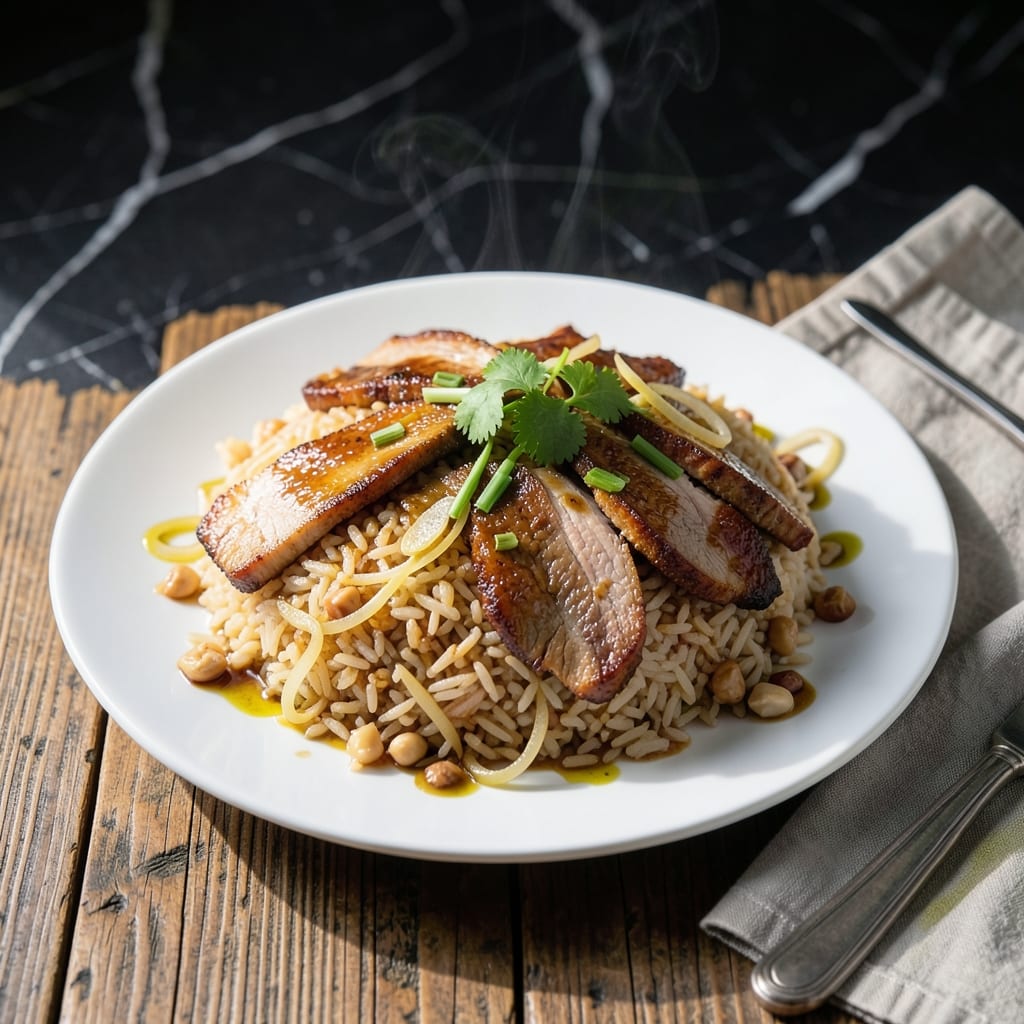
This recipe brings authentic Vietnamese flavors to your home kitchen with its perfect balance of savory, sweet, and umami notes. The dish relies on traditional wok-frying techniques to achieve that signature charred aroma and texture.
Each bite combines tender pork, fluffy rice, and vegetables with a subtle fish sauce seasoning that defines the cuisine. The high-heat cooking method ensures every grain of rice gets coated in flavor while maintaining a satisfying chew.
What makes this version special is its attention to detail—from the initial marination of the pork to the precise timing of ingredient additions. The result is a dish that tastes like it came from a street food stall in Saigon.
Serve hot with fresh herbs and a lime wedge for the complete experience. This creation stays true to its roots while being approachable for home cooks.
Ingredients for Vietnamese Pork Fried Rice
Authentic Vietnamese flavors start with these carefully selected ingredients for a wok-charred masterpiece.
| Ingredient | Amount | Notes |
|---|---|---|
| Jasmine Rice 🍚 | 3 cups | Day-old, cooked and chilled |
| Pork Shoulder 🥩 | 1 lb | Thinly sliced, boneless |
| Fish Sauce 🐟 | 3 tbsp | Vietnamese preferred for authenticity |
| Soy Sauce 🫒 | 2 tbsp | Light or all-purpose variety |
| Shallots 🧅 | 2 whole | Finely minced for depth |
| Garlic Cloves 🧄 | 4 cloves | Minced for aromatic base |
| Carrots 🥕 | 2 whole | Julienned for texture contrast |
| Green Onions 🌱 | 4 whole | Thinly sliced, green parts only |
| Frozen Peas 🌿 | ¾ cup | Thawed for quick cooking |
| Large Eggs 🥚 | 2 whole | Lightly beaten for richness |
| Vegetable Oil 🫒 | 3 tbsp | High smoke point for wok frying |
| White Pepper 🧂 | ½ tsp | Ground, traditional seasoning |
| Granulated Sugar 🍚 | 1 tsp | Balances savory fish sauce |
| Fresh Cilantro 🌿 | ½ cup | Chopped for garnish |
| Lime 🍈 | 1 whole | Cut into wedges for serving |
The pork should come from pork shoulder—its fat content keeps it juicy during high-heat cooking. Asian grocery stores often have pre-sliced options, but any well-marbled cut works. For rice, jasmine is non-negotiable—its floral aroma is key to authentic flavor. Day-old, cold rice fries up best (fresh rice turns mushy). Fish sauce is the soul of this dish; Red Boat or Three Crabs brands offer the cleanest flavor.
No pork? Chicken thighs or shrimp make excellent substitutes (adjust cooking time accordingly). Vegetarian? Extra-firm tofu pressed and cubed works well. Missing fish sauce? Coconut aminos at equal volume provides similar umami. For vegetables, bell peppers or zucchini can replace carrots. The eggs are optional but add richness—omit for a vegan version (though note this is a standard recipe).
Cooked rice keeps in the fridge for 3-4 days before using—perfect for planning ahead. Leftovers reheat beautifully in a skillet with a splash of water. For best results, store fish sauce and oils in a cool, dark place where they’ll keep for 6-12 months. Fresh herbs like cilantro last about 1 week wrapped in damp paper towels.
Why You’ll Love This Recipe
- One Pan Wonder: I toss everything—the pork, rice, and shallots—into one pan, and it’s done in 20 minutes flat.
- Umami Bomb: Fish sauce and soy sauce turn the pork and rice into this rich, savory bite that’s honestly hard to stop eating.
- Feeds a Crowd: Between us, this stretches easily for family dinners or meal prep—leftovers taste even better the next day.
- Budget Friendly: Pork shoulder and jasmine rice are cheap, but the flavor makes it taste like a restaurant dish.
Step-by-Step Instructions for Vietnamese Pork Fried Rice
Master the wok technique for authentic char and balanced flavors in this traditional dish.
Step 1: Prepare the Protein and Aromatics
Heat 1 tablespoon of the vegetable oil in a wok over high heat until shimmering. Add the 1 lb Pork Shoulder slices in a single layer, ensuring they sizzle immediately upon contact. Cook undisturbed for 2-3 minutes until the edges develop a deep caramelized crust.
Flip and cook for another 1-2 minutes until the pork is just cooked through but still tender. Transfer to a plate and set aside. In the same wok, add the 2 whole Shallots and 4 cloves Garlic Cloves, stirring constantly for 30 seconds until fragrant but not browned.
Step 2: Scramble the Eggs and Add Vegetables
Push the aromatics to one side of the wok and add the remaining 2 tablespoons of vegetable oil. Pour in the 2 whole Large Eggs and scramble quickly with a spatula until just set but still slightly runny. This creates ribbons of egg that will coat the rice beautifully.
Add the 2 whole Carrots, 0.75 cup Frozen Peas, and 4 whole Green Onions (green parts only). Stir-fry for 2-3 minutes until the carrots begin to soften slightly but retain a vibrant orange color and snap when bent.
Step 3: Incorporate Rice and Seasonings
Add the 3 cups Jasmine Rice to the wok, breaking up any clumps with your spatula. The rice should be cold and dry to achieve proper wok hei (breath of the wok). Distribute it evenly across the surface and press down lightly to maximize contact with the hot metal.
Drizzle the 3 tbsp Fish Sauce, 2 tbsp Soy Sauce, 1 tsp Granulated Sugar, and 0.5 tsp White Pepper over the rice. Toss everything together vigorously for 3-4 minutes until the rice develops a lightly charred aroma and the seasonings are evenly distributed.
Step 4: Finish and Garnish
Return the cooked pork shoulder to the wok and toss to combine. Cook for an additional 1-2 minutes until everything is heated through and the pork absorbs some of the sauce. The rice grains should be separate, with a slightly crisp texture and a glossy sheen from the sauces.
Remove from heat and stir in the 0.5 cup Fresh Cilantro. Transfer to a serving platter and serve immediately with lime wedges on the side. The final dish should have a balance of savory, sweet, and umami notes with a bright citrus finish.
Pro Tips For Making Vietnamese Pork Fried Rice
- Use Day-Old Rice: Fresh rice turns to mush in the wok—I learned this the hard way. Cook your jasmine rice the night before and refrigerate it uncovered so it dries out just enough to fry up light and separate.
- Render the Fat: Pork shoulder has plenty of fat; render it first over medium heat until crispy bits form, then add your shallots. This builds a deep, savory base that fish sauce and soy sauce can’t do alone.
- High Heat Only: Crank the burner to max and work in small batches. Overcrowding the pan steams the rice instead of frying it, and nobody wants soggy pork fried rice.
- Sauce at the End: Add fish sauce and soy sauce in the last minute of cooking—this prevents the rice from absorbing too much liquid and turning dark or overly salty. sounds weird, but it works.
Common Mistakes When Making vietnamese pork fried rice
Overcrowding the Wok
This is the most common mistake I see. Cooking too much at once drops the wok’s temperature, turning your dish steamed instead of stir-fried. Work in batches with 2-3 cups rice maximum per batch. Your patience will be rewarded with that coveted wok hei. 🔥
Using Fresh Rice
Day-old, cold rice is essential for achieving the right texture. Fresh rice contains too much moisture and will turn mushy when stir-fried. Spread leftover rice on a baking sheet and refrigerate uncovered for 2-3 hours to dry it out before using.
Underheating the Oil
Your oil needs to be smoking hot before adding ingredients. If it’s not shimmering, it’s not ready. I test by adding a single rice grain—it should sizzle violently. Use high smoke point oils like vegetable or peanut oil to handle the heat.
Overcooking the Pork
The pork should be just cooked through when removed from the wok, as it will finish cooking when added back later. Cook thin slices for only 2-3 minutes per side over high heat. Overcooked pork becomes tough and chewy, ruining the dish’s texture.
Skipping the Marinade
Even a quick 10-minute marinade with fish sauce and garlic makes a difference. This step adds depth of flavor to the pork. Mix 1 tbsp fish sauce with 2 minced garlic cloves and toss with pork slices before cooking.
Ignoring the Eggs
Cook the eggs separately from the rice at first, then combine. This creates those beautiful egg ribbons that coat each grain. Use medium-high heat and scramble just until set—about 30-45 seconds. They’ll finish cooking with the rice. 💡
Nutrition Facts
Frequently Asked Questions
Can I use fresh rice instead of day-old?
No, fresh rice contains too much moisture and will turn mushy. Spread leftover rice on a baking sheet and refrigerate uncovered for 2-3 hours to dry it out first.
What’s the best oil for high-heat cooking?
Use oils with a high smoke point like vegetable, peanut, or avocado oil. They can handle the high heat needed for authentic wok-frying without burning. Avoid olive oil as it has a lower smoke point.
How do I know when the pork is done?
Cook thin slices over high heat for 2-3 minutes per side until just cooked through. The pork will finish cooking when added back to the wok later. Overcooking makes it tough.
Can I add other vegetables?
Bell peppers, zucchini, or snap peas work well. Add them with the carrots so they cook evenly. Keep pieces small for quick, uniform cooking.

- Jollof Rice Sauce Recipe: West African Tomato and Spice Infusion - September 25, 2026
- Japanese Rice Soup Recipe: Umami-Rich Comfort in a Bowl - September 25, 2026
- Homemade Cream Of Rice Recipe: Silk-Smooth Breakfast in Minutes - September 25, 2026