
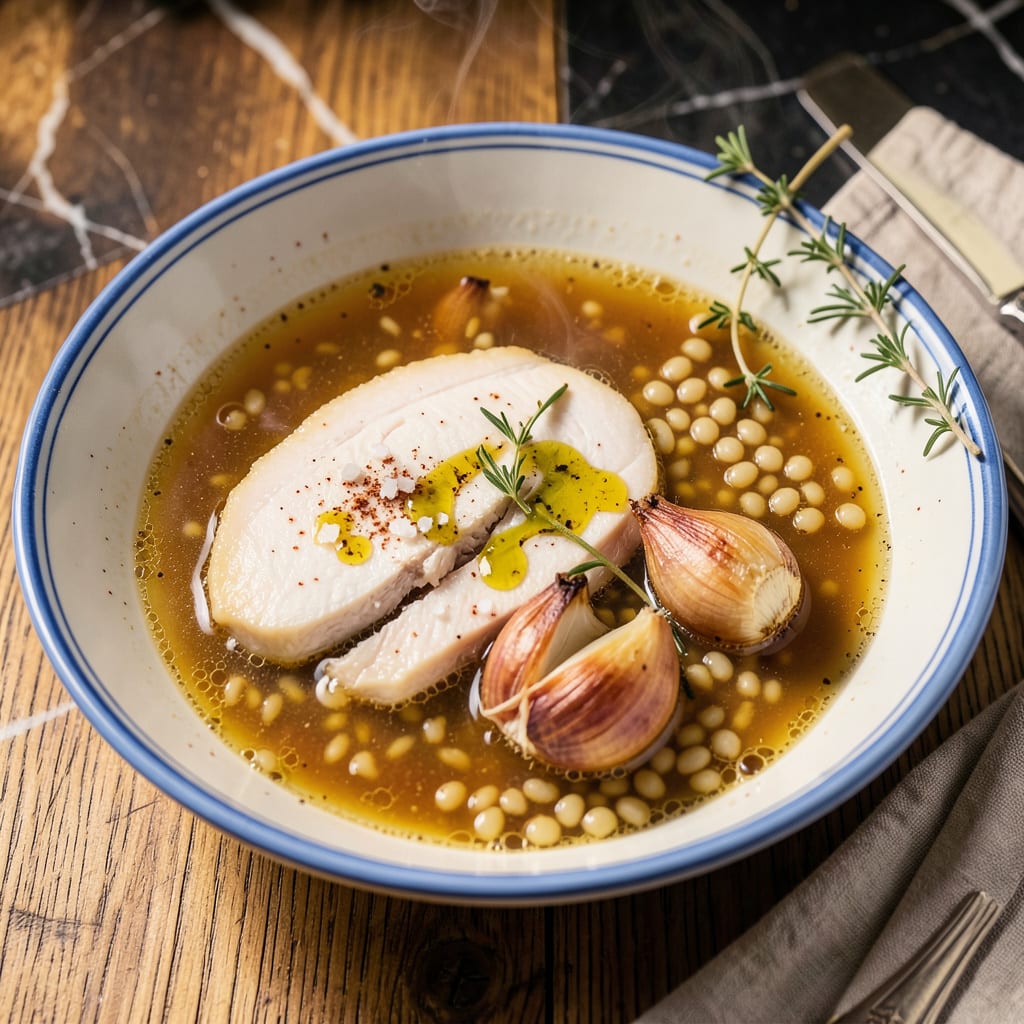
One standard 14.5-ounce can of chicken broth equals approximately 1¾ cups (1.75 cups). For a 10.5-ounce can, it yields about 1¼ cups (1.25 cups).
This conversion comes in handy when you’re scaling recipes or substituting broth for water. 🔥 I always keep these measurements in mind because canned broth is denser than water—meaning you get slightly more volume per ounce. The difference between a 10.5-ounce and 14.5-ounce can might seem small, but it can significantly impact the flavor concentration in soups, sauces, or rice dishes.
What’s interesting is how brands sometimes adjust their can sizes while keeping the liquid volume consistent. ✨ This is why I recommend measuring by cups rather than relying solely on the can’s weight—especially when precision matters in recipes like risotto or pan sauces.
💡 In This Article
- Understanding Chicken Broth Can Sizes and Volume
- Practical Uses for Canned Chicken Broth in Recipes
Understanding Chicken Broth Can Sizes and Volume
The variation in can sizes comes down to industry packaging standards and brand preferences. Most major brands like Swanson and College Inn offer 14.5-ounce cans as their standard size, while some store brands or specialty lines use 10.5-ounce cans.
The key factor is that broth is slightly denser than water due to dissolved proteins and sodium, which means it occupies less volume per ounce than pure water would.
When you measure a 14.5-ounce can of broth, you’ll consistently get about 1¾ cups because the liquid contains approximately 1-2% solids (proteins, fats, and minerals). This density difference explains why you can’t simply assume 8 ounces equals 1 cup like with water.
For comparison, a 10.5-ounce can yields 1¼ cups—the ratio remains the same, just scaled down proportionally.
What complicates things is that some brands use “low-sodium” or “organic” labels with slightly different formulations. These variations can alter the density by up to 0.5%, which might seem negligible but can affect recipes requiring precise liquid measurements.
I always recommend giving the can a quick shake before measuring—this ensures any settled solids are evenly distributed throughout the liquid.
The canning process itself also plays a role. Broth is typically heated to 250°F during canning, which causes slight evaporation. Manufacturers account for this by overfilling cans by about 3-5% to ensure the labeled volume remains accurate after processing.
This is why you might notice some cans feel slightly pressurized when first opened—they’re sealed while still hot.
For home cooks, the practical takeaway is that canned broth measurements are remarkably consistent across brands when measured by volume rather than weight.
The USDA standard for canned broth requires the net weight to reflect the actual edible content, so you can trust that a 14.5-ounce can will indeed give you 1¾ cups of usable liquid every time. 🔥
One pro tip I’ve learned: If you’re using broth in a reduction sauce, start with about 10% more than the recipe calls for to account for evaporation. For example, if your recipe needs 1 cup of reduced broth, begin with 1⅛ cups of canned broth.
This accounts for the water loss during simmering while maintaining the intended flavor concentration.

- Jollof Rice Sauce Recipe: West African Tomato and Spice Infusion - September 25, 2026
- Japanese Rice Soup Recipe: Umami-Rich Comfort in a Bowl - September 25, 2026
- Homemade Cream Of Rice Recipe: Silk-Smooth Breakfast in Minutes - September 25, 2026