
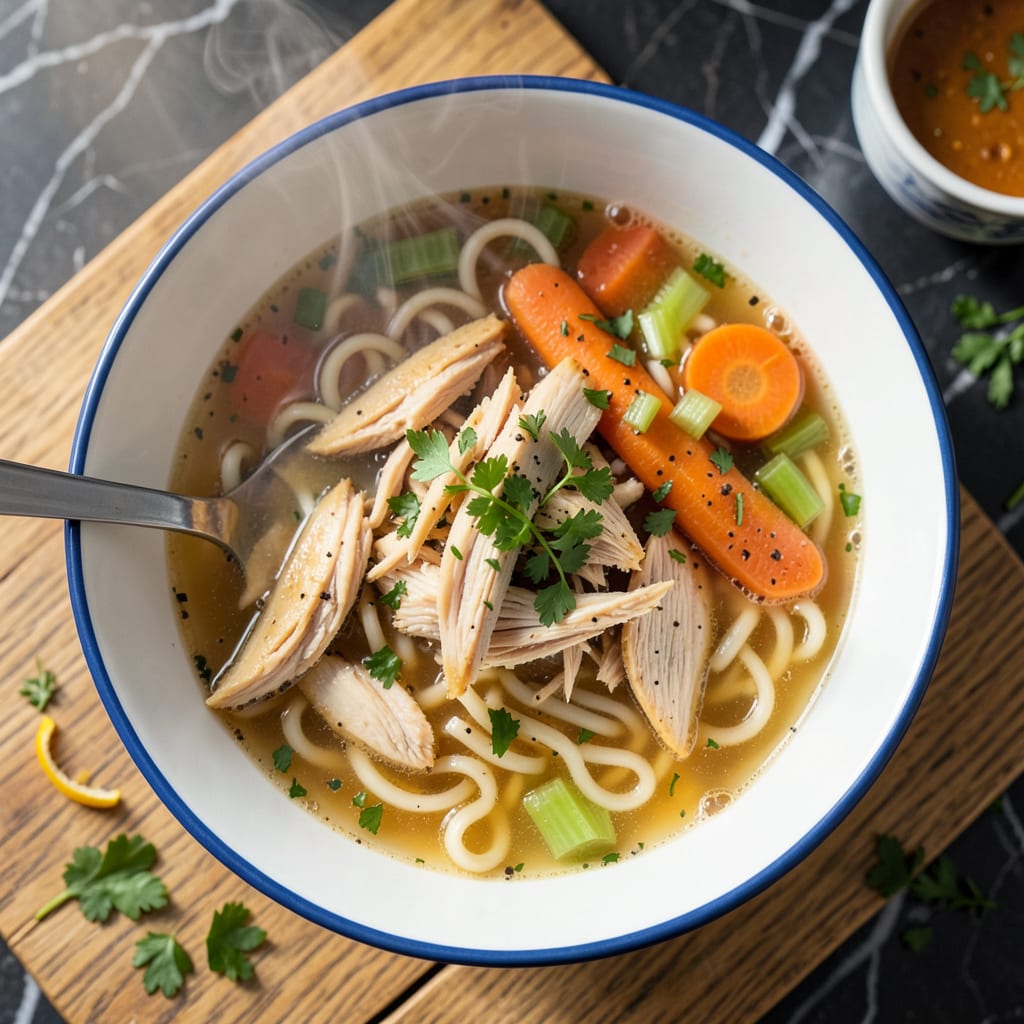
Tim Hortons chicken noodle soup typically contains chicken broth, diced chicken, egg noodles, carrots, celery, onions, and seasonings like salt, pepper, and parsley. Some locations may include modified cornstarch or soy derivatives for thickening.
This classic comfort soup balances hearty protein with vegetable elements for a satisfying meal. The egg noodles provide a tender bite that absorbs the broth’s flavor, while the carrots and celery add natural sweetness and texture. What many don’t realize is that regional variations exist—some locations adjust thickness with starches or enhance umami with soy-based ingredients. I always recommend checking with staff if you have dietary restrictions, as preparation methods can vary. ✨
For those watching additives, the modified cornstarch acts as a stabilizer to maintain consistency during transport and service. The soup’s simplicity makes it versatile, but the hidden details—like potential MSG alternatives or preservatives—are worth understanding for health-conscious consumers. This transparency helps explain why the flavor remains consistent across thousands of locations. 💫
💡 In This Article
- Breakdown of Tim Hortons Soup Ingredients and Additives
- Allergy Warnings and Dietary Alternatives for Tim Hortons Soup
Breakdown of Tim Hortons Soup Ingredients and Additives
The foundation of this soup starts with chicken broth, which provides the umami backbone. Unlike homemade versions that might use bone broth, commercial broths like Tim Hortons’ are typically made from concentrated chicken stock, water, and salt—simmered to extract collagen and gelatin for body.
The broth’s sodium content usually ranges between 600-800mg per serving, balancing flavor enhancement with preservation needs. 🔥
Egg noodles set this apart from traditional chicken soup. These noodles contain durum wheat flour and eggs, giving them a richer texture and golden hue compared to plain pasta. The eggs increase protein content (about 3g per ½ cup serving) and help the noodles hold up during prolonged heating in steam tables.
Modified cornstarch often appears as a thickening agent—it’s chemically altered to resist breaking down under heat, maintaining the soup’s consistency for hours. ✨
The vegetable trio of carrots, celery, and onions follows classic mirepoix ratios (2:1:1), though commercial kitchens often use pre-diced, flash-frozen versions for consistency. Carrots contribute natural sweetness that counterbalances the broth’s saltiness, while celery adds a subtle bitterness.
The onions are typically sautéed before adding to the broth to develop their sugars—this Maillard reaction creates the soup’s characteristic depth of flavor. 💫
Seasoning remains simple but strategic. Black pepper (about 0.1g per serving) provides warmth without overpowering, while parsley adds freshness. Some locations may use hydrolyzed soy protein as an MSG alternative to boost umami without adding sodium.
The diced chicken is pre-cooked and added late in the process to prevent overcooking—maintaining a tender texture despite sitting in hot broth for extended service periods. ⚡
Preservation plays a hidden but crucial role. Citric acid often appears as a natural preservative to maintain color and prevent bacterial growth, while calcium chloride might be used to fortify the noodles’ structure.
These additives are FDA-approved and used in minimal quantities (less than 0.5% of total volume), but they explain how the soup maintains its quality from morning rush to evening service. 🌟
The soup’s consistency across locations comes from standardized recipes and ingredient suppliers. Even the chicken—typically white meat from breast or tenderloin—is sourced to specific size specifications (½-inch cubes) to ensure uniform cooking times.
This level of control allows Tim Hortons to serve a familiar product whether you’re in Toronto or Tampa, though regional taste preferences might lead to slight variations in seasoning levels. 💛
What surprises many is how the ingredients interact over time. The starch from noodles and vegetables continues to thicken the broth slightly as it sits, while the chicken absorbs liquid and becomes more flavorful.
This evolution means the first bowl of the day tastes slightly different from the last—though the kitchen staff monitors and adjusts with additional broth or seasoning as needed throughout service hours. 💫

- Jollof Rice Sauce Recipe: West African Tomato and Spice Infusion - September 25, 2026
- Japanese Rice Soup Recipe: Umami-Rich Comfort in a Bowl - September 25, 2026
- Homemade Cream Of Rice Recipe: Silk-Smooth Breakfast in Minutes - September 25, 2026