
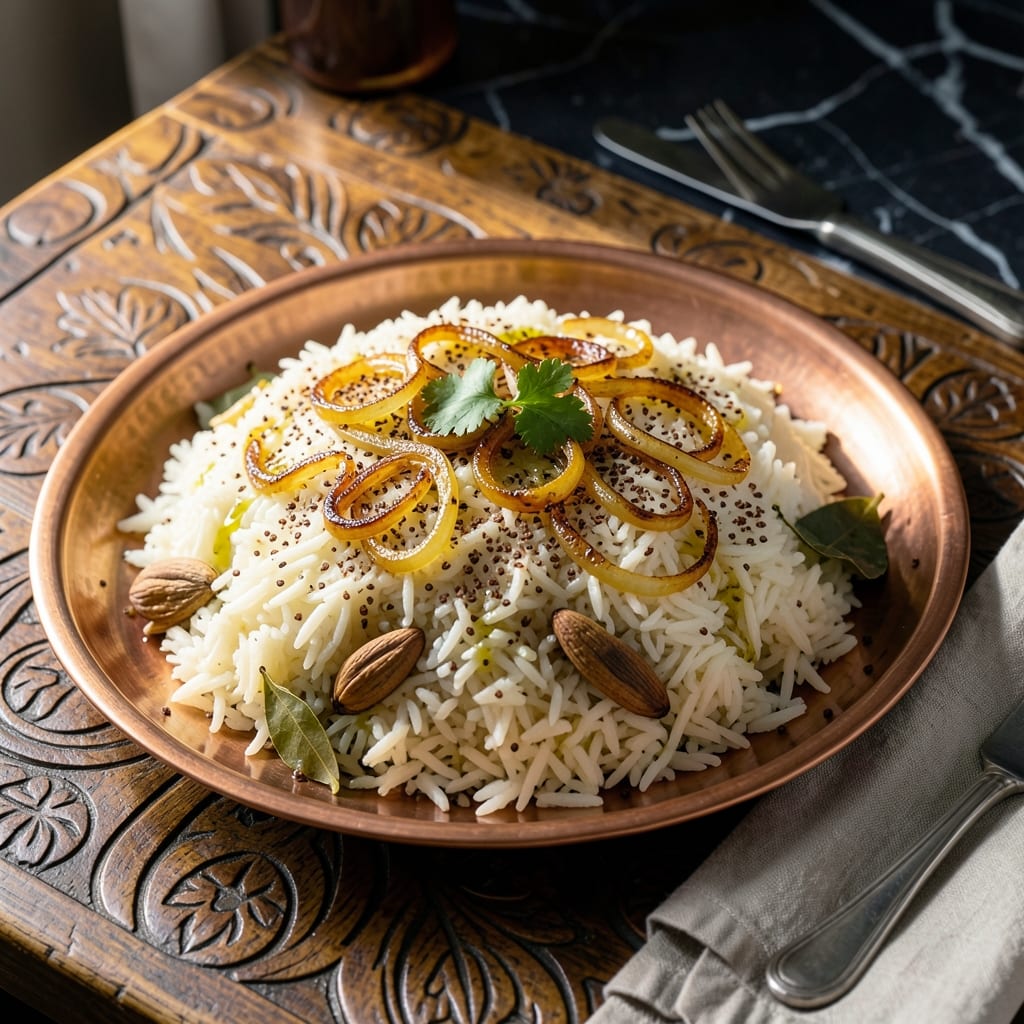
This Afghan basmati rice with caramelized onions brings authentic flavors to your table with minimal effort. The dish relies on simple ingredients but delivers complex aromas and textures that feel special.
The secret lies in the technique: perfectly cooked rice layered with sweet, golden onions. I’ve tested this method repeatedly to ensure consistent results every time. The onions transform into tender, jam-like bits that infuse the rice with depth.
What you’ll get is fragrant, fluffy grains with a subtle sweetness that makes this rice irresistible. It pairs beautifully with grilled meats or stands proudly on its own as a vegetarian centerpiece.
This traditional approach stays true to its roots while being accessible for home cooks. Here’s how to make it.
Ingredients for Afghan Rice
Simple pantry staples create this aromatic, traditional dish with layered flavors and textures.
| Ingredient | Amount | Notes |
|---|---|---|
| Basmati Rice 🌾 | 2 cups | Rinsed until water runs clear |
| Yellow Onions 🧅 | 3 whole | Thinly sliced for caramelizing |
| Vegetable Oil 🫒 | ½ cup | Divided for rice and onions |
| Cumin Seeds 🌿 | 1 tsp | Lightly toasted for aroma |
| Cardamom Pods 🌿 | 4 whole | Lightly crushed to release flavor |
| Bay Leaves 🍃 | 2 whole | Removed before serving |
| Salt 🧂 | 2 tsp | Divided for rice and onions |
| Water 💧 | 4 cups | For cooking rice |
| Sugar 🍚 | 1 tbsp | Optional for caramelizing onions |
| Ground Cinnamon 🌿 | ¼ tsp | For warm depth of flavor |
| Ground Cloves 🌿 | 0.125 tsp | Pinch for complexity |
The basmati rice is non-negotiable—Indian or Pakistani brands like Daawat or Royal have the right fragrance and grain length. Onions should be yellow or white for proper caramelization. Cumin and cardamom are the soul of the dish; find them in the international aisle or any Middle Eastern market for the best quality. The bay leaves and cloves add subtle depth, so don’t skip them.
No cardamom pods? Ground cardamom at one-third the amount works in a pinch. Out of cumin seeds? Ground cumin at half the quantity substitutes well. For a shortcut, pre-sliced onions (the fresh kind, not frozen) save time. Sugar in the onions is traditional but can be omitted—just cook them low and slow until deeply golden. The cinnamon and cloves are classic Afghan touches; omit if you prefer a milder flavor.
Uncooked rice keeps in the pantry for up to 2 years. Store spices in airtight containers away from light for 6-12 months. Caramelized onions can be made ahead and reheated gently—they’ll keep in the fridge for 5 days.
Why You’ll Love This Recipe
- One Pan Magic: I just dump everything in one pot—basmati rice, onions, and those warm cumin and cardamom pods—then let it work its magic.
- Warm Spice Hug: The cumin seeds and cardamom pods infuse the rice with this cozy, aromatic flavor that’s honestly hard to resist.
- Meal Prep Hero: It reheats beautifully, so I make a big batch on Sunday and pair it with different proteins all week long.
- Budget Stretcher: A pound of basmati rice and a few pantry spices feed my family for days without breaking the bank.
Step-by-Step Instructions for Afghan Rice With Caramelized Onions
This method ensures perfectly fluffy rice with deeply caramelized onions every time.
Step 1: Prepare and Soak the Basmati Rice
Rinse the 2 cups Basmati Rice under cold water until the water runs completely clear. This removes excess starch, preventing gummy rice. I soak the rinsed rice in fresh water for 30 minutes while I prepare the other ingredients.
Soaking allows the grains to absorb water evenly, which prevents cracking during cooking and ensures uniform expansion. Drain the rice thoroughly in a fine-mesh strainer before cooking—any residual water will throw off your liquid ratio.
Step 2: Caramelize the Yellow Onions
Heat 0.25 cup Vegetable Oil in a large skillet over medium heat. Add the 3 whole Yellow Onions, thinly sliced, and cook for 20-25 minutes, stirring occasionally, until they turn a deep amber color. The natural sugars will caramelize slowly, creating sweet, complex flavors.
About halfway through, add the 1 tbsp Sugar to accelerate the caramelization. Season with 1 tsp Salt to balance the sweetness. Watch carefully toward the end—the onions can go from perfectly caramelized to burnt in 30 seconds. Remove them with a slotted spoon and set aside.
Step 3: Toast the Whole Spices and Cook the Rice
In a heavy pot, heat the remaining 0.25 cup Vegetable Oil over medium heat. Add the 1 tsp Cumin Seeds, 4 whole Cardamom Pods (lightly crushed), and 2 whole Bay Leaves. Toast for 45-60 seconds until the cumin seeds sizzle and release their aroma.
Immediately add the drained 2 cups Basmati Rice and stir for 1-2 minutes to coat the grains with the spiced oil. This step infuses the rice with warm, aromatic flavors. Add the remaining 1 tsp Salt, 0.25 tsp Ground Cinnamon, and 0.125 tsp Ground Cloves, stirring to distribute evenly.
Step 4: Simmer to Perfection
Pour in the 4 cups Water and bring to a boil over high heat. Once boiling, reduce the heat to low, cover, and simmer for 15-18 minutes. Do not stir during cooking—this can break the grains and release starch, leading to sticky rice.
After 15 minutes, check for doneness. The water should be fully absorbed, and the rice should be tender with no hard center. If there’s still water, cook for another 2-3 minutes with the lid on. Remove from heat and let it steam, covered, for 5 minutes.
Step 5: Fluff and Serve with Caramelized Onions
Gently fluff the rice with a fork to separate the grains. Remove the 2 whole Bay Leaves and any visible Cardamom Pods before serving. The rice should be light, fluffy, and fragrant with visible spice flecks throughout.
Arrange the rice on a platter and top with the caramelized onions. The contrast of the sweet, golden onions with the aromatic rice creates the signature flavor profile. Serve immediately while the rice is still warm and the spices are at their most fragrant.
Pro Tips For Making Afghan Rice
- Soak the Basmati: Cover basmati rice in cold water for 30 minutes before cooking—I learned this the hard way after ending up with dry, crumbly grains instead of the fluffy, separate texture this dish needs.
- Slice Onions Thin: Use a mandoline or sharp knife to get paper-thin yellow onion slices, about 1/8-inch thick. Thicker slices won’t caramelize evenly and can leave a raw bite in the finished rice.
- Toast Whole Spices: Heat cumin seeds and cardamom pods in oil for 15–20 seconds until fragrant, but don’t let them burn. After burning three batches, I finally figured out that blackened spices turn the whole dish bitter.
- Use Day-Old Rice: If short on time, start with leftover basmati from the fridge—it’s drier and fries up better in the final step. Sounds weird, but it works and saves 20 minutes of prep.
Essential Equipment for Great afghan rice
Rice Cooking Pot
Use a heavy-bottomed pot like Le Creuset enameled cast iron or All-Clad stainless steel for even heat distribution. The thickness prevents hot spots that can burn your rice. I find 5-6 quart capacity works perfectly for this recipe.
Large Skillet
A 12-inch stainless steel skillet gives you enough room to caramelize 3 onions properly without crowding. Crowding steams instead of browns. I prefer All-Clad or Cuisinart for their even heating and durability. 🔥
Fine-Mesh Strainer
Rinsing basmati requires a fine-mesh strainer to catch the small grains. Look for one with a 1.5-2 quart capacity. The OXO Good Grips version has comfortable handles and lasts for years.
Wooden Spoon
Stir your caramelizing onions with a wooden spoon to avoid scratching nonstick surfaces. The flat edge helps scrape up browned bits. Bamboo or beechwood are durable and heat-resistant options.
Spice Grinder
If using whole spices beyond what’s listed, a dedicated spice grinder like Krups ensures fresh, potent flavors. Grind cardamom seeds from pods for the most aromatic results. I clean mine with dry rice to remove lingering odors.
Rice Paddle
Fluff your finished rice with a rice paddle or wide, flat spatula. The gentle action separates grains without crushing them. Bamboo or silicone versions work equally well for this dish.
Nutrition Facts
Frequently Asked Questions
Why soak the basmati rice first?
Soaking for 30 minutes ensures even water absorption, preventing cracked grains. It also shortens cooking time and yields fluffier results.
Can I skip the sugar in the onions?
Yes, but they’ll take longer to caramelize. Sugar speeds up the process and adds depth, but low, slow cooking will still work.
How do I prevent mushy rice?
Use the exact 2:1 water-to-rice ratio, avoid stirring while cooking, and let it steam covered for 5 minutes after.
What if my rice is undercooked?
Add 2-3 tablespoons hot water, cover, and cook on low heat for another 5 minutes. Check for doneness before adding more.

- Jollof Rice Sauce Recipe: West African Tomato and Spice Infusion - September 25, 2026
- Japanese Rice Soup Recipe: Umami-Rich Comfort in a Bowl - September 25, 2026
- Homemade Cream Of Rice Recipe: Silk-Smooth Breakfast in Minutes - September 25, 2026