
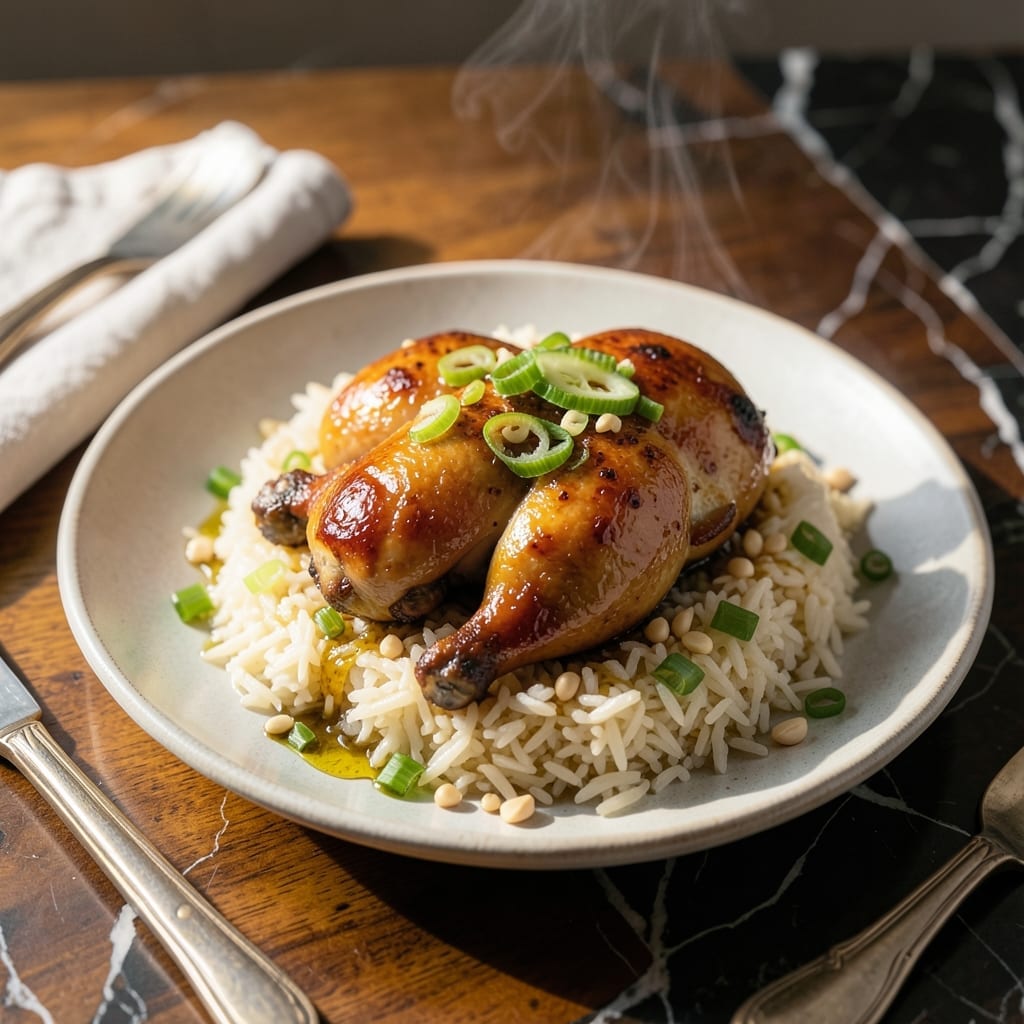
This Cantonese classic brings together poached chicken and fragrant ginger-infused rice in perfect harmony. The chicken stays incredibly tender while the rice absorbs all the aromatic flavors.
A traditional technique of poaching the chicken in ginger and green onion creates a delicate broth that’s then used to cook the rice. The result is a comforting one-bowl meal that’s both simple and deeply satisfying.
Ingredients for Cantonese Chicken Rice
Poached chicken and ginger rice come together with aromatic ingredients for authentic Cantonese flavor.
| Ingredient | Amount | Notes |
|---|---|---|
| Chicken Thighs 🍗 | 1 ½ lb | Boneless, skin-on preferred |
| Jasmine Rice 🍚 | 2 cups | Rinsed until water runs clear |
| Fresh Ginger 🌿 | 3 oz | Peeled, sliced into coins |
| Green Onions 🧅 | 6 whole | White and green parts separated |
| Garlic Cloves 🧄 | 4 cloves | Lightly smashed |
| Chicken Stock 💧 | 4 cups | Low-sodium preferred |
| Soy Sauce 🥢 | 3 tbsp | Light soy sauce |
| Sesame Oil 🫒 | 1 tbsp | Toasted variety |
| Shaoxing Wine 🍶 | 2 tbsp | Or dry sherry substitute |
| Neutral Oil 🫒 | 2 tbsp | Vegetable or peanut oil |
| Salt 🧂 | 1 tsp | Kosher or sea salt |
| White Pepper 🌶️ | ½ tsp | Ground for authentic flavor |
| Cilantro 🌿 | ½ cup | Roughly chopped for garnish |
The chicken should be fresh and bone-in for the most authentic texture. Thighs stay juicier than breasts during poaching. For the rice, jasmine is non-negotiable—its fragrance is key to this dish. Asian markets often carry better-quality jasmine than standard grocery stores. The ginger must be fresh; powdered won’t deliver the same aromatic punch. Look for firm, smooth roots without wrinkles.
No Shaoxing wine? Dry sherry works in a pinch, or even mirin plus a splash of vinegar. Green onions can be swapped for leeks if needed. For a gluten-free version, use tamari instead of soy sauce. The cilantro garnish is traditional but can be omitted if you’re one of those people who think it tastes like soap (no judgment).
The poaching broth freezes beautifully for 3 months—perfect for future rice dishes. Leftovers keep in the fridge for 4-5 days, though the rice is best fresh. Reheat gently with a splash of water to prevent drying out. Always bring ingredients to room temperature before starting for even cooking.
Why You’ll Love This Recipe
- One Pot Wonder: I throw everything in—chicken thighs, jasmine rice, ginger, garlic—and let it simmer. Minimal cleanup, maximum flavor.
- Umami Bomb: The ginger and garlic infuse the rice with this deep, savory aroma that makes the whole kitchen smell incredible.
- Meal Prep Hero: I make a big batch on Sunday, and it reheats beautifully for lunches all week.
- Budget Friendly: Chicken thighs stay juicy and cheap, while jasmine rice stretches the meal to feed four easily.
Step-by-Step Instructions for Cantonese Chicken Rice
Master the technique for perfectly poached chicken and ginger-infused rice with this method.
Step 1: Poach the Chicken Thighs in Aromatic Broth
In a large pot, combine the 4 cups Chicken Stock, 6 whole Green Onions (white parts only), 4 cloves Garlic Cloves, 3 oz Fresh Ginger, 2 tbsp Shaoxing Wine, 1 tbsp Sesame Oil, 1 tsp Salt, and 0.5 tsp White Pepper. Bring to a boil over medium-high heat.
Once boiling, reduce heat to medium-low so the liquid simmers gently. Add the 1.5 lb Chicken Thighs and poach for 15-18 minutes until the internal temperature reaches 165°F and the juices run clear. The chicken should be fully cooked but still tender and juicy.
Remove the chicken from the broth and let it cool slightly. Reserve 3 cups of the poaching liquid for cooking the rice. The aromatic broth will infuse the rice with deep, layered flavor.
Step 2: Prepare the Ginger-Infused Rice
Rinse the 2 cups Jasmine Rice under cold water until the water runs clear. This removes excess starch and ensures fluffy, separate grains. Drain thoroughly in a fine-mesh strainer.
In a medium pot, heat the 2 tbsp Neutral Oil over medium heat. Add the green parts of the 6 whole Green Onions and sauté for 1-2 minutes until fragrant. Stir in the drained rice and toast for 1 minute to enhance its nutty flavor.
Pour in the reserved 3 cups of poaching liquid and bring to a boil. Once boiling, reduce the heat to low, cover the pot, and simmer for 15 minutes. The rice should absorb all the liquid and become tender with a subtle ginger aroma.
Step 3: Shred the Chicken and Assemble the Dish
Once the chicken is cool enough to handle, discard the skin (if using skin-on thighs) and shred the meat into bite-sized pieces using two forks. The chicken should pull apart easily, with a moist, silky texture.
Drizzle the shredded chicken with 1 tbsp of the remaining 3 tbsp Soy Sauce and toss gently to coat. This adds a savory depth to the meat while keeping it moist. Cover and set aside while the rice finishes cooking.
Step 4: Finish and Garnish
Once the rice is cooked, remove it from the heat and let it sit covered for 5 minutes. This allows the grains to steam and become even more tender. Fluff the rice gently with a fork to separate the grains.
Divide the rice among serving bowls and top with the shredded chicken. Drizzle each serving with the remaining 2 tbsp Soy Sauce for added richness. Garnish generously with the 0.5 cup Cilantro for a fresh, vibrant finish.
Serve immediately while hot, with extra soy sauce on the side if desired. The rice should be fragrant and slightly sticky, with the chicken tender and infused with the aromatic flavors of the poaching broth.
Pro Tips For Making Cantonese Chicken Rice
- Poach the Chicken: Simmer the chicken thighs gently in water with ginger and green onions for exactly 15 minutes—any longer and they’ll dry out. I learned this the hard way after turning my first batch into rubber.
- Rinse the Rice: Wash the jasmine rice until the water runs clear to remove excess starch. Skipping this step gives you a gummy, sticky mess instead of fluffy grains.
- Use Chicken Fat: After poaching, skim off 2 tablespoons of the chicken fat floating on top and use it to sauté the garlic and ginger for the rice. Sounds weird, but it works: the flavor is unbeatable.
- Rest Before Serving: Let the chicken rest in its broth for 5-10 minutes after cooking. This keeps the juices locked in—cutting too soon means all that goodness ends up on the cutting board.
Pro Cooking Tips for Great cantonese chicken rice
Poaching Perfection
Keep the poaching liquid at a gentle simmer—never a rolling boil—to prevent tough chicken. I use a heavy-bottomed Dutch oven for even heat distribution. The 165°F internal temperature is your target; overcooking dries it out. 🌡️
Broth Management
Reserve exactly 3 cups of poaching liquid for rice; any less and your grains will be dry. Skim off foam during poaching for a cleaner broth. I strain mine through a fine-mesh sieve to remove ginger fibers before using.
Rice Texture Trick
Toast the rice in oil for a full 1 minute before adding liquid—this prevents mushiness. Use a 1:1.5 rice-to-liquid ratio by volume. The ginger aroma should be subtle, not overpowering.
Chicken Shredding
Let chicken cool 10 minutes before shredding to avoid steaming yourself. Pull apart with forks, not your hands, to maintain texture. The meat should glisten with juices when properly poached.
Final Assembly
Fluff rice with a fork, not a spoon, to keep grains intact. Drizzle soy sauce over chicken, not rice, to control saltiness. I always garnish with cilantro just before serving for maximum freshness. 💛
Nutrition Facts
Frequently Asked Questions
Can I use chicken breast instead of thighs?
Yes, but thighs stay juicier. If using breast, reduce poaching time to 12-14 minutes to prevent dryness. The leaner meat cooks faster and can become tough if overdone.
Why does the rice need to be toasted first?
Toasting the rice in oil for 1 minute enhances its nutty flavor and helps it stay separate. This step prevents the grains from turning mushy during cooking.
What if my broth doesn’t cover the rice?
Always reserve exactly 3 cups of poaching liquid. If short, supplement with hot water or extra stock. The rice needs full submersion to cook evenly.
How do I store leftovers?
Keep in an airtight container for 4-5 days in the fridge. Reheat gently with a splash of water to restore moisture. Freezing isn’t recommended as it dries out the chicken.

- Jollof Rice Sauce Recipe: West African Tomato and Spice Infusion - September 25, 2026
- Japanese Rice Soup Recipe: Umami-Rich Comfort in a Bowl - September 25, 2026
- Homemade Cream Of Rice Recipe: Silk-Smooth Breakfast in Minutes - September 25, 2026