
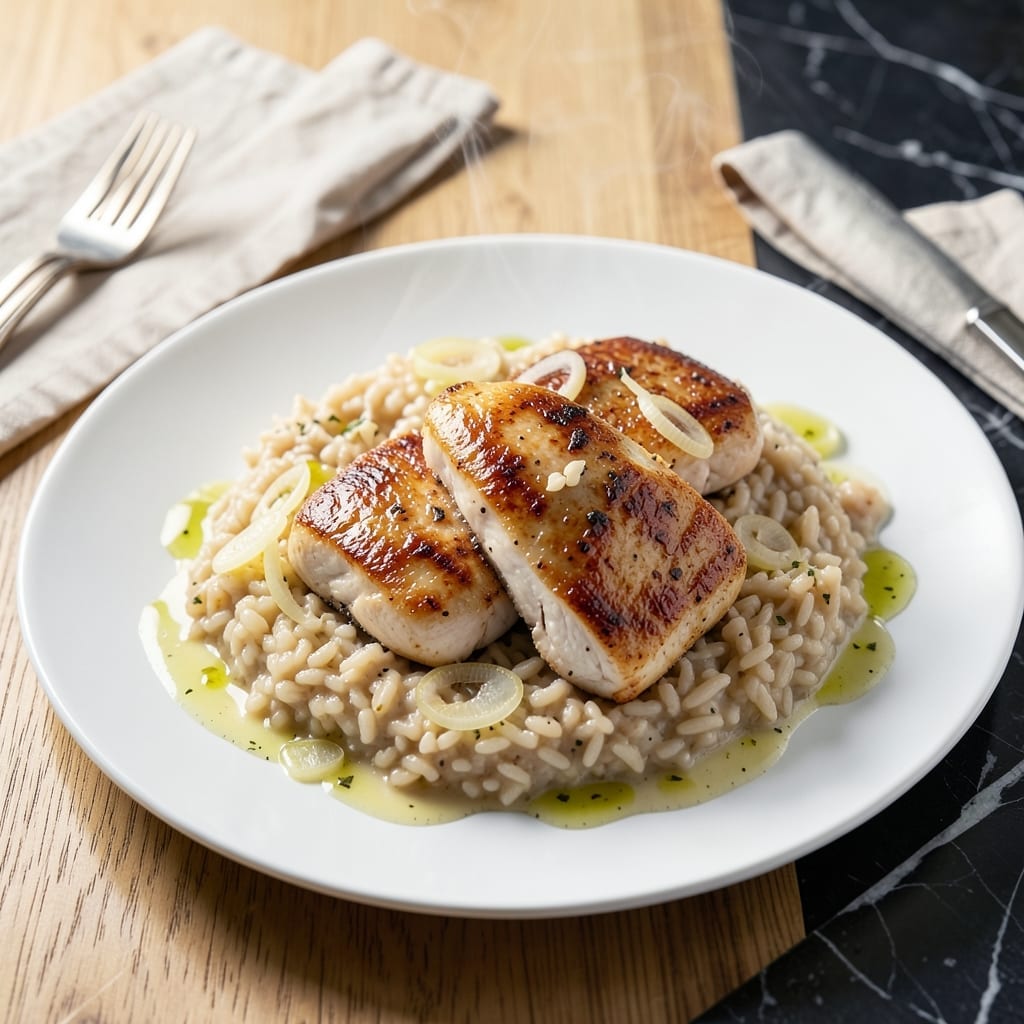
This arborio rice and chicken recipe transforms simple ingredients into a creamy, restaurant-quality dish that’s surprisingly easy to make at home. The key is slow cooking the rice in broth, which releases starches to create that signature velvety texture.
I developed this method to ensure the chicken stays tender while the rice absorbs maximum flavor. The process requires patience but rewards you with perfectly cooked grains and juicy chicken in every bite.
What emerges is a dish with rich, creamy rice that clings to each piece of chicken, creating a harmonious blend of textures and flavors. The result is comforting yet elegant enough for special occasions.
Ready in about 45 minutes, this one-pan meal proves that impressive dishes don’t require complicated techniques. Here’s how to make it perfectly every time.
Ingredients for Arborio Rice and Chicken
A few quality ingredients transform into restaurant-style creamy risotto with perfectly tender chicken.
| Ingredient | Amount | Notes |
|---|---|---|
| Arborio Rice 🌾 | 1 ½ cups | Short-grain for creamy texture |
| Boneless Skinless Chicken Breasts 🍗 | 1 ¼ lb | Pounded to even thickness |
| Chicken Broth 🥣 | 6 cups | Low-sodium preferred for control |
| White Wine 🍷 | ½ cup | Dry variety for acidity |
| Shallot 🧅 | 1 whole | Finely minced for subtle flavor |
| Garlic Cloves 🧄 | 3 cloves | Minced for aromatic base |
| Unsalted Butter 🧈 | 4 tbsp | Divided for cooking and finishing |
| Parmesan Cheese 🧀 | ¾ cup | Freshly grated from wedge |
| Olive Oil 🫒 | 2 tbsp | Extra-virgin for sautéing |
| Fresh Thyme Sprigs 🌿 | 4 sprigs | Leaves stripped for garnish |
| Kosher Salt 🧂 | 1 ½ tsp | Diamond Crystal preferred |
| Freshly Ground Black Pepper 🌶️ | ½ tsp | To taste for seasoning |
| Fresh Flat-Leaf Parsley 🍃 | ¼ cup | Chopped for garnish |
The arborio rice is non-negotiable—short-grain varieties like Carnaroli or Vialone Nano work as backups. For chicken, air-chilled breasts from Whole Foods or local butchers have superior texture. The broth should be homemade or high-quality (I prefer Better than Bouillon paste) since it’s the liquid backbone of the dish. Always use dry white wine; sweet varieties will throw off the balance.
No white wine? Substitute with additional broth plus 1 tbsp lemon juice. Shallots can be replaced with yellow onion at a 1:1 ratio, though the flavor will be slightly sharper. For a richer finish, swap 2 tbsp butter for heavy cream at the end. If avoiding dairy, use olive oil and nutritional yeast for the Parmesan element. Fresh herbs are ideal, but dried at one-third the amount works in a pinch.
Risotto is best served immediately, but leftovers keep 3-4 days refrigerated. Reheat gently with a splash of broth to restore creaminess. The cooked chicken holds 4 days in the fridge or 3 months frozen. Always bring broth to a simmer before adding to rice—cold liquid slows the cooking process.
Why You’ll Love This Recipe
- One Pot Meal: I love that everything cooks together—no extra pans, no fuss, just arborio rice soaking up all the chicken and white wine flavor.
- Creamy Perfection: The arborio turns out so rich and velvety, and the shallots add just the right sweetness to balance the wine.
- Weeknight Hero: Honestly, it’s my go-to for busy evenings when I need something hearty but not complicated.
- Stretches Far: Leftovers taste even better the next day, and it feeds my family for two meals without breaking the bank.
Step-by-Step Instructions for Creamy Risotto with Tender Chicken
Master the technique for perfectly creamy risotto paired with juicy chicken every time.
Step 1: Prepare and Cook the Chicken
Begin by pounding the 1.25 lb boneless skinless chicken breasts to an even ½-inch thickness to ensure uniform cooking. Season both sides with ½ tsp kosher salt and ¼ tsp freshly ground black pepper. This step guarantees the chicken stays tender and cooks through evenly.
Heat 1 tbsp olive oil and 1 tbsp unsalted butter in a large skillet over medium-high heat. Add the chicken and cook for 5-6 minutes per side until golden brown and the internal temperature reaches 165°F. Transfer to a plate and tent with foil to keep warm.
Step 2: Sauté Aromatics and Toast the Rice
In the same skillet, heat the remaining 1 tbsp olive oil over medium heat. Add the finely minced shallot and cook for 2-3 minutes until translucent. Stir in the minced garlic cloves and cook for 30 seconds until fragrant.
Add the 1.5 cups Arborio rice and stir to coat in the oil. Toast for 2 minutes until the edges of the rice become slightly translucent—this step enhances the nutty flavor of the risotto and prevents a gummy texture.
Step 3: Deglaze and Begin the Risotto Process
Pour in the 0.5 cup white wine and stir until the liquid is mostly absorbed. This deglazing step lifts all the flavorful browned bits from the pan, infusing the risotto with depth.
Add 1 cup chicken broth at a time, stirring frequently until the liquid is absorbed before adding more. Maintain a gentle simmer—too high heat will cook the rice unevenly. After 15 minutes, the rice should be al dente with a slight bite.
Step 4: Finish the Risotto and Incorporate Chicken
Once the rice is tender, stir in the remaining 3 tbsp unsalted butter, 0.75 cup freshly grated Parmesan cheese, and the remaining ½ tsp kosher salt and ¼ tsp freshly ground black pepper. The risotto should be creamy and slightly loose—it will thicken as it sits.
Slice the chicken into thin strips and gently fold it into the risotto. Stir in the fresh thyme leaves stripped from the sprigs. Let the mixture rest for 2 minutes off heat to allow the flavors to meld together beautifully.
Garnish with 0.25 cup chopped fresh flat-leaf parsley before serving. The result should be a luxuriously creamy risotto with tender bursts of chicken in every bite.
Pro Tips For Making Arborio Rice And Chicken
- Toast the Rice First: Sauté the arborio in the pan with a little oil for 2-3 minutes until it smells nutty—I learned this the hard way after my risotto turned out gummy instead of creamy.
- Cut Chicken Evenly: Slice the boneless breasts into uniform 1-inch pieces so they cook through at the same time, about 5-6 minutes per side in hot oil.
- Warm the Broth: Keep your chicken broth simmering in a pot next to the stove and add it ladle by ladle—cold broth shocks the rice and slows down the cooking.
- Deglaze with Wine: After browning the chicken, pour in a splash of white wine to scrape up those browned bits; it adds depth to the rice that water just can’t match.
Storing and Reheating arborio rice and chicken
Refrigerator Storage
Let your risotto cool for no more than 2 hours before transferring to airtight containers. Store in the fridge at 40°F or below for up to 3-4 days. The flavors will continue to meld beautifully. ❄️
Freezer Storage
This dish freezes well for up to 3 months. Portion into quart-size freezer bags, squeeze out excess air, and leave 1 inch headspace for expansion. Label with the date for easy tracking.
Stovetop Reheating
My preferred method: place risotto in a saucepan with ¼ cup chicken broth over medium-low heat. Stir frequently for 5-7 minutes until creamy. Add the chicken in the last 2 minutes to warm through. 🔥
Microwave Reheating
Combine risotto and chicken in a microwave-safe bowl with 2 tbsp broth. Cover loosely and heat on 70% power for 2-3 minutes, stirring halfway. Adjust time based on your microwave’s strength.
Reviving Texture
If the risotto seems dry after storage, stir in 1-2 tbsp warm broth or butter to restore creaminess. Avoid high heat, which can make the rice mushy. The chicken will stay tender if reheated gently.
Nutrition Facts
Frequently Asked Questions
Can I use a different type of rice?
Stick with short-grain varieties like Carnaroli or Vialone Nano for best results. Long-grain rice won’t release enough starch for that signature creamy texture.
Why does the chicken need to rest before slicing?
Resting for 5-10 minutes allows juices to redistribute, keeping the meat moist. Slicing immediately causes juices to spill out, resulting in dry chicken.
How do I prevent the risotto from turning mushy?
Add broth 1 cup at a time and stir frequently. Stop cooking when rice is al dente—it continues softening off heat.
Can I make this ahead of time?
Yes! Cook risotto until al dente, spread on a tray to cool, then refrigerate. Finish with broth and butter when ready to serve.

- Jollof Rice Sauce Recipe: West African Tomato and Spice Infusion - September 25, 2026
- Japanese Rice Soup Recipe: Umami-Rich Comfort in a Bowl - September 25, 2026
- Homemade Cream Of Rice Recipe: Silk-Smooth Breakfast in Minutes - September 25, 2026