
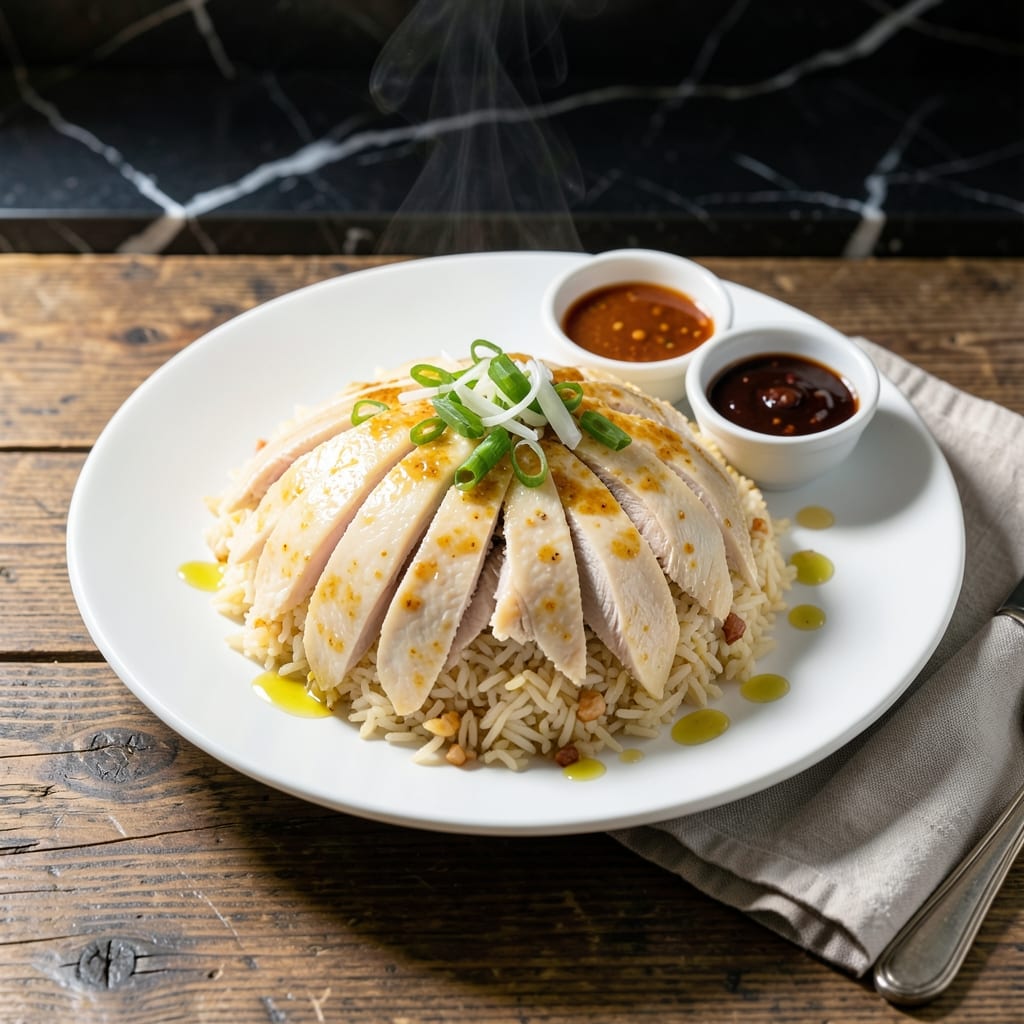
This recipe delivers the true taste of Singapore with its perfectly poached chicken and fragrant ginger-garlic rice. The traditional method ensures tender meat and aromatic grains every time.
The chicken is gently simmered in a ginger and green onion broth, creating a delicate, authentic flavor that defines this classic dish. The rice absorbs the same broth, making each bite rich with savory depth.
What sets this dish apart is the attention to detail—from the silky chicken texture to the golden, glossy rice. The accompanying ginger-garlic sauce and chili paste complete the experience.
Serve with cucumber slices for a refreshing contrast. This is comfort food refined through tradition.
Ingredients for Authentic Hainanese Chicken Rice
Authentic Singaporean flavors begin with these carefully selected traditional ingredients for poached perfection.
| Ingredient | Amount | Notes |
|---|---|---|
| Whole Chicken 🍗 | 3 lb | Bone-in, skin-on for flavor |
| Jasmine Rice 🍚 | 2 cups | Uncooked, rinsed thoroughly |
| Fresh Ginger 🌿 | 4 oz | Peeled, sliced for broth |
| Green Onions 🧅 | 1 bunch | White and green parts separated |
| Garlic Cloves 🧄 | 6 cloves | Smashed for broth, minced for sauce |
| Chicken Stock 🥣 | 6 cups | Low-sodium preferred for control |
| Sesame Oil 🫒 | 2 tbsp | Toasted variety for depth |
| Light Soy Sauce 💧 | 3 tbsp | For seasoning chicken and rice |
| Oyster Sauce 🫒 | 1 tbsp | Optional but traditional (use vegetarian oyster sauce if needed) |
| Shaoxing Wine 🍷 | 2 tbsp | Chinese rice wine, or dry sherry |
| Cucumber 🥒 | 1 whole | Thinly sliced for garnish |
| Red Chili Paste 🌶️ | 2 tbsp | Sambal oelek or sriracha works |
| Neutral Oil 🫒 | 2 tbsp | For cooking aromatics |
| Kosher Salt 🧂 | 1 tsp | Plus more to taste |
| White Pepper 🌶️ | ½ tsp | Freshly ground for authenticity |
The chicken is non-negotiable—bone-in, skin-on yields the most flavorful broth and tender meat. Jasmine rice is traditional; avoid substitutes as the texture won’t match. Source your ginger and garlic from Asian markets for the freshest, most pungent varieties. The green onions should have vibrant green tops and firm white stalks. For the stock, homemade is ideal but high-quality store-bought works in a pinch.
No Shaoxing wine? Dry sherry is the closest substitute. Skip the oyster sauce for a vegetarian version (use mushroom stir-fry sauce instead). Basmati rice can replace jasmine if absolutely necessary, though the fragrance won’t be the same. The sesame oil must be toasted—light sesame oil lacks depth. For the chili paste, any Southeast Asian variety works; adjust heat to preference.
Poached chicken keeps in its broth for 2 days refrigerated. The rice is best fresh but reheats well with a splash of broth. The ginger-garlic sauce and chili paste can be stored separately for up to 1 week. Always bring chicken to room temperature before serving for optimal texture.
Why You’ll Love This Recipe
- One Pot Meal: I love that everything cooks together—poached chicken, fragrant jasmine rice, and that ginger-garlic broth all in one pot.
- Weeknight Hero: Honestly, it’s my go-to for busy evenings—fancy enough for guests but simple enough for a Tuesday.
- Budget Stretcher: One whole chicken feeds my family for two meals, and the leftovers taste even better the next day.
Step-by-Step Instructions for Hainanese Chicken Rice
Master these authentic techniques to achieve restaurant-quality results with aromatic intensity and perfect texture.
Step 1: Poach the Whole Chicken with Aromatics
In a large stockpot, combine the 3 lb Whole Chicken, 4 oz Fresh Ginger, white parts of 1 bunch Green Onions, and 6 cloves Garlic Cloves (smashed). Pour in enough water to fully submerge the chicken—about 8 cups total.
Bring to a boil over high heat, then immediately reduce to low heat to maintain a gentle simmer. Poach uncovered for 40-45 minutes until the chicken is fully cooked through and reaches an internal temperature of 165°F at the thickest part of the breast. The meat should feel firm yet springy to the touch.
Step 2: Prepare the Fragrant Jasmine Rice
Rinse the 2 cups Jasmine Rice thoroughly until the water runs clear, then drain completely. In a rice cooker or heavy pot, combine the drained rice, 6 cups Chicken Stock, 2 tbsp Neutral Oil, 1 tsp Kosher Salt, and 0.5 tsp White Pepper.
Add the minced Garlic Cloves and the white parts of Green Onions from the poaching liquid. Cook according to your rice cooker’s standard setting, or simmer covered on the stovetop for 18-20 minutes until the liquid is absorbed and the rice is tender. Fluff with a fork and let sit covered for 5 minutes to steam.
Step 3: Create the Ginger-Garlic Dipping Sauce
In a small saucepan, heat 2 tbsp Neutral Oil over medium heat. Add the remaining minced Garlic Cloves and sliced Fresh Ginger from the poaching process. Sauté for 2-3 minutes until fragrant and just beginning to turn golden brown—don’t let it burn.
Remove from heat and stir in 3 tbsp Light Soy Sauce, 1 tbsp Oyster Sauce, 2 tbsp Shaoxing Wine, and 2 tbsp Sesame Oil. The sauce should be glossy and deeply aromatic. Thinly slice the 1 whole Cucumber and set aside for garnish.
Step 4: Assemble and Serve with Traditional Accompaniments
Remove the chicken from the poaching liquid and let it cool slightly. Once cool enough to handle, remove the skin if desired (traditional Hainanese chicken rice often uses skin-on for extra flavor). Shred or chop the chicken into serving pieces.
To serve, place a portion of the Jasmine Rice on each plate, top with chicken pieces, and drizzle with some of the poaching liquid. Serve with the ginger-garlic sauce, sliced Cucumber, and 2 tbsp Red Chili Paste on the side for those who prefer some heat. Garnish with the green parts of Green Onions for a fresh finish.
Pro Tips For Making Authentic Hainanese Chicken Rice
- Blanch the Chicken First: Plunge the whole chicken in boiling water for 2-3 minutes before poaching—this tightens the skin and keeps the meat tender. I learned this the hard way after my first few attempts had rubbery skin.
- Use Chicken Fat: After poaching, skim off the golden chicken fat from the broth and cook your jasmine rice in it. Sounds weird, but it works: the rice absorbs that rich, authentic flavor.
- Rest the Chicken: Once poached, let the chicken rest in the warm broth for at least 15 minutes before slicing. Skip this and you’ll lose all those precious juices—I was skeptical until I tried it.
- Toast the Aromatics: Sauté the ginger, green onions, and garlic in a bit of oil until fragrant before adding rice. My grandmother swore by this, and she was right: it builds a deeper base for the rice.
Regional Styles of These Flavors
Singapore Style
The classic version from Singapore uses a whole 3 lb chicken poached in a ginger-garlic broth, with rice cooked in the same aromatic liquid. The chicken is served skin-on for maximum flavor. I love the tender texture it achieves every time. 💛
Malaysian Approach
In Malaysia, they often use chicken thighs instead of whole chicken for richer flavor. The rice gets an extra boost from pandan leaves during cooking, adding a subtle floral note. The sauce is typically thicker with added cornstarch.
Thai Variation
Thai versions incorporate lemongrass and galangal into the poaching liquid for a citrusy twist. The dipping sauce often includes fish sauce and lime juice for a tangier profile. Cucumber slices are always served on the side.
Chinese Adaptation
In China, this dish often uses free-range chicken for superior texture. The rice is sometimes mixed with shitake mushrooms for added umami. The poaching broth may include goji berries for a subtle sweetness.
Vietnamese Version
Vietnamese cooks often add coconut water to the poaching liquid for a hint of sweetness. The dipping sauce includes fish sauce and rice vinegar for balance. The chicken is typically shredded rather than chopped. 🌟
Indonesian Style
Indonesian versions use turmeric in the rice for a golden color and earthy flavor. The sauce often includes shrimp paste for depth. The dish is commonly served with fried shallots as garnish.
Nutrition Facts
Frequently Asked Questions
What’s the best chicken cut to use?
Whole bone-in, skin-on chicken gives the most authentic flavor and texture. For quicker cooking, use chicken thighs instead. The bone and skin enhance the broth’s richness.
Can I use a different type of rice?
Jasmine rice is traditional, but basmati works in a pinch. Avoid long-grain white rice as it lacks the necessary fragrance and stickiness.
Why is the chicken served cold?
Traditionally, the chicken is poached ahead and served at room temperature. This allows the meat to firm up for easier slicing and better texture. It also lets the flavors meld together.
How do I keep the rice from getting mushy?
Rinse the rice thoroughly before cooking to remove excess starch. Use the exact ratio of 1:3 rice to liquid and avoid stirring while it cooks.

- Jollof Rice Sauce Recipe: West African Tomato and Spice Infusion - September 25, 2026
- Japanese Rice Soup Recipe: Umami-Rich Comfort in a Bowl - September 25, 2026
- Homemade Cream Of Rice Recipe: Silk-Smooth Breakfast in Minutes - September 25, 2026