
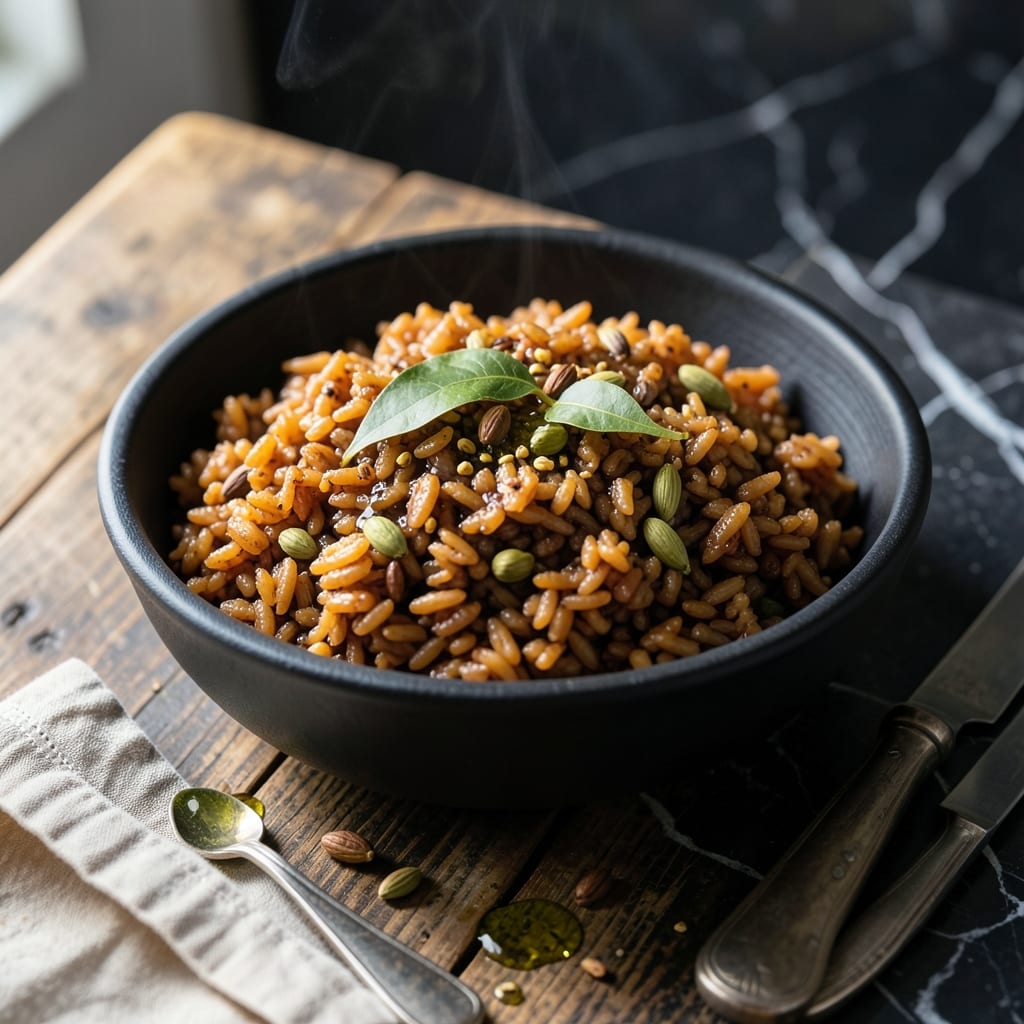
Bajra rice transforms simple pearl millet into a dish with earthy depth and nutty warmth. This traditional preparation honors the grain’s natural richness while delivering a satisfying, wholesome meal.
The process involves careful toasting and precise liquid ratios to unlock the millet’s full potential. Each step builds layers of flavor and texture, ensuring the final dish is both comforting and authentically flavorful.
What emerges is a bowl of perfectly cooked bajra with distinct grains, offering a hearty yet light base for any meal. Its subtle sweetness and robust character make it a versatile staple worth mastering.
This method guarantees consistent results every time, preserving the grain’s integrity while enhancing its natural appeal. The technique is straightforward but delivers restaurant-quality outcomes.
Ingredients for Bajra Rice
Earthy pearl millet meets warm spices for a satisfying, wholesome dish with nutty depth and subtle sweetness.
| Ingredient | Amount | Notes |
|---|---|---|
| Pearl Millet 🌾 | 1 ½ cups | Rinsed and drained thoroughly |
| Water 💧 | 3 ½ cups | Or vegetable broth for extra flavor |
| Cumin Seeds 🌿 | 1 tsp | For tempering and aroma |
| Mustard Seeds 🌶️ | ½ tsp | Yellow or black variety |
| Green Cardamom Pods 🌿 | 4 whole | Lightly crushed to release flavor |
| Bay Leaf 🍃 | 1 whole | Dried or fresh |
| Turmeric Powder 🌶️ | ½ tsp | For color and earthiness |
| Salt 🧂 | 1 tsp | Adjust to taste after cooking |
| Ghee Substitute 🫒 | 2 tbsp | Vegan butter or coconut oil |
| Fresh Cilantro 🌿 | ¼ cup | Chopped for garnish |
| Onion 🧅 | 1 whole | Medium-sized, finely chopped |
| Green Chilies 🌶️ | 2 whole | Slit lengthwise, adjust to heat preference |
The pearl millet is the foundation—look for whole, unbroken grains at Indian grocery stores or well-stocked health food sections. Freshness matters; old millet can turn bitter. Organic brands like Bob’s Red Mill or Ancient Harvest ensure quality. For the ghee substitute, Miyoko’s Cultured Vegan Butter adds richness without dairy. The cumin and mustard seeds should be freshly ground or recently purchased for maximum aroma.
No millet? Quinoa or farro can stand in, though the flavor profile shifts. Out of cardamom? Cinnamon stick at half the amount adds warmth. Skip the green chilies if sensitive to heat—red pepper flakes work too. For broth, Better Than Bouillon vegetable base is a reliable choice. The cilantro garnish is optional but recommended for freshness (dried won’t do).
Store dry millet in an airtight container in a cool, dark place for up to 3 months. Cooked bajra keeps well in the fridge for 4-5 days and reheats beautifully. Freeze portions for up to 3 months—the texture holds up surprisingly well.
Why You’ll Love This Recipe
- One Pot Wonder: I just toss the bajra, water, and whole spices in a pot and let it simmer—no fancy techniques, no fuss.
- Aroma Bomb: The cardamom and cumin seeds release this warm, earthy fragrance that fills my kitchen before the first bite.
- Feeds a Crowd: Honestly, it’s my go-to for family dinners because it stretches easily and pairs with anything from dal to roasted veggies.
- Budget Stretch: Pearl millet is cheap and a little goes a long way, so I save money without skimp on flavor.
Step-by-Step Instructions for Bajra Rice
Master this technique for perfectly fluffy pearl millet with layered aromatic depth.
Step 1: Temper the Whole Spices
Heat the 2 tbsp ghee substitute in a heavy-bottomed pot over medium heat until melted and shimmering. Immediately add the 1 tsp cumin seeds, 0.5 tsp mustard seeds, 4 whole green cardamom pods, and 1 whole bay leaf. Stir constantly for 45-60 seconds until the mustard seeds begin to pop and the cumin turns fragrant and golden.
This tempering process releases essential oils from the spices, creating the foundation of flavor for your dish. Watch closely—the mustard seeds will spatter as they pop, so keep a lid nearby if needed. The cumin should never darken beyond light brown or it will turn bitter.
Step 2: Sauté Aromatics and Toast the Millet
Add the finely chopped onion and 2 whole green chilies to the pot. Sauté for 4-5 minutes until the onions turn translucent and lightly golden at the edges. The green chilies will soften slightly but maintain their shape and heat.
Stir in the 1.5 cups pearl millet and 0.5 tsp turmeric powder, coating the grains thoroughly in the spiced ghee. Toast the pearl millet for 2-3 minutes until it becomes slightly fragrant and the grains appear separate and glossy. This step enhances the nutty flavor of the millet and prevents clumping during cooking.
Step 3: Add Liquids and Simmer
Pour in the 3.5 cups water and 1 tsp salt. Stir well to combine all ingredients, scraping the bottom of the pot to release any browned bits. Increase heat to high and bring to a rolling boil—you should see steady, vigorous bubbles breaking the surface.
Once boiling, reduce heat to low, cover the pot with a tight-fitting lid, and simmer for 18-20 minutes. The pearl millet should absorb all the liquid and become tender with a slight bite. Resist the urge to stir during cooking—this disturbs the steam and can lead to uneven texture.
Step 4: Rest and Fluff
Remove the pot from heat and let it sit, covered, for 10 minutes. This resting period allows the pearl millet to steam in its own residual heat, ensuring even doneness throughout. The grains will continue to absorb moisture and plump up during this time.
After resting, use a fork to gently fluff the bajra rice, breaking up any clumps while preserving the individual grains. The texture should be light and separate, with each grain distinct yet tender. Taste and adjust salt if needed—the flavors will have melded beautifully during the resting phase.
Step 5: Garnish and Serve
Transfer the bajra rice to a serving dish and sprinkle with the 0.25 cup fresh cilantro. The cilantro adds a bright, fresh contrast to the earthy millet and warm spices. Serve immediately while hot, as the rice will continue to firm up slightly as it cools.
Each serving should showcase the golden-hued millet flecked with spices, with a pronounced nutty aroma and layered flavors from the tempering. The texture should be light yet substantial, with the spices providing warmth without overpowering the natural taste of the pearl millet.
Pro Tips For Making Bajra Rice
- Soak the Bajra: I learned this the hard way—soak the millet for at least 30 minutes before cooking, or it’ll stay chewy no matter how long you simmer it.
- Toast the Seeds: Heat the cumin and mustard seeds in dry oil until they sizzle and pop—that’s when you know their flavor is fully unlocked.
- Skip the Overcooking: Bajra turns mushy fast, so once the water’s absorbed, turn off the heat and let it sit covered for 10 minutes.
- Crush the Cardamom: Lightly crack the green cardamom pods before adding them—this releases way more aroma than leaving them whole.
Regional Styles of This bajra rice
Rajasthan Style
In Rajasthan, bajra is often cooked with dried fenugreek leaves and finished with a dollop of yogurt. I add 1 tbsp kasuri methi during tempering for an aromatic touch. The dish is traditionally served with ghee-drizzled rotis and a side of spicy chutney. 🌾
Gujarati Approach
Gujaratis make bajra no rotlo, a denser version. They mix 1 part bajra flour with 2 parts water and spices, then steam it. I prefer the rice-like texture of pearl millet, but this method creates a hearty, bread-like dish perfect for dipping in kadhi.
Maharashtrian Variation
Maharashtrian bajra bhakri is a flatbread made from bajra flour. For a rice-like dish, they often add grated coconut and peanuts during cooking. I love the texture contrast this adds—it’s like a nutty pilaf that pairs perfectly with spicy curries.
Punjabi Method
Punjabi-style bajra khichdi combines millet with moong dal and vegetables. I use a 1:1 ratio of bajra to split moong for a protein-packed version. The addition of 1 tsp garam masala at the end gives it that signature Punjabi warmth. ✨
Karnataka Tradition
In Karnataka, bajra is often cooked with tamarind pulp and jaggery for a sweet-sour flavor. I add 1 tbsp tamarind and 2 tsp jaggery to the water before cooking. This creates a unique balance that works beautifully with coconut-based curries.
Tamil Nadu Style
Tamil cooks often make bajra kanji, a porridge-like version. They use more water (5 cups for 1.5 cups bajra) and cook it longer for a softer texture. I find this comforting version perfect for breakfast with a sprinkle of roasted cumin powder.
Nutrition Facts
Frequently Asked Questions
What’s the ideal water-to-millet ratio?
Use 3.5 cups water for every 1.5 cups pearl millet. This ensures the grains cook evenly without turning mushy.
Can I make this without tempering the spices?
Skipping tempering dulls the flavor. The 45-60 seconds of toasting whole spices in ghee unlocks their aromatic oils, making the dish far more fragrant.
How do I fix undercooked bajra?
Add 0.5 cup hot water, cover, and simmer for 5-7 minutes. If the grains are still firm, repeat once more. Avoid stirring to keep the texture light.
Is this dish gluten-free?
Yes! Pearl millet is naturally gluten-free. Just ensure your spices and broth (if using) are free from cross-contamination.

- Jollof Rice Sauce Recipe: West African Tomato and Spice Infusion - September 25, 2026
- Japanese Rice Soup Recipe: Umami-Rich Comfort in a Bowl - September 25, 2026
- Homemade Cream Of Rice Recipe: Silk-Smooth Breakfast in Minutes - September 25, 2026