
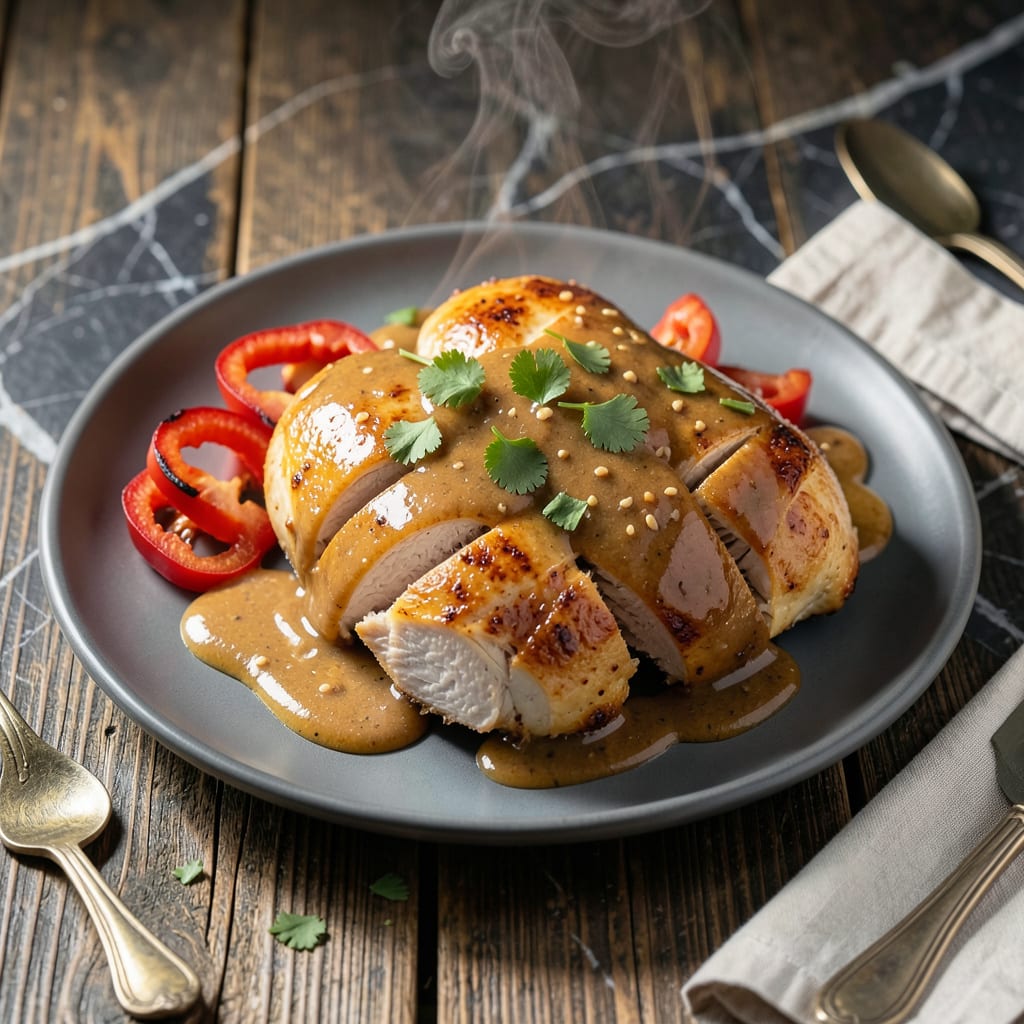
This baked chicken delivers tender meat with a rich, nutty peanut sauce that’s both satisfying and simple to prepare.
With a straightforward baking method and a quick sauce, you’ll achieve a dish that’s flavorful and worthy of any dinner table.
Ingredients for Baked Chicken with Peanut Sauce
Simple ingredients create tender chicken with a creamy, nutty peanut sauce to savor.
| Ingredient | Amount | Notes |
|---|---|---|
| Chicken Breasts 🍗 | 1 ½ lb | Boneless, skinless, pounded even |
| Creamy Peanut Butter 🥜 | ½ cup | Unsweetened, natural style preferred |
| Soy Sauce 🫙 | 3 tbsp | Low-sodium if available |
| Honey 🍯 | 2 tbsp | Pure, for balancing sweetness |
| Rice Vinegar 🍚 | 1 tbsp | Mild, light flavor |
| Fresh Ginger 🌿 | 1 tbsp | Peeled and grated |
| Garlic Cloves 🧄 | 3 cloves | Minced for sauce |
| Sesame Oil 🫒 | 1 tsp | Toasted, for depth |
| Chili Flakes 🌶️ | ½ tsp | Adjust to heat preference |
| Olive Oil 🫒 | 1 tbsp | For coating chicken |
| Salt 🧂 | 1 tsp | Kosher or sea salt |
| Black Pepper 🌶️ | ½ tsp | Freshly ground |
| Lime Juice 🍋 | 1 tbsp | Freshly squeezed for brightness |
| Water 💧 | 2 tbsp | To thin sauce as needed |
[recipeingredientscaler]
The chicken should be uniform in thickness for even baking—pound the thicker parts gently with a rolling pin or the flat side of a knife. Boneless, skinless breasts from Whole Foods or Trader Joe’s are consistently high quality. For the peanut butter, natural, unsweetened brands like Smucker’s or Crazy Richard’s work best, as they blend smoothly into the sauce without added sugars.
No peanut butter? Almond butter or cashew butter can substitute in a pinch (the flavor will differ slightly). If avoiding honey, maple syrup or agave at the same amount works. The soy sauce can be swapped for tamari for gluten-free or coconut aminos for a milder taste. Fresh ginger is ideal, but ground ginger at one-third the amount is acceptable if needed.
Sauce keeps in an airtight container for 4-5 days in the fridge. Chicken is best baked fresh but leftovers reheat nicely—store for up to 3 days. The sauce may thicken when chilled; thin with a splash of warm water before serving.
Why You’ll Love This Recipe
- One Pan Dinner: I toss the chicken in the sauce, bake it, and that’s it—no extra bowls or utensils to wash.
- Sweet-Savory Magic: The honey and soy sauce balance the peanut butter so well, I end up licking the spoon every time.
- Meal Prep Hero: I make a big batch on Sunday and it stays delicious for days—cold or reheated.
- Budget Stretcher: Chicken breasts and pantry staples keep this dish cheap, but it tastes like takeout. Honestly, it’s a win-win.
Step-by-Step Instructions for Baked Chicken With Peanut Sauce
Here’s the method that guarantees tender results with a rich, nutty finish every time.
Step 1: Season and Bake the Chicken
Preheat your oven to 400°F. Pat the 1.5 lb chicken breasts dry with paper towels to ensure even browning. Season both sides with 1 tsp salt and 0.5 tsp black pepper, then rub with 1 tbsp olive oil for a light coating.
Place the chicken breasts on a baking sheet lined with parchment paper. Bake for 20-22 minutes until the internal temperature reaches 165°F and the juices run clear. The edges should be lightly golden, and the meat should feel firm but still tender when pressed.
Step 2: Prepare the Peanut Sauce Base
While the chicken bakes, combine the 0.5 cup creamy peanut butter, 3 tbsp soy sauce, 2 tbsp honey, 1 tbsp rice vinegar, 1 tbsp fresh ginger, and 1 tsp sesame oil in a saucepan over low heat.
Stir constantly for 2-3 minutes until the mixture is smooth and fully combined. The peanut butter will loosen as it warms, creating a glossy, thick base. Watch for any separation and whisk vigorously if needed to maintain a consistent texture.
Step 3: Infuse with Aromatics and Adjust Consistency
Add the 3 cloves garlic cloves and 0.5 tsp chili flakes to the saucepan. Cook for 1 minute, stirring continuously, until the garlic is fragrant but not browned. The chili flakes will toast slightly, releasing their heat into the sauce.
Remove the sauce from heat and stir in 1 tbsp lime juice. Thin the sauce to your desired consistency with 2 tbsp water, adding it gradually. The sauce should coat the back of a spoon but still drizzle easily.
Step 4: Serve the Chicken with Peanut Sauce
Once the chicken is done, let it rest for 5 minutes before slicing. This allows the juices to redistribute, ensuring every bite is moist and tender. Slice the chicken breasts against the grain into ½-inch thick strips.
Arrange the chicken on a serving platter and drizzle generously with the warm peanut sauce. Serve immediately, with extra sauce on the side for dipping. The combination of tender chicken and rich, nutty sauce creates a perfect balance of flavors and textures.
Pro Tips For Making Baked Chicken With Peanut Sauce
- Pound the Breasts: Chicken breasts are uneven—pound them to an even 1-inch thickness so they bake uniformly and stay juicy. I learned this the hard way after too many dry, overcooked edges.
- Thin the Peanut Sauce: Straight peanut butter seizes up in the oven. Whisk in 2-3 tablespoons of warm water or chicken broth to loosen it before brushing on the chicken.
- Skip Overcrowding: Give each piece at least an inch of space on the baking sheet, or they’ll steam instead of brown. Sounds obvious, but I still catch myself cramming them in when I’m in a rush.
- Broil at the End: After baking at 375°F until almost done, switch to broil for 2-3 minutes to caramelize the honey in the sauce. Watch it like a hawk—it goes from golden to burnt fast.
Common Mistakes When Making baked chicken with peanut sauce
Uneven Chicken Thickness
Not pounding your chicken breasts to an even thickness means some parts will dry out while thicker sections stay undercooked. I always use a meat mallet or rolling pin to get uniform ½-inch thickness across the entire piece. This ensures even cooking at 400°F for 20-22 minutes. 💡
Sauce Separation
Peanut butter can separate when heated too quickly. Always warm your sauce over low heat and stir constantly for 2-3 minutes until smooth. If it does separate, remove from heat and whisk vigorously—it’ll come back together.
Overcooking the Chicken
Baking past 165°F internal temperature leads to dry, tough meat. Use a meat thermometer and pull the chicken as soon as it hits temperature. The carryover heat will finish the cooking during the 5-minute rest.
Skipping the Rest
Cutting into chicken immediately after baking causes all the juices to spill out, leaving the meat dry. Those 5 minutes of rest let the juices redistribute, keeping every bite tender and flavorful.
Sauce Too Thick
If your peanut sauce is too thick to drizzle, don’t force it. Thin it gradually with warm water, 1 tbsp at a time, until it reaches your desired consistency. The sauce should coat the back of a spoon but still pour easily.
Ignoring the Aromatics
Burnt garlic or chili flakes can make the sauce bitter. Cook them over low heat for just 1 minute until fragrant but not browned. This preserves their bright, fresh flavors in the final dish.
Nutrition Facts
Frequently Asked Questions
Can I use crunchy peanut butter instead?
Stick with creamy for the smoothest sauce, but crunchy works in a pinch. The texture will be grittier, so blend it well with the other ingredients to distribute the peanut pieces evenly.
How do I prevent the chicken from drying out?
Don’t overbake—pull it at 165°F internal temperature. Letting it rest for 5 minutes after baking keeps it juicy. Pounding the breasts to even thickness ensures even cooking.
Can I make the sauce ahead of time?
The sauce keeps for 4-5 days in the fridge. Reheat gently over low heat, adding a splash of water to thin if needed. Stir well before serving.

- Jollof Rice Sauce Recipe: West African Tomato and Spice Infusion - September 25, 2026
- Japanese Rice Soup Recipe: Umami-Rich Comfort in a Bowl - September 25, 2026
- Homemade Cream Of Rice Recipe: Silk-Smooth Breakfast in Minutes - September 25, 2026