
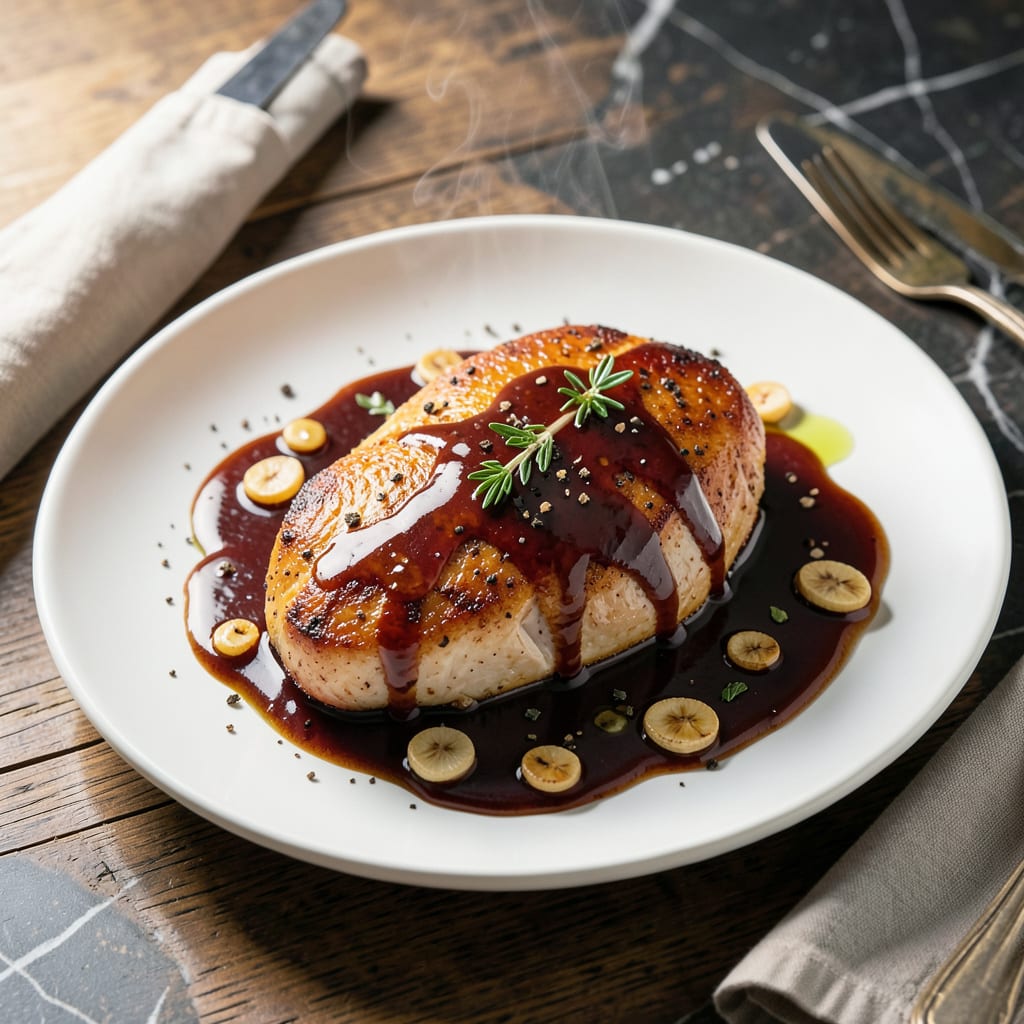
This balsamic sauce transforms ordinary chicken into a restaurant-quality dish with its perfect balance of sweet and tangy flavors. The reduction process intensifies the balsamic vinegar’s natural richness, creating a glossy glaze that clings beautifully to poultry.
With just a few pantry staples and 10 minutes of simmering, you’ll have a versatile sauce that elevates grilled, baked, or pan-seared chicken. It stores well in the fridge, making it ideal for meal prep and quick weeknight dinners.
Ingredients for Balsamic Chicken Sauce
Ten ingredients. Ten minutes. Restaurant-quality sauce for your poultry every time.
| Ingredient | Amount | Notes |
|---|---|---|
| Balsamic Vinegar 🍷 | 1 cup | Aged for depth of flavor |
| Honey 🍯 | ¼ cup | Balances acidity with sweetness |
| Garlic Cloves 🧄 | 3 cloves | Minced for even distribution |
| Dijon Mustard 🟡 | 1 tbsp | Adds tangy complexity |
| Soy Sauce 🫒 | 2 tbsp | Low-sodium preferred for control |
| Olive Oil 🫒 | 1 tbsp | Extra-virgin for richness |
| Fresh Thyme Leaves 🌿 | 1 tsp | Or dried at half the amount |
| Black Pepper 🌶️ | ½ tsp | Freshly cracked for best flavor |
| Salt 🧂 | ¼ tsp | Kosher or sea salt preferred |
| Chicken Stock 🍲 | ¼ cup | Low-sodium for reduction control |
[recipeingredientscaler]
The balsamic vinegar is the soul here. Aged 12+ years from Trader Joe’s or Whole Foods gives that syrupy depth you want—avoid the cheap stuff, it’s too harsh. Fresh thyme is worth hunting down (look for bright green, not woody stems), but dried works in a pinch. For the soy sauce, Kikkoman Low-Sodium is my go-to. The honey? Any kind, but clover’s neutral sweetness lets the vinegar shine.
No honey? Maple syrup or agave at the same amount. Out of Dijon? Whole-grain mustard adds texture but works—just strain if you want it smooth. Skip the fresh thyme? Dried at half the amount. No chicken stock? Water with a bouillon cube does the job. The olive oil can be any neutral oil if that’s what you’ve got (vegetable, canola—no biggie).
This keeps 1 week in the fridge in a sealed jar. For longer, freeze in ice cube trays—3 months easy. The flavors deepen overnight, so make it ahead if you can. Just reheat gently before using.
Why You’ll Love This Recipe
- One Pot Wonder: I just dump everything in a pan—balsamic, honey, garlic, mustard, soy—and let it simmer while I prep the rest of dinner.
- Sweet-Tangy Magic: The honey balances the balsamic’s bite, and the garlic? It makes the whole house smell incredible.
- Meal Prep Hero: I double the batch and use it on chicken, pork, or even roasted veggies all week.
- Budget Keeper: Five pantry staples, no fancy ingredients, and it tastes like a restaurant dish. Honestly, it’s my cheap thrill.
Step-by-Step Instructions for a Rich and Tangy Chicken Glaze
This method delivers a glossy, restaurant-worthy sauce that clings perfectly to poultry.
Step 1: Sauté Aromatics in Olive Oil
Heat the 1 tablespoon Olive Oil in a medium saucepan over medium heat. Add the 3 cloves Garlic Cloves and sauté for 30-60 seconds until fragrant but not browned. You’ll smell the garlic’s aroma intensify—that’s your cue.
Stir in the 1 teaspoon Fresh Thyme Leaves, 0.5 teaspoon Black Pepper, and 0.25 teaspoon Salt. Cook for another 30 seconds to bloom the spices. This builds a flavor foundation that will carry through the entire sauce.
Step 2: Build the Sauce Base
Pour in the 1 cup Balsamic Vinegar, 0.25 cup Honey, 2 tablespoons Soy Sauce, and 1 tablespoon Dijon Mustard. Stir well to combine all the ingredients. The mixture will look thin at first—that’s normal.
Increase the heat to medium-high and bring the mixture to a gentle boil. You’ll see small bubbles forming around the edges of the pan. Let it cook at this boil for 3-4 minutes to begin the reduction process.
Step 3: Reduce and Thicken the Glaze
Add the 0.25 cup Chicken Stock and stir to incorporate. Reduce the heat to medium-low and let the sauce simmer. You’re aiming for a gentle, steady simmer, not a rolling boil.
Simmer the sauce for 10-12 minutes, stirring occasionally, until it reduces by about half and becomes thick enough to coat the back of a spoon. The color will deepen to a rich mahogany, and the aroma will become more concentrated and complex.
Watch carefully toward the end—the sauce can go from perfect to burnt quickly as it thickens. Remove from heat when it reaches your desired consistency.
Step 4: Finish and Serve
Let the sauce cool for 2-3 minutes off the heat. It will thicken slightly more as it cools. Give it a final stir to ensure all the flavors are well distributed.
Taste and adjust seasoning if needed, though the balance of sweet, tangy, and umami should be perfect as is. Drizzle this glossy glaze over grilled or roasted chicken, or use it as a dipping sauce for crispy chicken tenders.
Pro Tips For Making Balsamic Chicken Sauce
- Simmer, Don’t Boil: Keep the heat at medium-low once the sauce starts thickening—balsamic vinegar and honey will scorch if you rush it with high heat.
- Mince Garlic Fine: Press or finely mince the garlic cloves so they dissolve into the sauce instead of leaving harsh chunks that overpower the honey and balsamic.
- Reduce Before Adding Chicken: Let the sauce reduce by a third before adding the chicken back in, otherwise you’ll end up with a watery glaze instead of a rich, clingy coating.
- Swap Soy for Tamari: If you have tamari on hand, use it instead of soy sauce—it’s thicker, less salty, and lets the balsamic and Dijon flavors shine without overpowering them.
Creative Variations of These Flavors
Citrus Twist
Add 2 tbsp fresh orange juice and 1 tsp orange zest along with the balsamic vinegar. The citrus brightens the sauce, cutting through the richness. I love this version with grilled chicken thighs for a summer cookout. 🍊
Spicy Kick
Stir in ½ tsp red pepper flakes with the garlic, or add 1 tbsp sriracha at the end for heat. For a smoky depth, use chipotle powder instead. This pairs perfectly with crispy chicken wings.
Herb Infusion
Swap the thyme for 1 tbsp fresh rosemary or 1 tbsp fresh basil. Rosemary adds a piney note, while basil gives it an Italian flair. I often use rosemary when serving with roasted chicken and root vegetables.
Creamy Variation
After reducing, remove from heat and whisk in 2 tbsp heavy cream or 2 tbsp Greek yogurt. This creates a luscious, velvety sauce that’s incredible over baked chicken breasts. Stir gently to avoid curdling.
Fruity Depth
Add ¼ cup finely diced dried figs or ¼ cup fresh raspberries with the chicken stock. The fruit softens and melts into the sauce, adding a sophisticated sweetness. Strain before serving if you prefer a smooth texture.
Umami Boost
For extra depth, stir in 1 tbsp Worcestershire sauce or 1 tsp fish sauce with the soy sauce. These ingredients amplify the savory notes, making the sauce even more addictive. 💫
Nutrition Facts
Frequently Asked Questions
Can I substitute the honey with another sweetener?
Yes! Use maple syrup or agave nectar in equal amounts. Brown sugar works too but may darken the sauce more. Each brings a slightly different flavor profile.
How do I prevent the sauce from burning?
Keep the heat at medium-low and stir frequently during the last 5 minutes of reduction. The sauce thickens quickly once it nears completion. Remove from heat as soon as it coats the spoon.
Is this sauce suitable for vegetarians?
Yes, the recipe is vegetarian as written. To make it vegan, simply swap the honey for maple syrup and use vegetable stock instead of chicken stock.
How long does it keep in the fridge?
Store in an airtight container for up to 1 week. The flavors actually deepen over time. For longer storage, freeze for up to 3 months.

- Jollof Rice Sauce Recipe: West African Tomato and Spice Infusion - September 25, 2026
- Japanese Rice Soup Recipe: Umami-Rich Comfort in a Bowl - September 25, 2026
- Homemade Cream Of Rice Recipe: Silk-Smooth Breakfast in Minutes - September 25, 2026